


Galicia / Spain

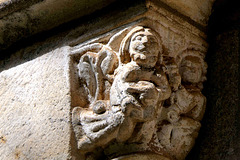
Parada de Sil - Monasterio de Santa Cristina
| |
|
The Benedictine monastery has its origins in the 10th century. Century. It was initially an independent monastery and, from around the 16th century, a priory dependent on the monastery of San Esteban de Ribas de Sil. In the Middle Ages, it was one of the most important monasteries in the Ribeira Sacra. The monks cultivated chestnut trees and vines. The confiscation meant the complete abandonment of the village.
The Romanesque church from the end of the 12th century has been preserved. It has the floor plan of a Latin cross.
Capital
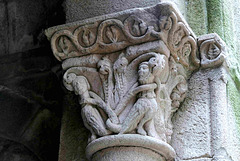
Parada de Sil - Monasterio de Santa Cristina
| |
|
The Benedictine monastery has its origins in the 10th century. Century. It was initially an independent monastery and, from around the 16th century, a priory dependent on the monastery of San Esteban de Ribas de Sil. In the Middle Ages, it was one of the most important monasteries in the Ribeira Sacra. The monks cultivated chestnut trees and vines. The confiscation meant the complete abandonment of the village.
The Romanesque church from the end of the 12th century has been preserved. It has the floor plan of a Latin cross.
Capital
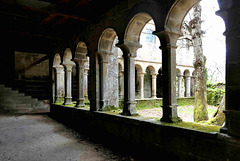
Parada de Sil - Monasterio de Santa Cristina
| |
|
|
The Benedictine monastery has its origins in the 10th century. Century. It was initially an independent monastery and, from around the 16th century, a priory dependent on the monastery of San Esteban de Ribas de Sil. In the Middle Ages, it was one of the most important monasteries in the Ribeira Sacra. The monks cultivated chestnut trees and vines. The confiscation meant the complete abandonment of the village.
The Romanesque church from the end of the 12th century has been preserved. It has the floor plan of a Latin cross.
The cloister
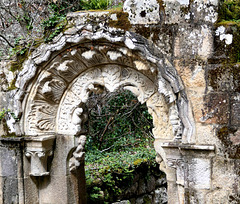
Parada de Sil - Monasterio de Santa Cristina
| |
|
The Benedictine monastery has its origins in the 10th century. Century. It was initially an independent monastery and, from around the 16th century, a priory dependent on the monastery of San Esteban de Ribas de Sil. In the Middle Ages, it was one of the most important monasteries in the Ribeira Sacra. The monks cultivated chestnut trees and vines. The confiscation meant the complete abandonment of the village.
The Romanesque church from the end of the 12th century has been preserved. It has the floor plan of a Latin cross.
A very elaborately designed arched passageway
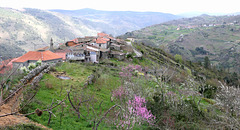
San Lourenzo de Barxacova

San Victor de Barxacova
| |
|
The chapel and necropolis of San Vítor de Barxacova is an archaeological site, consisting of the remains of a medieval chapel and a necropolis with anthropomorphic tombs excavated in stone. The graves, which are up to 2.5 metres long, are mostly west-east orientated. The site is located in the valley of the Mao River, near the confluence with the Sil.
The chapel and the necropolis belonged to the monastery of Santa Cristina de Ribas de Sil. Until the 12th century, it belonged to the monastery of San Lorenzo de Barjacoba , which at that time became a bailiwick of a commandery, belonging to the order of Saint John of Jerusalem .
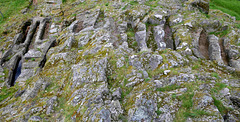
San Victor de Barxacova
| |
|
|
The chapel and necropolis of San Vítor de Barxacova is an archaeological site, consisting of the remains of a medieval chapel and a necropolis with anthropomorphic tombs excavated in stone. The graves, which are up to 2.5 metres long, are mostly west-east orientated. The site is located in the valley of the Mao River, near the confluence with the Sil.
The chapel and the necropolis belonged to the monastery of Santa Cristina de Ribas de Sil. Until the 12th century, it belonged to the monastery of San Lorenzo de Barjacoba , which at that time became a bailiwick of a commandery, belonging to the order of Saint John of Jerusalem .
Canón do Sil
| |
|
|
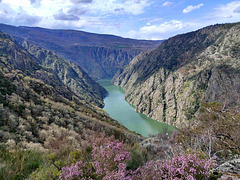
The Sil Canyon covers the last 50 km before the Sil enters the Minho.
The scenery is really spectacular. The walls rise almost vertically up to 500 m from water level. Due to the extraordinary terrain, the local climate differs from surrounding areas and allows the growth of Mediterranean vegetation. The river cliffs have been terraced to allow production of grape vines. Wine production started in this area already in Roman times. The area is called the Ribeira Sacra wine region.
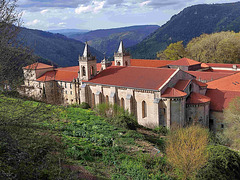
Santo Estevo de Ribas de Sil (PiP)
| |
|
|
|
Santo Estevo de Ribas de Sil is a former Benedictine monastery. The ensemble of buildings, in which three cloisters have been preserved, is now used as a Parador hotel.
The first monastery probably already existed in Visigothic times. At the beginning of the 10th century, a hermit settled in the abandoned monastery and founded a new community with other hermits who had retreated to the Sil Valley. The Galician king Ordoño II granted privileges and from 921 the monastery was rebuilt and dedicated to St Stephen. The monastery's coat of arms, which depicts nine mitres, commemorates nine bishops who renounced their episcopal see in the 10th and 11th centuries and retired to the monastery of Santo Estevo. They were buried in the monastery and, as they were venerated as saints, their tombs soon attracted pilgrims.
As there were frequent disputes with the local landlords among the later commendatory abbots, Pope Julius II placed the monastery under the Benedictine Congregation of Valladolid in 1506. As a result, a school of liberal arts and philosophy was established in Santo Estevo and the monastery experienced a new period of prosperity.
Two more cloisters and new monastery buildings, a chapter house, a large kitchen and a dining hall as well as dormitories were built. In the 17th century, 60 monks lived there.
After the disamortisation of 1835, the monastery buildings fell into disrepair and were only restored at the end of the 20th century.
I've been here before, but I checked in for one night to better ‘explore’ the former monastery.
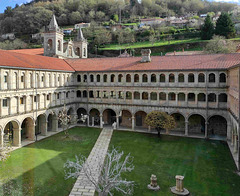
Santo Estevo de Ribas de Sil
| |
|
|
Santo Estevo de Ribas de Sil is a former Benedictine monastery. The ensemble of buildings, in which three cloisters have been preserved, is now used as a Parador hotel.
The first monastery probably already existed in Visigothic times. At the beginning of the 10th century, a hermit settled in the abandoned monastery and founded a new community with other hermits who had retreated to the Sil Valley. The Galician king Ordoño II granted privileges and from 921 the monastery was rebuilt and dedicated to St Stephen. The monastery's coat of arms, which depicts nine mitres, commemorates nine bishops who renounced their episcopal see in the 10th and 11th centuries and retired to the monastery of Santo Estevo. They were buried in the monastery and, as they were venerated as saints, their tombs soon attracted pilgrims.
As there were frequent disputes with the local landlords among the later commendatory abbots, Pope Julius II placed the monastery under the Benedictine Congregation of Valladolid in 1506. As a result, a school of liberal arts and philosophy was established in Santo Estevo and the monastery experienced a new period of prosperity.
Two more cloisters and new monastery buildings, a chapter house, a large kitchen and a dining hall as well as dormitories were built. In the 17th century, 60 monks lived there.
After the disamortisation of 1835, the monastery buildings fell into disrepair and were only restored at the end of the 20th century.
I've been here before, but I checked in for one night to better ‘explore’ the former monastery.
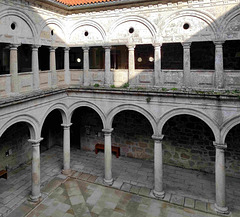
Santo Estevo de Ribas de Sil
| |
|
|
Santo Estevo de Ribas de Sil is a former Benedictine monastery. The ensemble of buildings, in which three cloisters have been preserved, is now used as a Parador hotel.
The first monastery probably already existed in Visigothic times. At the beginning of the 10th century, a hermit settled in the abandoned monastery and founded a new community with other hermits who had retreated to the Sil Valley. The Galician king Ordoño II granted privileges and from 921 the monastery was rebuilt and dedicated to St Stephen. The monastery's coat of arms, which depicts nine mitres, commemorates nine bishops who renounced their episcopal see in the 10th and 11th centuries and retired to the monastery of Santo Estevo. They were buried in the monastery and, as they were venerated as saints, their tombs soon attracted pilgrims.
As there were frequent disputes with the local landlords among the later commendatory abbots, Pope Julius II placed the monastery under the Benedictine Congregation of Valladolid in 1506. As a result, a school of liberal arts and philosophy was established in Santo Estevo and the monastery experienced a new period of prosperity.
Two more cloisters and new monastery buildings, a chapter house, a large kitchen and a dining hall as well as dormitories were built. In the 17th century, 60 monks lived there.
After the disamortisation of 1835, the monastery buildings fell into disrepair and were only restored at the end of the 20th century.
Cloister
I've been here before, but I checked in for one night to better ‘explore’ the former monastery.
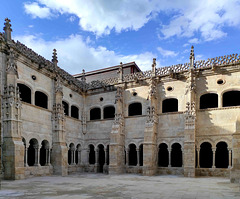
Santo Estevo de Ribas de Sil
| |
|
|
Santo Estevo de Ribas de Sil is a former Benedictine monastery. The ensemble of buildings, in which three cloisters have been preserved, is now used as a Parador hotel.
The first monastery probably already existed in Visigothic times. At the beginning of the 10th century, a hermit settled in the abandoned monastery and founded a new community with other hermits who had retreated to the Sil Valley. The Galician king Ordoño II granted privileges and from 921 the monastery was rebuilt and dedicated to St Stephen. The monastery's coat of arms, which depicts nine mitres, commemorates nine bishops who renounced their episcopal see in the 10th and 11th centuries and retired to the monastery of Santo Estevo. They were buried in the monastery and, as they were venerated as saints, their tombs soon attracted pilgrims.
As there were frequent disputes with the local landlords among the later commendatory abbots, Pope Julius II placed the monastery under the Benedictine Congregation of Valladolid in 1506. As a result, a school of liberal arts and philosophy was established in Santo Estevo and the monastery experienced a new period of prosperity.
Two more cloisters and new monastery buildings, a chapter house, a large kitchen and a dining hall as well as dormitories were built. In the 17th century, 60 monks lived there.
After the disamortisation of 1835, the monastery buildings fell into disrepair and were only restored at the end of the 20th century.
Cloister
I've been here before, but I checked in for one night to better ‘explore’ the former monastery.
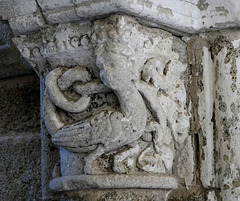
Santo Estevo de Ribas de Sil
| |
|
|
Santo Estevo de Ribas de Sil is a former Benedictine monastery. The ensemble of buildings, in which three cloisters have been preserved, is now used as a Parador hotel.
The first monastery probably already existed in Visigothic times. At the beginning of the 10th century, a hermit settled in the abandoned monastery and founded a new community with other hermits who had retreated to the Sil Valley. The Galician king Ordoño II granted privileges and from 921 the monastery was rebuilt and dedicated to St Stephen. The monastery's coat of arms, which depicts nine mitres, commemorates nine bishops who renounced their episcopal see in the 10th and 11th centuries and retired to the monastery of Santo Estevo. They were buried in the monastery and, as they were venerated as saints, their tombs soon attracted pilgrims.
As there were frequent disputes with the local landlords among the later commendatory abbots, Pope Julius II placed the monastery under the Benedictine Congregation of Valladolid in 1506. As a result, a school of liberal arts and philosophy was established in Santo Estevo and the monastery experienced a new period of prosperity.
Two more cloisters and new monastery buildings, a chapter house, a large kitchen and a dining hall as well as dormitories were built. In the 17th century, 60 monks lived there.
After the disamortisation of 1835, the monastery buildings fell into disrepair and were only restored at the end of the 20th century.
Capital
Santo Estevo de Ribas de Sil
| |
|
Santo Estevo de Ribas de Sil is a former Benedictine monastery. The ensemble of buildings, in which three cloisters have been preserved, is now used as a Parador hotel.
The first monastery probably already existed in Visigothic times. At the beginning of the 10th century, a hermit settled in the abandoned monastery and founded a new community with other hermits who had retreated to the Sil Valley. The Galician king Ordoño II granted privileges and from 921 the monastery was rebuilt and dedicated to St Stephen. The monastery's coat of arms, which depicts nine mitres, commemorates nine bishops who renounced their episcopal see in the 10th and 11th centuries and retired to the monastery of Santo Estevo. They were buried in the monastery and, as they were venerated as saints, their tombs soon attracted pilgrims.
As there were frequent disputes with the local landlords among the later commendatory abbots, Pope Julius II placed the monastery under the Benedictine Congregation of Valladolid in 1506. As a result, a school of liberal arts and philosophy was established in Santo Estevo and the monastery experienced a new period of prosperity.
Two more cloisters and new monastery buildings, a chapter house, a large kitchen and a dining hall as well as dormitories were built. In the 17th century, 60 monks lived there.
After the disamortisation of 1835, the monastery buildings fell into disrepair and were only restored at the end of the 20th century.
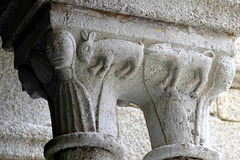
Capital / Two pilgrims and between them a Coquille Saint-Jacques and a gof
Narrow side - Two pilgrims and a Coquille Saint-Jacques
Broad side - A dog hunting a hare

Santo Estevo de Ribas de Sil
| |
|
Santo Estevo de Ribas de Sil is a former Benedictine monastery. The ensemble of buildings, in which three cloisters have been preserved, is now used as a Parador hotel.
The first monastery probably already existed in Visigothic times. At the beginning of the 10th century, a hermit settled in the abandoned monastery and founded a new community with other hermits who had retreated to the Sil Valley. The Galician king Ordoño II granted privileges and from 921 the monastery was rebuilt and dedicated to St Stephen. The monastery's coat of arms, which depicts nine mitres, commemorates nine bishops who renounced their episcopal see in the 10th and 11th centuries and retired to the monastery of Santo Estevo. They were buried in the monastery and, as they were venerated as saints, their tombs soon attracted pilgrims.
As there were frequent disputes with the local landlords among the later commendatory abbots, Pope Julius II placed the monastery under the Benedictine Congregation of Valladolid in 1506. As a result, a school of liberal arts and philosophy was established in Santo Estevo and the monastery experienced a new period of prosperity.
Two more cloisters and new monastery buildings, a chapter house, a large kitchen and a dining hall as well as dormitories were built. In the 17th century, 60 monks lived there.
After the disamortisation of 1835, the monastery buildings fell into disrepair and were only restored at the end of the 20th century.
The baptismal font is decorated with a "Fleur-de-lis".
In heraldry, the lily symbolises purity and innocence.
Santo Estevo de Ribas de Sil
| |
|
Santo Estevo de Ribas de Sil is a former Benedictine monastery. The ensemble of buildings, in which three cloisters have been preserved, is now used as a Parador hotel.
The first monastery probably already existed in Visigothic times. At the beginning of the 10th century, a hermit settled in the abandoned monastery and founded a new community with other hermits who had retreated to the Sil Valley. The Galician king Ordoño II granted privileges and from 921 the monastery was rebuilt and dedicated to St Stephen. The monastery's coat of arms, which depicts nine mitres, commemorates nine bishops who renounced their episcopal see in the 10th and 11th centuries and retired to the monastery of Santo Estevo. They were buried in the monastery and, as they were venerated as saints, their tombs soon attracted pilgrims.
As there were frequent disputes with the local landlords among the later commendatory abbots, Pope Julius II placed the monastery under the Benedictine Congregation of Valladolid in 1506. As a result, a school of liberal arts and philosophy was established in Santo Estevo and the monastery experienced a new period of prosperity.
Two more cloisters and new monastery buildings, a chapter house, a large kitchen and a dining hall as well as dormitories were built. In the 17th century, 60 monks lived there.
After the disamortisation of 1835, the monastery buildings fell into disrepair and were only restored at the end of the 20th century.

Santo Estevo de Ribas de Sil
| |
|
Santo Estevo de Ribas de Sil is a former Benedictine monastery. The ensemble of buildings, in which three cloisters have been preserved, is now used as a Parador hotel.
The first monastery probably already existed in Visigothic times. At the beginning of the 10th century, a hermit settled in the abandoned monastery and founded a new community with other hermits who had retreated to the Sil Valley. The Galician king Ordoño II granted privileges and from 921 the monastery was rebuilt and dedicated to St Stephen. The monastery's coat of arms, which depicts nine mitres, commemorates nine bishops who renounced their episcopal see in the 10th and 11th centuries and retired to the monastery of Santo Estevo. They were buried in the monastery and, as they were venerated as saints, their tombs soon attracted pilgrims.
As there were frequent disputes with the local landlords among the later commendatory abbots, Pope Julius II placed the monastery under the Benedictine Congregation of Valladolid in 1506. As a result, a school of liberal arts and philosophy was established in Santo Estevo and the monastery experienced a new period of prosperity.
Two more cloisters and new monastery buildings, a chapter house, a large kitchen and a dining hall as well as dormitories were built. In the 17th century, 60 monks lived there.
After the disamortisation of 1835, the monastery buildings fell into disrepair and were only restored at the end of the 20th century.
Christ and the Apostles / 12th-13th century

Santo Estevo de Ribas de Sil
| |
|
|
Santo Estevo de Ribas de Sil is a former Benedictine monastery. The ensemble of buildings, in which three cloisters have been preserved, is now used as a Parador hotel.
The first monastery probably already existed in Visigothic times. At the beginning of the 10th century, a hermit settled in the abandoned monastery and founded a new community with other hermits who had retreated to the Sil Valley. The Galician king Ordoño II granted privileges and from 921 the monastery was rebuilt and dedicated to St Stephen. The monastery's coat of arms, which depicts nine mitres, commemorates nine bishops who renounced their episcopal see in the 10th and 11th centuries and retired to the monastery of Santo Estevo. They were buried in the monastery and, as they were venerated as saints, their tombs soon attracted pilgrims.
As there were frequent disputes with the local landlords among the later commendatory abbots, Pope Julius II placed the monastery under the Benedictine Congregation of Valladolid in 1506. As a result, a school of liberal arts and philosophy was established in Santo Estevo and the monastery experienced a new period of prosperity.
Two more cloisters and new monastery buildings, a chapter house, a large kitchen and a dining hall as well as dormitories were built. In the 17th century, 60 monks lived there.
After the disamortisation of 1835, the monastery buildings fell into disrepair and were only restored at the end of the 20th century.
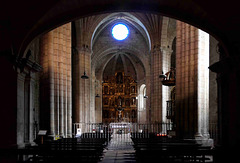
The altar
Jump to top
RSS feed- Latest items - Subscribe to the latest items added to this album
- ipernity © 2007-2026
- Help & Contact
|
Club news
|
About ipernity
|
History |
ipernity Club & Prices |
Guide of good conduct
Donate | Group guidelines | Privacy policy | Terms of use | Statutes | In memoria -
Facebook
X
