


Galicia / Spain

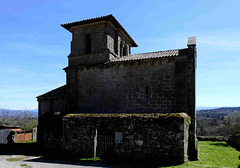
Pantón - San Miguel de Eiré
| |
|
|
San Miguel de Eiré, (aka Mosteiro de Eiré) is a Romanesque monastery church. The belonged to the monastery of San Bieito and was built in the first half of the 12th century.
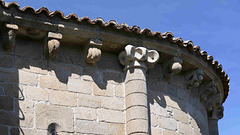
The single-nave building is covered with a wooden roof and the transept with a vault. The semicircular apse is decorated with four columns with capitals in the shape of snake heads.
Pantón - San Miguel de Eiré
| |
|
|
San Miguel de Eiré, (aka Mosteiro de Eiré) is a Romanesque monastery church. The belonged to the monastery of San Bieito and was built in the first half of the 12th century.
The single-nave building is covered with a wooden roof and the transept with a vault. The semicircular apse is decorated with four columns with capitals in the shape of snake heads.
Corbels under the roof of the apse
Pantón,
"San Miguel de Eiré",
"Mosteiro de Eiré",
romanesque,
corbel,
"Ribeira Sacra",
Galicia,
Spain,
Espana,
Pantón - San Miguel de Eiré
| |
|
|
San Miguel de Eiré, (aka Mosteiro de Eiré) is a Romanesque monastery church. The belonged to the monastery of San Bieito and was built in the first half of the 12th century.
The single-nave building is covered with a wooden roof and the transept with a vault. The semicircular apse is decorated with four columns with capitals in the shape of snake heads.
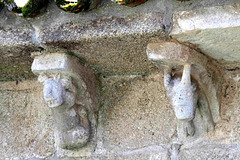
Corbels under the roof of the apse. Lion and bull
Pantón - San Miguel de Eiré
| |
|
|
San Miguel de Eiré, (aka Mosteiro de Eiré) is a Romanesque monastery church. The belonged to the monastery of San Bieito and was built in the first half of the 12th century.
The single-nave building is covered with a wooden roof and the transept with a vault. The semicircular apse is decorated with four columns with capitals in the shape of snake heads.
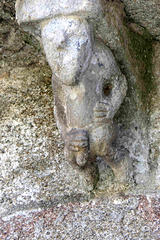
Corbels under the roof of the apse.
Exhibitionists are quite common in this area.
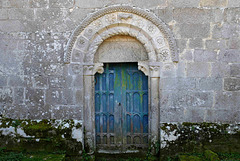
Pantón - San Miguel de Eiré
| |
|
|
San Miguel de Eiré, (aka Mosteiro de Eiré) is a Romanesque monastery church. The belonged to the monastery of San Bieito and was built in the first half of the 12th century.
The single-nave building is covered with a wooden roof and the transept with a vault. The semicircular apse is decorated with four columns with capitals in the shape of snake heads.
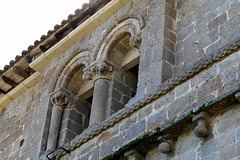
Pantón - San Miguel de Eiré
| |
|
San Miguel de Eiré, (aka Mosteiro de Eiré) is a Romanesque monastery church. The belonged to the monastery of San Bieito and was built in the first half of the 12th century.
The single-nave building is covered with a wooden roof and the transept with a vault. The semicircular apse is decorated with four columns with capitals in the shape of snake heads.
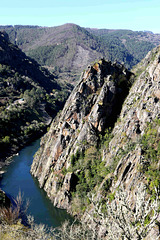
Ribeira Sacra
| |
|
Ribeira Sacra is an area that stretches along the banks of the rivers Cabe, Sil and Miño. The town of Monforte de Lemos was designated as the capital of the area and is also the most populous town.
The first written evidence of the town's name dates back to 1124, when the royals donated a "locum qui dicitur Rouoyra Sacrata". The name perhaps refers to the many hermitages and monasteries that had already been built here at that time.
The Ribeira Sacra is also known for the quality of its wines. The vineyards, which follow the course of the river, are arranged in a system of stone steps along the riverbank and date back to Roman times, as the Romans already appreciated these wines.
The spectacular Cañón del Sil is a gorge that covers the last 50 km before the Sil enters the Minho.
The walls rise almost vertically up to 500 m from water level.
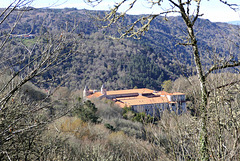
Santo Estevo de Ribas de Sil
| |
|
|
Santo Estevo de Ribas de Sil is a former Benedictine monastery. The building ensemble, in which three cloisters have been preserved, is now used as a Parador hotel.
The first monastery probably already existed in Visigothic times. At the beginning of the 10th century, a hermit settled in the abandoned monastery and founded a new community with other hermits who had retreated to the Sil Valley. Galician King Ordoño II granted privileges and from 921 the monastery was rebuilt and dedicated to St Stephen. The coat of arms of the monastery, which depicts nine mitres, commemorates nine bishops who gave up their episcopal sees in the 10th and 11th centuries and retired to the monastery of Santo Estevo. They were buried in the monastery and, as they were venerated as saints, their graves soon attracted pilgrims.
As there were frequent disputes with the local landlords under the later commendatory abbots, Pope Julius II placed the monastery under the control of the Benedictine Congregation of Valladolid in 1506. This established a school of liberal arts and philosophy in Santo Estevo and brought the monastery a new period of prosperity.
Two more cloisters and new monastery buildings, a chapter house, a large kitchen and dining and dormitories were built. In the 17th century, 60 monks lived there.
After the disamortisation of 1835, the monastery buildings fell into disrepair and were not restored until the end of the 20th century.

Santo Estevo de Ribas de Sil
| |
|
|
|
Santo Estevo de Ribas de Sil is a former Benedictine monastery. The building ensemble, in which three cloisters have been preserved, is now used as a Parador hotel.
The first monastery probably already existed in Visigothic times. At the beginning of the 10th century, a hermit settled in the abandoned monastery and founded a new community with other hermits who had retreated to the Sil Valley. Galician King Ordoño II granted privileges and from 921 the monastery was rebuilt and dedicated to St Stephen. The coat of arms of the monastery, which depicts nine mitres, commemorates nine bishops who gave up their episcopal sees in the 10th and 11th centuries and retired to the monastery of Santo Estevo. They were buried in the monastery and, as they were venerated as saints, their graves soon attracted pilgrims.
As there were frequent disputes with the local landlords under the later commendatory abbots, Pope Julius II placed the monastery under the control of the Benedictine Congregation of Valladolid in 1506. This established a school of liberal arts and philosophy in Santo Estevo and brought the monastery a new period of prosperity.
Two more cloisters and new monastery buildings, a chapter house, a large kitchen and dining and dormitories were built. In the 17th century, 60 monks lived there.
After the disamortisation of 1835, the monastery buildings fell into disrepair and were not restored until the end of the 20th century.
It is unusual that the main apse is lower than the lateral apses.

Santo Estevo de Ribas de Sil
| |
|
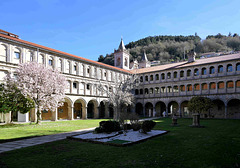
Santo Estevo de Ribas de Sil is a former Benedictine monastery. The building ensemble, in which three cloisters have been preserved, is now used as a Parador hotel.
The first monastery probably already existed in Visigothic times. At the beginning of the 10th century, a hermit settled in the abandoned monastery and founded a new community with other hermits who had retreated to the Sil Valley. Galician King Ordoño II granted privileges and from 921 the monastery was rebuilt and dedicated to St Stephen. The coat of arms of the monastery, which depicts nine mitres, commemorates nine bishops who gave up their episcopal sees in the 10th and 11th centuries and retired to the monastery of Santo Estevo. They were buried in the monastery and, as they were venerated as saints, their graves soon attracted pilgrims.
As there were frequent disputes with the local landlords under the later commendatory abbots, Pope Julius II placed the monastery under the control of the Benedictine Congregation of Valladolid in 1506. This established a school of liberal arts and philosophy in Santo Estevo and brought the monastery a new period of prosperity.
Two more cloisters and new monastery buildings, a chapter house, a large kitchen and dining and dormitories were built. In the 17th century, 60 monks lived there.
After the disamortisation of 1835, the monastery buildings fell into disrepair and were not restored until the end of the 20th century.
A crucifix relief between the corbels under the roof
Santo Estevo de Ribas de Sil
| |
|
|
Santo Estevo de Ribas de Sil is a former Benedictine monastery. The building ensemble, in which three cloisters have been preserved, is now used as a Parador hotel.
The first monastery probably already existed in Visigothic times. At the beginning of the 10th century, a hermit settled in the abandoned monastery and founded a new community with other hermits who had retreated to the Sil Valley. Galician King Ordoño II granted privileges and from 921 the monastery was rebuilt and dedicated to St Stephen. The coat of arms of the monastery, which depicts nine mitres, commemorates nine bishops who gave up their episcopal sees in the 10th and 11th centuries and retired to the monastery of Santo Estevo. They were buried in the monastery and, as they were venerated as saints, their graves soon attracted pilgrims.
As there were frequent disputes with the local landlords under the later commendatory abbots, Pope Julius II placed the monastery under the control of the Benedictine Congregation of Valladolid in 1506. This established a school of liberal arts and philosophy in Santo Estevo and brought the monastery a new period of prosperity.
Two more cloisters and new monastery buildings, a chapter house, a large kitchen and dining and dormitories were built. In the 17th century, 60 monks lived there.
After the disamortisation of 1835, the monastery buildings fell into disrepair and were not restored until the end of the 20th century.
A large cloister

Monforte de Lemos
| |
|
|
The Lemavi tribe populated the area around Monforte de Lemos, before the Romans, the Suevi and the Visigoths left their own footprints.
Tt is believed the town was destroyed in the 8th century by the Muslim invaders. In the 12th century, the settlemet was granted to Fruela Díaz, of the House of Lemos, who had the town rebuilt over the ruins. Monforte flourished as an agricultural market.
During the Middle Ages, a Benedictine community established on the Monastery of San Vicente del Pino. Both the capital tower and the fortified city's walls were demolished during the Irmandiño revolt in the second half of 15th century. The rebels repressed by the Count of Lemos, the lord of the land, who made them work to rebuild the castle.
Today the Monasterio de San Vicente del Pino (now a Paradores hotel) and the Torre da Homenaxe tower over the town.

Monforte de Lemos - excellence
| |
|
|
The Lemavi tribe populated the area around Monforte de Lemos, before the Romans, the Suevi and the Visigoths left their own footprints.
Tt is believed the town was destroyed in the 8th century by the Muslim invaders. In the 12th century, the settlemet was granted to Fruela Díaz, of the House of Lemos, who had the town rebuilt over the ruins. Monforte flourished as an agricultural market.
During the Middle Ages, a Benedictine community established on the Monastery of San Vicente del Pino. Both the capital tower and the fortified city's walls were demolished during the Irmandiño revolt in the second half of 15th century. The rebels repressed by the Count of Lemos, the lord of the land, who made them work to rebuild the castle.
Today the Monasterio de San Vicente del Pino (now a Paradores hotel) and the Torre da Homenaxe tower over the town.
The excellence lavandaria is "powered by Miele"!

Monforte de Lemos - Monasterio de San Vicente del…
| |
|
The Lemavi tribe populated the area around Monforte de Lemos, before the Romans, the Suevi and the Visigoths left their own footprints.
Tt is believed the town was destroyed in the 8th century by the Muslim invaders. In the 12th century, the settlemet was granted to Fruela Díaz, of the House of Lemos, who had the town rebuilt over the ruins. Monforte flourished as an agricultural market.
During the Middle Ages, a Benedictine community established on the Monastery of San Vicente del Pino. Both the capital tower and the fortified city's walls were demolished during the Irmandiño revolt in the second half of 15th century. The rebels repressed by the Count of Lemos, the lord of the land, who made them work to rebuild the castle.
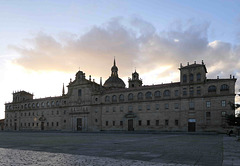
The former monastery of San Vicente del Pino now forms the Parador hotel together with the palace.
The construction of the current building dates back to the 16th century, although there are references to its origins in the 10th century.It has a neoclassical style and has three floors, highlighting the Doric columns on its façade.
Monforte de Lemos - Colegio de Nuestra Señora de…
| |
|
|
The Lemavi tribe populated the area around Monforte de Lemos, before the Romans, the Suevi and the Visigoths left their own footprints.
Tt is believed the town was destroyed in the 8th century by the Muslim invaders. In the 12th century, the settlemet was granted to Fruela Díaz, of the House of Lemos, who had the town rebuilt over the ruins. Monforte flourished as an agricultural market.
During the Middle Ages, a Benedictine community established on the Monastery of San Vicente del Pino. Both the capital tower and the fortified city's walls were demolished during the Irmandiño revolt in the second half of 15th century. The rebels repressed by the Count of Lemos, the lord of the land, who made them work to rebuild the castle.
Work on the Colegio de Nuestra Señora de la Antigua began in 1593 under the patronage of Rodrigo de Castro, Archbishop of Seville, benefactor of Monforte and patron of the arts. The building was built in the Herreriano style, the school is often known as El Escorial of Galicia, being one of the few manifestations of this style in Galicia.
Until 1773, the school was the royal seminary and the nucleus of the university with up to seven professorships at a time when these were barely established in the province. It was initially run by the Jesuits, but in 1767, the Jesuits were expelled from Spain. In the middle of the 18th century, the patronage of the foundation, which was held by the Counts of Lemos, was incorporated into the Duchy of Alba. In 1873, the Piarist Fathers were entrusted with the management of this educational centre.

Monforte de Lemos - Plaza de Abastos
| |
|
The Lemavi tribe populated the area around Monforte de Lemos, before the Romans, the Suevi and the Visigoths left their own footprints.
Tt is believed the town was destroyed in the 8th century by the Muslim invaders. In the 12th century, the settlemet was granted to Fruela Díaz, of the House of Lemos, who had the town rebuilt over the ruins. Monforte flourished as an agricultural market.
During the Middle Ages, a Benedictine community established on the Monastery of San Vicente del Pino. Both the capital tower and the fortified city's walls were demolished during the Irmandiño revolt in the second half of 15th century. The rebels repressed by the Count of Lemos, the lord of the land, who made them work to rebuild the castle.
The market hall
Monforte de Lemos - Puente Viejo
| |
|
|
The Lemavi tribe populated the area around Monforte de Lemos, before the Romans, the Suevi and the Visigoths left their own footprints.
Tt is believed the town was destroyed in the 8th century by the Muslim invaders. In the 12th century, the settlemet was granted to Fruela Díaz, of the House of Lemos, who had the town rebuilt over the ruins. Monforte flourished as an agricultural market.
During the Middle Ages, a Benedictine community established on the Monastery of San Vicente del Pino. Both the capital tower and the fortified city's walls were demolished during the Irmandiño revolt in the second half of 15th century. The rebels repressed by the Count of Lemos, the lord of the land, who made them work to rebuild the castle.
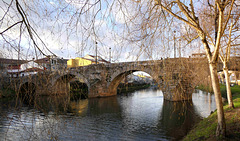
According to tradition, its origins date back to Roman times. However, the current bridge was not built until the 16th century. It is a stone bridge consisting of six round arches, two of which were rebuilt later, and whose pillars are supported by buttresses. The bridge is labelled as "old", in contrast to another important bridge in the city, built in the last century and known as the Puente Nuevo.
Montefurado - Túnel romano
| |
|
|
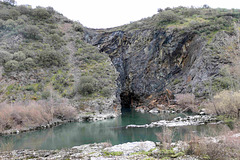
The Roman tunnel of Boca do Monte was built in the 2nd century by order of Emperor Trajan to divert the course of the River Sil and extract the gold deposited in the meanders of the old course of the river.
It is dug in slate and was 120 metres long until 1934, but a flood of the River Sil in that year caused a large part of the tunnel to collapse, giving it its current dimensions: 54 metres long, 19 metres wide and an average height of 17 metres.
Jump to top
RSS feed- Latest items - Subscribe to the latest items added to this album
- ipernity © 2007-2026
- Help & Contact
|
Club news
|
About ipernity
|
History |
ipernity Club & Prices |
Guide of good conduct
Donate | Group guidelines | Privacy policy | Terms of use | Statutes | In memoria -
Facebook
X
