


Galicia / Spain

Santo Estevo de Ribas de Sil
| |
|
|
Santo Estevo de Ribas de Sil is a former Benedictine monastery. The ensemble of buildings, in which three cloisters have been preserved, is now used as a Parador hotel.
The first monastery probably already existed in Visigothic times. At the beginning of the 10th century, a hermit settled in the abandoned monastery and founded a new community with other hermits who had retreated to the Sil Valley. The Galician king Ordoño II granted privileges and from 921 the monastery was rebuilt and dedicated to St Stephen. The monastery's coat of arms, which depicts nine mitres, commemorates nine bishops who renounced their episcopal see in the 10th and 11th centuries and retired to the monastery of Santo Estevo. They were buried in the monastery and, as they were venerated as saints, their tombs soon attracted pilgrims.
As there were frequent disputes with the local landlords among the later commendatory abbots, Pope Julius II placed the monastery under the Benedictine Congregation of Valladolid in 1506. As a result, a school of liberal arts and philosophy was established in Santo Estevo and the monastery experienced a new period of prosperity.
Two more cloisters and new monastery buildings, a chapter house, a large kitchen and a dining hall as well as dormitories were built. In the 17th century, 60 monks lived there.
After the disamortisation of 1835, the monastery buildings fell into disrepair and were only restored at the end of the 20th century.
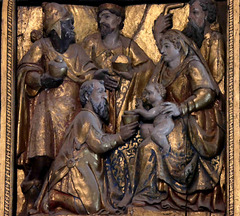
Detail of the altar
Santo Estevo de Ribas de Sil
| |
|
|
|
Santo Estevo de Ribas de Sil is a former Benedictine monastery. The ensemble of buildings, in which three cloisters have been preserved, is now used as a Parador hotel.
The first monastery probably already existed in Visigothic times. At the beginning of the 10th century, a hermit settled in the abandoned monastery and founded a new community with other hermits who had retreated to the Sil Valley. The Galician king Ordoño II granted privileges and from 921 the monastery was rebuilt and dedicated to St Stephen. The monastery's coat of arms, which depicts nine mitres, commemorates nine bishops who renounced their episcopal see in the 10th and 11th centuries and retired to the monastery of Santo Estevo. They were buried in the monastery and, as they were venerated as saints, their tombs soon attracted pilgrims.
As there were frequent disputes with the local landlords among the later commendatory abbots, Pope Julius II placed the monastery under the Benedictine Congregation of Valladolid in 1506. As a result, a school of liberal arts and philosophy was established in Santo Estevo and the monastery experienced a new period of prosperity.
Two more cloisters and new monastery buildings, a chapter house, a large kitchen and a dining hall as well as dormitories were built. In the 17th century, 60 monks lived there.
After the disamortisation of 1835, the monastery buildings fell into disrepair and were only restored at the end of the 20th century.
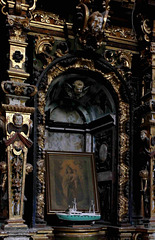
A votive ship on the Baroque side altar
Santo Estevo de Ribas de Sil
| |
|
|
Santo Estevo de Ribas de Sil is a former Benedictine monastery. The ensemble of buildings, in which three cloisters have been preserved, is now used as a Parador hotel.
The first monastery probably already existed in Visigothic times. At the beginning of the 10th century, a hermit settled in the abandoned monastery and founded a new community with other hermits who had retreated to the Sil Valley. The Galician king Ordoño II granted privileges and from 921 the monastery was rebuilt and dedicated to St Stephen. The monastery's coat of arms, which depicts nine mitres, commemorates nine bishops who renounced their episcopal see in the 10th and 11th centuries and retired to the monastery of Santo Estevo. They were buried in the monastery and, as they were venerated as saints, their tombs soon attracted pilgrims.
As there were frequent disputes with the local landlords among the later commendatory abbots, Pope Julius II placed the monastery under the Benedictine Congregation of Valladolid in 1506. As a result, a school of liberal arts and philosophy was established in Santo Estevo and the monastery experienced a new period of prosperity.
Two more cloisters and new monastery buildings, a chapter house, a large kitchen and a dining hall as well as dormitories were built. In the 17th century, 60 monks lived there.
After the disamortisation of 1835, the monastery buildings fell into disrepair and were only restored at the end of the 20th century.
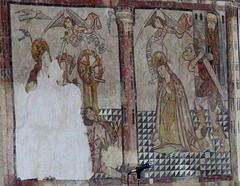
During renovation work in the 1950s, these murals were discovered under the whitewash.

Santo Estevo de Ribas de Sil
| |
|
Santo Estevo de Ribas de Sil is a former Benedictine monastery. The ensemble of buildings, in which three cloisters have been preserved, is now used as a Parador hotel.
The first monastery probably already existed in Visigothic times. At the beginning of the 10th century, a hermit settled in the abandoned monastery and founded a new community with other hermits who had retreated to the Sil Valley. The Galician king Ordoño II granted privileges and from 921 the monastery was rebuilt and dedicated to St Stephen. The monastery's coat of arms, which depicts nine mitres, commemorates nine bishops who renounced their episcopal see in the 10th and 11th centuries and retired to the monastery of Santo Estevo. They were buried in the monastery and, as they were venerated as saints, their tombs soon attracted pilgrims.
As there were frequent disputes with the local landlords among the later commendatory abbots, Pope Julius II placed the monastery under the Benedictine Congregation of Valladolid in 1506. As a result, a school of liberal arts and philosophy was established in Santo Estevo and the monastery experienced a new period of prosperity.
Two more cloisters and new monastery buildings, a chapter house, a large kitchen and a dining hall as well as dormitories were built. In the 17th century, 60 monks lived there.
After the disamortisation of 1835, the monastery buildings fell into disrepair and were only restored at the end of the 20th century.
During renovation work in the 1950s, these murals were discovered under the whitewash.
Dos Abades - Pork
| |
|
The former Benedictine monastery of Santo Estevo de Ribas de Sil is now a Parador Hotel.
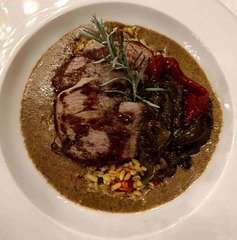
The "Dos Abades" restaurant, which is located in the former stables of the monastery, offers fine Galician cuisine.
Chestnut-fed pork
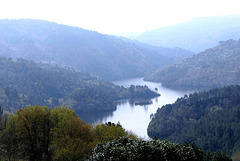
Canón do Sil
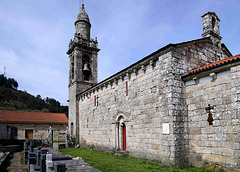
Santa María de Nogueira de Miño
| |
|
Santa María de Nogueira de Miño is a Romanesque church from the second half of the 12th century. The tower and façade were renovated in the 18th century.
In 2012, wall paintings from the period between 1560 and 1570 were discovered, which have since been restored. They are attributed to the so-called ‘Mestre de Nogueira.

Santa María de Nogueira de Miño
| |
|
|
Santa María de Nogueira de Miño is a Romanesque church from the second half of the 12th century. The tower and façade were renovated in the 18th century.
In 2012, wall paintings from the period between 1560 and 1570 were discovered, which have since been restored. They are attributed to the so-called ‘Mestre de Nogueira.
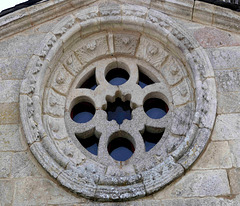
Santa María de Nogueira de Miño
| |
|
Santa María de Nogueira de Miño is a Romanesque church from the second half of the 12th century. The tower and façade were renovated in the 18th century.
In 2012, wall paintings from the period between 1560 and 1570 were discovered, which have since been restored. They are attributed to the so-called ‘Mestre de Nogueira.
The rose window of the façade
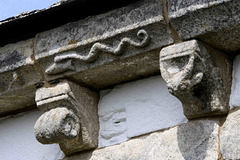
Santa María de Nogueira de Miño
| |
|
Santa María de Nogueira de Miño is a Romanesque church from the second half of the 12th century. The tower and façade were renovated in the 18th century.
In 2012, wall paintings from the period between 1560 and 1570 were discovered, which have since been restored. They are attributed to the so-called ‘Mestre de Nogueira.
Santa María de Nogueira de Miño
| |
|
|
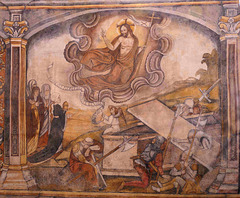
Santa María de Nogueira de Miño is a Romanesque church from the second half of the 12th century. The tower and façade were renovated in the 18th century.
In 2012, wall paintings from the period between 1560 and 1570 were discovered, which have since been restored. They are attributed to the so-called ‘Mestre de Nogueira.
Santa María de Nogueira de Miño
| |
|
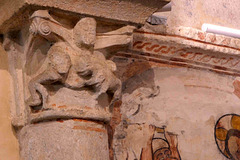
Santa María de Nogueira de Miño is a Romanesque church from the second half of the 12th century. The tower and façade were renovated in the 18th century.
In 2012, wall paintings from the period between 1560 and 1570 were discovered, which have since been restored. They are attributed to the so-called ‘Mestre de Nogueira.
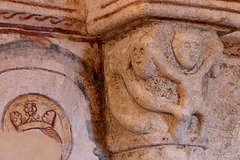
Romanesque capital
Santa María de Nogueira de Miño
| |
|
|
Santa María de Nogueira de Miño is a Romanesque church from the second half of the 12th century. The tower and façade were renovated in the 18th century.
In 2012, wall paintings from the period between 1560 and 1570 were discovered, which have since been restored. They are attributed to the so-called ‘Mestre de Nogueira.
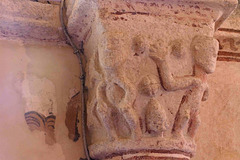
Romanesque capital
Santa María de Nogueira de Miño
| |
|
|
Santa María de Nogueira de Miño is a Romanesque church from the second half of the 12th century. The tower and façade were renovated in the 18th century.
In 2012, wall paintings from the period between 1560 and 1570 were discovered, which have since been restored. They are attributed to the so-called ‘Mestre de Nogueira.
Romanesque capital
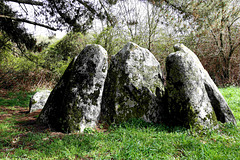
Dolmen de Abuime
| |
|
The Dolmen de Abuime has six tall granite blocks that outline a floor plan 3 metres in diameter. Its dimensions are evidence of a large stone chamber. It is not possible to see whether or not there was a corridor since not all of the stones have been preserved.
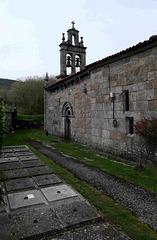
San Miguel do Monte
| |
|
|
San Miguel do Monte is dating back to the late 12th century, although there is a strong Baroque influence, it still retains elements of its original Romanesque style construction. It is clear to see that the building was later extended to the east
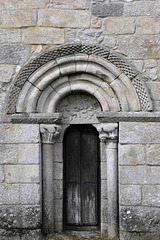
San Miguel do Monte
| |
|
San Miguel do Monte is dating back to the late 12th century, although there is a strong Baroque influence, it still retains elements of its original Romanesque style construction.
The side portal
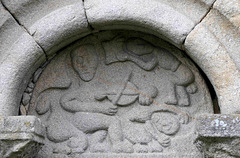
San Miguel do Monte
| |
|
San Miguel do Monte is dating back to the late 12th century, although there is a strong Baroque influence, it still retains elements of its original Romanesque style construction.
The unusual tympanum depicts a musician and two dancers.
Jump to top
RSS feed- Latest items - Subscribe to the latest items added to this album
- ipernity © 2007-2026
- Help & Contact
|
Club news
|
About ipernity
|
History |
ipernity Club & Prices |
Guide of good conduct
Donate | Group guidelines | Privacy policy | Terms of use | Statutes | In memoria -
Facebook
X
