


Galicia / Spain

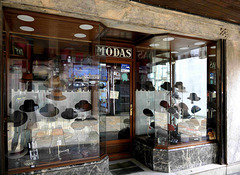
Santiago de Compostela - MODAS
| |
|
|
According to legend, the mortal remains of the apostle St James were taken to Galicia for burial, where they were lost. Eight hundred years later, a light led a shepherd, Pelagius the Hermit, who was guarding his flock at night, to the burial site. The shepherd reported his discovery to the bishop of Iria. The bishop declared that the remains were those of St James the Apostle and immediately informed King Alfonso II in Oviedo. In honour of Saint James, the cathedral was built on the spot where his remains were said to have been found. The legend, which includes numerous miraculous events, enabled the Catholic faithful to strengthen their stronghold in northern Spain during the Reconquista against the Moors, but also led to the growth and development of the city.
ROPAS alias "Sombrerería Iglesias en Santiago de Compostela" looks after the headwear of the people of Santiago.
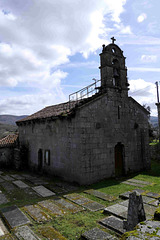
Rodeiro - Igrexa de San Vicente
| |
|
|
San Vicente is the parish of the municipality of Rodeiro. The first documentary mention of Rodeiro dates back to 1368, the church may .be a century older.
The floor plan consists of a single rectangular nave and an apse connected by a triumphal arch. The walls are made of granite blocks laid in stone in regular rows. The upper part of the west façade was altered in modern times when the bell tower was rebuilt and replaced by a baroque tower.

Rodeiro - Igrexa de San Vicente
| |
|
San Vicente is the parish of the municipality of Rodeiro. The first documentary mention of Rodeiro dates back to 1368, the church may .be a century older.
The floor plan consists of a single rectangular nave and an apse connected by a triumphal arch. The walls are made of granite blocks laid in stone in regular rows. The upper part of the west façade was altered in modern times when the bell tower was rebuilt and replaced by a baroque tower.
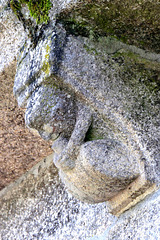
There are some interesting corbels under the roof.
This one shows a male exhibitionist. The genitals of such sculptures were often cut off in the later Puritan period, here it has been preserved.
Rodeiro - Igrexa de San Vicente
| |
|
|
San Vicente is the parish of the municipality of Rodeiro. The first documentary mention of Rodeiro dates back to 1368, the church may .be a century older.
The floor plan consists of a single rectangular nave and an apse connected by a triumphal arch. The walls are made of granite blocks laid in stone in regular rows. The upper part of the west façade was altered in modern times when the bell tower was rebuilt and replaced by a baroque tower.
There are some interesting corbels under the roof.
A musician playing a dolium
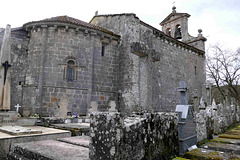
Chantada - San Salvador de Asma
| |
|
|
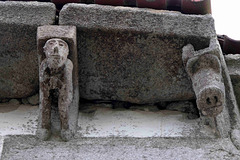
The church belonged to a former monastery that was founded at the end of the 9th century. In the 12th century, the monastery adopted the Rule of St Benedict and gained considerable importance in the region. Throughout the late Middle Ages, the monastery enjoyed important royal privileges. Alfonso IX, Fernando III and Alfonso X were some of the monarchs who granted donations, decrees and privileges to the monastery, but this could not prevent it from experiencing economic difficulties from the end of the 14th century. In 1496, Pope Alexander VI placed it under the Benedictine Congregation of Valladolid.
Today, only the church can be visited, as the rest of the monastery is privately owned.
Chantada - San Salvador de Asma
| |
|
|
The church belonged to a former monastery that was founded at the end of the 9th century. In the 12th century, the monastery adopted the Rule of St Benedict and gained considerable importance in the region. Throughout the late Middle Ages, the monastery enjoyed important royal privileges. Alfonso IX, Fernando III and Alfonso X were some of the monarchs who granted donations, decrees and privileges to the monastery, but this could not prevent it from experiencing economic difficulties from the end of the 14th century. In 1496, Pope Alexander VI placed it under the Benedictine Congregation of Valladolid.
Today, only the church can be visited, as the rest of the monastery is privately owned.
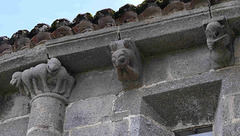
The church was locked, but there were beautiful corbels under the roof
Chantada - San Salvador de Asma
| |
|
|
The church belonged to a former monastery that was founded at the end of the 9th century. In the 12th century, the monastery adopted the Rule of St Benedict and gained considerable importance in the region. Throughout the late Middle Ages, the monastery enjoyed important royal privileges. Alfonso IX, Fernando III and Alfonso X were some of the monarchs who granted donations, decrees and privileges to the monastery, but this could not prevent it from experiencing economic difficulties from the end of the 14th century. In 1496, Pope Alexander VI placed it under the Benedictine Congregation of Valladolid.
Today, only the church can be visited, as the rest of the monastery is privately owned.
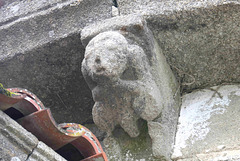
The church was locked, but there were beautiful corbels under the roof
Chantada - San Salvador de Asma
| |
|
The church belonged to a former monastery that was founded at the end of the 9th century. In the 12th century, the monastery adopted the Rule of St Benedict and gained considerable importance in the region. Throughout the late Middle Ages, the monastery enjoyed important royal privileges. Alfonso IX, Fernando III and Alfonso X were some of the monarchs who granted donations, decrees and privileges to the monastery, but this could not prevent it from experiencing economic difficulties from the end of the 14th century. In 1496, Pope Alexander VI placed it under the Benedictine Congregation of Valladolid.
Today, only the church can be visited, as the rest of the monastery is privately owned.
The church was locked, but there were beautiful corbels under the roof
A weathered male exhibitionist.
Chantada - Santa María de Camporramiro
| |
|
|
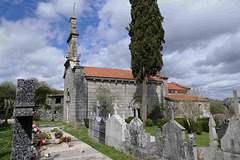
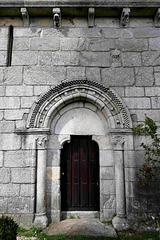
Santa María de Camporramiro is located on the west bank of the river Miño about 3 km from Chantada. According to legend, its name comes from the battle that took place between Ramiro I and the Norman invaders. The battle, which lacks historical documentation, took place on a field, where a church dedicated to Santa María was later erected.
The building of Santa María, whose origin, according to legend, dates back to the 9th century, preserves almost all of its Romanesque construction, except the belfry and the sacristy. The walls are made of regular granite ashlars, arranged in horizontal rows.
Chantada - Santa María de Camporramiro
| |
|
|
|
Santa María de Camporramiro is located on the west bank of the river Miño about 3 km from Chantada. According to legend, its name comes from the battle that took place between Ramiro I and the Norman invaders. The battle, which lacks historical documentation, took place on a field, where a church dedicated to Santa María was later erected.
The building of Santa María, whose origin, according to legend, dates back to the 9th century, preserves almost all of its Romanesque construction, except the belfry and the sacristy. The walls are made of regular granite ashlars, arranged in horizontal rows.
The portal
Saviano - Santo Estevo de Ribas de Miño
| |
|
|
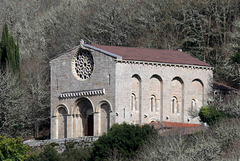
The place may have been donated end of the 10th century for a convent, but the church, located on the banks of the Miño River, is the only remaing building. Given the steepness of the area, to save the levels, the apse was made by excavating the rock, while the facade was built on a crypt .
Saviano - Santo Estevo de Ribas de Miño
| |
|
|
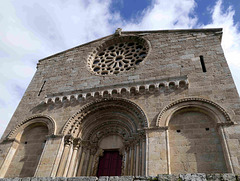
The place may have been donated end of the 10th century for a convent, but the church, located on the banks of the Miño River, is the only remaing building. Given the steepness of the area, to save the levels, the apse was made by excavating the rock, while the facade was built on a crypt .
Saviano - Santo Estevo de Ribas de Miño
| |
|
|
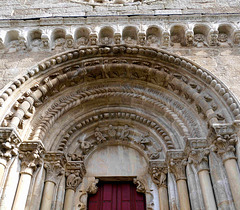
The place may have been donated end of the 10th century for a convent, but the church, located on the banks of the Miño River, is the only remaing building. Given the steepness of the area, to save the levels, the apse was made by excavating the rock, while the facade was built on a crypt .
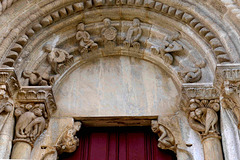
The archivolts of the main portal
Saviano - Santo Estevo de Ribas de Miño
| |
|
|
The place may have been donated end of the 10th century for a convent, but the church, located on the banks of the Miño River, is the only remaing building. Given the steepness of the area, to save the levels, the apse was made by excavating the rock, while the facade was built on a crypt .
I have the impression that the tympanum has been lost. Two of the men in the inner archivolt carry sun and moon, the other instruments. On the right is a harp.
Ribeira Sacra
| |
|
|
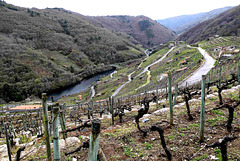
Ribeira Sacra is an area that stretches along the banks of the rivers Cabe, Sil and Miño. The town of Monforte de Lemos was designated as the capital of the area and is also the most populous town.
The first written evidence of the town's name dates back to 1124, when the royals donated a "locum qui dicitur Rouoyra Sacrata". The name perhaps refers to the many hermitages and monasteries that had already been built here at that time.
The Ribeira Sacra is also known for the quality of its wines. The vineyards, which follow the course of the river, are arranged in a system of stone steps along the riverbank and date back to Roman times, as the Romans already appreciated these wines.
Pantón - San Fiz de Cangas
| |
|
|
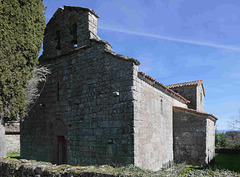
This church belonged to a Benedictine convent. Monastic life was maintained in San Fiz until the reform at the end of the 15th century, when the nuns were forced to move to a convent in Santiago.
The church was remodelled several times

Pantón - San Fiz de Cangas
| |
|
|
This church belonged to a Benedictine convent. Monastic life was maintained in San Fiz until the reform at the end of the 15th century, when the nuns were forced to move to a convent in Santiago.
The church was remodelled several times.
The tympanum is decorated with reliefs that represent the Sun and the Moon with a Greek cross in the center, under which an eight-pointed star and some concentric rectangles are represented. Some scholars ardue, that these stones are much older than 12th century. These may be reused funeral stones.

Pantón - San Fiz de Cangas
| |
|
|
This church belonged to a Benedictine convent. Monastic life was maintained in San Fiz until the reform at the end of the 15th century, when the nuns were forced to move to a convent in Santiago.
The church was remodelled several times.
An exhibitionist under the roof
Jump to top
RSS feed- Latest items - Subscribe to the latest items added to this album
- ipernity © 2007-2026
- Help & Contact
|
Club news
|
About ipernity
|
History |
ipernity Club & Prices |
Guide of good conduct
Donate | Group guidelines | Privacy policy | Terms of use | Statutes | In memoria -
Facebook
X
