

Martin M. Miles' photos

Chalkis - Archaeological Museum (old)
| |
|
|
Chalcis (aka Chalkida), the capital of the island of Euboea, situated on the Euripus Strait at its narrowest point, today is a city of about 60.000 inhabitants.
The earliest recorded mention of Chalcis is in the Iliad. In the 8th and 7th centuries BC, settlers from Chalkis founded cities in southern Italy and Sicily, amongst other places. The city reached the height of its importance during the Archaic period, when it was one of the most significant trading centres in the whole of Hellas. Its main economic activities were fishing for purple snails and metalworking.
In 506 BC, the city came under Athenian control. Despite the tensions, Chalkis supported the alliance during the Persian Wars. Chalkis was forced to join the Attic League, but repeatedly attempted, without success, to rebel against Athens. From 338 BC onwards, Philip II of Macedonia controlled the city. Owing to its strategic location on the Euripus, the Macedonians developed Chalkis into a stronghold.
In 146 BC, the city fell to the Roman Empire and lost much of its political significance. Under the Eastern Roman Empire, the city gradually recovered.
The Triarchy of Negroponte was a Crusader state founded on the island of Euboea (Venetian: Negroponte) following the partition of the Byzantine Empire after the Fourth Crusade. Euboea was granted to Boniface of Montferrat, King of Thessaloniki. Boniface, in turn, ceded the island as a fief to the Flemish nobleman Jacques II of Avesnes. Euboea subsequently came under the influence of Venice. From around 1390, the island became a regular Venetian colony known as the ‘Reame di Negroponte’.
Negroponte played a significant role in the history of Frankish Greece, but Chalkis was finally captured by the Ottoman Empire after a long siege in 1470. Under Turkish rule, the town became a fortified stronghold and an important naval base.
Since 1833, Chalkis has been part of the newly founded, independent Greek state.
The collection of the old Archaeological Museum of Chalkis is not very large.
Terracotta figures
Horseman, sirens, pig...
5th c. BC

Chalkis - Archaeological Museum (old)
| |
|
|
Chalcis (aka Chalkida), the capital of the island of Euboea, situated on the Euripus Strait at its narrowest point, today is a city of about 60.000 inhabitants.
The earliest recorded mention of Chalcis is in the Iliad. In the 8th and 7th centuries BC, settlers from Chalkis founded cities in southern Italy and Sicily, amongst other places. The city reached the height of its importance during the Archaic period, when it was one of the most significant trading centres in the whole of Hellas. Its main economic activities were fishing for purple snails and metalworking.
In 506 BC, the city came under Athenian control. Despite the tensions, Chalkis supported the alliance during the Persian Wars. Chalkis was forced to join the Attic League, but repeatedly attempted, without success, to rebel against Athens. From 338 BC onwards, Philip II of Macedonia controlled the city. Owing to its strategic location on the Euripus, the Macedonians developed Chalkis into a stronghold.
In 146 BC, the city fell to the Roman Empire and lost much of its political significance. Under the Eastern Roman Empire, the city gradually recovered.
The Triarchy of Negroponte was a Crusader state founded on the island of Euboea (Venetian: Negroponte) following the partition of the Byzantine Empire after the Fourth Crusade. Euboea was granted to Boniface of Montferrat, King of Thessaloniki. Boniface, in turn, ceded the island as a fief to the Flemish nobleman Jacques II of Avesnes. Euboea subsequently came under the influence of Venice. From around 1390, the island became a regular Venetian colony known as the ‘Reame di Negroponte’.
Negroponte played a significant role in the history of Frankish Greece, but Chalkis was finally captured by the Ottoman Empire after a long siege in 1470. Under Turkish rule, the town became a fortified stronghold and an important naval base.
Since 1833, Chalkis has been part of the newly founded, independent Greek state.
The collection of the old Archaeological Museum of Chalkis is not very large.
Mosaic
Left a naked man, right a centaur
Maybe the Centauromachy, is the mythical battle the civilized Lapiths and the unruly Centaurs.
3rd c BC

Chalkis - Archaeological Museum (old)
| |
|
|
|
Chalcis (aka Chalkida), the capital of the island of Euboea, situated on the Euripus Strait at its narrowest point, today is a city of about 60.000 inhabitants.
The earliest recorded mention of Chalcis is in the Iliad. In the 8th and 7th centuries BC, settlers from Chalkis founded cities in southern Italy and Sicily, amongst other places. The city reached the height of its importance during the Archaic period, when it was one of the most significant trading centres in the whole of Hellas. Its main economic activities were fishing for purple snails and metalworking.
In 506 BC, the city came under Athenian control. Despite the tensions, Chalkis supported the alliance during the Persian Wars. Chalkis was forced to join the Attic League, but repeatedly attempted, without success, to rebel against Athens. From 338 BC onwards, Philip II of Macedonia controlled the city. Owing to its strategic location on the Euripus, the Macedonians developed Chalkis into a stronghold.
In 146 BC, the city fell to the Roman Empire and lost much of its political significance. Under the Eastern Roman Empire, the city gradually recovered.
The Triarchy of Negroponte was a Crusader state founded on the island of Euboea (Venetian: Negroponte) following the partition of the Byzantine Empire after the Fourth Crusade. Euboea was granted to Boniface of Montferrat, King of Thessaloniki. Boniface, in turn, ceded the island as a fief to the Flemish nobleman Jacques II of Avesnes. Euboea subsequently came under the influence of Venice. From around 1390, the island became a regular Venetian colony known as the ‘Reame di Negroponte’.
Negroponte played a significant role in the history of Frankish Greece, but Chalkis was finally captured by the Ottoman Empire after a long siege in 1470. Under Turkish rule, the town became a fortified stronghold and an important naval base.
Since 1833, Chalkis has been part of the newly founded, independent Greek state.
The collectionn of the old Archaeological Museum of Chalkis is not very large.
Fragment
Three riders galloping right
Marble, 1st c BC

Chalkis - Archaeological Museum (old)
| |
|
|
Chalcis (aka Chalkida), the capital of the island of Euboea, situated on the Euripus Strait at its narrowest point, today is a city of about 60.000 inhabitants.
The earliest recorded mention of Chalcis is in the Iliad. In the 8th and 7th centuries BC, settlers from Chalkis founded cities in southern Italy and Sicily, amongst other places. The city reached the height of its importance during the Archaic period, when it was one of the most significant trading centres in the whole of Hellas. Its main economic activities were fishing for purple snails and metalworking.
In 506 BC, the city came under Athenian control. Despite the tensions, Chalkis supported the alliance during the Persian Wars. Chalkis was forced to join the Attic League, but repeatedly attempted, without success, to rebel against Athens. From 338 BC onwards, Philip II of Macedonia controlled the city. Owing to its strategic location on the Euripus, the Macedonians developed Chalkis into a stronghold.
In 146 BC, the city fell to the Roman Empire and lost much of its political significance. Under the Eastern Roman Empire, the city gradually recovered.
The Triarchy of Negroponte was a Crusader state founded on the island of Euboea (Venetian: Negroponte) following the partition of the Byzantine Empire after the Fourth Crusade. Euboea was granted to Boniface of Montferrat, King of Thessaloniki. Boniface, in turn, ceded the island as a fief to the Flemish nobleman Jacques II of Avesnes. Euboea subsequently came under the influence of Venice. From around 1390, the island became a regular Venetian colony known as the ‘Reame di Negroponte’.
Negroponte played a significant role in the history of Frankish Greece, but Chalkis was finally captured by the Ottoman Empire after a long siege in 1470. Under Turkish rule, the town became a fortified stronghold and an important naval base.
Since 1833, Chalkis has been part of the newly founded, independent Greek state.
In the foreground is the lapidarium of the old Archaeological Museum of Chalkis.

Chalkis - Agios Nikolaos
| |
|
|
Chalcis (aka Chalkida), the capital of the island of Euboea, situated on the Euripus Strait at its narrowest point, today is a city of about 60.000 inhabitants.
The earliest recorded mention of Chalcis is in the Iliad. In the 8th and 7th centuries BC, settlers from Chalkis founded cities in southern Italy and Sicily, amongst other places. The city reached the height of its importance during the Archaic period, when it was one of the most significant trading centres in the whole of Hellas. Its main economic activities were fishing for purple snails and metalworking.
In 506 BC, the city came under Athenian control. Despite the tensions, Chalkis supported the alliance during the Persian Wars. Chalkis was forced to join the Attic League, but repeatedly attempted, without success, to rebel against Athens. From 338 BC onwards, Philip II of Macedonia controlled the city. Owing to its strategic location on the Euripus, the Macedonians developed Chalkis into a stronghold.
In 146 BC, the city fell to the Roman Empire and lost much of its political significance. Under the Eastern Roman Empire, the city gradually recovered.
The Triarchy of Negroponte was a Crusader state founded on the island of Euboea (Venetian: Negroponte) following the partition of the Byzantine Empire after the Fourth Crusade. Euboea was granted to Boniface of Montferrat, King of Thessaloniki. Boniface, in turn, ceded the island as a fief to the Flemish nobleman Jacques II of Avesnes. Euboea subsequently came under the influence of Venice. From around 1390, the island became a regular Venetian colony known as the ‘Reame di Negroponte’.
Negroponte played a significant role in the history of Frankish Greece, but Chalkis was finally captured by the Ottoman Empire after a long siege in 1470. Under Turkish rule, the town became a fortified stronghold and an important naval base.
Since 1833, Chalkis has been part of the newly founded, independent Greek state.
As far back as the Byzantine period, there was a place of worship on this site.
During the Ottoman rule, the original church was destroyed. In its place, the Ottomans built the Oursou Mosque.
After the Ottomans withdrew, the mosque was demolished to make way for a new, monumental Christian place of worship. The foundation stone for today’s three-aisled basilica was laid in 1855. After almost three decades of construction, the church was officially consecrated in 1882.

Chalkis - Euripus Strait
| |
|
|
Chalcis (aka Chalkida), the capital of the island of Euboea, situated on the Euripus Strait at its narrowest point, today is a city of about 60.000 inhabitants.
The earliest recorded mention of Chalcis is in the Iliad. In the 8th and 7th centuries BC, settlers from Chalkis founded cities in southern Italy and Sicily, amongst other places. The city reached the height of its importance during the Archaic period, when it was one of the most significant trading centres in the whole of Hellas. Its main economic activities were fishing for purple snails and metalworking.
In 506 BC, the city came under Athenian control. Despite the tensions, Chalkis supported the alliance during the Persian Wars. Chalkis was forced to join the Attic League, but repeatedly attempted, without success, to rebel against Athens. From 338 BC onwards, Philip II of Macedonia controlled the city. Owing to its strategic location on the Euripus, the Macedonians developed Chalkis into a stronghold.
In 146 BC, the city fell to the Roman Empire and lost much of its political significance. Under the Eastern Roman Empire, the city gradually recovered.
The Triarchy of Negroponte was a Crusader state founded on the island of Euboea (Venetian: Negroponte) following the partition of the Byzantine Empire after the Fourth Crusade. Euboea was granted to Boniface of Montferrat, King of Thessaloniki. Boniface, in turn, ceded the island as a fief to the Flemish nobleman Jacques II of Avesnes. Euboea subsequently came under the influence of Venice. From around 1390, the island became a regular Venetian colony known as the ‘Reame di Negroponte’.
Negroponte played a significant role in the history of Frankish Greece, but Chalkis was finally captured by the Ottoman Empire after a long siege in 1470. Under Turkish rule, the town became a fortified stronghold and an important naval base.
Since 1833, Chalkis has been part of the newly founded, independent Greek state.
The Euripus Strait is the narrowest strait in the world. At its narrowest point, it is just 40 metres wide. For centuries, a bridge has connected Euboea with the mainland here.
The bridge, built in 1962, can be opened when necessary to allow larger ships to pass through. Situated in the centre of Chalkis, it was the main link between Euboea and Attica. The completion of the multi-lane Euripos Bridge in 1992 significantly improved the flow of traffic.

Chalkis - Asterakia
| |
|
|
Chalcis (aka Chalkida), the capital of the island of Euboea, situated on the Euripus Strait at its narrowest point, today is a city of about 60.000 inhabitants.
The earliest recorded mention of Chalcis is in the Iliad. In the 8th and 7th centuries BC, settlers from Chalkis founded cities in southern Italy and Sicily, amongst other places. The city reached the height of its importance during the Archaic period, when it was one of the most significant trading centres in the whole of Hellas. Its main economic activities were fishing for purple snails and metalworking.
In 506 BC, the city came under Athenian control. Despite the tensions, Chalkis supported the alliance during the Persian Wars. Chalkis was forced to join the Attic League, but repeatedly attempted, without success, to rebel against Athens. From 338 BC onwards, Philip II of Macedonia controlled the city. Owing to its strategic location on the Euripus, the Macedonians developed Chalkis into a stronghold.
In 146 BC, the city fell to the Roman Empire and lost much of its political significance. Under the Eastern Roman Empire, the city gradually recovered.
The Triarchy of Negroponte was a Crusader state founded on the island of Euboea (Venetian: Negroponte) following the partition of the Byzantine Empire after the Fourth Crusade. Euboea was granted to Boniface of Montferrat, King of Thessaloniki. Boniface, in turn, ceded the island as a fief to the Flemish nobleman Jacques II of Avesnes. Euboea subsequently came under the influence of Venice. From around 1390, the island became a regular Venetian colony known as the ‘Reame di Negroponte’.
Negroponte played a significant role in the history of Frankish Greece, but Chalkis was finally captured by the Ottoman Empire after a long siege in 1470. Under Turkish rule, the town became a fortified stronghold and an important naval base.
Since 1833, Chalkis has been part of the newly founded, independent Greek state.
The Asterakia autoscooter is somewhat reminiscent of an ancient temple
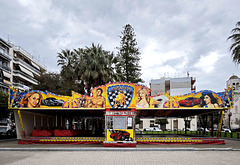
Chalkis - Lamborghini
| |
|
|
Chalcis (aka Chalkida), the capital of the island of Euboea, situated on the Euripus Strait at its narrowest point, today is a city of about 60.000 inhabitants.
The earliest recorded mention of Chalcis is in the Iliad. In the 8th and 7th centuries BC, settlers from Chalkis founded cities in southern Italy and Sicily, amongst other places. The city reached the height of its importance during the Archaic period, when it was one of the most significant trading centres in the whole of Hellas. Its main economic activities were fishing for purple snails and metalworking.
In 506 BC, the city came under Athenian control. Despite the tensions, Chalkis supported the alliance during the Persian Wars. Chalkis was forced to join the Attic League, but repeatedly attempted, without success, to rebel against Athens. From 338 BC onwards, Philip II of Macedonia controlled the city. Owing to its strategic location on the Euripus, the Macedonians developed Chalkis into a stronghold.
In 146 BC, the city fell to the Roman Empire and lost much of its political significance. Under the Eastern Roman Empire, the city gradually recovered.
The Triarchy of Negroponte was a Crusader state founded on the island of Euboea (Venetian: Negroponte) following the partition of the Byzantine Empire after the Fourth Crusade. Euboea was granted to Boniface of Montferrat, King of Thessaloniki. Boniface, in turn, ceded the island as a fief to the Flemish nobleman Jacques II of Avesnes. Euboea subsequently came under the influence of Venice. From around 1390, the island became a regular Venetian colony known as the ‘Reame di Negroponte’.
Negroponte played a significant role in the history of Frankish Greece, but Chalkis was finally captured by the Ottoman Empire after a long siege in 1470. Under Turkish rule, the town became a fortified stronghold and an important naval base.
Since 1833, Chalkis has been part of the newly founded, independent Greek state.
Autoscooter Lamborghini

Chalkis
| |
|
|
Chalcis (aka Chalkida), the capital of the island of Euboea, situated on the Euripus Strait at its narrowest point, today is a city of about 60.000 inhabitants.
The earliest recorded mention of Chalcis is in the Iliad. In the 8th and 7th centuries BC, settlers from Chalkis founded cities in southern Italy and Sicily, amongst other places. The city reached the height of its importance during the Archaic period, when it was one of the most significant trading centres in the whole of Hellas. Its main economic activities were fishing for purple snails and metalworking.
In 506 BC, the city came under Athenian control. Despite the tensions, Chalkis supported the alliance during the Persian Wars. Chalkis was forced to join the Attic League, but repeatedly attempted, without success, to rebel against Athens. From 338 BC onwards, Philip II of Macedonia controlled the city. Owing to its strategic location on the Euripus, the Macedonians developed Chalkis into a stronghold.
In 146 BC, the city fell to the Roman Empire and lost much of its political significance. Under the Eastern Roman Empire, the city gradually recovered.
The Triarchy of Negroponte was a Crusader state founded on the island of Euboea (Venetian: Negroponte) following the partition of the Byzantine Empire after the Fourth Crusade. Euboea was granted to Boniface of Montferrat, King of Thessaloniki. Boniface, in turn, ceded the island as a fief to the Flemish nobleman Jacques II of Avesnes. Euboea subsequently came under the influence of Venice. From around 1390, the island became a regular Venetian colony known as the ‘Reame di Negroponte’.
Negroponte played a significant role in the history of Frankish Greece, but Chalkis was finally captured by the Ottoman Empire after a long siege in 1470. Under Turkish rule, the town became a fortified stronghold and an important naval base.
Since 1833, Chalkis has been part of the newly founded, independent Greek state.
The two-storey villa, built in an eclectic or neoclassical style, was probably constructed around 1900. The building dates from the period of urban expansion that began following the demolition of the Ottoman fortress walls in 1885. The building could do with a bit of renovation.

Chalkis - Glitter Nails
| |
|
|
Chalcis (aka Chalkida), the capital of the island of Euboea, situated on the Euripus Strait at its narrowest point, today is a city of about 60.000 inhabitants.
The earliest recorded mention of Chalcis is in the Iliad. In the 8th and 7th centuries BC, settlers from Chalkis founded cities in southern Italy and Sicily, amongst other places. The city reached the height of its importance during the Archaic period, when it was one of the most significant trading centres in the whole of Hellas. Its main economic activities were fishing for purple snails and metalworking.
In 506 BC, the city came under Athenian control. Despite the tensions, Chalkis supported the alliance during the Persian Wars. Chalkis was forced to join the Attic League, but repeatedly attempted, without success, to rebel against Athens. From 338 BC onwards, Philip II of Macedonia controlled the city. Owing to its strategic location on the Euripus, the Macedonians developed Chalkis into a stronghold.
In 146 BC, the city fell to the Roman Empire and lost much of its political significance. Under the Eastern Roman Empire, the city gradually recovered.
The Triarchy of Negroponte was a Crusader state founded on the island of Euboea (Venetian: Negroponte) following the partition of the Byzantine Empire after the Fourth Crusade. Euboea was granted to Boniface of Montferrat, King of Thessaloniki. Boniface, in turn, ceded the island as a fief to the Flemish nobleman Jacques II of Avesnes. Euboea subsequently came under the influence of Venice. From around 1390, the island became a regular Venetian colony known as the ‘Reame di Negroponte’.
Negroponte played a significant role in the history of Frankish Greece, but Chalkis was finally captured by the Ottoman Empire after a long siege in 1470. Under Turkish rule, the town became a fortified stronghold and an important naval base.
Since 1833, Chalkis has been part of the newly founded, independent Greek state.

Chalkis
| |
|
|
Chalcis (aka Chalkida), the capital of the island of Euboea, situated on the Euripus Strait at its narrowest point, today is a city of about 60.000 inhabitants.
The earliest recorded mention of Chalcis is in the Iliad. In the 8th and 7th centuries BC, settlers from Chalkis founded cities in southern Italy and Sicily, amongst other places. The city reached the height of its importance during the Archaic period, when it was one of the most significant trading centres in the whole of Hellas. Its main economic activities were fishing for purple snails and metalworking.
In 506 BC, the city came under Athenian control. Despite the tensions, Chalkis supported the alliance during the Persian Wars. Chalkis was forced to join the Attic League, but repeatedly attempted, without success, to rebel against Athens. From 338 BC onwards, Philip II of Macedonia controlled the city. Owing to its strategic location on the Euripus, the Macedonians developed Chalkis into a stronghold.
In 146 BC, the city fell to the Roman Empire and lost much of its political significance. Under the Eastern Roman Empire, the city gradually recovered.
The Triarchy of Negroponte was a Crusader state founded on the island of Euboea (Venetian: Negroponte) following the partition of the Byzantine Empire after the Fourth Crusade. Euboea was granted to Boniface of Montferrat, King of Thessaloniki. Boniface, in turn, ceded the island as a fief to the Flemish nobleman Jacques II of Avesnes. Euboea subsequently came under the influence of Venice. From around 1390, the island became a regular Venetian colony known as the ‘Reame di Negroponte’.
Negroponte played a significant role in the history of Frankish Greece, but Chalkis was finally captured by the Ottoman Empire after a long siege in 1470. Under Turkish rule, the town became a fortified stronghold and an important naval base.
Since 1833, Chalkis has been part of the newly founded, independent Greek state.

Hosios Loukas
| |
|
|
The monastery of Hosios Loukas was founded in the early 10th century AD by the hermit, Venerable Luke of Steiris, whose relics are kept in the monastery to this day. A church dedicated to Saint Barbara, which forms the core of the present-day church, was likely built during his lifetime.
The monastery derived its wealth from the fact that the relics of St. Luke were said to have exuded a sort of perfumed oil which produced healing miracles. Pilgrims were encouraged to sleep by the side of the tomb in order to be healed.
At the heart of the monastery complex lie two interconnected churches: the Katholikon and, on slightly higher ground and adjoining to the northeast, the more modest Theotokos Church.
The Katholikon, the main church dedicated to Saint Luke and dating from 1011, represents a type of church that was new at the time. This elongated rectangular structure is a cross-in-square domed church, a style otherwise characteristic of medieval Armenian architecture.
Inside the ‘fotanamma’, a communal room that could be heated. As Orthodox monastery churches and monks’ cells were usually unheated in winter, the monks would gather in the fotanamma to warm themselves on cold nights.
A thick layer of soot is the perfect surface for scratching graffiti on

Hosios Loukas
| |
|
|
The monastery of Hosios Loukas was founded in the early 10th century AD by the hermit, Venerable Luke of Steiris, whose relics are kept in the monastery to this day. A church dedicated to Saint Barbara, which forms the core of the present-day church, was likely built during his lifetime.
The monastery derived its wealth from the fact that the relics of St. Luke were said to have exuded a sort of perfumed oil which produced healing miracles. Pilgrims were encouraged to sleep by the side of the tomb in order to be healed.
At the heart of the monastery complex lie two interconnected churches: the Katholikon and, on slightly higher ground and adjoining to the northeast, the more modest Theotokos Church.
The Katholikon, the main church dedicated to Saint Luke and dating from 1011, represents a type of church that was new at the time. This elongated rectangular structure is a cross-in-square domed church, a style otherwise characteristic of medieval Armenian architecture.
Inside the ‘fotanamma’, a communal room that could be heated. As Orthodox monastery churches and monks’ cells were usually unheated in winter, the monks would gather in the fotanamma to warm themselves on cold nights.

Hosios Loukas
| |
|
|
The monastery of Hosios Loukas was founded in the early 10th century AD by the hermit, Venerable Luke of Steiris, whose relics are kept in the monastery to this day. A church dedicated to Saint Barbara, which forms the core of the present-day church, was likely built during his lifetime.
The monastery derived its wealth from the fact that the relics of St. Luke were said to have exuded a sort of perfumed oil which produced healing miracles. Pilgrims were encouraged to sleep by the side of the tomb in order to be healed.
At the heart of the monastery complex lie two interconnected churches: the Katholikon and, on slightly higher ground and adjoining to the northeast, the more modest Theotokos Church.
The Katholikon, the main church dedicated to Saint Luke and dating from 1011, represents a type of church that was new at the time. This elongated rectangular structure is a cross-in-square domed church, a style otherwise characteristic of medieval Armenian architecture.
The small entrance on the right leads into the ‘fotanamma’, a communal room that could be heated. As Orthodox monastery churches and monks’ cells were usually unheated in winter, the monks would gather in the fotanamma to warm themselves on cold nights.

Hosios Loukas
| |
|
|
|
The monastery of Hosios Loukas was founded in the early 10th century AD by the hermit, Venerable Luke of Steiris, whose relics are kept in the monastery to this day. A church dedicated to Saint Barbara, which forms the core of the present-day church, was likely built during his lifetime.
The monastery derived its wealth from the fact that the relics of St. Luke were said to have exuded a sort of perfumed oil which produced healing miracles. Pilgrims were encouraged to sleep by the side of the tomb in order to be healed.
At the heart of the monastery complex lie two interconnected churches: the Katholikon and, on slightly higher ground and adjoining to the northeast, the more modest Theotokos Church.
The Katholikon, the main church dedicated to Saint Luke and dating from 1011, represents a type of church that was new at the time. This elongated rectangular structure is a cross-in-square domed church, a style otherwise characteristic of medieval Armenian architecture.

Hosios Loukas
| |
|
|
The monastery of Hosios Loukas was founded in the early 10th century AD by the hermit, Venerable Luke of Steiris, whose relics are kept in the monastery to this day. A church dedicated to Saint Barbara, which forms the core of the present-day church, was likely built during his lifetime.
The monastery derived its wealth from the fact that the relics of St. Luke were said to have exuded a sort of perfumed oil which produced healing miracles. Pilgrims were encouraged to sleep by the side of the tomb in order to be healed.
At the heart of the monastery complex lie two interconnected churches: the Katholikon and, on slightly higher ground and adjoining to the northeast, the more modest Theotokos Church.
The Katholikon, the main church dedicated to Saint Luke and dating from 1011, represents a type of church that was new at the time. This elongated rectangular structure is a cross-in-square domed church, a style otherwise characteristic of medieval Armenian architecture.
The abbey´s former refectory now houses a small museum.
Two peacocks on a lintel.
The medallion, which was originally in the centre, has been chipped away.
11 c AD

Hosios Loukas
| |
|
|
The monastery of Hosios Loukas was founded in the early 10th century AD by the hermit, Venerable Luke of Steiris, whose relics are kept in the monastery to this day. A church dedicated to Saint Barbara, which forms the core of the present-day church, was likely built during his lifetime.
The monastery derived its wealth from the fact that the relics of St. Luke were said to have exuded a sort of perfumed oil which produced healing miracles. Pilgrims were encouraged to sleep by the side of the tomb in order to be healed.
At the heart of the monastery complex lie two interconnected churches: the Katholikon and, on slightly higher ground and adjoining to the northeast, the more modest Theotokos Church.
The Katholikon, the main church dedicated to Saint Luke and dating from 1011, represents a type of church that was new at the time. This elongated rectangular structure is a cross-in-square domed church, a style otherwise characteristic of medieval Armenian architecture.
The abbey´s former refectory now houses a small museum.
A hand grasps the handle of an ornate staff, decorated with an intricately carved Byzantine interlace pattern. A weapon?
11 c AD

Hosios Loukas
| |
|
|
The monastery of Hosios Loukas was founded in the early 10th century AD by the hermit, Venerable Luke of Steiris, whose relics are kept in the monastery to this day. A church dedicated to Saint Barbara, which forms the core of the present-day church, was likely built during his lifetime.
The monastery derived its wealth from the fact that the relics of St. Luke were said to have exuded a sort of perfumed oil which produced healing miracles. Pilgrims were encouraged to sleep by the side of the tomb in order to be healed.
At the heart of the monastery complex lie two interconnected churches: the Katholikon and, on slightly higher ground and adjoining to the northeast, the more modest Theotokos Church.
The Katholikon, the main church dedicated to Saint Luke and dating from 1011, represents a type of church that was new at the time. This elongated rectangular structure is a cross-in-square domed church, a style otherwise characteristic of medieval Armenian architecture.
The abbey´s former refectory now houses a small museum.
This slab was probably originally used in a horizontal position. This was so that the devout monks could play "Nine Men's Morris" here if they grew bored of the overly long sermon.
