

tarboat's photos
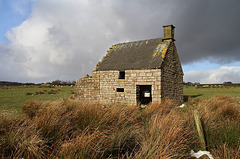
Moorside
| |
|
|
I came across this derelict house whilst wandering the exceedingly wet and boggy moors above Elkstone in search of limekilns. The barn section has collapsed but the house remains standing although the ground floor is flooded. I have attempted to find who lived here 100 years or so ago, but the census data is not clear as to which property was which in the vicinity.

Conveyor and Elevator Co, Accrington
| |
|
|
1909 advert for a company specialising in materials handling equipment. The firm, which was established in 1889, continues in business at Grange Works, Wellington Street in Accrington.

New Conveyor Co., Ltd., Smethwick
| |
|
The New Conveyor Company specialised in conveyors and elevators but also operated as general mechanical engineers. In 1914 the company was listed as proprietors of the Midland Engineering Company. It was acquired by Tube Investments, Ltd in 1951. In 1961 the firm employed 800 people and in 1968 it supplied the coal handling plant for Cottam Power Station.
This 1907 advert was published in the Journal of Gas Lighting.
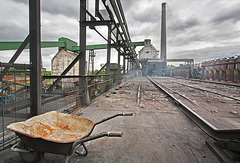
On the ovens
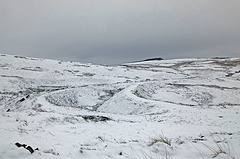
Curves
| |
|
|
When the Cromford and High Peak Railway opened in 1831 it was operated with horses between the inclines and the tight curves were not a problem. After the introduction of locomotives this curve on the approach to Burbage tunnel must have caused significant difficulties and a new alignment (on the right) was created, which required a significant embankment to be built. It is a bleak place, even in summer, and must have been a hard place to work.
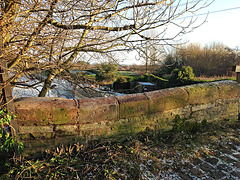
Putting things in the correct order
| |
|
|
|
I love to find little details around the canal network and in this case it is something I had missed until the sun was at the right angle, and then it was obvious. This is Bridge 14 on the Macclesfield Canal at Higher Poynton and if you look closely at the coping stones they are numbered from I to IIIIII. It seems that the parapet has been rebuilt at some point and that III and IIII have been transposed.
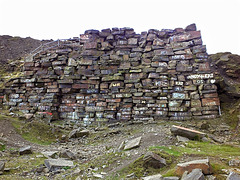
A name for every stone
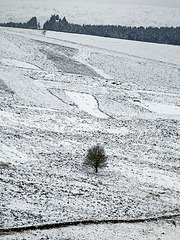
Wild Moor
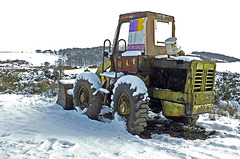
FOR SALE
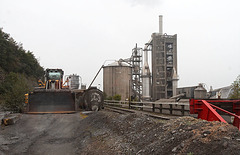
Clitheroe cement
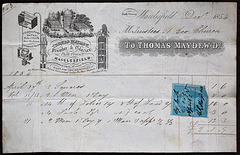
Thomas Maydew plumber and glazier
| |
|
|
|
Thomas Maydew was born in 1818 and by 1841 was listed as a glazier living with his mother in St Vincent Street, Macclesfield. In 1851 he had married and was operating a business as plumber and glazier at 12 Park Green. He is stated as employing thre men at this time. The renumbering of properties saw the business listed at 36 Park Green in 1864 and 40 Park Green in 1871. Thomas Maydew senior was retired in 1881 whilst his son Thomas Junior was then running the business.
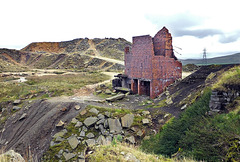
Facit Quarries
| |
|
|
|
The Facit Quarries specialised in flagstones, which were largely worked underground, and were operated by Henry Heys in the 19th and early 20th century. Later the business passed to Sanderson Quarries (Facit) Ltd and eventually production moved towards aggregate and crushing equipment was installed. Today the quarries at Facit are abandoned and used by motorcyclists. The remains of the storage and loading bins are still an impressive structure even though in ruins.
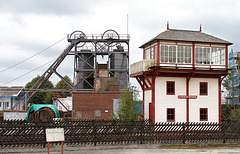
Snibston closure
| |
|
|
|
The colliery at Snibston saw its first shaft sunk in 1833 by George Stephenson and partners. Closure came 150 years later in December 1983 and the site subsequently became part of the Snibston Discovery Museum. This week Leicestershire County Council announced that the museum would close and some of the land would be sold off for housing. Whether the preserved colliery buildings will survive is yet to be seen. The future of the mining artefacts stored here from various opencast sites is probably not good. :-(
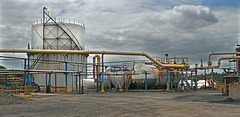
Gas and chemicals
| |
|
|
|
A look at some of the gas and liquid storage in the by-product plant at Monckton coke works. Sadly this plant closed in December.

Properly Protected
| |
|
|
|
The maker's mark on corrugated iron produced by the American Rolling Mill Company of Middletown, Ohio.
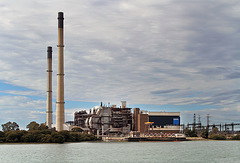
Torrens Island power station
| |
|
|
Torrens Island Power Station, near Adelaide, South Australia is operated by AGL Energy. It burns natural gas in 8 steam turbines to generate up to 1,280MW of electricity. The gas is supplied via the SEAGas pipeline from Victoria and from Moomba in the Cooper Basin although it is also is capable of burning fuel oil. It is the largest power station in South Australia and the largest single user of natural gas in Australia. Construction began in 1963 and the A Station was completed in 1967 The B Station was completed in 1976.
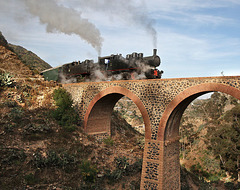
Bridging the valley
| |
|
|
|
Double-headed Mallets climbing towards Asmara and crossing the viaduct west of Arbaroba on the Eritrea Railway.
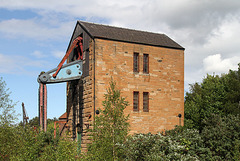
Prestongrange Colliery
| |
|
|
|
The Prestongrange engine is of the Cornish type and was manufactured by J. E. Mare & Co of Plymouth to the design of engineers Hocking & Loam. This 70 inch engine was brought to the Prestongrange Colliery second hand in 1874 having been used previously on three Cornish Mines, the last being the Great Western Mines from 1869 to 1873. It was bought Harveys of Hayle who sold it on to Prestongrange complete with a new Beam of their own manufacture. The Harvey name cast into the beam has lead to confusion as to the manufacturer and it was Kenneth Brown who discovered the truth ( www.aditnow.co.uk/documents/Prestongrange-Industrial/Prestongrange-a-Myth.pdf ). The engine pumped the pit until electric pumps took over in 1954. The colliery closed in 1962 and the engine is now preserved as a feature in the Industrial Heritage Museum on the site.
