

tarboat's photos
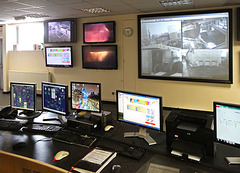
Everything under control
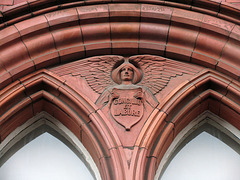
Concilio et Labore
| |
|
|
Detail on the 1887 Royal Jubilee exhibition wing of Manchester Municipal School of Art. "Concilio et Labore" is the city of Manchester's motto, which loosely translated means "Wisdom and Effort"
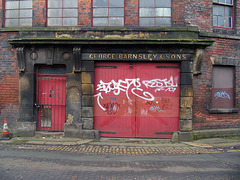
George Barnsley and Sons
| |
|
|
Another entrance to this abandoned works. George Barnsley and Sons Ltd was founded in 1836. The firm specialised in manufacturing files and cutting tools for leather workers and shoe makers. In 1852 they moved to Cornish Works on Cornish Street in Sheffield. In 1944 the works was producing steel files, shoe and butchers knives. The works has been derelict for many years.
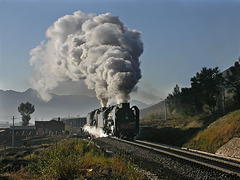
A reason to get out of bed
| |
|
|
|
To catch that special morning light you have to get up early and miss breakfast. QJs 7041 and 7009 are well into the climb with an eastbound train approaching Biliigou on the Jinpeng section of the Jitong Railway.
Climbing beyond the village
| |
|
|
|
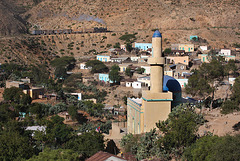
A Mallet with a short freight train digs into the steep climb above the village of Nefasit on the Eritrean Railway.
Double dragon
| |
|
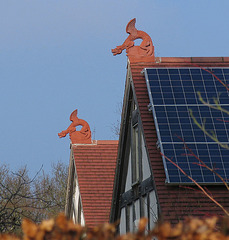
I love to see terracotta ornamentation and was delighted to spot this pair of ridge dragons on a house in Adlington.
No.3 Gate
| |
|
|
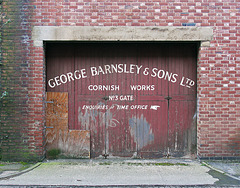
George Barnsley and Sons Ltd was founded in 1836. The firm specialised in manufacturing files and cutting tools for leather workers and shoe makers. In 1852 they moved to Cornish Works on Cornish Street in Sheffield. In 1944 the works was producing steel files, shoe and butchers knives. The works has been derelict for many years.
Cold crossing
| |
|
|
|
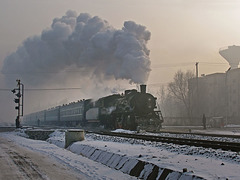
During this visit to the Tiefa Coal Railway the wintry conditions in Diaobingshan had reached such a state that schoolchildren were being turned out to clear snow from the streets. Of course the railway kept running as normal, and here the crossing keepers stand in their heavy coats, protecting this early morning service into Diaobingshan. SY 1767 is to the fore and putting on a fine exhaust for the cameras.
Garage
| |
|
|
|
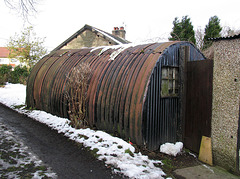
Corrugated iron buildings often appear in unexpected places. This tiny garage was spotted on a track high up above Whaley Bridge.

H. Ford coal merchant
| |
|
|
|
10s 10d for 1 ton of coal sold in June 1857 by H. Ford, Coal merchant based at the coal wharf on the canal side in Macclesfield. Large quantities were transported to Macclesfield by the canal from collieries a few miles north and also from the Potteries. Rail transport eventually took over much of this trade and many merchants moved to coal yards near the main goods yards.
Self-dumping and Self-righting
| |
|
|
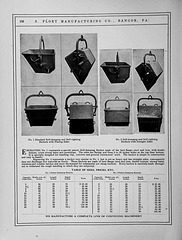
Page from the 1908 catalogue of S. Flory Manufacturing Co of Bangor, Pennsylvania which is new to me as a ropeway manufacturer. The company manufactured a wide range of hoisting machinery and specialised in suspension cablways. It also offered an "Improved Elevated Wire Rope Tramway with Patent Carriage and Grip", for which these buckets would have been ideal.
Tiefa branch line
| |
|
|
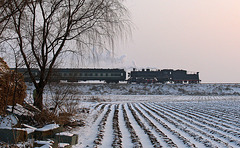
Early morning and a passenger service for workers is coasting towards the terminus of the branch to Wangqian on the Tiefa Mining Railway. The locomotive, SY 1772, was built at Tangshan in 1999.

The next generation
| |
|
|
|
The fascination with steam is evident in this new generation of enthusiasts watching the River Don plate mill engine at Kelham Island Industrial Museum. This is the largest surviving steam engine in the UK, generating 12,000 horsepower, and was used to roll armour plate for warships at thicknesses up to 18 inches. Steam remained in use for these large rolling jobs for so long due to the speed that the engine could be reversed for another pass of the plate. The engine is still steamed and run daily at the museum and is recommended to anyone with an interest in heavy engineering.
Fresh Meats

Behind the brick facade
| |
|
|
|
Big Nissen huts turn up in so many corners of industry. This one is lurking behind the brick facade at BPS Springs at, Spotland Bridge in Rochdale.

Riddings Drift
Brookside Works
| |
|
|
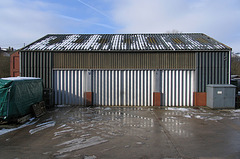
A study in corrugation. Engineering works in Whaley Bridge. Home to D & A Engineers Ltd who have over 30 years experience in machine design and manufacture, automation systems and maintenance.
Selva Salt
| |
|
|
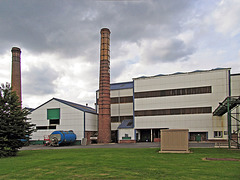
The New Cheshire Salt Works, Lower Wincham, was the third largest salt manufacturer in the UK in the 1980s. The company extracted brine from a borehole under the works and produced salt using the vacuum method. The company was founded by Alfred Stubbs in the 1920s and was producing over 1,000 tons of salt per week, of which 25% was sold under the brand name of "Selva". The business was taken over by British Salt in 2005 and the works was soon closed down, demolished, with the land sold to developers.
