

Tu'er Ye - a Chinese gay deity
Panjiayuan
Tree House
Zha zha café
Zakázané mesto
Zakázané mesto - vchod
Zakázané mesto
Zakázané mesto
Zakázané mesto
Zakázané mesto - hrncek
Zakázané mesto - lefi
Zakázané mesto
Zakázané mesto - zahrada
Zakázané mesto - zahrada
Zakázané mesto
Dragon wall
Zakázané mesto
Zakázané mesto - lefi
Zakázané mesto
Zakázané mesto - divadlo
Zakázané mesto - divadlo
Zakázané mesto
Zakázané mesto
Vegetarian Buddha
牛
2009
Buddha in shade
Buddha
Buddha
Heil buddha?!
Buddha for sale
Yunnanese Buddha
Fancy tea sitting
Ripe dark tea
Corn-decorated House
Starý nápis
the New and the Old
Welcome home
Gate says the new year is coming
Nápisy IV.
Entrance
Traditional entrance
Our Night on the Kàng [炕] Warmth, Tradition, and a…
Dzedzina
Kuk
Keywords
Authorizations, license
-
Visible by: Everyone -
All rights reserved
-
585 visits
Tu'er Ye
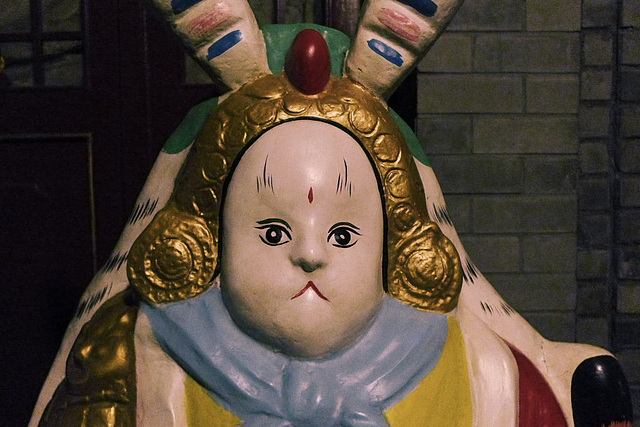

Tu’er Ye, the Rabbit God, is a beloved symbol of Beijing’s Mid-Autumn Festival, instantly recognisable by its unique combination of a human body and a rabbit’s face. Its origins are deeply rooted in ancient Chinese moon worship, where the rabbit is closely linked to the Moon Goddess Chang’e and the legend of the jade rabbit living on the moon.
Traditionally, Tu’er Ye is crafted by hand from clay and painted in bright, festive colours, with each artisan adding their own distinctive touch, making every figurine one of a kind. The Rabbit God is often depicted wearing ornate armour and a general’s helmet, and in some versions, he is shown riding a tiger, elephant, or even a mythical beast. Historically, Tu’er Ye was believed to protect children from illness and disaster, especially during times of plague in Beijing, and was often placed in homes as a guardian figure. Interestingly, in the Qing dynasty, Tu’er Ye also became a secret symbol for gay men in Beijing, with dedicated shrines providing a rare safe space for same-sex couples to pray for love and happiness.
Over time, modern interpretations have introduced a female companion, Tu’er Nainai, reflecting changing social attitudes. Today, the craft of making Tu’er Ye is recognised as part of Beijing’s intangible cultural heritage, and the Rabbit God has enjoyed a modern revival, appearing in contemporary art, fashion, and as a popular souvenir, continuing to inspire both tradition and creativity.

Traditionally, Tu’er Ye is crafted by hand from clay and painted in bright, festive colours, with each artisan adding their own distinctive touch, making every figurine one of a kind. The Rabbit God is often depicted wearing ornate armour and a general’s helmet, and in some versions, he is shown riding a tiger, elephant, or even a mythical beast. Historically, Tu’er Ye was believed to protect children from illness and disaster, especially during times of plague in Beijing, and was often placed in homes as a guardian figure. Interestingly, in the Qing dynasty, Tu’er Ye also became a secret symbol for gay men in Beijing, with dedicated shrines providing a rare safe space for same-sex couples to pray for love and happiness.
Over time, modern interpretations have introduced a female companion, Tu’er Nainai, reflecting changing social attitudes. Today, the craft of making Tu’er Ye is recognised as part of Beijing’s intangible cultural heritage, and the Rabbit God has enjoyed a modern revival, appearing in contemporary art, fashion, and as a popular souvenir, continuing to inspire both tradition and creativity.
- Keyboard shortcuts:
Jump to top
RSS feed- Latest comments - Subscribe to the comment feeds of this photo
- ipernity © 2007-2026
- Help & Contact
|
Club news
|
About ipernity
|
History |
ipernity Club & Prices |
Guide of good conduct
Donate | Group guidelines | Privacy policy | Terms of use | Statutes | In memoria -
Facebook
X

Sign-in to write a comment.