

Ripe dark tea
Fancy tea sitting
Yunnanese Buddha
Buddha for sale
Heil buddha?!
Buddha
Buddha
Buddha in shade
2009
牛
Vegetarian Buddha
Tu'er Ye
Tu'er Ye - a Chinese gay deity
Panjiayuan
Tree House
Zha zha café
Zakázané mesto
Zakázané mesto - vchod
Zakázané mesto
Zakázané mesto
Zakázané mesto
Zakázané mesto - hrncek
Zakázané mesto - lefi
Starý nápis
the New and the Old
Welcome home
Gate says the new year is coming
Nápisy IV.
Entrance
Traditional entrance
Our Night on the Kàng [炕] Warmth, Tradition, and a…
Dzedzina
Kuk
Nápisy III.
Nápisy II.
Nápisy I.
Cuàn - 爨
Cuàn - 爨
Zarastené terasovité políčka
Terasy
Západ II.
Západ I.
Štastie - 福 [fú]
Brána
Motív - bambus
See also...
Keywords
Authorizations, license
-
Visible by: Everyone -
All rights reserved
-
402 visits
Corn-decorated House
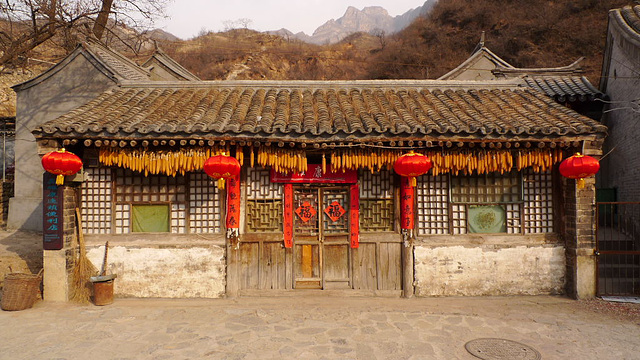

Cuandixia is a well-preserved Ming dynasty village nestled in the mountains near Beijing, famous for its traditional courtyard homes and ancient stone lanes. One of the most striking sights in Cuandixia, especially during harvest season, is the way villagers decorate their houses with rows of golden corn. This is not just for decoration—it's a practical tradition deeply rooted in rural life. After the corn harvest, families hang corn cobs on the walls, under the eaves, and across wooden racks outside their homes. This method helps the corn dry naturally, keeping it safe from pests and making it easy to store and use throughout the year.
Beyond its practical purpose, hanging corn is also a symbol of abundance and prosperity. It reflects the villagers’ pride in a successful harvest and adds a festive, welcoming atmosphere to the ancient stone houses. The bright yellow corn stands out beautifully against the grey Ming-era architecture, creating a unique blend of history, culture, and everyday life. In Cuandixia, this tradition connects the rhythms of the agricultural calendar with the village’s rich heritage, making it a living example of how practical needs and cultural values come together in rural China.
Beyond its practical purpose, hanging corn is also a symbol of abundance and prosperity. It reflects the villagers’ pride in a successful harvest and adds a festive, welcoming atmosphere to the ancient stone houses. The bright yellow corn stands out beautifully against the grey Ming-era architecture, creating a unique blend of history, culture, and everyday life. In Cuandixia, this tradition connects the rhythms of the agricultural calendar with the village’s rich heritage, making it a living example of how practical needs and cultural values come together in rural China.
(deleted account) has particularly liked this photo
- Keyboard shortcuts:
Jump to top
RSS feed- Latest comments - Subscribe to the comment feeds of this photo
- ipernity © 2007-2026
- Help & Contact
|
Club news
|
About ipernity
|
History |
ipernity Club & Prices |
Guide of good conduct
Donate | Group guidelines | Privacy policy | Terms of use | Statutes | In memoria -
Facebook
X

Sign-in to write a comment.