

Buddha
Buddha in shade
2009
牛
Vegetarian Buddha
Tu'er Ye
Tu'er Ye - a Chinese gay deity
Panjiayuan
Tree House
Zha zha café
Zakázané mesto
Zakázané mesto - vchod
Zakázané mesto
Zakázané mesto
Zakázané mesto
Zakázané mesto - hrncek
Zakázané mesto - lefi
Zakázané mesto
Zakázané mesto - zahrada
Zakázané mesto - zahrada
Zakázané mesto
Dragon wall
Zakázané mesto
Heil buddha?!
Buddha for sale
Yunnanese Buddha
Fancy tea sitting
Ripe dark tea
Corn-decorated House
Starý nápis
the New and the Old
Welcome home
Gate says the new year is coming
Nápisy IV.
Entrance
Traditional entrance
Our Night on the Kàng [炕] Warmth, Tradition, and a…
Dzedzina
Kuk
Nápisy III.
Nápisy II.
Nápisy I.
Cuàn - 爨
Cuàn - 爨
Zarastené terasovité políčka
Keywords
Authorizations, license
-
Visible by: Everyone -
All rights reserved
-
424 visits
Buddha
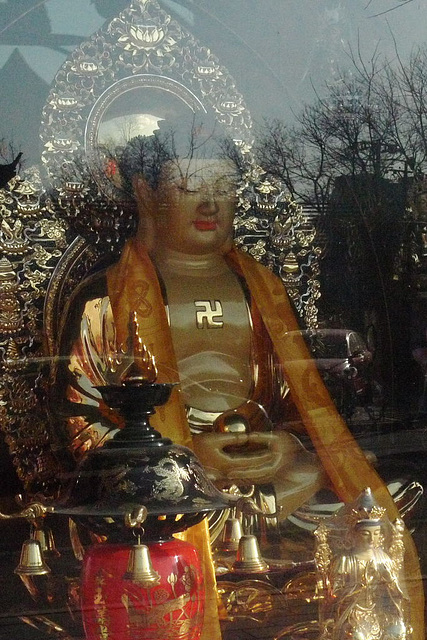

On Buddhist statues in China, the swastika (卍) on the Buddha’s chest is a mark of auspiciousness and eternity, deeply rooted in Asian religious art. The idea that the direction of the swastika—clockwise or counterclockwise—changes its meaning is a misconception; both forms have been used interchangeably in Buddhist imagery for centuries. The negative association stems solely from its 20th-century misuse in the West. In Chinese Buddhism, the swastika remains a revered symbol of the Buddha’s wisdom, virtue, and the harmonious order of the universe.
- Keyboard shortcuts:
Jump to top
RSS feed- Latest comments - Subscribe to the comment feeds of this photo
- ipernity © 2007-2026
- Help & Contact
|
Club news
|
About ipernity
|
History |
ipernity Club & Prices |
Guide of good conduct
Donate | Group guidelines | Privacy policy | Terms of use | Statutes | In memoria -
Facebook
X

Sign-in to write a comment.