

Kleiner Schillerfalter - Apatura ilia - Lesser pur…
Kleiner Fuchs - Optimal Sonne tanken - Optimal sun…
Der Admiral - Die Wärme der Sonne genießen - Enjoy…
Tagpfauenauge - Im prächtigen Hochzeitskleid - In…
Die Admirale sind schon da - The admirals are alre…
Segelfalter: einer der schönsten Tagfalter - Scarc…
Aurorafalter: Ich schlafe noch ... Orange tip: I a…
Kleiner Perlmutterfalter - Issoria lathonia - Quee…
Ein Winzling: Das Hornkraut-Tageulchen - A Tiny On…
Aurorafalter: Hilfe, ich stecke fest! - Orange Tip…
Langhornmotte: Länger geht's nicht - Longhorn Moth…
Der Mauerfuchs liebt die Wärme - The wall brown lo…
Hauhechel-Bläuling: Die erste Generation fliegt sc…
Schwarzaderspanner: Mein erster Fund - Black-veine…
Hauhechel-Bläuling: So schön bunt - Common blue bu…
Das Flockenblumen-Grünwidderchen: eine rare Schönh…
Die hohe Zeit der Schachbrettfalter - The high tim…
Kleiner Schlehen-Zipfelfalter: Ein eigenartiger Bl…
Happy wedding - Kaisermantel - Silver-washed friti…
1) Schachbrettfalter lieben violette Blüten - Marb…
2) Schachbrettfalter lieben violette Blüten - Marb…
Faulbaumbläuling: So zarte Farben - Holly blue: Su…
Kleiner Sonnenröschen-Bläuling: eine unauffällige…
Kleiner Feuerfalter - Lycaena phlaeas - small copp…
Faulbaum-Bläuling - Celastrina argiolus - Holly Bl…
Auch die Unterseite kann entzücken - The underside…
Der kümmerliche Rest - The meagre remainder
Auch ohne Zipfel kann man leben ... You can live e…
Ein Russischer Bär - A Jersey tiger - PiPs
Fressen und gefressen werden - Eating and being ea…
Der zweitkleinste Bläuling Mitteleuropas - The sec…
Bei der Balz - During mating
Zeit der Sonnenhüte - Time of the coneflowers
Nur für Hummeln und Schmetterlinge geeignet ... On…
Ein scheuer Waldbewohner - A shy woodland dweller
Ein ganz seltener Gast - A very rare guest - 2PiP
Insekten-Kamasutra (2)__Insect Camasutra (2) - PiP
Insekten-Kamasutra (1)__Insect Camasutra (1)
Mein Überraschungsfund - My surprise find
Der typische Schmetterling im Hochsommer - The typ…
Ein Liebhaber warmer Standorte ... A lover of warm…
Mit einem ganz langen Saugrüssel ... Equipped with…
Eine haarige Schönheit - A hairy beauty
Seid fruchtbar und mehret euch ... Be fruitful and…
Eine zarte Schmetterlingsfee - A delicate butterfl…

Location
Lat, Lng:
You can copy the above to your favourite mapping app.
Address: unknown
You can copy the above to your favourite mapping app.
Address: unknown
See also...
Keywords
Authorizations, license
-
Visible by: Everyone -
All rights reserved
-
686 visits
Zahnflügel-Bläuling (Polyommatus daphnis) - Meleager's blue
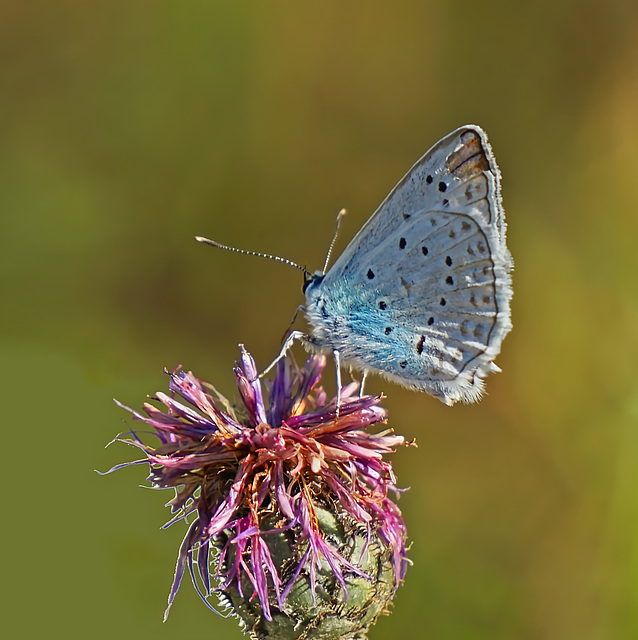

Seinen deutschen Artnamen hat er aufgrund der zahnreihenartigen Ausbuchtungen der Hinterflügelränder bekommen. Der Zahnflügel-Bläuling kann von Anfängern durch den gewellten Rand der Hinterflügel fälschlicherweise als Zipfelfalter eingeordnet werden, diese haben aber keine Punkte auf der Flügelunterseite (zitiert aus Zahnflügel-Bläuling wikipedia).
Diese Bläulingsart bevorzugt Wiesen auf kalkhaltigem Untergrund und ist in Deutschland recht selten. Er gilt als gefährdet bis sehr gefährdet. Das Photo zeigt ein Zahnflügel-Männchen.
It got its German species name because of the rows of teeth-like bulges on the edges of the hind wings. The Meleager's blue can be mistakenly classified as a hairstreak by beginners due to the wavy edge of the hind wings, but these have no dots on the underside of the wings (Zahnflügel-Bläuling wikipedia).
This species of blue prefers meadows on calcareous subsoil and is quite rare in Germany. It is classified as endangered to very endangered. The photo shows a male of the Meleage's blue.
Translate into English
Diese Bläulingsart bevorzugt Wiesen auf kalkhaltigem Untergrund und ist in Deutschland recht selten. Er gilt als gefährdet bis sehr gefährdet. Das Photo zeigt ein Zahnflügel-Männchen.
It got its German species name because of the rows of teeth-like bulges on the edges of the hind wings. The Meleager's blue can be mistakenly classified as a hairstreak by beginners due to the wavy edge of the hind wings, but these have no dots on the underside of the wings (Zahnflügel-Bläuling wikipedia).
This species of blue prefers meadows on calcareous subsoil and is quite rare in Germany. It is classified as endangered to very endangered. The photo shows a male of the Meleage's blue.
David Holland, Nouchetdu38, Fred Fouarge, Percy Schramm and 41 other people have particularly liked this photo
- Keyboard shortcuts:
Jump to top
RSS feed- Latest comments - Subscribe to the comment feeds of this photo
- ipernity © 2007-2026
- Help & Contact
|
Club news
|
About ipernity
|
History |
ipernity Club & Prices |
Guide of good conduct
Donate | Group guidelines | Privacy policy | Terms of use | Statutes | In memoria -
Facebook
X

wonderful
...obwohl er schon an der Flügelspitze leichte Alterserscheinungen aufweist...
Merci pour toutes ces informations.
Wünsche noch einen schönen Nachmittag,ganz liebe Grüße Güni :))
Sublime graciousness, cammino!
Sign-in to write a comment.