

cammino's photos with the keyword: Polyommatus daphnis
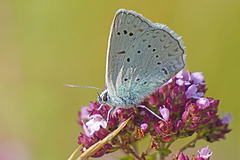
Ein gefährdeter Bläuling - An endangered blue butt…
| 19 Oct 2025 |
|
|
|
Bei uns in Franken sieht man gelegentlich einen seltsamen Bläuling, der gar nicht dem Bild eines Bläulings entspricht: Es ist der Zahnflügel-Bläuling (Polyommatus daphnis) . Er kommt egentlich in geringen Beständen in Süddeutschland vor. Er gilt als gefährdet. Im Bild ein Männchen. Die Aufnahme entstand in einem Naturschutzgebiet.
nwv-schwaben.de/Zahnflügel-Bläuling
de.wikipedia.org/wiki/Zahnfl%C3%BCgel-Bl%C3%A4uling
Here in Franconia, we occasionally see a strange blue butterfly that doesn't look like a blue butterfly at all: it's the Meleager's blue butterfly (Polyommatus daphnis) . It actually occurs in small populations in southern Germany. It is considered endangered. The picture shows a male. The photo was taken in a nature reserve.
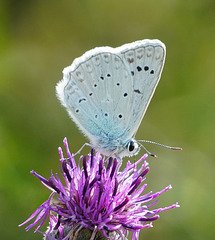
Zahnflügel-Bläuling: Fast ganz in Weiß - Meleager'…
| 22 Jul 2023 |
|
|
|
Meist bekommt man vom Zahnflügel-Bläuling (Polyommatus daphnis) nur die Unterseite zu sehen, weil er nach dem Landen sofort die Flügel zusammenklappt. Die Männchen zeigen dann ihre hellweiße, ganz leicht bläuliche Unterseite mit typischer schwarzer Zeichnung. Die Zahnflügelform ist nur schwach angedeutet (siehe Notiz). Im Gegensatz dazu sind die Weibchen etwas kleiner. Dazu ist deren Unterseite deutlich braun gefärbt. Außerdem ist die Zahnflügelform deutlich sichtbar ausgeprägt (siehe PiP).
Den Zahnflügel-Bläuling findet man in warmen, blütenreichen Biotopen mit Kalkboden. Die Raupe ernährt sich von verschiedenen Schmetterlingsblütlern und lebt in Symbiose mit bestimmten Ameisen, z.B. der Fremden Wegameise (Lasius alienus) und Großen Wiesenameise (Formica pratensis).Der Falter wird in der aktuellen Roten Liste Deutschlands als "gefährdet" eingestuft.
wikipedia_Zahnflügelbläuling
Biodiversität von Bläulingen und ihren Ameisenpartnern
Usually you only get to see the underside of the Meleager's blue (Polyommatus daphnis) because it folds up its wings immediately after landing. The males then show their bright white, very slightly bluish underside with typical black markings. The tooth wing shape is only faintly indicated (see note). In contrast, the females are somewhat smaller. In addition, their underside is clearly brown in colour. In addition, the tooth wing shape is clearly visible (see PiP).
The Meleager's blue is found in warm, flower-rich biotopes with calcareous soil. The caterpillar feeds on various papilionaceous plants and lives in symbiosis with certain ants, e.g. Lasius alienus and Formica pratensis.The butterfly is classified as "endangered" in the current German Red List.
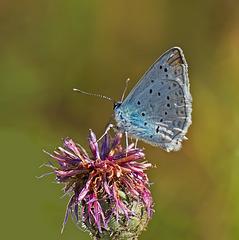
Zahnflügel-Bläuling (Polyommatus daphnis) - Meleag…
| 09 Feb 2023 |
|
|
|
Seinen deutschen Artnamen hat er aufgrund der zahnreihenartigen Ausbuchtungen der Hinterflügelränder bekommen. Der Zahnflügel-Bläuling kann von Anfängern durch den gewellten Rand der Hinterflügel fälschlicherweise als Zipfelfalter eingeordnet werden, diese haben aber keine Punkte auf der Flügelunterseite (zitiert aus Zahnflügel-Bläuling wikipedia ).
Diese Bläulingsart bevorzugt Wiesen auf kalkhaltigem Untergrund und ist in Deutschland recht selten. Er gilt als gefährdet bis sehr gefährdet. Das Photo zeigt ein Zahnflügel-Männchen.
It got its German species name because of the rows of teeth-like bulges on the edges of the hind wings. The Meleager's blue can be mistakenly classified as a hairstreak by beginners due to the wavy edge of the hind wings, but these have no dots on the underside of the wings ( Zahnflügel-Bläuling wikipedia ).
This species of blue prefers meadows on calcareous subsoil and is quite rare in Germany. It is classified as endangered to very endangered. The photo shows a male of the Meleage's blue.
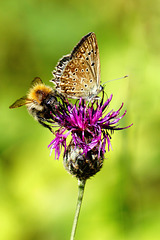
Kein Streit um den Nektar - No quarrel about the n…
| 04 Aug 2020 |
|
|
|
Im Bild ein Weibchen vom Zahnflügel-Bläuling (Polyommatus daphnis) und eine Hummel, welche friedlich den Nektar aus einer Flockenblume saugen. Der Name des Bläulings bezieht sich auf die auffällige Form des Hinterflügel-Randes mit zahnreihenartigen Ausbuchtungen (siehe Notiz im Bild). Diese Schmetterlingsart ist in Deutschland stark gefährdet und steht auf der Roten Liste. Die Aufnahme entstand an einem heißen Wegrand in der Nähe eines aufgelassenen Kalksteinbruchs.
de.wikipedia.org/wiki/Zahnfl%C3%BCgel-Bl%C3%A4uling
In the picture a female of Meleager's blue (Polyommatus daphnis) and a bumblebee peacefully sucking the nectar from a flake flower. The name of the blue refers to the striking shape of the back-wing edge with tooth row-like bulges (see note in picture). This butterfly species is highly endangered in Germany and is on the Red List. The picture was taken at a hot wayside near an abandoned limestone quarry.
Jump to top
RSS feed- cammino's latest photos with "Polyommatus daphnis" - Photos
- ipernity © 2007-2026
- Help & Contact
|
Club news
|
About ipernity
|
History |
ipernity Club & Prices |
Guide of good conduct
Donate | Group guidelines | Privacy policy | Terms of use | Statutes | In memoria -
Facebook
X
