

Ein Märzenbecher in der Froschperspektive - A frog…
Der Frühling wird eingeläutet - Spring is heralded
Keine Angst: Es ist nur eine große Waldschwebflieg…
Frohe Ostern - Happy Easter - Joyeuses Pâques - Bu…
Die Königin der Frühjahrsblumen - The queen of spr…
Der Frühling ist nah - Spring is near
Schnell mal Nektar tanken ... Quickly suck some ne…
Die Zeit der Frühlingsblumen endet - The time of s…
Landschaft in Rot - Landscape in red
Ein seltenes Ackerwildkraut - A rare field weed
Ein zarter Frühlingsbote - A delicate harbinger of…
Hineingefressen in eine Löwenzahnblüte ... Burrowe…
"Eulen", die am Tag fliegen - "Owls" that fly duri…
Auf die Spitze getrieben - The Tip of a Flower
Die ersten Kuhschellen zeigen sich - The First Pas…
Angeknabbert - Nibbled - 2
Angeknabbert - Nibbled -1
Magnolienpracht im Kaisergarten - Magnolia splendo…
Bunte Eleganz - Colourful elegance
Frühlingsboten - Heralds of spring
Eine stachelige Schönheit - A prickly beauty
Eine Giftpflanze aus dem Garten - A poisonous plan…
Keine Angst vor Wanzen! Don't be afraid of bugs!
So weit die Füße tragen - As far as my feet will c…
Strahlende Sonnen - Brilliant suns
Kleine Struwwelpeter | Little tousle-heads
Bauernbübchen ... Grape hyacinth ...
Brüderchen und Schwesterchen - Common lungwort
Goldene Frühlingssonnen - Golden spring suns
Ein Lichtblick im Wald - A bright spot in the fore…
Trotz Krise sich am Leben erfreuen - Enjoying life…
Er ist's - It's him
Reinheit - Purezza - Purity
Nicht stören - Don't disturb - 2 PiP
Kleine Diamanten - Small diamonds
Frühlingsanfang - Beginning of spring - PiP
Biogerste für Biobier - Organic barley for bio bee…
Eine Versammlung kleiner Stachelmännchen - A gathe…
Ganz schön haarig - Pretty hairy
Die Magnolienzeit geht zu Ende - The Magnolia seas…

1/160 • f/4.0 • 90.0 mm • ISO 5000 •
SONY ILCE-6400
FE 90mm F2.8 Macro G OSS
EXIF - See more detailsSee also...
Keywords
Authorizations, license
-
Visible by: Everyone -
All rights reserved
-
706 visits
Die Blumenkönigin des Waldes - The flower queen of the woods
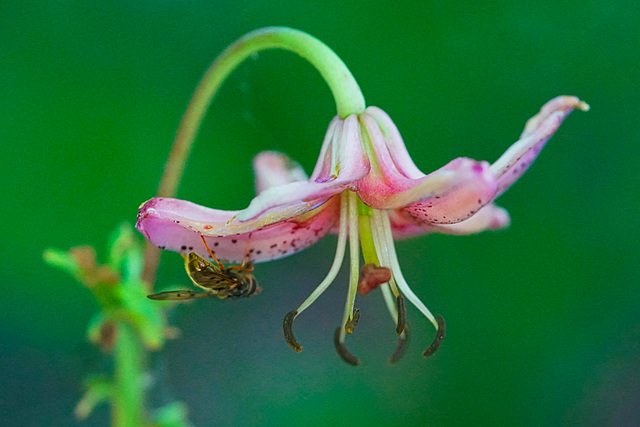

In vielen unterfränkischen Laubmischwäldern kommt vereinzelt der Türkenbund (Lilium martagon) vor. An der Spitze der etwa 50 cm großen Pflanze erscheint im Lauf des Monats Juni die Blütenrispe mit ca. 5 cm großen Einzelblüten, die Schwebfliegen wie magisch anziehen und die dann für die Bestäubung verantwortlich sind. Die Blütenknospen des Türkenbundes werden von Rehen gerne abgefressen und auch das Insekt Lilienhähnchen (bekannt aus dem Garten) schädigt die Pflanze erheblich, so dass viele Türkenbundpflanzen nicht zur Blüte kommen. Der Türkenbund ist in Deutschland im Bestand nicht gefährdet, dennoch ist er nach Bundesartenschutzverordnung geschützt.
Das Foto entstand in einem unterfränkischen Laubmischwald (Kalkboden) als Handaufnahme ohne Blitz. Für mich ist die Blüte der Türkenbund-Lilie die schönste aller Waldpflanzen wegen ihrer eleganten Blütenform und der feinen Pastellfarben.
de.wikipedia.org/wiki/T%C3%BCrkenbund
The Turk's cap lily (Lilium martagon) occurs sporadically in many mixed deciduous forests in Lower Franconia. At the top of the plant, which is about 50 cm tall, the flower panicle appears in the course of June with individual flowers about 5 cm in size, which magically attract hoverflies and which are then responsible for pollination. The flower buds of the Turk's cap are frequently eaten by deer, and the insect red lily beetle (known from the garden) also causes considerable damage to the plant, so that many Turk's cap plants do not come into flower.
The photo was taken in a mixed deciduous forest in Lower Franconia (limestone soil) by hand without flash. For me, the flower of the Turk's-cap lily is the most beautiful of all forest plants because of its elegant flower shape and the fine pastel colours.
Translate into English
Das Foto entstand in einem unterfränkischen Laubmischwald (Kalkboden) als Handaufnahme ohne Blitz. Für mich ist die Blüte der Türkenbund-Lilie die schönste aller Waldpflanzen wegen ihrer eleganten Blütenform und der feinen Pastellfarben.
de.wikipedia.org/wiki/T%C3%BCrkenbund
The Turk's cap lily (Lilium martagon) occurs sporadically in many mixed deciduous forests in Lower Franconia. At the top of the plant, which is about 50 cm tall, the flower panicle appears in the course of June with individual flowers about 5 cm in size, which magically attract hoverflies and which are then responsible for pollination. The flower buds of the Turk's cap are frequently eaten by deer, and the insect red lily beetle (known from the garden) also causes considerable damage to the plant, so that many Turk's cap plants do not come into flower.
The photo was taken in a mixed deciduous forest in Lower Franconia (limestone soil) by hand without flash. For me, the flower of the Turk's-cap lily is the most beautiful of all forest plants because of its elegant flower shape and the fine pastel colours.
Berny, Ruebenkraut, Traktor 49, Erika Akire and 44 other people have particularly liked this photo
- Keyboard shortcuts:
Jump to top
RSS feed- Latest comments - Subscribe to the comment feeds of this photo
- ipernity © 2007-2026
- Help & Contact
|
Club news
|
About ipernity
|
History |
ipernity Club & Prices |
Guide of good conduct
Donate | Group guidelines | Privacy policy | Terms of use | Statutes | In memoria -
Facebook
X

Wünsche noch einen schönen Nachmittag,ganz liebe Grüße Güni :))
cammino club has replied to Fred Fouarge clubMerci pour le groupe :
Nature's miracles
All Flowers Group
.
www.ipernity.com/group/194694
Sign-in to write a comment.