

Andrew Trundlewagon's photos

Coombes church DSC 4870
| |
|
|
|
When I was in England I did a short walking trip to visit as many old flint-walled churches as I could fit in. This is Coombes Church, in Sussex close to the Adur between Bramber and Shoreham. It is a hard one to find as access is by a footpath through a farm and it is hidden from view. I walked quite a long way beyond it before I realized my mistake. Its date is uncertain, but it is Saxon with later additions. Although it is a very humble building, the interior is decorated with original frescoes, also of uncertain date. One estimate suggests they predate the Norman Conquest, another suggests a date in the 1130s.
www.ipernity.com/doc/319515/52555632
www.ipernity.com/doc/319515/52555634

river Adur St Botolphs DSC 4775
| |
|
|
|
St Botolph's church Sussex. A church has been here since before the Norman Conquest. This has been rebuilt, repaired and modified at various time since. One of the interesting artifacts inside the church is a banner dating from the reign of King Charles II (1660 to 1685).

River Adur St Nicholas Shoreham DSC 4722-2
| |
|
|
St Nicholas Shoreham: A church of some kind has been in or around this site since 481. This church retains some Saxon structure but was highly modified in about 1140, and at various times since.

Poynings, Holy Trinity 14th century DSC 4581
| |
|
|
|
Holy Trinity church, Poynings in Sussex, UK , nestled at the foot of the South Downs. It is 14th century.

Squid shop 20251021 121053(1)

Cardinal in winter DSC 9717(1)
| |
|
|
|
A male cardinal in the snow. At this time of year so much is black and white or shades of grey, so the flash of colour these birds bring is always welcome.
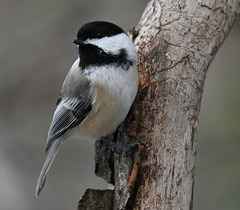
Black-capped chickadee SC 9703(1)
| |
|
|
|
A black-capped chickadee. Despite their small size, the chickadees stay around all winter no matter how cold it gets and add some life to the otherwise rather bleak environment.
They travel in flocks, especially in winter, and stash food in many different hiding places. Their memory is exceptional and allows them to retrieve the hidden food as they need it. In autumn, the part of their brain responsible for spatial memory (hippocampus) grows in size to retain the knowledge of where the food is stored, and shrinks again in the spring when they no longer need to retain the information.

Blue Jay_DSC 9496(1)

Waiting for the Train that Never Comes_DSC 5652(2)
| |
|
|
|
On the abandoned railway track at Folkestone Harbour Station, the "Rug People" is an enigmatic sculpture by the German artist Paloma Varga Weisz (2011). Trains don't come here anymore, but for decades it was a busy terminus for the Channel crossing to Europe. Many soldiers left from here for the mayhem of World War I. Who are the the travellers? Why are they bound together? Why are they are wrapped in blankets and rugs? Why are they "Waiting for the train that never comes".
www.youtube.com/watch?v=z6pF1CwjKpA

yellow iris CSC 0114
| |
|
|
|
A yellow iris growing wild. These are not native to our area, but have escaped from gardens and grow unsupervised in wet, marshy areas.

Shin Ike pond DSC 6731
| |
|
|
|
The Shin-Ike pond, Kyoto. The red building jutting into the water is the Kumataka Shinto shrine which helps find lost people.

Bell Tower DSC 7575 1(1)

Skyline by night Toronto_DSC 9472

Sunset and sleds 2025-12-02 163904

Winter by a lake_DSC 8727(1)

Two birds on a stick_DSC 7912(1)

Kinkaku-ji DSC 6947(1)
| |
|
|
|
Kinkaku-ji. The Golden temple, Kyoto. The current building is relatively young as the original was burned to the ground by a deranged monk in the 1950s.

