Andrew Trundlewagon's photos

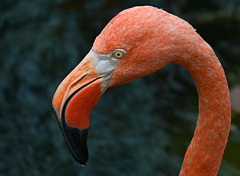
st bruno may 16 2026 cardinal DSC 0876-3

White trillium DSC 1053

Magnolia DSC 0857

British library Newton Eduardo Paolozzi-1995 DSC 6…
| |
|
|
|
Newton, at the British Library, London. A statue by Eduardo Paolozzi, 1995, that is based on William Blake's print "Newton: Personification of Man Limited by Reason." Blake was not a fan, and I wonder what Newton, who was deeply religious, would have thought of being portrayed naked for all the world to see?

Ant DSC 0985(1)(1)

st bruno may 16 2026 service berry DSC 0841
| |
|
|
|
The flowers of the serviceberry tress (shadberry or Amelanchier), growing beside a small lake, St. Bruno, Quebec.

wild sweetpea st bruno DSC 3078
| |
|
|
|
Narrow-leafed sweet pea. This is an invasive plant from Europe that has "gone wild" in parts of Canada.

car park moon 20260202 072107(1)
Wallenberg 20260511 084420(1)(1)
| |
|
|
|
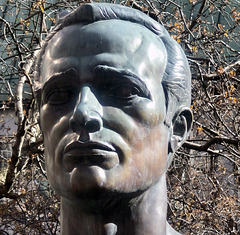
The bronze head of Raoul Wallenberg, from a church garden in central Montreal. Wallenberg was a Swedish businessman and diplomat who, at great personal risk, worked in Budapest to rescue Jews from deportation during the Second World War. He was arrested by the Soviet forces as they advanced across Europe and "disappeared". It is assumed he died in captivity, although the details of his death are a mystery.
en.wikipedia.org/wiki/Raoul_Wallenberg

Feathers DSC 0579

Fern st bruno-may 2026-DSC 0490-x
Forillon Day two Cap St Albans to Perce DSC 4983
| |
|
|
|
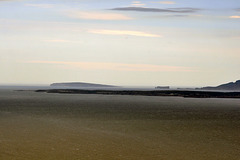
The Gulf of St. Lawrence, Quebec, from Cap St. Albans, Forillon, looking towards Percé and l'Île Bonaventure, Gaspé Peninsula as the ocean and the river meet.

melting+DSC 0546
| |
|
|
Ice cold melt water rushing downstream.(It looks like a black and white photo, but it was taken in full colour).

lichen mile oak IMG 20231010 154555
| |
|
|
|
This was taken a few years ago, from a walk on the South Downs in Sussex, England. I don't know much about lichens (almost nothing in fact) but this looks like two different forms growing together.

Hepatica_DSC 0257
| |
|
|
|
Round-leaved hepatica, one of the first woodland wildflowers to bloom in the spring before the leaves on the trees open and shade the ground.

Winter raccoon DSC 0089(1)
| |
|
|
|
A young raccoon in winter searching for food. They sleep most of the winter, coming out only in the warmer spells to feed. Raccoons are usually nocturnal but feed by day in the winter to avoid the colder temperatures at night.

DSC 0253