

Flower of Ladies finger / Okra
Monstera Deliciosa / Swiss cheese plant
Worlds in world
Perspective. Gurupura bridge
Joseph Hooker, Charles Lyell, and Charles Darwin.
Writing on the Wall
Gourmet Uzbek Turkish
Girl with Red Hat
Standing on the edge of a cliff
A store
Nirvana
Charles Darwin on Music
Fork & knife
Figure 8
Disuse of organs
ON THE ORIGIN OF SPECIES
JOLENE
Sandwalk
Darwin' daughter Annie; <b>his heart’s favorite, H…
Sunflower
Sunflower
Plate 7.3
Rambutan
Information for the wayfarer
Angled Luffa, Silk squash ~ Chinese Okra
Pins
Winter morning
Farmer's Market
I respect you.....
Fluffy Mould
An orangutan attacked by Dayaks
Avocado
Morning
Soil
THE NATIONAL GEOGRAPHIC MAGAZINE ~ JUNE 1931
Kartikeya / Muruga
Waimea Trees
Years ago
Roses
Keywords
Authorizations, license
-
Visible by: Everyone -
All rights reserved
-
84 visits
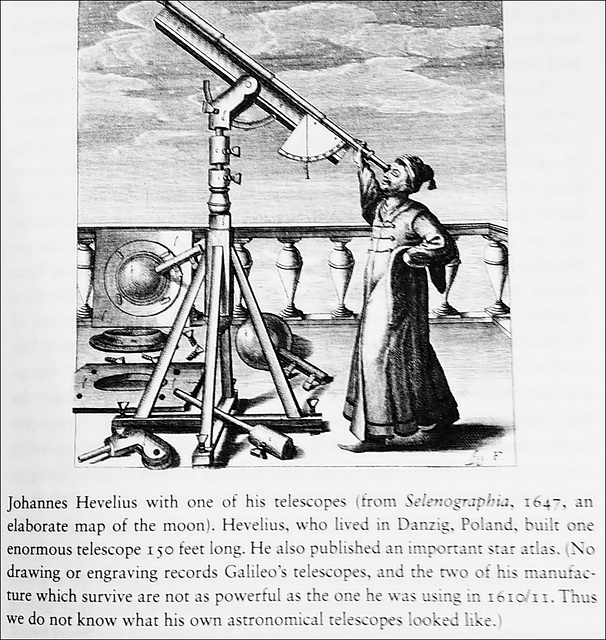
Telescope

Peter_Private_Box, Marije Aguillo, J.Garcia and 2 other people have particularly liked this photo
- Keyboard shortcuts:
Jump to top
RSS feed- Latest comments - Subscribe to the comment feeds of this photo
- ipernity © 2007-2026
- Help & Contact
|
Club news
|
About ipernity
|
History |
ipernity Club & Prices |
Guide of good conduct
Donate | Group guidelines | Privacy policy | Terms of use | Statutes | In memoria -
Facebook
X

Once the telescope was in use, it was not long before another, related device was invented: the microscope. Galileo may have been first to use the telescope to view objects close up, thus setting the stage for the invention of the new instrument. A student of his reported that in 1610 Galileo had used an inverted telescope to observe “a certain insect in which each eye is covered with a rather thick membrane, which is perforated with seven holes like a visor of a warrior to allow it sight.” Five years later Giovanni du Pont described how Calileo had used the device to discover that flies could walk upside down on glass because they were “inserting the points of their nails in the pores of the glass.” by sometime between 1620 and 1624, Galileo was constructing a special kind of microscope that he called an ‘occhialiono,’ or little eye, for the purpose of, as he put it, “observing minute objects closely.” ~ Page 62
Sign-in to write a comment.