

I respect you.....
Farmer's Market
Winter morning
Pins
Angled Luffa, Silk squash ~ Chinese Okra
Information for the wayfarer
Rambutan
Plate 7.3
Telescope
Flower of Ladies finger / Okra
Monstera Deliciosa / Swiss cheese plant
Worlds in world
Perspective. Gurupura bridge
Joseph Hooker, Charles Lyell, and Charles Darwin.
Writing on the Wall
Gourmet Uzbek Turkish
Girl with Red Hat
Standing on the edge of a cliff
A store
An orangutan attacked by Dayaks
Avocado
Morning
Soil
THE NATIONAL GEOGRAPHIC MAGAZINE ~ JUNE 1931
Kartikeya / Muruga
Waimea Trees
Years ago
Roses
A green bench
Fig.133 Pointing Lady
Fig. 81 ~ Leda and the Swan
E O Wilson and President Carter
Crab Apple
Bus stop
99 C. only
Red, Red Rose
Sticker
Sushi ~ Veggi

See also...
Keywords
Authorizations, license
-
Visible by: Everyone -
All rights reserved
-
134 visits
- Keyboard shortcuts:
Jump to top
RSS feed- Latest comments - Subscribe to the comment feeds of this photo
- ipernity © 2007-2026
- Help & Contact
|
Club news
|
About ipernity
|
History |
ipernity Club & Prices |
Guide of good conduct
Donate | Group guidelines | Privacy policy | Terms of use | Statutes | In memoria -
Facebook
X

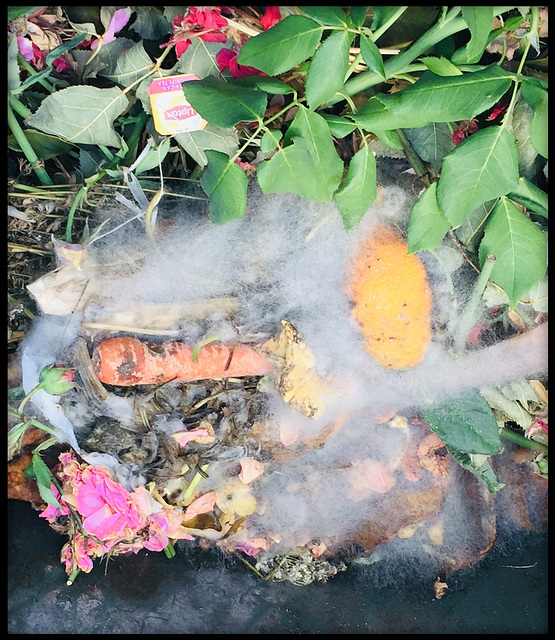
Microorganisms such as bacteria and fungi are part of a normal composting process and responsible for the decomposition of waste.
You may notice white fluffy mould in the HOTBIN, this is nothing to be concerned about and is actually an indicator that actinomycetes (a fungus-like bacterium) are present in your HOTBIN.
What Do Actinomycetes Bring to Composting?
Actinomycetes help digest and break down plant material, ordinarily their presence is a good indication that the tough fibrous material in the HOTBIN is being successfully decomposed and the bacterium is helping to create a well-balanced compost which is a rich, deep brown in colour and contributes towards a noticeable “earthy” odour.
The presence of actinomycetes is usually associated with the addition of grass and tougher fibrous materials in damp, warm conditions. Actinomycetes are especially effective in dealing with lignin associated with newspapers and woody materials.
What Should I Do?
Moving forward this bacterium is in no way harmful – just unsightly. We would recommend you continue to feed your HOTBIN every couple of days with fresh waste, paper and bulking agent to keep the internal temperatures high as possible and the fungal growth can be mixed in with new waste if you choose to do so.
Sign-in to write a comment.