

tarboat's photos
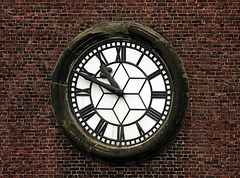
Back in action
| |
|
Having been stopped for some time the Christ Church clock is now back in action following attention from a well known Whitchurch based clock manufacturer and repairer.

Bricks
| |
|
All wrapped up and ready to go. The finished product at Claughton brickworks near Lancaster.
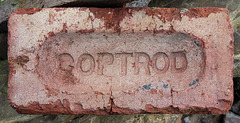
Coptrod
| |
|
I hadn't previously heard of the Coptrod brickworks, but a search reveals that the works was on Mellor Street in Rochdale and opened some time in 1908.
Tramway incline
| |
|
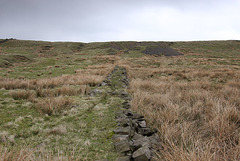
The coal from the shaft seen in the previous image was brought down this incline and through a tunnel to reach a staithe near the main road. Looking uphill to the collliery site, the embankment is made of random gritstone pieces.
Colliery staith
| |
|
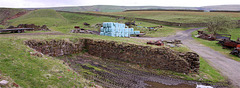
At the end of the tramroad seen in the previous image was this staith where the coal was transferred to carts for delivery to customers around the area. The tramroad emerged from a tunnel on the top left side and ran in front of the bales to, I assume, tipplers on top of the wall for loading carts.
Shaft top
| |
|
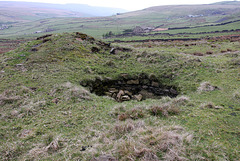
In a land of drift mines it was a slight surprise to find this shaft top whilst roaming the hills. Nice ginging. :-)
Ferrybridge 'C'
| |
|
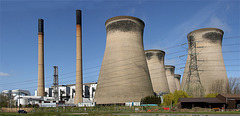
Scottish and Southern Energy plc currently operate the 2000 megawatt power station at Ferrybridge. This station first generated electricity in 1966.
Daw Mill sidings
| |
|
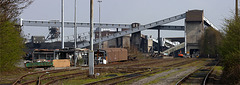
Not much action in the loading sidings at Daw Mill Colliery on this particular sunday.

Odlum's wharf
| |
|
|
Odlum's Sallins oatmeal mill is situated part way up the Naas branch of the Grand Canal in Country Kildare. The corrugated iron clad structure once provided cover and storage for grain being unloaded from barges.
William Odlum opened his first flour mill in 1845 and subsequently his two sons, William P. and Richard Odlum established the company W.P. & R. Odlum. In the early 20th century, the company operated as many as nine mills but consolidation reduced that number to the three flour mills in Dublin, Cork, and Portarlington and an oatmeal mill in Naas. The company remained in family hands until 1988 and is now owned by Origin Enterprises. The Sallins mill was closed in 2008.
Loading the peat
| |
|
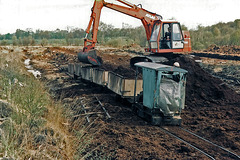
Lindow Moss peat railway with loading underway on a typical train. The unstable nature of the surface and trackbed is evident in the varying angles of wagons, excavator and locomotive. May 1985.
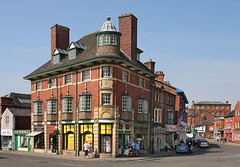
Sanders Buildings
| |
|
Sanders Buildings provides for a range of commercial and residential occupancy. Completed in 1894 this distinctive building stands at the junction of Haywood St and Derby St in Leek. The building was designed for William Sanders by one of the Sugdens in 1894. Mr Sanders, a florist and seedsman and Mr William Mears, an outfitter, both occupied the premises. The building later became known locally as Mears' Corner when James Mears, William Sander's nephew took over the florists business, and shared the premises with Mear's clothiers. The Sanders Buildings became Mears the greengrocers in later years.
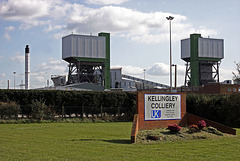
Kellingley Colliery
| |
|
Often referred to as the 'Big K', the Kellingley pit was sunk between 1958 and 1965 when the first coal was raised. The No.1 shaft on the left is 791m deep and is used for man riding and materials. The upcast is 768m deep and can raise coal at up to 900 tonnes per hour. Coal is mainly supplied to local power stations with a small amount of house coal also produced.
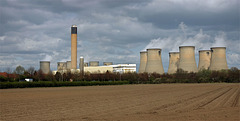
Drax
| |
|
Drax is Britain's largest power station. Operated by Drax Power Ltd, it has a capacity of 3,870Mw.
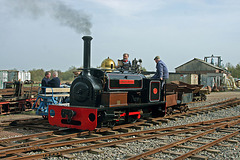
Edward Sholto
| |
|
|
Edward Sholto was built in 1909 by Hunslet for Penrhyn slate quarry. The original cost was £600. It is named after Edward Sholto Douglas-Pennant who inherited the Penrhyn estates upon the death of his father in 1907. Laid up in 1956 it was sold in 1961 and exported to Canada in October of that year. It never steamed there and changed hands several times before being purchased by Andrew Neale and repatriated in July 2006. Andrew and his small team have since done a marvellous restoration job which resulted in the locomotive returning to steam in 2010.
It is seen here in action with two quarry trucks at its base at the Moseley Railway Trust, Apedale Heritage Centre. This was a special event in conjunction with the AGM of the Industrial Railway Society which was held in one of the locomotive sheds.
Andrew Neale, seen here on the far left, is particularly proud of the fact that the locomotive still comprises most of the original metalwork from when it was delivered by Hunslet in 1909; even the firebox wrapper is original. He puts this down to the workshop practice at Penrhyn where locomotives were repaired one at a time and therefore there was less opportunity for swapping parts than at Dinorwic where two locomotives could be under heavy repair at the same time and the good bits of both would be used to get one back in service as quickly as possible.
Passing Beeston
| |
|
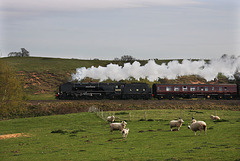
A black painted Duchess of Sutherland at Beeston with the Welsh Dragon tour heading for Holyhead. Thanks to Eagle142 for the transport and general good company.
Collie corner
Lawton's Famous Pies
| |
|
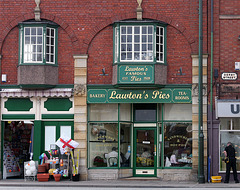
Mrs Tarboat and I spent a happy morning mooching around Leek and then adjourned to Lawton's pie shop to partake of the delights purveyed therein. It is one of life's great pleasures to tuck in to a nice steak pie with chips and gravy, all washed down with a big mug of tea.
D Sharratt & Sons, Elland
| |
|
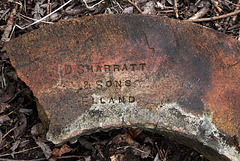
A very large piece of firebrick seen at Jubilee Colliery coke ovens, in Shaw near Oldham, where it had formed part of the flue lining.
David Sharratt was in business manufacturing firebricks at Elland by 1860. By 1917 the firm was David Sharratt & Sons Ltd. The company operated several fireclay mines in Elland. Storth was the longest lasting but there were also Tonge Royd and Ainley Grange which were being worked in 1940.
