tarboat's photos

Longmore Walsall
| |
|
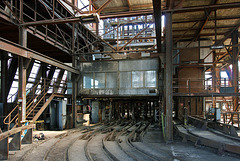
William Longmore's, Hopyard Brick Works, Bentley, Walsall opened c1900 and closed just after WWII.
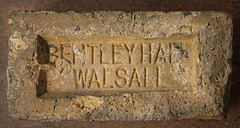
Bentley Hall, Walsall
| |
|
The Bentley Hall Brick Company Ltd. was founded in 1933. The 80 acre site had previously been extensively mined and much of the material used came from the spoil heaps. The 1938 OS map shows the Hoffman continuous kiln capable of burning over 200,000 bricks a week and 3 rectangular kilns on the site.
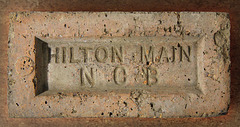
Hilton Main NCB
| |
|
Hilton Main brickworks comprised four continuous kilns situated just south-west of the shafts at Hilton Main Colliery. The National Coal Board continued to produce bricks here after nationalisation until 1967. The colliery closed two years later.

High Carr No.4 Mine
| |
|
Winding house and tippler at High Carr No.4 Mine operated by the Great Row Colliery Co.Ltd. The road sign in the background is at the Junction of the A500 ('D Road') and the A34.
Heading for Jinpeng
| |
|
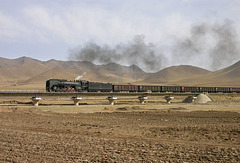
Westbound on the approaches to the Jinpeng section of the Jitong Railway, this QJ is digging in for the big climb.
Fuxin repair shop
| |
|
|
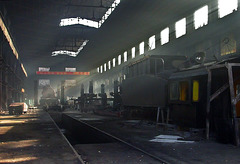
Access to the workshops of the Fuxin Mining Administration was difficult as permission was always refused by the management on site. I managed to obtain this shot of an SY undergoing a heavy repair by walking in at shift change before management arrived. Nobody stopped me and I grabbed a few shots and departed before anyone in authority noticed. :-)
White-legged Damselfly
| |
|
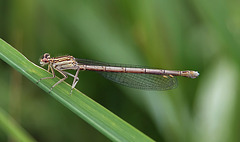
The White-legged Damselfly ( Platycnemis pennipes ) only appeared in Cheshire in 2007 when the first specimens were seen on the Dee around Farndon. The species has probably migrated northward from the Severn where there are good populations. A walk at Farndon this afternoon proved that they are still present when I spotted this teneral female on the riverbank.

Going underground
| |
|
Actually, I think it's coming out from underground. Production in full swing at Eckington Colliery.

To the collieries
| |
|
|
Empty wagons across the desert on the branch to the deep mines at Sandaoling. Photo by Tarboat junior.
Corus Shotton
Waterloo Mills, Leek
| |
|
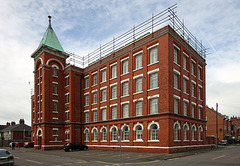
Waterloo Mills were erected in 1894 for William Broster & Co who manufactured silk sewing threads. Even in 1985 under the ownership of a company called 'Lux Lux' business was booming and the mills were manufacturing a wide range of lingerie and nightwear. Today the premises have been converted into luxury apartments.

Phoenix Brickworks, Barrow Hill
| |
|
The company's original name was Campbell Brickworks and was built adjacent to the now defunct Campbell colliery. Following successive Nationalisation and De-nationalisation programmes involving both the Coal Board and the British Steel Corporation it was sold by BSC to a private company, Innes Lee Industries, in 1971. In 1988 Innes Lee sold their brickworks to Tarmac Building Materials, who ran the site for four years before its closure in 1992. The company was then purchased by the present owners in May 1993, and reopened as Phoenix Brick Company Limited.
The kilns are fired on methane extracted from landfill in the old claypits.
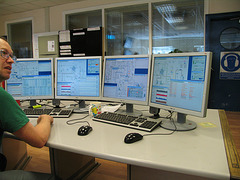
Control
| |
|
Control room at the UPM paper mill, Shotton, Deeside. The pulping process and feed to the two paper-making machines is managed from here. The output is also quality checked in real time. Everything at the click of a mouse.
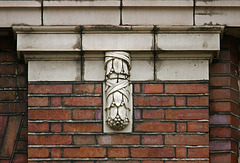
Hops
| |
|
This detail on the 1923 built Grey Horse pub in Oldham is, I think, a rather stylised hop motif. This pub stands on the corner of Union Street and Peter Street and is know named The Castle.
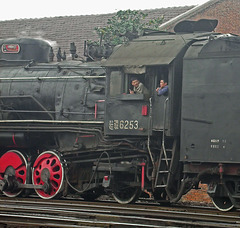
Men at work
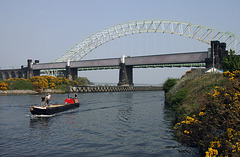
Passing the Runcorn bridges
| |
|
The tanker narrowboat passes the road and rail bridges at Runcorn on its journey down the Manchester Ship Canal to Ellesmere Port.
Runpast problems
| |
|
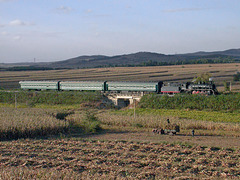
SY1749 is seen with a passenger train on the Faku branch to the west of Diaobingshan on the Tiefa mining railway system. The mining company had agreed to run this special train in between the coal and passenger services on the branch and had also agreed to a number of photo runpasts. This would have been wonderful apart from the problem that the crew were completely unaware of the requirements of the photographers. The runpasts turned into a series of trains coasting gently past. No amount of pleading and bribery would persuade them to make a bit of steam and smoke and some spirited running for the video people. They were just too professional and used to using minimum steam and making as little smoke as possible!