

tarboat's photos
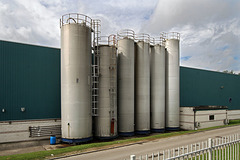
Promens, Queensferry
| |
|
|
Promens' Deeside factory specialises in the manufacture of industrial packaging for dangerous substances including chemicals such as agrochemicals, detergents, and lubricating oil. The main processes are extrusion blow moulding and injection moulding.
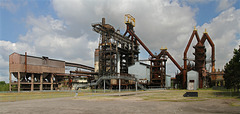
Uckange
| |
|
The steelworks at Uckange was last operated by Lorfonte. In 1991 the works was closed and the No.4 blast furnace and Cowper stoves have been preserved.
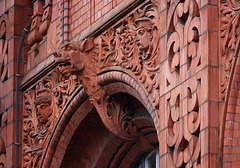
17-19 Newhall St, Birmingham
| |
|
|
The Bell-Edison Telephone Building was completed in 1896 to the design of architect Frederick Martin of the firm Martin & Chamberlain. Whilst fairly plain at ground level, the upper storeys feature a rich variety of terracotta ornamentation.
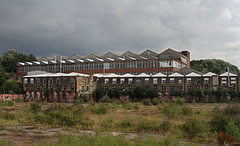
Spotland Mill
| |
|
This cotton-weaving mill was started 1855 by Samuel Turner. He and his three sons, John, Samuel II and Robert traded as Turner Bros and diversified into the manufacture of cotton packings for valves and glands. In 1879 they started spinning and weaving asbestos which by then was being imported from Canada and proved a better material for packings. By 1900 they were making asbestos yarns, cloth, and hair belting as well as packings. In 1920 they formed a new copmany Turner & Newall with the Washington Chemical Co. in County Durham, Newall's Insulation Co. and J. W. Roberts of Leeds. In 1925 they acquired Ferodo of Chapel-en-le-Frith, Derbyshire, manufacturers of brake linings. At one time this was the largest asbestos factory in the world, equipped with modern asbestos carding, spinning and doubling machines and looms, plaiting machines.
Subsequent legislation against asbestos due to its disastrous effect on health of workers and anyone coming into contact with its fibres has seen the industry collapse and the lodging of massive compensation claims. Large sections of the mill have been demolished although some parts remain in other industrial use.
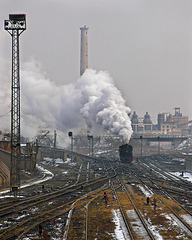
Industrial Baiyin
| |
|
SY 0206 charges into Gongsi Yard at Baiyin with the lead/zinc smelter and shot tower behind.
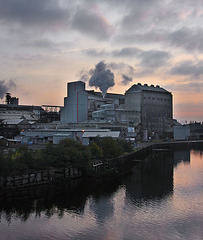
Winnington Dusk
| |
|
The Brunner Mond soda ash factory at Winnington viewed across the River Weaver from Anderton
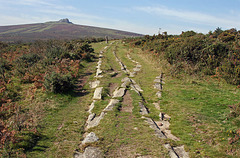
Siding
| |
|
Passing place on the upper reaches of the Haytor Granite Tramway.
The Haytor Granite Tramway was opened in September 1820 by George Templer to carry stone from his quarries around Hay Tor down to the Stover Canal for onward shipping. It is remarkable for the rails being made of the same material as its intended traffic. It operated until the late 1850s when competition from rail served quarries caused a significant decline in demand.
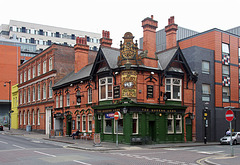
The Queens Arms
| |
|
|
Mitchells and Butlers' Gold Medal Ales to the fore at The Queens Arms, 150 Newhall St, Birmingham. I used to enjoy their Springfield Bitter and Highgate Mild many years ago before brewery takeovers and closures swept them away.
Heading for Quorn
| |
|
|
|
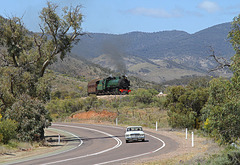
Beyer Peacock 4-8-2 W934 heads the morning service from Port Augusta above Woolshed Flat on the Pichi Richi Railway. The line is well suited to car chasing for most of the way to Quorn although a lot of the locals seemed to want to stand right next to the track photographing rivets and buffers!
Cimescaut, Antoing
| |
|
|
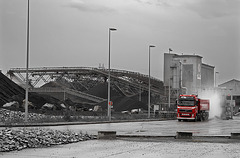
The Cimescaut site specialises in production of limestone aggregates using stone from the adjacent quarry. It has a capacity of up to 20,000 tonnes of crushed rock per day shipped by road and water.
Gibfield Colliery Baths
| |
|
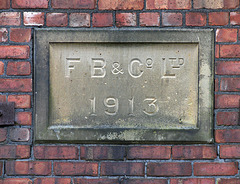
Plaque on the end wall of the former baths at Gibfield Colliery. Coal owners Fletcher Burrows & Co Ltd erected the first purpose built colliery bath house in Britain at Gibfield Colliery in 1913 after a trial of an adapted building at their Howe Bridge Colliery. The colliery closed in 1963 but the building survives as a car repair and maintenance garage.
Rupert Street, Nelson
| |
|
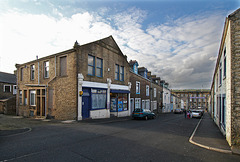
Former Co-op in one of the many terraced street around Nelson continues partly in use selling groceries. The weaving mill at the bottom of the street is still in business too!
Wallerscote Wharf
| |
|
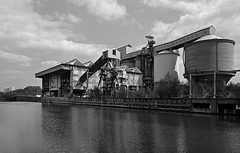
Coasters used to load soda ash here. Now the loading facilities lie mainly derelict, but the storage bunkers remain in use.
Not needed
| |
|
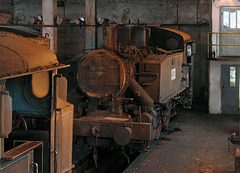
62-380 sits in depot at Zenica Steelworks along with several other locomotives of the same class. Whether they would ever work again was debatable as the works was on at a low level of production and had several diesels available as well as a couple of other steam locomotives in service.
Telpher man
| |
|
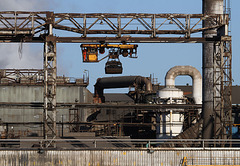
Coke movement from the storage bunkers at the Port Pirie smelter is by this telpher and grab. Mangrove Rat suggested an early start to catch the light around the harbour and smelter area, and it was certainly worth the effort.
Differdange
| |
|
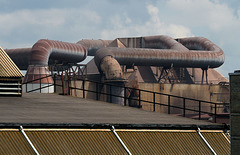
The ArcelorMittal Steelworks at Differdange produces beams, bars and heavy sections. The works has a worldwide reputation for wide flange beams.
Cokeries d'Anderlues
| |
|
|
|
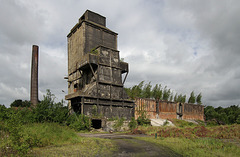
S.A. Cokeries et Houillères d'Anderlues first erected coke ovens in 1904 which were replaced by new ones in 1931. The works produced foundry coke and was one of the smallest and oldest coke by-product plants still operating in Belgium at the time of closure in November 2002.
The chimney really was tilting, it's not distortion from the lens!
Ramsbottom signalling
| |
|
|
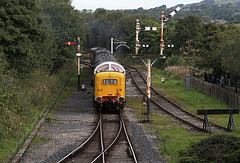
D9016 Gordon Highlander arrives at Ramsbottom during the recent East Lancashire Railway Deltic event.
