

tarboat's photos
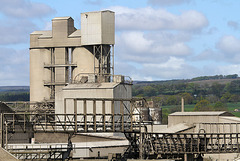
Cement storage
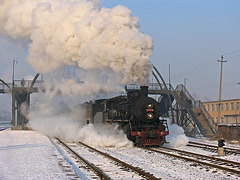
Winter at Tiefa
| |
|
|
|
SY 1772 makes a spirited departure from the main station at Diaobingshan on the Tiefa Coal Railway.
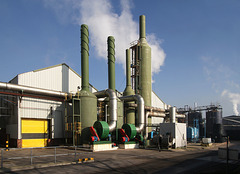
Saria, Widnes
| |
|
I was unsure what this business was when I first saw the works, but I now know that this is basically a rendering plant which produces fertiliser and pet food amongst other things.
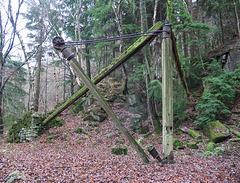
Hanging on
| |
|
|
|
This crane stands in a small working alongside the Sheep Pasture Incline of the Cromford and High Peak Railway. The jib has already detached at the base and the whole structure is probably not going to stand for much longer. These quarry cranes were once very common but rot and the predations of the scrap men has brought most of them down.
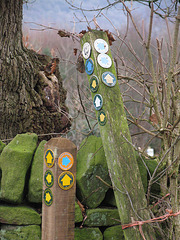
Which way to go?
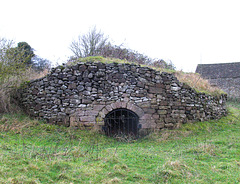
Dark lane kiln
| |
|
This small draw kiln has had the face rather crudely restored using a certain amount of limestone rather than the sandstone that can be seen around the draw arch.
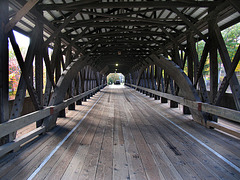
Saco River Bridge, Conway, New Hampshire
| |
|
|
|
In 1850, Jacob Berry and Peter Paddleford built a covered bridge to replace a crudely framed log bridge that had collapsed at this site. This bridge stood until the Swift River covered bridge crashed into it in 1869. The Saco River covered bridge was rebuilt by Allen and Warren of Conway but it was destroyed again by a tannery fire in 1890. The current bridge was built by Charles Broughton and his son Frank. The design is Paddleford truss with added arches.
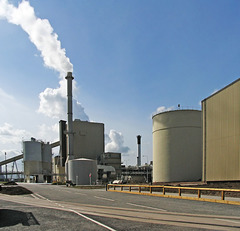
UPM Shotton
| |
|
The UPM paper mill at Shotton generates 22MW of electricity in its on site power station using biomass and recycled materials as fuel. This is to be increased in 2017 with another 4.5MW turbine to use excess process steam since the closure of one paper making machine.
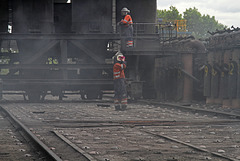
The charging team

Fruity
| |
|
|
Whilst in Newcastle-under-Lyme this afternoon I took the opportunity to snap this (one of two) bowl of fruit on the former Swettenhams Co-operative Institutions Building. Got to love all those coloured glazes.
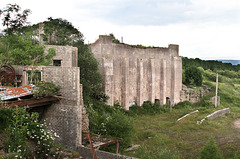
Flusco Lodge limekilns
| |
|
|
Flusco Lodge Limestone Quarry seems to have been operated on a small scale from the 1920s, but it does not seem to be until the 1950s that the four pot kiln was erected in concrete. It is unusually faced with concrete bricks. Map evidence suggests that it went out of use in the 1970s or early 1980s.

Searchlight
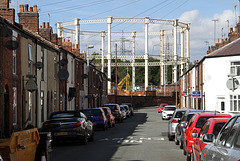
Going
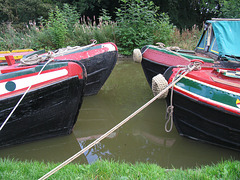
Bows
| |
|
|
Fore ends at Bollington historic boat gathering. Hazel and Forget me Not on the left with Bargus and Betelgeuse on the right.
Dunbar cement, Oxwellmains
| |
|
|
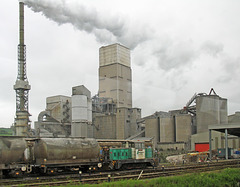
A grab shot from a speeding train with reflections from the window. However, it does give a view from a side not normally accessible for photography.
It was in March 1962 that work first began on the modern works and on April 1st 1963 the first kiln was lit. Associated Portland Cement Manufacturers Limited (later Blue Circle Industries PLC) selected Dunbar because it had the ideal proportions of raw material (shale and limestone) for the production of cement; for much of the works’ existence it has been the only cement producer in Scotland. The plant was modernised in the 1980s. The current kiln has an output of around 867 tonnes of cement clinker per day. Ownership passed to Lafarge in 2001 and from Lafarge Tarmac to CRH in July 2015.

New Hampshire autumn
Boulton, Midland & Port Vale Tileries
| |
|
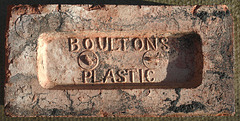
By 1896 Boulton & Co advertised their business from the Midland Brick and Tile Works, Port Vale. The business became Boulton & Co (Longport) Ltd. in 1907 and traded as Midland & Port Vale Tileries, Longport. The works was closed in 1955 after takeover by Pilkington Tiles Ltd.
Wilkinson Brothers, Longport
| |
|
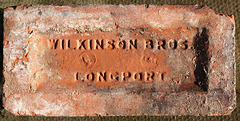
Brothers Jabez and Samuel Wilkinson were working as builders and then started a new brickworks at Longbridge Hayes around 1924. A third brother, Joseph Wilkinson, joined the business and in 1934 they formed Wilkinson Bros (Burslem) Ltd. This company ran the new works until closure in the 1950s.
