

tarboat's photos
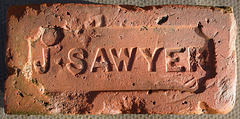
Joseph Sawyer
| |
|
Joseph Sawyer was based in Waterloo just outside Liverpool and in 1861 was listed as a bricklayer and brickmaker employing 50 men and 15 boys. The brickworks was somewhere in Seaforth but I have not been able to pinpoint the location although it seems to have been operating at least as late as 1880. After the works was built over by the expanding housing stock of the area Joseph continued as a building contractor.
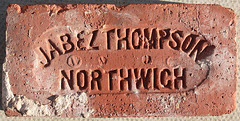
Jabez Thompson, Northwich
| |
|
The brick works at Witton Hall and on Manchester Road, Northwich, were eventually run by Jabez Thompson (1838-1911). Jabez produced common, fine and moulded bricks and terracotta, providing bricks for the Victorian architect, John Douglas. All the fine and moulded bricks are stamped and have been identified at demolition sites across the North West. He also specialised in ornamental pieces and panels. The façades of Moseley Road Swimming Baths, Birmingham and the Sanatorium at Denstone College, Uttoxeter are by him, as is a terra-cotta alto reredos of Leonardo Da Vinci’s Last Supper at St. Michael and All Saints Church, Little Leigh, near Northwich.
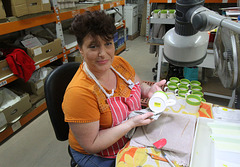
Litho work
| |
|
|
Applying lithographed transfer decoration and company details (in this case Fortnum and Mason) to pottery mugs at the Middleport Pottery. The yellow backing colour will disappear when the mugs are fired again. The staff undertaking this work have to be highly skilled to achieve the necessary accuracy.
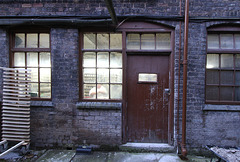
The brown door
Middleport Pottery
| |
|
|
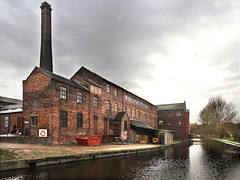
The Middleport Pottery opened in the 1880s and has continued in production to the present day. In 2009 with the business facing closure it was purchased by the Prince's Regeneration Trust and the buildings underwent restoration and regeneration. Today I was at last able to tour the works and see Burleigh Ware and other marks being made at this great survivor of the pottery trade.
Englands in the trees

On top
Spoil train
| |
|
|
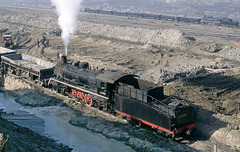
SY 1689 at the head of a spoil train awaiting loading at one of the higher levels of the opencast coal mine at Jalainur in 1992.
Cement storage
| |
|
|
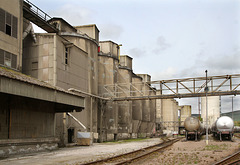
Storage hoppers for cement at the Hope Construction Materials works at Hope, Derbyshire.
Carrutherstown
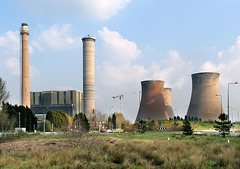
Rugeley 'B'
| |
|
|
The Rugeley 'B' Power Station was commissioned in 1970 and generated around 1000 megawatts of electricity. This view shows the flue gas desulphurisation plant under construction. This was hardly used before the power station was closed in late spring 2016.
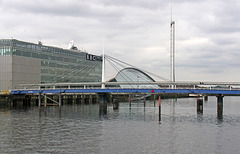
Bell's Bridge
| |
|
|
|
Bell's Bridge is a pedestrian bridge spanning the River Clyde in Glasgow, Scotland. Constructed in 1988 to coincide with the Glasgow Garden Festival, it allowed pedestrians to cross from the main exhibition site to the Scottish Exhibition and Conference Centre on the other side of the river. The northern stub of the bridge is supported only by the quay, whereas the majority of the bridge consists of a cable-stayed span which can rotate through 90 degrees, providing two lanes of passage for river traffic either side. It is named for the Bell's & Sons whisky company, who sponsored its construction. The bridge was designed by Sir William Arrol & Co. and constructed by John Young and Company (Kelvinhaugh) Ltd.
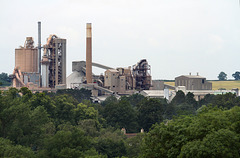
Ketton Cement Works
| |
|
|
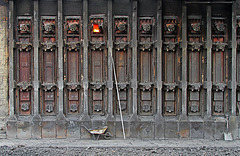
The Ketton cement works was established by the Ketton Portland Cement Company in 1928. It is currently owned by Heidelberg and comprises two kilns (nos 7 & 8) which were completed in 1975 and the mid-1980's. Kiln 7 was mothballed in 2008.
42 - 34
Chelford Arms Depot
| |
|
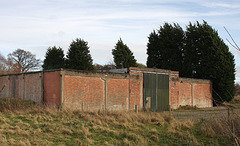
Originally planned as a filling factory (ROF Macclesfield - Factory No.13), the site was requisitioned before 1941 and was open as an ammunition store by 1942. The fourteen standard sheds continued in use until 1964. The surviving buildings are now in agricultural and light industrial use.

Randlay, Salop
| |
|
A brick works that was started at Stirchley in 1838 by the Botfield family which became the Randlay Brickworks in 1856. In 1893 the works was leased to George Wilkinson. He went into partnership with Adam Boulton to form 'Randlay Brick & Tile Co', which later became Adam Boulton & Co. In 1898, the partners bought the works and surrounding land. It was estimated that in the 1960s the brickworks could produce over 300,000 fiery red bricks in a week; sufficient to build 43 semi-detached houses. The business survived into the 20th century but closed by the end of the 1960s with the loss of around 90 jobs.

Patent Hydraulic
| |
|
The Patent Hydraulic Saggar Brick and Marl Co, Brookfield Works, Hanley appears in trade directories 1892 - 1955.
Patent Hydraulic
| |
|
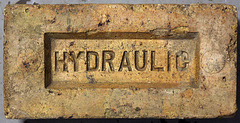
The Patent Hydraulic Saggar Brick and Marl Co, Brookfield Works, Hanley appears in trade directories 1892 - 1955.
