tarboat's photos
Pushing side
High Peak Railtour 2010
| |
|
|
|
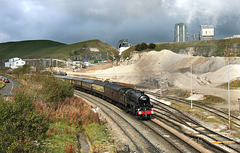
The "High Peak" railtour from Tyseley to Buxton was headed by 45305 and is seen arriving at Peak Forest. The lack of exhaust was very frustrating as the driver shut off as he had not had a clear view of the signal beyond the bridge.
Winnington kilns
| |
|
|
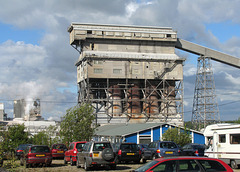
Limekilns at the Winnington works of Brunner Mond & Co from the south. There were originally six shaft kilns which were extended to nine in the 1950s. Since this photograph was taken the production of soda ash here has ended and the kilns are disused and awaiting demolition.
Pye kiln
| |
|
|
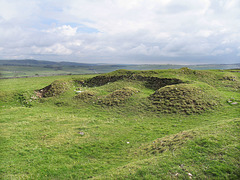
This is a good example of the rectangular clamp limekilns found in Derbyshire and known as 'Pye Kilns'. The chamber in this one at Litton Edge measures 12m x 2.7m and there are three entrances.

Faces in the doorway
| |
|
|
|
Fine terracotta doorway at 37-38 Cannon Street in Birmingham. The plaque contains the letters N H but I have been unable to identify to whom this refers.
Fluorspar days
| |
|
|
|
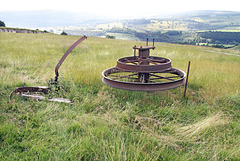
A relic of the fluorspar extraction from mine hillocks in the Great Longstone area of Derbyshire. The spar was lowered down an inclined plane with the rope passing around this wheel with brake wheel above.

Aston Quay
| |
|
|
|
Today it is hard to imagine that this spot was once a bustling wharf from which coal, clay and bricks were exported in large quantities. All that now remains are these timbers that formed part of the quay.
A quay developed at Lower, or King's Ferry on the River Dee, for the shipment of coal from about 1740 when the Mancot Tramway was built to link Big Mancot Colliery with the Dee at Mancot Mark. Around 1793 this was replaced by an iron plateway. Aston Quay, as it came to be known, expanded further following the construction of a second tramway, or in fact a system of tramways, which extended from Pentrobin Colliery, Buckley. The various sections of the tramway had different names but are generally referred to as the Aston Tramroad. The south section was built by Rigby, the Hawarden Ironmaster, and Hancock, the Buckley brick manufacturer, after the formation of a partnership in 1792. The lower 1¼ miles was replaced by an iron plateway around 1799, which served a number of businesses including Lane End brickworks at Buckley and Aston Hall Colliery. The plateway was eventually replaced by the standard gauge Aston Hall Colliery Railway. All that now remains are a few of the timbers that formed part of the quay.
Ketton Cement
| |
|
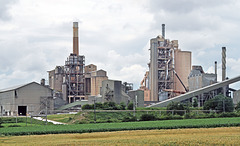
The Ketton cement works was established by the Ketton Portland Cement Company in 1928. It is currently owned by Heidelberg and comprises two kilns (nos 7 & 8) which were completed in 1975 and the mid-1980's. Kiln 7 was mothballed in 2008.

Church above Tiger Camp
| |
|
|
|
A quick glimpse of this church with the characterful roof, grabbed from the back of a wagon in a train climbing above Tiger Camp on the Burma Mines Railway.
Tomatoes
| |
|
|
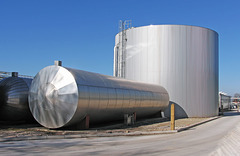
This is the face of modern tomato growing. Tanks alongside the acres of greenhouses at Yew Tree Farm, Heald Green.
Marsden limekilns
| |
|
|
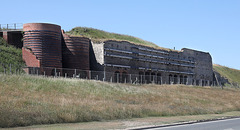
This massive battery of 15 limekilns was built in the 1870s in association with Marsden Quarry and Whitburn Colliery. They operated until the 1960s and are now a scheduled ancient monument. A scheme to conserve the structures commenced in 2016 but stalled in 2017 when the owners went into administration.
Still at large
| |
|
|
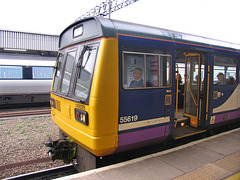
Despite their withdrawal having been announced for some months ago the dreaded Pacers continue to spread misery across the north of England. These "nodding donkeys" were well to the fore of Thursday with one even heading to the sylvan delights of Alderley Edge. This one waits at Stockport before heading off for a bouncy and rattling journey all the way to Chester. We deserve better and this type of basic bus train would not be acceptable to the denizens of the south-east so why should it be in the north-west?
Industrial Scotland
| |
|
|
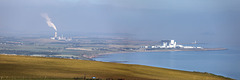
A panorama of the industrial activity on Scotland's east coast.On the right is the 1,364 Mw Torness nuclear power station that was commissioned in 1988, On the left is the Dunbar cement works at Oxwellmains. Now operated by CRH it has an output of around 867 tonnes of cement clinker daily.
Financial experts
| |
|
|
|
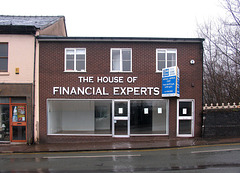
A wet day in Crewe and the expertise seems to have gone missing! Maybe they know something we don't.
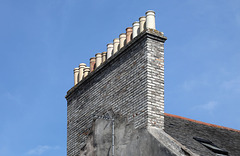
13 Pots
| |
|
It is always good to see a chimneystack with a full complement of pots. This is in Haddington, East Lothian. The cream brick is nice to see and presumably originates from a works on the coalfield around Prestongrange not far to the north west.
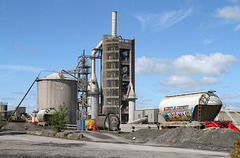
Preheater
| |
|
|
Preheater tower and silo at the Hanson owned Ribblesdale Cement Works at Clitheroe. Dust collection to the fore and the chimneey on top was as a funny angle after storm damage. The company was waiting for a shutdown when it would be reattached properly. One of the One of two 1975 built GEC Traction locomotives lurks on the railway headshunt.
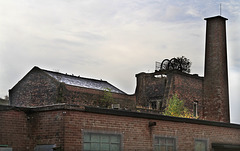
Winstanley Pit
| |
|
|
The Winstanley shaft at Chatterley Whitfield colliery has an unusual brick heapstead. The shaft was sunk in 1914 and is 235 yards deep. It was here that vistors descended into the workings when the museum was open.