

Xata's photos
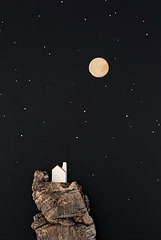
The sound of silence
| |
|
|
|
“ SOMETHING YOU CAN’T LIVE WITHOUT” for THE SUNDAY CHALLENGE #532
THIS IS WHO I AM, A SOLITARY DREAMER, THIS IS WHAT KEEPS ME BALANCED IN A WORLD IN WHICH I DON’T FIT IN (NEVER DID… JUST ADAPTED MYSELF TO CIRCUMSTANCES)
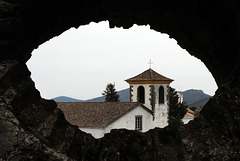
Marvão, Igreja de Santa Maria, Museu
| |
|
|
|
There are references to the parish of Santa Maria dating back as far as 1321, when it was handed to the Order of the Hospital, led by the Prior of Crato in this region of the Alentejo.
The church was built close to the castle, on one of the highest points, overlooking one of the main streets of the town itself. Built in the Gothic style, it was remodelled during the 17th century, a fact that highlights the demographic expansion that had taken place in the town, although such a peak of population was never again matched until the present day, with the result that Marvão has managed to preserve its mediaeval features largely unaltered since then.
Transformed into a Municipal Museum, in 1987, the church´s original religious function can still be recognised in its overall structure and in an 18th-century chapel, its walls covered in figurative azulejo panels and containing an altar in baroque carved woodwork.
Source: www.visitportugal.com/en/NR/exeres/B95A8532-9641-48C8-B77C-00CDA7026BB3
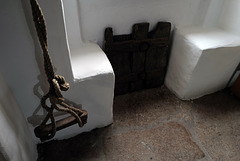
Marvão, Prison
| |
|
|
|
IN PIP ABOVE THIS TOO THE SYSTEM FOR LOWERING PRISONERS INTO CELLS... SEE MORE EXPLAINED ON THE PREVIOUS POSTED PHOTO (THE GRID)
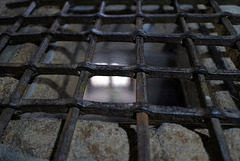
Marvão, Prison
| |
|
|
|
IN MARVÃO THE PRISON, WHICH TODAY IS A HANDICRAFT SHOP, HAD NO EXIT TO THE STREET, ONLY TWO WINDOWS WITH GRILLS AND NO GLASS OR ANY PROTECTION, SO THAT THE WINTER COLD ENTERED. THE PRISONERS WERE LOWERED THROUGH THE OPENING THAT YOU SEE CLOSED BY THIS GRILL. IN THE NEXT PHOTO I WILL SHOW YOU THE SYSTEM TO LOWER THE PRISONERS INTO THE CELLS. THIS OPENING IS LOCATED IN WHAT WAS THE GUARDHOUSE, WHERE THE GUARD LIVED. THE PRISONERS LIVED WITHOUT ANY HYGIENIC CONDITIONS AND THE FOOD WAS THROWN THROUGH THIS OPENING. IN MOST CASES THEY DIDN'T GET OUT ALIVE.
THE MOST COMMON "CRIME" WAS SMUGGLING WITH NEIGHBOURING SPAIN.
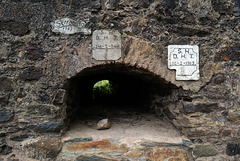
Ponte romana de Vila Ruiva
| |
|
Trata-se de uma antiga ponte romana, em uso até os nossos dias. Por causa da sua largura, entretanto, apenas é atravessada em mão única.
Ao que tudo indica, integrava a antiga estrada romana que, de Faro e Beja, seguia para Évora e Mérida.
Apresenta várias fases construtivas. Supõe-se que a estrutura original, os três primeiros pegões feitos de granito, datem provavelmente entre o Século I a.C. e Século I. Podem ser vistas reconstruções e obras acrescentadas, que têm data provável do século V e século XI, utilizando antigo material romano como também materiais novos da época.
Encontra-se classificada como Monumento Nacional desde 1967.
A vista atual da ponte é incompleta, pois devido ao assoreamento, 15 arcos e olhais não podem ser vistos, estando subterrados parcialmente.
+++
This is an ancient Roman bridge, in use until today. Because of its width, however, it can only be crossed one-way.
Apparently, it was part of the old Roman road that went from Faro and Beja to Évora and Mérida.
It has various construction phases. It is assumed that the original structure, the first three granite footings, probably date from between the 1st century BC and the 1st century. Reconstructions and added works can be seen, which are probably dated between the 5th century and the 11th century, using ancient Roman material as well as new materials of the time.
It has been classified as a National Monument since 1967.
The current view of the bridge is incomplete, as due to silting, 15 arches and eyebolts cannot be seen, being partially subterranean.
Source:
pt.wikipedia.org/wiki/Ponte_romana_sobre_a_ribeira_de_Odivelas
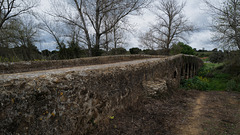
Ponte romana de Vila Ruiva
| |
|
|
|
Trata-se de uma antiga ponte romana, em uso até os nossos dias. Por causa da sua largura, entretanto, apenas é atravessada em mão única.
Ao que tudo indica, integrava a antiga estrada romana que, de Faro e Beja, seguia para Évora e Mérida.
Apresenta várias fases construtivas. Supõe-se que a estrutura original, os três primeiros pegões feitos de granito, datem provavelmente entre o Século I a.C. e Século I. Podem ser vistas reconstruções e obras acrescentadas, que têm data provável do século V e século XI, utilizando antigo material romano como também materiais novos da época.
Encontra-se classificada como Monumento Nacional desde 1967.
A vista atual da ponte é incompleta, pois devido ao assoreamento, 15 arcos e olhais não podem ser vistos, estando subterrados parcialmente.
+++
This is an ancient Roman bridge, in use until today. Because of its width, however, it can only be crossed one-way.
Apparently, it was part of the old Roman road that went from Faro and Beja to Évora and Mérida.
It has various construction phases. It is assumed that the original structure, the first three granite footings, probably date from between the 1st century BC and the 1st century. Reconstructions and added works can be seen, which are probably dated between the 5th century and the 11th century, using ancient Roman material as well as new materials of the time.
It has been classified as a National Monument since 1967.
The current view of the bridge is incomplete, as due to silting, 15 arches and eyebolts cannot be seen, being partially subterranean.
Source:
pt.wikipedia.org/wiki/Ponte_romana_sobre_a_ribeira_de_Odivelas
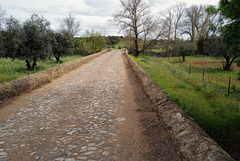
Ponte romana de Vila Ruiva
| |
|
|
Trata-se de uma antiga ponte romana, em uso até os nossos dias. Por causa da sua largura, entretanto, apenas é atravessada em mão única.
Ao que tudo indica, integrava a antiga estrada romana que, de Faro e Beja, seguia para Évora e Mérida.
Apresenta várias fases construtivas. Supõe-se que a estrutura original, os três primeiros pegões feitos de granito, datem provavelmente entre o Século I a.C. e Século I. Podem ser vistas reconstruções e obras acrescentadas, que têm data provável do século V e século XI, utilizando antigo material romano como também materiais novos da época.
Encontra-se classificada como Monumento Nacional desde 1967.
A vista atual da ponte é incompleta, pois devido ao assoreamento, 15 arcos e olhais não podem ser vistos, estando subterrados parcialmente.
+++
This is an ancient Roman bridge, in use until today. Because of its width, however, it can only be crossed one-way.
Apparently, it was part of the old Roman road that went from Faro and Beja to Évora and Mérida.
It has various construction phases. It is assumed that the original structure, the first three granite footings, probably date from between the 1st century BC and the 1st century. Reconstructions and added works can be seen, which are probably dated between the 5th century and the 11th century, using ancient Roman material as well as new materials of the time.
It has been classified as a National Monument since 1967.
The current view of the bridge is incomplete, as due to silting, 15 arches and eyebolts cannot be seen, being partially subterranean.
Source:
pt.wikipedia.org/wiki/Ponte_romana_sobre_a_ribeira_de_Odivelas
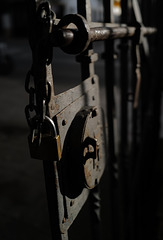
Ronda, Andalucia, HFF
| |
|
|
|
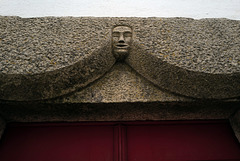
Marvão
| |
|
|
|
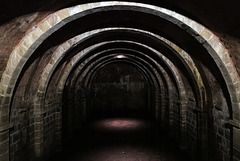
Marvão, Cisterna
| |
|
|
|
Just like the small cistern, this one is also shrouded in some mystery, and it is said in the village that it may have had a different function in the past, namely a religious one. We don't think so, since, below the normal level of the ground, only stores are built, almost always for water. However, in a military document from 1861, it is said, without anything being proved, that inside the Castle there is an armoury, a cistern (formerly the Mosque of the Arabs) and some warehouses (see Military Historical Archive, 3rd Division, 9th Section, Box 51, Number 17 (1861). It was in fact necessary to build a large cistern to collect rainfall and supply Marvão, which could only get water that way. According to the Parochial Memoirs mentioned in the previous note, a well opened in Terreiro, during a great drought in 1712 or 1713, never had enough water to make a fountain run and ended up being blocked
(MACHADO, J. Liberata and GORJÃO, Sérgio, art. cit.) The cistern presents, in the extrasoil, a terrace with 3 skylights (today covered) and a system of 8 culverts for rainwater collection. It was, and still is, supplied by a levada of rainwater that, from inside the first enclosure of the castle, falls into the cistern after a recently built manhole. Before this box was built, there was another (1.10 m x 0.60 m), already on the outside of the cistern, into which the levada was led and then channelled by gutter into one of the culverts. The water collection system in the first castle enclosure consisted of various gutters, which even took advantage of the rainwater from the roofs. As regards its date, we believe it dates from the late Middle Ages or early modern times...
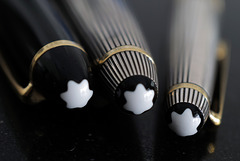
Mont Blanc
| |
|
|
|

Marvão, Doors, condemned and functional
| |
|
|
|
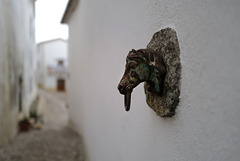
Marvão, HWW
| |
|
|
|
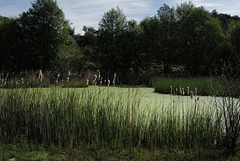
Typha latifolia, Odeleite
| |
|
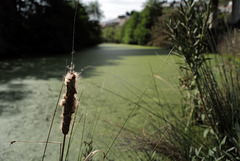
Typha latifolia, Odeleite
| |
|
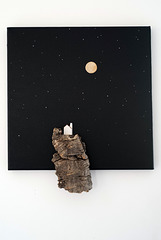
Isto é quem sou...
| |
|
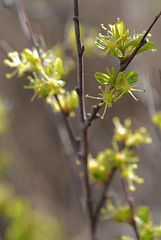
Forestiera pubescens, Oleaceae, Penedos
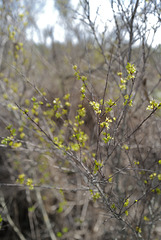
Forestiera pubescens, Oleaceae, Penedos
| |
|
