

Xata's photos
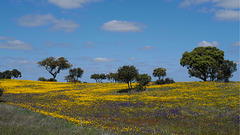
Castro Verde, Chrysanthemum segetum, Asteraceae,…
| |
|
|
|
Our meadows are like this, some years more yellow than others, depends on the rain and the soil.
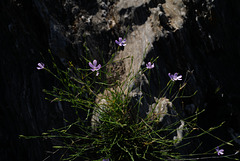
Petrorhagia saxifraga, Caryophyllales

FAKE for the Sunday challenge
| |
|
|
|
"Big mama", Echino grusonii brevispina, over 60 years old, was not very happy about this pale copy of her little ones, so she punished me scratching my hand when I removed "the undesired alien"...
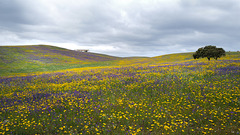
Alentejo, Aljustrel
| |
|
|
|
MAYBE WORTH PRESS "Z" TO SEE WIDE ON BLACK
Chrysanthemum segetum, Asteraceae, Pampilho-das-searas
Echium plantagineum, Boraginaceae, Chupa-mel, Soagem
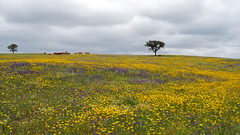
Alentejo, Aljustrel
| |
|
|
|
MAYBE WORTH PRESS "Z" TO SEE WIDE ON BLACK
Chrysanthemum segetum, Asteraceae, Pampilho-das-searas
Echium plantagineum, Boraginaceae, Chupa-mel, Soagem
COWS
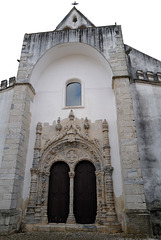
Viana do Alentejo, Igreja Matriz
| |
|
Viana do Alentejo
Pela confluência de estilos e soluções arquitetónicas apresentadas, a Igreja Matriz de Nossa Senhora da Anunciação é considerada por historiadores de Arte como um exemplo quase perfeito do chamado Tardo-Gótico Alentejano, vertente artística que imiscui num única matriz a vertente final do estilo Gótico, a geometria e a proporção do Renascimento italiano com ergonomia do Mudéjar.
O traço é de autoria atribuída ao arquiteto régio Diogo de Arruda. A igreja apresenta uma matriz manuelina, presente nas suas três naves e oito pilares que servem de apoio à cobertura. Para além das três capelas presentes na zona da cabeceira (Nossa Senhora do Rosário à esquerda, Almas à direita e no centro a capela-mor com a representação da cena da Anunciação), é de destacar o altar do menino Jesus e o altar de S. Luís de França, ambos em talha dourada e situados nas proximidades do acesso à sacristia, bem como o altar erigido à memória do Padre Luís António da Cruz.
O pórtico da igreja é uma das referências regionais dentro do estilo manuelino, apresentando na sua composição elementos heráldica régia (armas régias, cruz da Ordem de Cristo e esferas armilares), elementos de cariz religioso como a videira, aplicados sobre uma matriz renascentista, com pormenores a nível dos pilares laterais desenhados ao gosto do plateresco.
++++
Viana do Alentejo
Due to the confluence of styles and architectural solutions presented, the Mother Church of Nossa Senhora da Anunciação is considered by art historians to be an almost perfect example of the so-called Late Gothic Alentejo, an artistic aspect that mixes in a single matrix the final aspect of the Gothic style, the geometry and proportion of the Italian Renaissance with the ergonomics of Mudéjar.
The design is attributed to the royal architect Diogo de Arruda. The church presents a Manueline matrix, present in its three naves and eight pillars that support the roof. As well as the three chapels in the zone of the head (Nossa Senhora do Rosário to the left, Almas to the right and, in the centre, the main chapel with the representation of the Annunciation scene), the altar of the child Jesus and the altar of S. Luís de França are also noteworthy, both in gilded woodcarving and situated near the sacristy access, as well as the altar erected to the memory of Father Luís António da Cruz.
The church porch is one of the regional references within the Manueline style, presenting in its composition royal heraldic elements (royal coat of arms, cross of the Order of Christ and armillary spheres), religious elements such as the vine, applied on a Renaissance matrix, with details at the level of the lateral pillars designed in the Plateresque style.
Fonte: www.cm-vianadoalentejo.pt/locais/igreja-matriz-nossa-senhora-da-anunciacao
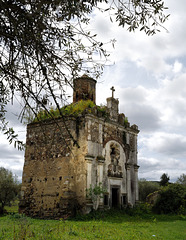
Viana do Alentejo, Capela do Cruzeiro
| |
|
|
ou Ermida do Sr. Jesus do Cruzeiro
A ermida está localizada a cerca de 200 metros a sudeste do santuário de Nossa Senhora de Aires.
Apesar de a devoção a Cristo ser muito antiga, o grande surto cristológico em Portugal ocorreu nos séculos XVII e XVIII, época em que a devoção popular ao Crucifixo fez aumentar o número quer de pequenas capelas, quer de grandes santuários dedicados a Jesus localizados no exterior das localidades. A par desta devoção desenvolveu-se, na mesma época, o culto mariano e a construção dos santuários que lhe dão expressão, como é o caso do actual santuário de Nossa Senhora de Aires que resultou de uma substituição, feita no século XVIII, de um edifício primitivo do século XVI.
A construção da pequena capela do Senhor Jesus do Cruzeiro de Viana é, também ela, precisamente, uma manifestação da devoção popular ao Crucifixo na centúria de Setecentos. Por isso a sua planta é em cruz grega.
+++
The hermitage is located about 200 metres southeast of the sanctuary of Nossa Senhora de Aires.
Although the devotion to Christ is very ancient, the great Christological surge in Portugal occurred in the 17th and 18th centuries, a time when the popular devotion to the Crucifix increased the number of both small chapels and large shrines dedicated to Jesus located outside the localities. Alongside this devotion, at the same time, the Marian cult and the construction of the sanctuaries that give it expression developed, as is the case of the current sanctuary of Our Lady of Aires which resulted from a substitution, made in the 18th century, of a primitive building from the 16th century.
The construction of the small chapel of Senhor Jesus do Cruzeiro de Viana is also precisely a manifestation of the popular devotion to the Crucifix in the 18th century. That is why it has a Greek cross shape.
Fonte: www.conhecerahistoria.pt/?d=93&da=3&fa=Via
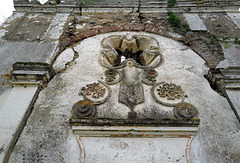
Viana do Alentejo, Capela do Cruzeiro
| |
|
ou Ermida do Sr. Jesus do Cruzeiro
ou Ermida do Sr. Jesus do Cruzeiro
A ermida está localizada a cerca de 200 metros a sudeste do santuário de Nossa Senhora de Aires.
Apesar de a devoção a Cristo ser muito antiga, o grande surto cristológico em Portugal ocorreu nos séculos XVII e XVIII, época em que a devoção popular ao Crucifixo fez aumentar o número quer de pequenas capelas, quer de grandes santuários dedicados a Jesus localizados no exterior das localidades. A par desta devoção desenvolveu-se, na mesma época, o culto mariano e a construção dos santuários que lhe dão expressão, como é o caso do actual santuário de Nossa Senhora de Aires que resultou de uma substituição, feita no século XVIII, de um edifício primitivo do século XVI.
A construção da pequena capela do Senhor Jesus do Cruzeiro de Viana é, também ela, precisamente, uma manifestação da devoção popular ao Crucifixo na centúria de Setecentos. Por isso a sua planta é em cruz grega.
+++
The hermitage is located about 200 metres southeast of the sanctuary of Nossa Senhora de Aires.
Although the devotion to Christ is very ancient, the great Christological surge in Portugal occurred in the 17th and 18th centuries, a time when the popular devotion to the Crucifix increased the number of both small chapels and large shrines dedicated to Jesus located outside the localities. Alongside this devotion, at the same time, the Marian cult and the construction of the sanctuaries that give it expression developed, as is the case of the current sanctuary of Our Lady of Aires which resulted from a substitution, made in the 18th century, of a primitive building from the 16th century.
The construction of the small chapel of Senhor Jesus do Cruzeiro de Viana is also precisely a manifestation of the popular devotion to the Crucifix in the 18th century. That is why it has a Greek cross shape.
Fonte: www.conhecerahistoria.pt/?d=93&da=3&fa=Via
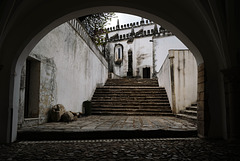
Viana do Alentejo, Igreja Matriz
| |
|
|
Viana do Alentejo
Pela confluência de estilos e soluções arquitetónicas apresentadas, a Igreja Matriz de Nossa Senhora da Anunciação é considerada por historiadores de Arte como um exemplo quase perfeito do chamado Tardo-Gótico Alentejano, vertente artística que imiscui num única matriz a vertente final do estilo Gótico, a geometria e a proporção do Renascimento italiano com ergonomia do Mudéjar.
O traço é de autoria atribuída ao arquiteto régio Diogo de Arruda. A igreja apresenta uma matriz manuelina, presente nas suas três naves e oito pilares que servem de apoio à cobertura. Para além das três capelas presentes na zona da cabeceira (Nossa Senhora do Rosário à esquerda, Almas à direita e no centro a capela-mor com a representação da cena da Anunciação), é de destacar o altar do menino Jesus e o altar de S. Luís de França, ambos em talha dourada e situados nas proximidades do acesso à sacristia, bem como o altar erigido à memória do Padre Luís António da Cruz.
O pórtico da igreja é uma das referências regionais dentro do estilo manuelino, apresentando na sua composição elementos heráldica régia (armas régias, cruz da Ordem de Cristo e esferas armilares), elementos de cariz religioso como a videira, aplicados sobre uma matriz renascentista, com pormenores a nível dos pilares laterais desenhados ao gosto do plateresco.
++++
Viana do Alentejo
Due to the confluence of styles and architectural solutions presented, the Mother Church of Nossa Senhora da Anunciação is considered by art historians to be an almost perfect example of the so-called Late Gothic Alentejo, an artistic aspect that mixes in a single matrix the final aspect of the Gothic style, the geometry and proportion of the Italian Renaissance with the ergonomics of Mudéjar.
The design is attributed to the royal architect Diogo de Arruda. The church presents a Manueline matrix, present in its three naves and eight pillars that support the roof. As well as the three chapels in the zone of the head (Nossa Senhora do Rosário to the left, Almas to the right and, in the centre, the main chapel with the representation of the Annunciation scene), the altar of the child Jesus and the altar of S. Luís de França are also noteworthy, both in gilded woodcarving and situated near the sacristy access, as well as the altar erected to the memory of Father Luís António da Cruz.
The church porch is one of the regional references within the Manueline style, presenting in its composition royal heraldic elements (royal coat of arms, cross of the Order of Christ and armillary spheres), religious elements such as the vine, applied on a Renaissance matrix, with details at the level of the lateral pillars designed in the Plateresque style.
Fonte: www.cm-vianadoalentejo.pt/locais/igreja-matriz-nossa-senhora-da-anunciacao
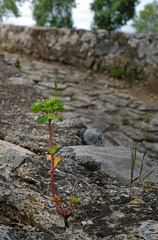
Euphorbia helioscopia, Ponte do Azinhal, Vila Nova…
| |
|
|
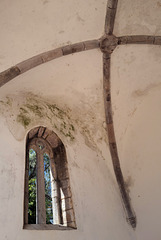
Tavira, Ordem Terceira de São Francisco
| |
|
|
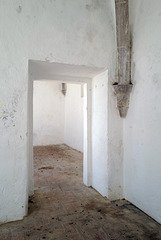
Tavira, Ordem Terceira de S. Francisco
| |
|
|
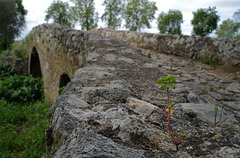
Euphorbia helioscopia, Ponte do Azinhal
| |
|
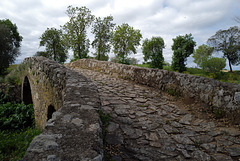
Ponte do Azinhal, Vila Nova da Baronia
| |
|
|
|
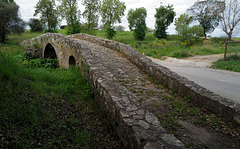
Ponte do Azinhal, Vila Nova da Baronia
| |
|
|
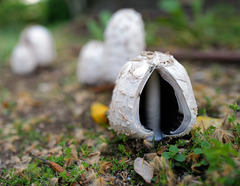
Coprinus comatus, Alvito
| |
|
|
|
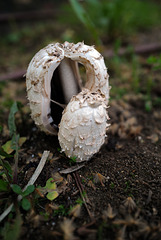
Coprinus comatus, Alvito
| |
|
|
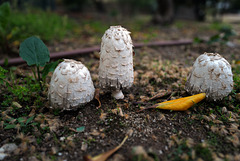
Coprinus comatus, Alvito
| |
|
|
