

Xata's photos
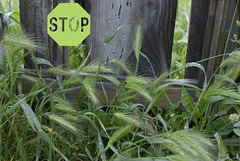
Penedos, STOP HFF, see you next Friday .
| |
|
|
|
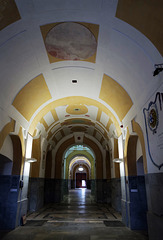
Elvas, Forte da Graça, Refeitório
| |
|
|
|
PIP ABOVE :
"THE BEST ARMY WILL DO NOTHING IF IT LACKS FOOD"
No século XVII, a posição estratégica do monte da Graça, ocupada por tropas espanholas no contexto da Guerra da Restauração da independência, muito caro custou a Portugal durante o cerco a Elvas (1658-1659).
Um século mais tarde, durante a Guerra dos Sete Anos (1756-1763), a cidade sofreu novo sítio (1762). Com esse fato em mente, sob o reinado de D. José I (1750-1777), tendo o Marquês de Pombal chamado o Marechal Wilhelm von Schaumburg-Lippe, conde de Lippe para reorganizar o Exército português, determinou-lhe traçar planos para a modernização daquela praça-forte.
Os trabalhos do Forte da Graça iniciaram-se em 1763, estendendo-se até ao reinado de Dna. Maria I (1777-1816), que a inaugurou em 1792, com o nome de Forte Conde de Lippe, militar que havia proposto a sua construção e que comandou o Exército português entre 1762 e 1764. Em 1763 foram precisos quase 30 anos, seis mil homens, quatro mil animais e 120 mil moedas de ouro para a renovação.
O forte resistiu às tropas espanholas durante a chamada Guerra das Laranjas (1801) e, mais tarde, no contexto da Guerra Peninsular, às tropas do general Nicolas Jean de Dieu Soult, que a bombardearam (1811), não chegando a tomá-la.
Utilizado no passado como prisão militar, o conjunto encontrava-se até 2014 em condições próximas da ruína, aguardando a sua cedência à Câmara Municipal de Elvas para consolidação e restauro. Em Setembro de 2015 foram concluídas as obras de restauro nas infrastruturas, com o objectivo de transformar o forte num museu miltiar funcional.
Em 2015, foram precisos quase 11 meses, 220 trabalhadores a tempo inteiro e 6,1 milhões de euros para o restaurar e reabilitar a tempo de no dia 27 de novembro de 2015, reabrir as suas portas ao público.
++++++++
In the 17th century, the strategic position of the Graça hill, occupied by Spanish troops in the context of the War to Restore Independence, cost Portugal dearly during the siege of Elvas (1658-1659).
A century later, during the Seven Years' War (1756-1763), the city was sieged again (1762). With this fact in mind, under the reign of King José I (1750-1777), having the Marquis of Pombal called Marshal Wilhelm von Schaumburg-Lippe, Count of Lippe to reorganise the Portuguese Army, he ordered him to draw up plans for the modernisation of that fortress.
Work on Fort Graça began in 1763, extending until the reign of Queen Maria I (1777-1816), who inaugurated it in 1792, under the name of Fort Conde de Lippe, the military officer who had proposed its construction and commanded the Portuguese Army between 1762 and 1764. In 1763 it took almost 30 years, six thousand men, four thousand animals and 120 thousand gold coins to renovate it.
The fort resisted Spanish troops during the so-called War of the Oranges (1801) and, later, in the Peninsular War, troops of General Nicolas Jean de Dieu Soult, who bombarded it (1811), but never took it.
Used in the past as a military prison, the set was until 2014 in conditions close to ruin, awaiting its transfer to the Municipality of Elvas for consolidation and restoration. In September 2015, the restoration works on the infrastructures were completed, with the aim of transforming the fort into a functional miltiar museum.
In 2015, it took almost 11 months, 220 full-time workers and 6.1 million euros to restore and rehabilitate it in time to reopen its doors to the public on 27 November 2015.
Fonte:
pt.wikipedia.org/wiki/Forte_de_Nossa_Senhora_da_Graça
Springs for TSC536
| |
|
TOYOTA RAV 4 SPRING for TSC 536
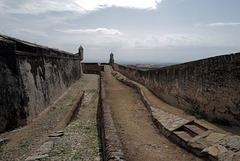
Elvas, Forte da Graça, HWW
| |
|
|
|
No século XVII, a posição estratégica do monte da Graça, ocupada por tropas espanholas no contexto da Guerra da Restauração da independência, muito caro custou a Portugal durante o cerco a Elvas (1658-1659).
Um século mais tarde, durante a Guerra dos Sete Anos (1756-1763), a cidade sofreu novo sítio (1762). Com esse fato em mente, sob o reinado de D. José I (1750-1777), tendo o Marquês de Pombal chamado o Marechal Wilhelm von Schaumburg-Lippe, conde de Lippe para reorganizar o Exército português, determinou-lhe traçar planos para a modernização daquela praça-forte.
Os trabalhos do Forte da Graça iniciaram-se em 1763, estendendo-se até ao reinado de Dna. Maria I (1777-1816), que a inaugurou em 1792, com o nome de Forte Conde de Lippe, militar que havia proposto a sua construção e que comandou o Exército português entre 1762 e 1764. Em 1763 foram precisos quase 30 anos, seis mil homens, quatro mil animais e 120 mil moedas de ouro para a renovação.
O forte resistiu às tropas espanholas durante a chamada Guerra das Laranjas (1801) e, mais tarde, no contexto da Guerra Peninsular, às tropas do general Nicolas Jean de Dieu Soult, que a bombardearam (1811), não chegando a tomá-la.
Utilizado no passado como prisão militar, o conjunto encontrava-se até 2014 em condições próximas da ruína, aguardando a sua cedência à Câmara Municipal de Elvas para consolidação e restauro. Em Setembro de 2015 foram concluídas as obras de restauro nas infrastruturas, com o objectivo de transformar o forte num museu miltiar funcional.
Em 2015, foram precisos quase 11 meses, 220 trabalhadores a tempo inteiro e 6,1 milhões de euros para o restaurar e reabilitar a tempo de no dia 27 de novembro de 2015, reabrir as suas portas ao público.
++++++++
In the 17th century, the strategic position of the Graça hill, occupied by Spanish troops in the context of the War to Restore Independence, cost Portugal dearly during the siege of Elvas (1658-1659).
A century later, during the Seven Years' War (1756-1763), the city was sieged again (1762). With this fact in mind, under the reign of King José I (1750-1777), having the Marquis of Pombal called Marshal Wilhelm von Schaumburg-Lippe, Count of Lippe to reorganise the Portuguese Army, he ordered him to draw up plans for the modernisation of that fortress.
Work on Fort Graça began in 1763, extending until the reign of Queen Maria I (1777-1816), who inaugurated it in 1792, under the name of Fort Conde de Lippe, the military officer who had proposed its construction and commanded the Portuguese Army between 1762 and 1764. In 1763 it took almost 30 years, six thousand men, four thousand animals and 120 thousand gold coins to renovate it.
The fort resisted Spanish troops during the so-called War of the Oranges (1801) and, later, in the Peninsular War, troops of General Nicolas Jean de Dieu Soult, who bombarded it (1811), but never took it.
Used in the past as a military prison, the set was until 2014 in conditions close to ruin, awaiting its transfer to the Municipality of Elvas for consolidation and restoration. In September 2015, the restoration works on the infrastructures were completed, with the aim of transforming the fort into a functional miltiar museum.
In 2015, it took almost 11 months, 220 full-time workers and 6.1 million euros to restore and rehabilitate it in time to reopen its doors to the public on 27 November 2015.
Fonte:
pt.wikipedia.org/wiki/Forte_de_Nossa_Senhora_da_Graça
PIP ABOVE :
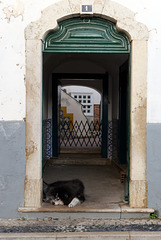
Faro, Vila-Adentro, HFF
| |
|
|
|
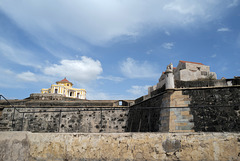
Elvas, Forte da Graça, HWW
| |
|
|
|
PIP ABOVE
No século XVII, a posição estratégica do monte da Graça, ocupada por tropas espanholas no contexto da Guerra da Restauração da independência, muito caro custou a Portugal durante o cerco a Elvas (1658-1659).
Um século mais tarde, durante a Guerra dos Sete Anos (1756-1763), a cidade sofreu novo sítio (1762). Com esse fato em mente, sob o reinado de D. José I (1750-1777), tendo o Marquês de Pombal chamado o Marechal Wilhelm von Schaumburg-Lippe, conde de Lippe para reorganizar o Exército português, determinou-lhe traçar planos para a modernização daquela praça-forte.
Os trabalhos do Forte da Graça iniciaram-se em 1763, estendendo-se até ao reinado de Dna. Maria I (1777-1816), que a inaugurou em 1792, com o nome de Forte Conde de Lippe, militar que havia proposto a sua construção e que comandou o Exército português entre 1762 e 1764. Em 1763 foram precisos quase 30 anos, seis mil homens, quatro mil animais e 120 mil moedas de ouro para a renovação.
O forte resistiu às tropas espanholas durante a chamada Guerra das Laranjas (1801) e, mais tarde, no contexto da Guerra Peninsular, às tropas do general Nicolas Jean de Dieu Soult, que a bombardearam (1811), não chegando a tomá-la.
Utilizado no passado como prisão militar, o conjunto encontrava-se até 2014 em condições próximas da ruína, aguardando a sua cedência à Câmara Municipal de Elvas para consolidação e restauro. Em Setembro de 2015 foram concluídas as obras de restauro nas infrastruturas, com o objectivo de transformar o forte num museu miltiar funcional.
Em 2015, foram precisos quase 11 meses, 220 trabalhadores a tempo inteiro e 6,1 milhões de euros para o restaurar e reabilitar a tempo de no dia 27 de novembro de 2015, reabrir as suas portas ao público.
++++++++
In the 17th century, the strategic position of the Graça hill, occupied by Spanish troops in the context of the War to Restore Independence, cost Portugal dearly during the siege of Elvas (1658-1659).
A century later, during the Seven Years' War (1756-1763), the city was sieged again (1762). With this fact in mind, under the reign of King José I (1750-1777), having the Marquis of Pombal called Marshal Wilhelm von Schaumburg-Lippe, Count of Lippe to reorganise the Portuguese Army, he ordered him to draw up plans for the modernisation of that fortress.
Work on Fort Graça began in 1763, extending until the reign of Queen Maria I (1777-1816), who inaugurated it in 1792, under the name of Fort Conde de Lippe, the military officer who had proposed its construction and commanded the Portuguese Army between 1762 and 1764. In 1763 it took almost 30 years, six thousand men, four thousand animals and 120 thousand gold coins to renovate it.
The fort resisted Spanish troops during the so-called War of the Oranges (1801) and, later, in the Peninsular War, troops of General Nicolas Jean de Dieu Soult, who bombarded it (1811), but never took it.
Used in the past as a military prison, the set was until 2014 in conditions close to ruin, awaiting its transfer to the Municipality of Elvas for consolidation and restoration. In September 2015, the restoration works on the infrastructures were completed, with the aim of transforming the fort into a functional miltiar museum.
In 2015, it took almost 11 months, 220 full-time workers and 6.1 million euros to restore and rehabilitate it in time to reopen its doors to the public on 27 November 2015.
Fonte:
pt.wikipedia.org/wiki/Forte_de_Nossa_Senhora_da_Graça
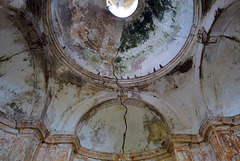
Viana do Alentejo, Capela do Cruzeiro ou Ermida do…
| |
|
|
|
PIPs ABOVE
ou Ermida do Sr. Jesus do Cruzeiro
A ermida está localizada a cerca de 200 metros a sudeste do santuário de Nossa Senhora de Aires.
Apesar de a devoção a Cristo ser muito antiga, o grande surto cristológico em Portugal ocorreu nos séculos XVII e XVIII, época em que a devoção popular ao Crucifixo fez aumentar o número quer de pequenas capelas, quer de grandes santuários dedicados a Jesus localizados no exterior das localidades. A par desta devoção desenvolveu-se, na mesma época, o culto mariano e a construção dos santuários que lhe dão expressão, como é o caso do actual santuário de Nossa Senhora de Aires que resultou de uma substituição, feita no século XVIII, de um edifício primitivo do século XVI.
A construção da pequena capela do Senhor Jesus do Cruzeiro de Viana é, também ela, precisamente, uma manifestação da devoção popular ao Crucifixo na centúria de Setecentos. Por isso a sua planta é em cruz grega.
+++
The hermitage is located about 200 metres southeast of the sanctuary of Nossa Senhora de Aires.
Although the devotion to Christ is very ancient, the great Christological surge in Portugal occurred in the 17th and 18th centuries, a time when the popular devotion to the Crucifix increased the number of both small chapels and large shrines dedicated to Jesus located outside the localities. Alongside this devotion, at the same time, the Marian cult and the construction of the sanctuaries that give it expression developed, as is the case of the current sanctuary of Our Lady of Aires which resulted from a substitution, made in the 18th century, of a primitive building from the 16th century.
The construction of the small chapel of Senhor Jesus do Cruzeiro de Viana is also precisely a manifestation of the popular devotion to the Crucifix in the 18th century. That is why it has a Greek cross shape.
Fonte: www.conhecerahistoria.pt/?d=93&da=3&fa=Via
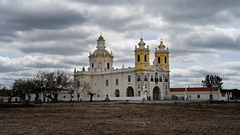
Viana do Alentejo, Santuário Nossa Senhora d'Aires
| |
|
|
|
O santuário em estilo barroco foi construído entre 1743 e 1804, segundo o projeto do Padre João Baptista, no local onde existia uma anterior ermida quinhentista. Na portada, uma inscrição em latim relata que após a expulsão dos mouros destas terras, um lavrador arava o campo quando encontrou dentro de um pote de barro a imagem que se vê no altar. O edifício tem uma planta de cruz latina, composta por uma única nave, com cobertura em abóbada de berço. No interior, destaca-se o altar de talha em estilo rococó.
++++
The Baroque-style sanctuary was built between 1743 and 1804, according to the project of Father João Baptista, on the site where there was a previous 16th-century chapel. On the doorway, an inscription in Latin relates that after the expulsion of the Moors from these lands, a farmer was ploughing the field when he found inside a clay pot the image that can be seen on the altar. The building has a Latin cross plan, consisting of a single nave, with a vaulted roof. Inside, the rococo style carved altarpiece stands out.
Fonte: www.visitportugal.com/pt-pt/content/santuario-de-nossa-senhora-de-aires
COULD NOT GO ANY CLOSER: PARKING LOTS UNDER CONSTRUCTION AND ALL THE AREA WAS FENCED.
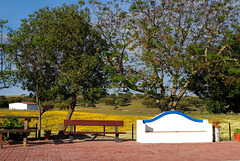
A caminho de Beja, HBM
| |
|
|
|
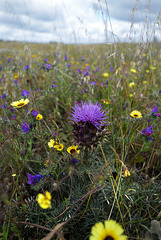
Cynara cardunculus, Penedos
| |
|
|
|
Walking on the flowery meadows
| |
|
|
|
NEIRA DAN TOLD ME SHE WOULD LOVE TO WALK ON THESE MEADOWS WE HAVE IN ALENTEJO, I DID THIS VIDEO THIS MORNING FOR HER AND I AM HAPPY TO SHARE WITH YOU ALL.
ENJOY YOUR SUNDAY
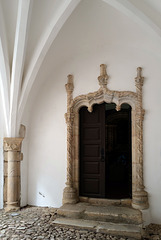
Viana do Alentejo, Igreja da Misericórdia

Viana do Alentejo, Igreja Matriz Nossa Senhora da…
| |
|
|
|
PIP ABOVE
Viana do Alentejo
Pela confluência de estilos e soluções arquitetónicas apresentadas, a Igreja Matriz de Nossa Senhora da Anunciação é considerada por historiadores de Arte como um exemplo quase perfeito do chamado Tardo-Gótico Alentejano, vertente artística que imiscui num única matriz a vertente final do estilo Gótico, a geometria e a proporção do Renascimento italiano com ergonomia do Mudéjar.
O traço é de autoria atribuída ao arquiteto régio Diogo de Arruda. A igreja apresenta uma matriz manuelina, presente nas suas três naves e oito pilares que servem de apoio à cobertura. Para além das três capelas presentes na zona da cabeceira (Nossa Senhora do Rosário à esquerda, Almas à direita e no centro a capela-mor com a representação da cena da Anunciação), é de destacar o altar do menino Jesus e o altar de S. Luís de França, ambos em talha dourada e situados nas proximidades do acesso à sacristia, bem como o altar erigido à memória do Padre Luís António da Cruz.
O pórtico da igreja é uma das referências regionais dentro do estilo manuelino, apresentando na sua composição elementos heráldica régia (armas régias, cruz da Ordem de Cristo e esferas armilares), elementos de cariz religioso como a videira, aplicados sobre uma matriz renascentista, com pormenores a nível dos pilares laterais desenhados ao gosto do plateresco.
++++
Viana do Alentejo
Due to the confluence of styles and architectural solutions presented, the Mother Church of Nossa Senhora da Anunciação is considered by art historians to be an almost perfect example of the so-called Late Gothic Alentejo, an artistic aspect that mixes in a single matrix the final aspect of the Gothic style, the geometry and proportion of the Italian Renaissance with the ergonomics of Mudéjar.
The design is attributed to the royal architect Diogo de Arruda. The church presents a Manueline matrix, present in its three naves and eight pillars that support the roof. As well as the three chapels in the zone of the head (Nossa Senhora do Rosário to the left, Almas to the right and, in the centre, the main chapel with the representation of the Annunciation scene), the altar of the child Jesus and the altar of S. Luís de França are also noteworthy, both in gilded woodcarving and situated near the sacristy access, as well as the altar erected to the memory of Father Luís António da Cruz.
The church porch is one of the regional references within the Manueline style, presenting in its composition royal heraldic elements (royal coat of arms, cross of the Order of Christ and armillary spheres), religious elements such as the vine, applied on a Renaissance matrix, with details at the level of the lateral pillars designed in the Plateresque style.
Fonte: www.cm-vianadoalentejo.pt/locais/igreja-matriz-nossa-senhora-da-anunciacao
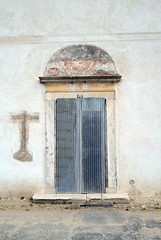
Viana do Alentejo, Convento de Jesus
| |
|
|
|
Cerro do Bufo, STOP HFF, see you next Friday !
| |
|
|
|
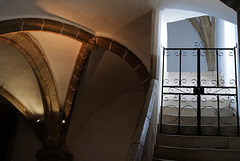
Viana do Alentejo, Igreja Matriz Nossa Senhora da…
| |
|
|
|
PIP ABOVE
Viana do Alentejo
Pela confluência de estilos e soluções arquitetónicas apresentadas, a Igreja Matriz de Nossa Senhora da Anunciação é considerada por historiadores de Arte como um exemplo quase perfeito do chamado Tardo-Gótico Alentejano, vertente artística que imiscui num única matriz a vertente final do estilo Gótico, a geometria e a proporção do Renascimento italiano com ergonomia do Mudéjar.
O traço é de autoria atribuída ao arquiteto régio Diogo de Arruda. A igreja apresenta uma matriz manuelina, presente nas suas três naves e oito pilares que servem de apoio à cobertura. Para além das três capelas presentes na zona da cabeceira (Nossa Senhora do Rosário à esquerda, Almas à direita e no centro a capela-mor com a representação da cena da Anunciação), é de destacar o altar do menino Jesus e o altar de S. Luís de França, ambos em talha dourada e situados nas proximidades do acesso à sacristia, bem como o altar erigido à memória do Padre Luís António da Cruz.
O pórtico da igreja é uma das referências regionais dentro do estilo manuelino, apresentando na sua composição elementos heráldica régia (armas régias, cruz da Ordem de Cristo e esferas armilares), elementos de cariz religioso como a videira, aplicados sobre uma matriz renascentista, com pormenores a nível dos pilares laterais desenhados ao gosto do plateresco.
++++
Viana do Alentejo
Due to the confluence of styles and architectural solutions presented, the Mother Church of Nossa Senhora da Anunciação is considered by art historians to be an almost perfect example of the so-called Late Gothic Alentejo, an artistic aspect that mixes in a single matrix the final aspect of the Gothic style, the geometry and proportion of the Italian Renaissance with the ergonomics of Mudéjar.
The design is attributed to the royal architect Diogo de Arruda. The church presents a Manueline matrix, present in its three naves and eight pillars that support the roof. As well as the three chapels in the zone of the head (Nossa Senhora do Rosário to the left, Almas to the right and, in the centre, the main chapel with the representation of the Annunciation scene), the altar of the child Jesus and the altar of S. Luís de França are also noteworthy, both in gilded woodcarving and situated near the sacristy access, as well as the altar erected to the memory of Father Luís António da Cruz.
The church porch is one of the regional references within the Manueline style, presenting in its composition royal heraldic elements (royal coat of arms, cross of the Order of Christ and armillary spheres), religious elements such as the vine, applied on a Renaissance matrix, with details at the level of the lateral pillars designed in the Plateresque style.
Fonte: www.cm-vianadoalentejo.pt/locais/igreja-matriz-nossa-senhora-da-anunciacao
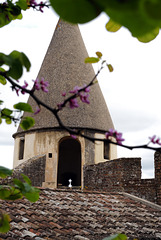
Viana do Alentejo, Castelo
| |
|
|
|
