The University of Pennsylvania Museum of Archeology and Anthropology, commonly called The University Museum, is an archaeology and anthropology museum that is part of the University of Pennsylvania in University City, Philadelphia, Pennsylvania. Text excerpted from: en.wikipedia.org/wiki/University_of_Pennsylvania_Museum_o...
The University of Pennsylvania Museum of Archeology and Anthropology, commonly called The University Museum, is an archaeology and anthropology museum that is part of the University of Pennsylvania in University City, Philadelphia, Pennsylvania. Text excerpted from: en.wikipedia.org/wiki/University_of_Pennsylvania_Museum_o...
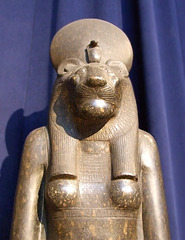
The Goddess Sakhmet
Egypt, Thebes (Ramessesum)
ca. 1405-1367 BC
Late 18th Dynasty
Black Granite (sun disc, lower torso, and base restored)
# E-2047 (?)
Sakhmet, consort of the god Ptah of Memphis, was also the goddess of war and pestilence who annihilated her enemies in the guise of a lioness. Originally set up by Amenhotep III at the Mut Temple at Karnak, the statue was later removed to the West Bank of the Nile by Ramesses II.
Text from the U. Penn. Museum label
Detail of the Statue of the Goddess Sekhmet in the…
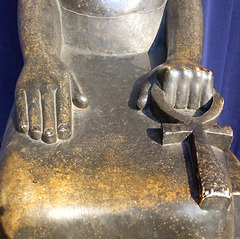
The Goddess Sakhmet
Egypt, Thebes (Ramessesum)
ca. 1405-1367 BC
Late 18th Dynasty
Black Granite (sun disc, lower torso, and base restored)
# E-2047 (?)
Sakhmet, consort of the god Ptah of Memphis, was also the goddess of war and pestilence who annihilated her enemies in the guise of a lioness. Originally set up by Amenhotep III at the Mut Temple at Karnak, the statue was later removed to the West Bank of the Nile by Ramesses II.
Text from the U. Penn. Museum label
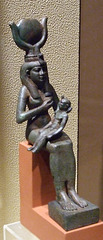
Isis Nursing Horus in the University of Pennsylvan…
Isis Nursing Horus
Bronze
height, 0.31 meter
Provenance uncertain, possibly Saqqara (in Lower Egypt)
Late Period, circa 575 BC
# E-14293
Seth flew into a rage when he learnt of the birth of Horus, so Isis fled with the baby into the marshes of the Nile Delta. During this period divine powers were invoked by Isis to protect her son against venomous insects and prowling animals, so the image of this statuette was regarded as a powerful, protective one.
Text from the U. Penn. Museum label
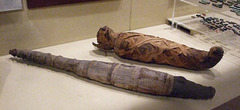
Crocodile & Cat Mummy in the University of Pennsyl…
Cat Mummy (right)
length, 0.46 meter
Provenance unknown, but probably Bubastis (in the Delta)
Ptolemaic Period, circa 2nd century BC
# 50-17-1
and
Crocodile Mummy and its radiograph (left)
length, 0.69 meter
Fayum region (in Lower Egypt)
Ptolemaic Period, circa 2nd century BC
# E17631
Text excerpted from the U. Penn Museum labels
Section of a Sarcophagus Lid in the University of…
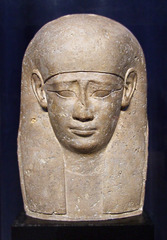
Section of a Sarcophagus Lid
Egypt
ca. 525-30 BC, Persian to Ptolemaic periods
Limestone
# 53-32-1
Upper part of an anthropomorphic sarcophagus lid. The back and shoulders have been trimmed away.
Text from the U. Penn. Museum label.
Egyptian Statue of a Cat in the University of Penn…
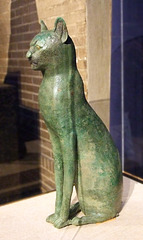
Statue of a Cat
Provenance unknown
Dynasty 22 (945-712 BC) or later
Bronze with gold leaf
# E14284
The cat was an important animal in ancient Egypt. Not only were cats useful household pets, but the cat was often associated with the goddess Bastet. Bastet is often shown as a cat or cat headed woman. She was a goddess of fertility and the home. Enormous cat cemeteries associated with the cult of Bastet existed at a number of sites throughout Egypt. Sacred cats were mummified and buried in these cemeteries, often enclosed in cat-shaped coffins of wood or bronze. This example is hollow and the interior is large enough to have contained a cat mummy. There is a collar incised around her neck with a pendant in the shape of an aegis. Gold leaf has been applied to the eyes.
Text from the U. Penn. Museum label.
Egyptian Lion Sculpture in the University of Penns…
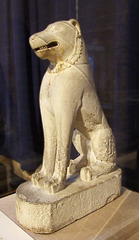
Lion
Egypt
Limestone (painted)
26th Dynasty, ca. 672-664 BC
# E-14306
Stylized seated lion, representing a royal pet. The name in the cartouche on the animal's chest may represent Necho I, ruler of the delta city of Sais under the Assyrian kings Esarhaddon and Assurbanipal.
Text from the U. Penn. Museum label.
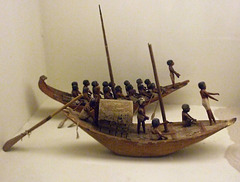
Egyptian Model Boats in the University of Pennsylv…
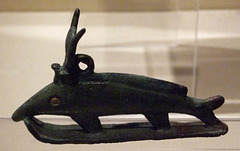
Oxyrhynchus Fish Amulet
Bronze
length, 0.12 meter
Provenance uncertain, possibly Thebes (in Upper Egypt)
Ptolemaic Period, 4th century BC
# 54-33-6
This grey-colored fish (Marymus kannume) was regarded as a form of the goddess Hathor. It figures in the later version of the Osirus legend as the creature which swallowed the phallus of the dismembered king.
Text from the U. Penn. Museum label.
Seated Man in the University of Pennsylvania Museu…
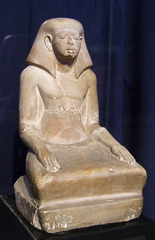
Seated Man
Egypt, Illahun
ca. 1800 BC, 12th Dynasty
Pink limestone (repaired)
# E-253
An official, wearing a cloth headdress and a long, fringed kilt. Carving the inscription was a final step when sculpting tomb statues of the deceased. Since this statue was not inscribed, it was never completed.
Text from the U. Penn. Museum label.
Egyptian Funerary Mask in the University of Pennsy…
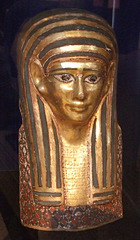
Funerary Mask
Provenance Unknown
Ptolemaic or Roman Period
Gilded Cartonnage
#53-1201a
Funerary masks served to protect the head and face of the deceased. Not really portraits of an individual, these masks presented the deceased in an idealized manner. Here the deceased wears a wig shown in alternating stripes of blue, red, and gold. Between the two lappets of the wig is a gilt collar with raised decorations. The sides and bottom of the mask are painted to represent beadwork. The face of the deceased is gilded perhaps reflecting a belief that the flesh of the immortal gods was made of gold.
Text from the U. Penn. Museum label.
Bust of a Man in the University of Pennsylvania Mu…
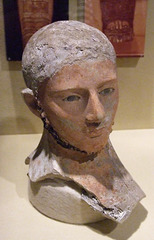
Bust of a Man
Plaster
Height 0.66 m
El Kharga (in Upper Egypt)
Roman Period, 2nd century AD
# E 886 a,b
This bust reflects the injection of several eastern Mediterranean influences on an otherwise traditional Egyptian theme. In contrast with the impersonal cartonnage mask placed on mummies from the Middle Kingdom onwards, portraiture of the deceased was now realistic. The general style is Hellenistic in nature, but the hairstyle and the beard match the prevalent fashions of the court in Rome.
The earliest types of this bust consisted of a hollow headpiece which was actually fitted over the skull. However later examples, like this one, were raised at an angle to the body to give the impression that the head was resting on a pillow.
Text from the U. Penn. Museum label.
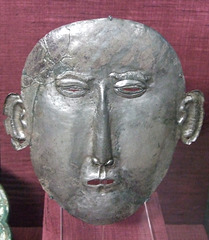
Chinese Death Mask in the University of Pennsylvan…
Death Mask
Liao Dynasty (947-1125)
Silver
The delicate features of this thin silver death mask were beaten into shape from a heavy sheet of metal. Masks like this were placed over the faces of men and women of the Khitan (Qidan) tribes that formed the Liao empire. The masks were attached to gold, silver, or copper wire shrouds that covered the bodies of Khitan buried in Inner Mongolia and Liaoning province between the mid-10th and first quarter of the 12th century.
Text from the U. Penn. Museum label.
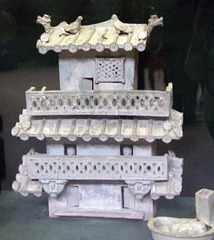
Chinese Model of a House in the University of Penn…
House
# C356
Model of a two-story house. The detail and size make it probable that it is from the tomb of a wealthy landowner.
Text from the U. Penn. Museum label.
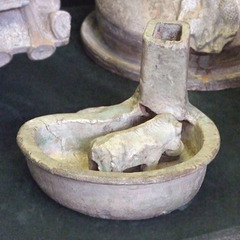
Chinese Model of a Pig Pen in the University of Pe…
Help & Contact|Club news|About ipernity|History|ipernity Club & Prices|Guide of good conduct Donate|Group guidelines|Privacy policy|Terms of use|Statutes|In memoria