


Lot-et-Garonne (47) and Gironde (33)

Fotos taken in the départements Lot-et-Garonne and Gironde, meanwhile parts of "Nouvelle-Aquitaine" region.
Bordeaux - Sainte-Croix
| |
|
|
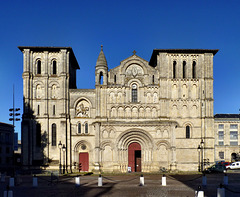
The late afternoon sun shines on "Sainte-Croix", the church of the former "Abbatiale Sainte-Croix". The abbey was founded in Merovingian times just south of Bordeaux. The exact year is unknown, but it was mentioned already in 679. The abbey was destroyed by the Saracens around 730 and rebuilt at the end of the century . During the 9th century the Normans raided the area and the abbey got devastated again. Local nobility supported the rebuilding of the abbey by donations and privileges.
The abbey church was built in eleventh/twelfth century - and the facade, seen here, is a fine example of the specific Romanesque style, typical for the Saintonge. The church is built as a Latin Cross.
The church got renovated and rebuilt during the 19th century by Paul Abadie, later known as the architect of "Sacré-Coeur de Montmartre" and strongly influenced by Viollet-le-Duc. His works (eg Saint-Front, Périgueux, St. Pierre, Angoulême, Saint-Etienne, Cahors) are disputed today, as he "re-created" structures. Here he added the left tower to the facade.
Bordeaux - Sainte-Croix
| |
|
|
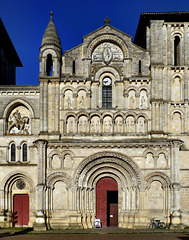
The late afternoon sun shines on "Sainte-Croix", the church of the former "Abbatiale Sainte-Croix". The abbey was founded in Merovingian times just south of Bordeaux. The exact year is unknown, but it was mentioned already in 679. The abbey was destroyed by the Saracens around 730 and rebuilt at the end of the century . During the 9th century the Normans raided the area and the abbey got devastated again. Local nobility supported the rebuilding of the abbey by donations and privileges.
The abbey church was built in eleventh/twelfth century. Here is the center of the facade, a fine example of the specific Romanesque style, typical for the Saintonge.
The church got renovated and rebuilt during the 19th century by Paul Abadie, later known as the architect of "Sacré-Coeur de Montmartre" and strongly influenced by Viollet-le-Duc. His works (eg Saint-Front, Périgueux, St. Pierre, Angoulême, Saint-Etienne, Cahors) are disputed today, as he "re-created" structures. St. George slaying the dragon (left) is one of Abbadie´s additions.
Bordeaux - Sainte-Croix
| |
|
|
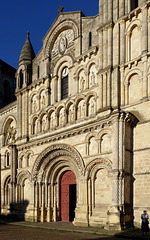
The late afternoon sun shines on "Sainte-Croix", the church of the former "Abbatiale Sainte-Croix". The abbey was founded in Merovingian times just south of Bordeaux. The exact year is unknown, but it was mentioned already in 679. The abbey was destroyed by the Saracens around 730 and rebuilt at the end of the century . During the 9th century the Normans raided the area and the abbey got devastated again. Local nobility supported the rebuilding of the abbey by donations and privileges.
The abbey church was built in eleventh/twelfth century. Here is the center of the facade, a fine example of the specific Romanesque style, typical for the Saintonge.
The church got renovated and rebuilt during the 19th century by Paul Abadie, later known as the architect of "Sacré-Coeur de Montmartre" and strongly influenced by Viollet-le-Duc. His works (eg Saint-Front, Périgueux, St. Pierre, Angoulême, Saint-Etienne, Cahors) are disputed today, as he "re-created" structures.
Bordeaux - Sainte-Croix
| |
|
|
The late afternoon sun shines on "Sainte-Croix", the church of the former "Abbatiale Sainte-Croix". The abbey was founded in Merovingian times just south of Bordeaux. The exact year is unknown, but it was mentioned already in 679. The abbey was destroyed by the Saracens around 730 and rebuilt at the end of the century . During the 9th century the Normans raided the area and the abbey got devastated again. Local nobility supported the rebuilding of the abbey by donations and privileges.
The abbey church was built in eleventh/twelfth century. Here is the center of the facade, a fine example of the specific Romanesque style, typical for the Saintonge.
The church got renovated and rebuilt during the 19th century by Paul Abadie, later known as the architect of "Sacré-Coeur de Montmartre" and strongly influenced by Viollet-le-Duc. His works (eg Saint-Front, Périgueux, St. Pierre, Angoulême, Saint-Etienne, Cahors) are disputed today, as he "re-created" structures.
In 1745 Dom Bédos (aka "François Lamathe Bédos de Celles de Salelles") joined the Benedictian congregation of Sainte-Croix. He is known for being a master pipe organ builder. He built an organ for this church in 1748, that in 1811 later was moved to the Cathedral. The organ was returned to Sainte-Croix in the 1970s and restored.
In July and August, there are free concerts here every Wednesday at 18h30.
www.youtube.com/watch?v=W-zfOJciZDE
Bordeaux - Sainte-Croix
| |
|
|
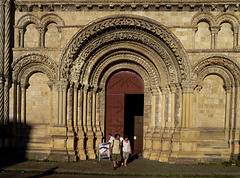
The late afternoon sun shines on "Sainte-Croix", the church of the former "Abbatiale Sainte-Croix". The abbey was founded in Merovingian times just south of Bordeaux. The exact year is unknown, but it was mentioned already in 679. The abbey was destroyed by the Saracens around 730 and rebuilt at the end of the century . During the 9th century the Normans raided the area and the abbey got devastated again. Local nobility supported the rebuilding of the abbey by donations and privileges.
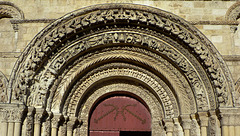
The abbey church, built in eleventh/twelfth century, got renovated and rebuilt during the 19th century by Paul Abadie, later known as the architect of "Sacré-Coeur de Montmartre" and strongly influenced by Viollet-le-Duc. His works (eg Saint-Front, Périgueux, St. Pierre, Angoulême) are disputed today, as he "re-created" structures and added details.
The archivolts over the central portal are examples of the specific Romanesque carving-style, typical for the Saintonge. Like in Saintes, Aulney and Avy the number of "Elders of the Apocalypse" is higher than 24, what is the number mentioned in the Book of Revelation.
Bordeaux - Sainte-Croix
| |
|
|
The late afternoon sun shines on "Sainte-Croix", the church of the former "Abbatiale Sainte-Croix". The abbey was founded in Merovingian times just south of Bordeaux. The exact year is unknown, but it was mentioned already in 679. The abbey was destroyed by the Saracens around 730 and rebuilt at the end of the century . During the 9th century the Normans raided the area and the abbey got devastated again. Local nobility supported the rebuilding of the abbey by donations and privileges.
The abbey church, built in eleventh/twelfth century, got renovated and rebuilt during the 19th century by Paul Abadie, later known as the architect of "Sacré-Coeur de Montmartre" and strongly influenced by Viollet-le-Duc. His works (eg Saint-Front, Périgueux, St. Pierre, Angoulême) are disputed today, as he "re-created" structures and added details.
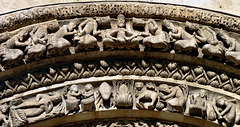
The archivolts over the central portal.
The large outer archivolt depicts the "Elders of the Apocalypse", while the large inner archivolt has the signs of the Zodiac and "Monthly Labors". There is the Cancer - and a farmer using a scythe.
Bordeaux - Sainte-Croix
| |
|
|
The late afternoon sun shines on "Sainte-Croix", the church of the former "Abbatiale Sainte-Croix". The abbey was founded in Merovingian times just south of Bordeaux. The exact year is unknown, but it was mentioned already in 679. The abbey was destroyed by the Saracens around 730 and rebuilt at the end of the century . During the 9th century the Normans raided the area and the abbey got devastated again. Local nobility supported the rebuilding of the abbey by donations and privileges.
The abbey church, built in eleventh/twelfth century, got renovated and rebuilt during the 19th century by Paul Abadie, later known as the architect of "Sacré-Coeur de Montmartre" and strongly influenced by Viollet-le-Duc. His works (eg Saint-Front, Périgueux, St. Pierre, Angoulême) are disputed today, as he "re-created" structures and added details.
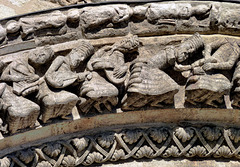
Another close up of the central archivolt. The "Elders of the Apocalypse".
Bordeaux - Sainte-Croix
| |
|
|
The late afternoon sun shines on "Sainte-Croix", the church of the former "Abbatiale Sainte-Croix". The abbey was founded in Merovingian times just south of Bordeaux. The exact year is unknown, but it was mentioned already in 679. The abbey was destroyed by the Saracens around 730 and rebuilt at the end of the century . During the 9th century the Normans raided the area and the abbey got devastated again. Local nobility supported the rebuilding of the abbey by donations and privileges.
The abbey church, built in eleventh/twelfth century, got renovated and rebuilt during the 19th century by Paul Abadie, later known as the architect of "Sacré-Coeur de Montmartre" and strongly influenced by Viollet-le-Duc. His works (eg Saint-Front, Périgueux, St. Pierre, Angoulême) are disputed today, as he "re-created" structures and added details.
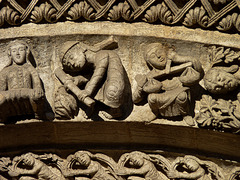
While the outer of the large archivolts depict the "Elders of the Apocalypse" (see previous uploads), the inner one has the signs of the Zodiac and the "Monthly Labors". The person with the scale stands for Libra.
Bordeaux - Sainte-Croix
| |
|
|
The late afternoon sun shines on "Sainte-Croix", the church of the former "Abbatiale Sainte-Croix". The abbey was founded in Merovingian times just south of Bordeaux. The exact year is unknown, but it was mentioned already in 679. The abbey was destroyed by the Saracens around 730 and rebuilt at the end of the century . During the 9th century the Normans raided the area and the abbey got devastated again. Local nobility supported the rebuilding of the abbey by donations and privileges.
The abbey church, built in eleventh/twelfth century, got renovated and rebuilt during the 19th century by Paul Abadie, later known as the architect of "Sacré-Coeur de Montmartre" and strongly influenced by Viollet-le-Duc. His works (eg Saint-Front, Périgueux, St. Pierre, Angoulême) are disputed today, as he "re-created" structures and added details.
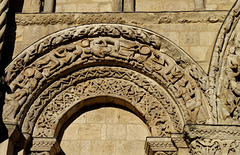
There are two blind arches flanking the central entrance. Here are the archivolts over the left blind arch. Avarice is a deathly sin, so that the five misers, holding their filled purses, are tortured by evil devils. No mercy!
Bordeaux - Sainte-Croix
| |
|
|
The late afternoon sun shines on "Sainte-Croix", the church of the former "Abbatiale Sainte-Croix". The abbey was founded in Merovingian times just south of Bordeaux. The exact year is unknown, but it was mentioned already in 679. The abbey was destroyed by the Saracens around 730 and rebuilt at the end of the century . During the 9th century the Normans raided the area and the abbey got devastated again. Local nobility supported the rebuilding of the abbey by donations and privileges.
The abbey church, built in eleventh/twelfth century, got renovated and rebuilt during the 19th century by Paul Abadie, later known as the architect of "Sacré-Coeur de Montmartre" and strongly influenced by Viollet-le-Duc. His works (eg Saint-Front, Périgueux, St. Pierre, Angoulême) are disputed today, as he "re-created" structures and added details.
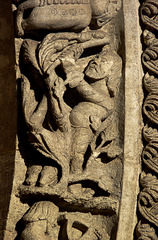
While the outer of the large archivolts depict the "Elders of the Apocalypse" (see previous uploads), the inner one has the signs of the Zodiac and the "Monthly Labors". A farmer is pruning the vines. Below a part of the Sagitarius.
Bordeaux - Sainte-Croix
| |
|
|
The late afternoon sun shines on "Sainte-Croix", the church of the former "Abbatiale Sainte-Croix". The abbey was founded in Merovingian times just south of Bordeaux. The exact year is unknown, but it was mentioned already in 679. The abbey was destroyed by the Saracens around 730 and rebuilt at the end of the century . During the 9th century the Normans raided the area and the abbey got devastated again. Local nobility supported the rebuilding of the abbey by donations and privileges.
The abbey church, built in eleventh/twelfth century, got renovated and rebuilt during the 19th century by Paul Abadie, later known as the architect of "Sacré-Coeur de Montmartre" and strongly influenced by Viollet-le-Duc. His works (eg Saint-Front, Périgueux, St. Pierre, Angoulême) are disputed today, as he "re-created" structures and added details.
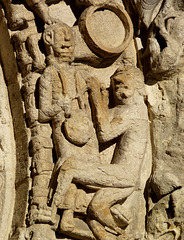
There are two blind arches flanking the central entrance. Here are the archivolts over the left blind arch. Avarice is a deathly sin, so that the misers, holding their filled purses, are tortured by evil devils. No mercy! Here is a close up.
Bordeaux - Sainte-Croix
| |
|
|
The late afternoon sun shines on "Sainte-Croix", the church of the former "Abbatiale Sainte-Croix". The abbey was founded in Merovingian times just south of Bordeaux. The exact year is unknown, but it was mentioned already in 679. The abbey was destroyed by the Saracens around 730 and rebuilt at the end of the century . During the 9th century the Normans raided the area and the abbey got devastated again. Local nobility supported the rebuilding of the abbey by donations and privileges.
The abbey church, built in eleventh/twelfth century, got renovated and rebuilt during the 19th century by Paul Abadie, later known as the architect of "Sacré-Coeur de Montmartre" and strongly influenced by Viollet-le-Duc. His works (eg Saint-Front, Périgueux, St. Pierre, Angoulême) are disputed today, as he "re-created" structures and added details.
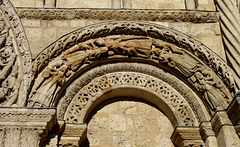
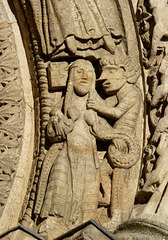
There are two blind arches flanking the central entrance. Here are the archivolts over the right blind arch. While on the left side five misers are plagued by devils, as avarice is a deathly sin, here are five luxuriae tortured by the devils. These ladies are symbols of lust, another deathly sin.
Bordeaux - Sainte-Croix
| |
|
|
The late afternoon sun shines on "Sainte-Croix", the church of the former "Abbatiale Sainte-Croix". The abbey was founded in Merovingian times just south of Bordeaux. The exact year is unknown, but it was mentioned already in 679. The abbey was destroyed by the Saracens around 730 and rebuilt at the end of the century . During the 9th century the Normans raided the area and the abbey got devastated again. Local nobility supported the rebuilding of the abbey by donations and privileges.
The abbey church, built in eleventh/twelfth century, got renovated and rebuilt during the 19th century by Paul Abadie, later known as the architect of "Sacré-Coeur de Montmartre" and strongly influenced by Viollet-le-Duc. His works (eg Saint-Front, Périgueux, St. Pierre, Angoulême) are disputed today, as he "re-created" structures and added details.
There are two blind arches flanking the central entrance. Here are the archivolts over the right blind arch. While on the left side five misers are plagued by devils, as avarice is a deathly sin, here are five luxuriae tortured by the devils. These ladies are symbols of lust, another deathly sin.
Here is a close up.
Bordeaux - Los Teoporos
| |
|
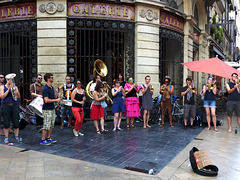
Great music for a wonderful summer evening in Bordeaux!
The music can be thrilling:
www.youtube.com/watch?v=GHnx7izv9us
Merci beaucoup!!
www.losteoporos.org/
Soulac-sur-Mer - Sandwicherie
Soulac-sur-Mer - Notre-Dame-de-la-Fin-des-Terres
| |
|
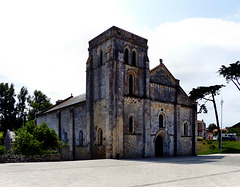
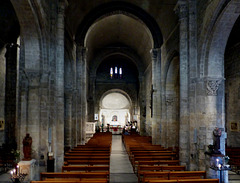
In 1103 a priory, dependent from the Benedictine abbey Sainte Croix in Bordeaux existed here, on the tip of the Medoc peninsula. At that time, the pilgrimage to Santiago de Compostela was developing and many "pelerins" went ashore here. So one of many "chemins" ("Voie de Soulac") started right here and followed the coastline south.
The church, erected near the beach, was threatened by shifting sand dunes already in the beginning - and after a long fight, the church was given up around 1740. At that time, the church was completely buried by a sand dune. As the dune moved on, the ruined church was dug out of the sand during the century, got restored and now serves the parish.
Soulac-sur-Mer - Notre-Dame-de-la-Fin-des-Terres
| |
|
|
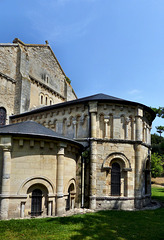
In 1103 a priory, dependent from the Benedictine abbey Sainte Croix in Bordeaux existed here, on the tip of the Medoc peninsula. At that time, the pilgrimage to Santiago de Compostela was developing and many "pelerins" went ashore here. So one of many "chemins" ("Voie de Soulac") started right here and followed the coastline south.
The church, erected near the beach, was threatened by shifting sand dunes already in the beginning - and after a long fight, the church was given up around 1740. At that time, the church was completely buried by a sand dune. As the dune moved on, the ruined church was dug out of the sand by the mid 19th century and got restored.
Soulac-sur-Mer - Notre-Dame-de-la-Fin-des-Terres
| |
|
In 1103 a priory, dependent from the Benedictine abbey Sainte Croix in Bordeaux existed here, on the tip of the Medoc peninsula. At that time, the pilgrimage to Santiago de Compostela was developing and many "pelerins" went ashore here. So one of many "chemins" ("Voie de Soulac") started right here and followed the coastline south.
The church, erected near the beach, was threatened by shifting sand dunes already in the beginning - and after a long fight, the church was given up around 1740. At that time, the church was completely buried by a sand dune. As the dune moved on, the ruined church was dug out of the sand by the mid 19th century and got restored.
Fighting against the shifting sand dune the floor level was heightened, what can be seen here.
Jump to top
RSS feed- Latest items - Subscribe to the latest items added to this album
- ipernity © 2007-2026
- Help & Contact
|
Club news
|
About ipernity
|
History |
ipernity Club & Prices |
Guide of good conduct
Donate | Group guidelines | Privacy policy | Terms of use | Statutes | In memoria -
Facebook
X
