


Lower Saxony, Niedersachsen, Basse-Saxe

A collection of photos - taken in Lower Saxony.

Hildesheim - Waffenschmiedehaus
| |
|
|
|
Louis the Pious founded the bishopric of Hildesheim in 815. The settlement developed into a town and was granted market rights by King Otto III in 983. Craftsmen and merchants were attracted and the city developed into an important community. By 1167, Hildesheim was an almost completely walled market settlement.
At the beginning of the 13th century, Hildesheim had about 5,000 inhabitants, and when Hildesheim received its city charter in 1249, it was one of the largest cities in northern Germany. The clergy ruled Hildesheim for four centuries before a town hall was built and the citizens gained influence and independence. In 1367, Hildesheim became a member of the Hanseatic League. But what is now called Hildesheim was various small "suburbs". After centuries of (sometimes armed) disputes, it was not until the end of the 16th century that a union was created and subsequently at least the inner wall was taken down Old and New Town.
During the Thirty Years' War, Hildesheim was besieged and occupied several times. In 1813, after the Napoleonic Wars, the town became part of the Kingdom of Hanover, which was annexed by the Kingdom of Prussia as a province after the Austro-Prussian War in 1866.
The air raids on Hildesheim in 1944/45 destroyed large parts of the city. Of the 1500 half-timbered houses, only 200 remained. 90 percent of the historic old town was destroyed in the firestorm.
-
A small area in the southern part of the old town, the area around the Godehardikirche, remained largely intact during the war. The Waffenschmiedehaus (gunsmith's house) is from 1548 and now houses the "Neisse Heimat Museum", where memories and exhibits from the Neisse area (now Poland) are collected.

Hildesheim - Wernersches Haus
| |
|
|
Louis the Pious founded the bishopric of Hildesheim in 815. The settlement developed into a town and was granted market rights by King Otto III in 983. Craftsmen and merchants were attracted and the city developed into an important community. By 1167, Hildesheim was an almost completely walled market settlement.
At the beginning of the 13th century, Hildesheim had about 5,000 inhabitants, and when Hildesheim received its city charter in 1249, it was one of the largest cities in northern Germany. The clergy ruled Hildesheim for four centuries before a town hall was built and the citizens gained influence and independence. In 1367, Hildesheim became a member of the Hanseatic League. But what is now called Hildesheim was various small "suburbs". After centuries of (sometimes armed) disputes, it was not until the end of the 16th century that a union was created and subsequently at least the inner wall was taken down Old and New Town.
During the Thirty Years' War, Hildesheim was besieged and occupied several times. In 1813, after the Napoleonic Wars, the town became part of the Kingdom of Hanover, which was annexed by the Kingdom of Prussia as a province after the Austro-Prussian War in 1866.
The air raids on Hildesheim in 1944/45 destroyed large parts of the city. Of the 1500 half-timbered houses, only 200 remained. 90 percent of the historic old town was destroyed in the firestorm.
-
A small area in the southern part of the old town, the area around the Godehardikirche, remained largely intact during the war. The stately Werner House is a Renaissance half-timbered house dates back to 1606 and is named after its builder, the episcopal secretary Philip Werner. It suffered fire damage during the bombing of Hildesheim in 1945, which had already been repaired by 1948.

Hildesheim - Wernersches Haus
| |
|
|
|
Louis the Pious founded the bishopric of Hildesheim in 815. The settlement developed into a town and was granted market rights by King Otto III in 983. Craftsmen and merchants were attracted and the city developed into an important community. By 1167, Hildesheim was an almost completely walled market settlement.
At the beginning of the 13th century, Hildesheim had about 5,000 inhabitants, and when Hildesheim received its city charter in 1249, it was one of the largest cities in northern Germany. The clergy ruled Hildesheim for four centuries before a town hall was built and the citizens gained influence and independence. In 1367, Hildesheim became a member of the Hanseatic League. But what is now called Hildesheim was various small "suburbs". After centuries of (sometimes armed) disputes, it was not until the end of the 16th century that a union was created and subsequently at least the inner wall was taken down Old and New Town.
During the Thirty Years' War, Hildesheim was besieged and occupied several times. In 1813, after the Napoleonic Wars, the town became part of the Kingdom of Hanover, which was annexed by the Kingdom of Prussia as a province after the Austro-Prussian War in 1866.
The air raids on Hildesheim in 1944/45 destroyed large parts of the city. Of the 1500 half-timbered houses, only 200 remained. 90 percent of the historic old town was destroyed in the firestorm.
-
A small area in the southern part of the old town, the area around the Godehardikirche, remained largely intact during the war. The stately Werner House is a Renaissance half-timbered house dates back to 1606 and is named after its builder, the episcopal secretary Philip Werner. It suffered fire damage during the bombing of Hildesheim in 1945, which had already been repaired by 1948.
A detail

Hildesheim - St. Godehard
| |
|
|
|
Louis the Pious founded the bishopric of Hildesheim in 815. The settlement developed into a town and was granted market rights by King Otto III in 983. Craftsmen and merchants were attracted and the city developed into an important community. By 1167, Hildesheim was an almost completely walled market settlement.
At the beginning of the 13th century, Hildesheim had about 5,000 inhabitants, and when Hildesheim received its city charter in 1249, it was one of the largest cities in northern Germany. The clergy ruled Hildesheim for four centuries before a town hall was built and the citizens gained influence and independence. In 1367, Hildesheim became a member of the Hanseatic League. But what is now called Hildesheim was various small "suburbs". After centuries of (sometimes armed) disputes, it was not until the end of the 16th century that a union was created and subsequently at least the inner wall was taken down Old and New Town.
During the Thirty Years' War, Hildesheim was besieged and occupied several times. In 1813, after the Napoleonic Wars, the town became part of the Kingdom of Hanover, which was annexed by the Kingdom of Prussia as a province after the Austro-Prussian War in 1866.
The air raids on Hildesheim in 1944/45 destroyed large parts of the city. Of the 1500 half-timbered houses, only 200 remained. 90 percent of the historic old town was destroyed in the firestorm.
-
St. Godehard, one of the most important bishops of Hildesheim from 1022 to 1038, was canonized in 1133. In the same year, construction began on a church and monastery in his honor. In 1172 the work was completed and this church got consecrated.
The monastery remained untouched by the Reformation and existed until secularization in 1803. The basilica was saved from demolition and became a Catholic parish church.
The basilica remained almost unchanged over the centuries and was not heavily damaged even during WWII. From 1945 to 1960, when Hildesheim Cathedral was destroyed and rebuilt, St, Godehard served as the "cathedral" of the Bishop of Hildesheim.

Hildesheim - St. Godehard
| |
|
|
|
Louis the Pious founded the bishopric of Hildesheim in 815. The settlement developed into a town and was granted market rights by King Otto III in 983. Craftsmen and merchants were attracted and the city developed into an important community. By 1167, Hildesheim was an almost completely walled market settlement.
At the beginning of the 13th century, Hildesheim had about 5,000 inhabitants, and when Hildesheim received its city charter in 1249, it was one of the largest cities in northern Germany. The clergy ruled Hildesheim for four centuries before a town hall was built and the citizens gained influence and independence. In 1367, Hildesheim became a member of the Hanseatic League. But what is now called Hildesheim was various small "suburbs". After centuries of (sometimes armed) disputes, it was not until the end of the 16th century that a union was created and subsequently at least the inner wall was taken down Old and New Town.
During the Thirty Years' War, Hildesheim was besieged and occupied several times. In 1813, after the Napoleonic Wars, the town became part of the Kingdom of Hanover, which was annexed by the Kingdom of Prussia as a province after the Austro-Prussian War in 1866.
The air raids on Hildesheim in 1944/45 destroyed large parts of the city. Of the 1500 half-timbered houses, only 200 remained. 90 percent of the historic old town was destroyed in the firestorm.
-
St. Godehard, one of the most important bishops of Hildesheim from 1022 to 1038, was canonized in 1133. In the same year, construction began on a church and monastery in his honor. In 1172 the work was completed and this church got consecrated.
The monastery remained untouched by the Reformation and existed until secularization in 1803. The basilica was saved from demolition and became a Catholic parish church.
The basilica remained almost unchanged over the centuries and was not heavily damaged even during WWII. From 1945 to 1960, when Hildesheim Cathedral was destroyed and rebuilt, St, Godehard served as the "cathedral" of the Bishop of Hildesheim.

Hildesheim - St. Godehard
| |
|
|
|
Louis the Pious founded the bishopric of Hildesheim in 815. The settlement developed into a town and was granted market rights by King Otto III in 983. Craftsmen and merchants were attracted and the city developed into an important community. By 1167, Hildesheim was an almost completely walled market settlement.
At the beginning of the 13th century, Hildesheim had about 5,000 inhabitants, and when Hildesheim received its city charter in 1249, it was one of the largest cities in northern Germany. The clergy ruled Hildesheim for four centuries before a town hall was built and the citizens gained influence and independence. In 1367, Hildesheim became a member of the Hanseatic League. But what is now called Hildesheim was various small "suburbs". After centuries of (sometimes armed) disputes, it was not until the end of the 16th century that a union was created and subsequently at least the inner wall was taken down Old and New Town.
During the Thirty Years' War, Hildesheim was besieged and occupied several times. In 1813, after the Napoleonic Wars, the town became part of the Kingdom of Hanover, which was annexed by the Kingdom of Prussia as a province after the Austro-Prussian War in 1866.
The air raids on Hildesheim in 1944/45 destroyed large parts of the city. Of the 1500 half-timbered houses, only 200 remained. 90 percent of the historic old town was destroyed in the firestorm.
-
St. Godehard, one of the most important bishops of Hildesheim from 1022 to 1038, was canonized in 1133. In the same year, construction began on a church and monastery in his honor. In 1172 the work was completed and this church got consecrated.
The monastery remained untouched by the Reformation and existed until secularization in 1803. The basilica was saved from demolition and became a Catholic parish church.
The basilica remained almost unchanged over the centuries and was not heavily damaged even during WWII. From 1945 to 1960, when Hildesheim Cathedral was destroyed and rebuilt, St, Godehard served as the "cathedral" of the Bishop of Hildesheim.

Hildesheim - St. Godehard
| |
|
Louis the Pious founded the bishopric of Hildesheim in 815. The settlement developed into a town and was granted market rights by King Otto III in 983. Craftsmen and merchants were attracted and the city developed into an important community. By 1167, Hildesheim was an almost completely walled market settlement.
At the beginning of the 13th century, Hildesheim had about 5,000 inhabitants, and when Hildesheim received its city charter in 1249, it was one of the largest cities in northern Germany. The clergy ruled Hildesheim for four centuries before a town hall was built and the citizens gained influence and independence. In 1367, Hildesheim became a member of the Hanseatic League. But what is now called Hildesheim was various small "suburbs". After centuries of (sometimes armed) disputes, it was not until the end of the 16th century that a union was created and subsequently at least the inner wall was taken down Old and New Town.
During the Thirty Years' War, Hildesheim was besieged and occupied several times. In 1813, after the Napoleonic Wars, the town became part of the Kingdom of Hanover, which was annexed by the Kingdom of Prussia as a province after the Austro-Prussian War in 1866.
The air raids on Hildesheim in 1944/45 destroyed large parts of the city. Of the 1500 half-timbered houses, only 200 remained. 90 percent of the historic old town was destroyed in the firestorm.
-
St. Godehard, one of the most important bishops of Hildesheim from 1022 to 1038, was canonized in 1133. In the same year, construction began on a church and monastery in his honor. In 1172 the work was completed and this church got consecrated.
The monastery remained untouched by the Reformation and existed until secularization in 1803. The basilica was saved from demolition and became a Catholic parish church.
The basilica remained almost unchanged over the centuries and was not heavily damaged even during WWII. From 1945 to 1960, when Hildesheim Cathedral was destroyed and rebuilt, St, Godehard served as the "cathedral" of the Bishop of Hildesheim.

Hildesheim - St. Godehard
| |
|
|
Louis the Pious founded the bishopric of Hildesheim in 815. The settlement developed into a town and was granted market rights by King Otto III in 983. Craftsmen and merchants were attracted and the city developed into an important community. By 1167, Hildesheim was an almost completely walled market settlement.
At the beginning of the 13th century, Hildesheim had about 5,000 inhabitants, and when Hildesheim received its city charter in 1249, it was one of the largest cities in northern Germany. The clergy ruled Hildesheim for four centuries before a town hall was built and the citizens gained influence and independence. In 1367, Hildesheim became a member of the Hanseatic League. But what is now called Hildesheim was various small "suburbs". After centuries of (sometimes armed) disputes, it was not until the end of the 16th century that a union was created and subsequently at least the inner wall was taken down Old and New Town.
During the Thirty Years' War, Hildesheim was besieged and occupied several times. In 1813, after the Napoleonic Wars, the town became part of the Kingdom of Hanover, which was annexed by the Kingdom of Prussia as a province after the Austro-Prussian War in 1866.
The air raids on Hildesheim in 1944/45 destroyed large parts of the city. Of the 1500 half-timbered houses, only 200 remained. 90 percent of the historic old town was destroyed in the firestorm.
-
St. Godehard, one of the most important bishops of Hildesheim from 1022 to 1038, was canonized in 1133. In the same year, construction began on a church and monastery in his honor. In 1172 the work was completed and this church got consecrated.
The monastery remained untouched by the Reformation and existed until secularization in 1803. The basilica was saved from demolition and became a Catholic parish church.
The basilica remained almost unchanged over the centuries and was not heavily damaged even during WWII. From 1945 to 1960, when Hildesheim Cathedral was destroyed and rebuilt, St, Godehard served as the "cathedral" of the Bishop of Hildesheim.
The nave

Hildesheim - St. Godehard
| |
|
|
Louis the Pious founded the bishopric of Hildesheim in 815. The settlement developed into a town and was granted market rights by King Otto III in 983. Craftsmen and merchants were attracted and the city developed into an important community. By 1167, Hildesheim was an almost completely walled market settlement.
At the beginning of the 13th century, Hildesheim had about 5,000 inhabitants, and when Hildesheim received its city charter in 1249, it was one of the largest cities in northern Germany. The clergy ruled Hildesheim for four centuries before a town hall was built and the citizens gained influence and independence. In 1367, Hildesheim became a member of the Hanseatic League. But what is now called Hildesheim was various small "suburbs". After centuries of (sometimes armed) disputes, it was not until the end of the 16th century that a union was created and subsequently at least the inner wall was taken down Old and New Town.
During the Thirty Years' War, Hildesheim was besieged and occupied several times. In 1813, after the Napoleonic Wars, the town became part of the Kingdom of Hanover, which was annexed by the Kingdom of Prussia as a province after the Austro-Prussian War in 1866.
The air raids on Hildesheim in 1944/45 destroyed large parts of the city. Of the 1500 half-timbered houses, only 200 remained. 90 percent of the historic old town was destroyed in the firestorm.
-
St. Godehard, one of the most important bishops of Hildesheim from 1022 to 1038, was canonized in 1133. In the same year, construction began on a church and monastery in his honor. In 1172 the work was completed and this church got consecrated.
The monastery remained untouched by the Reformation and existed until secularization in 1803. The basilica was saved from demolition and became a Catholic parish church.
The basilica remained almost unchanged over the centuries and was not heavily damaged even during WWII. From 1945 to 1960, when Hildesheim Cathedral was destroyed and rebuilt, St, Godehard served as the "cathedral" of the Bishop of Hildesheim.
The painting of the choir was created in the middle of the 19th century. The large wheel chandelier was donated to the church in 1864 by Queen Marie of Hanover. The chandelier got damaged when thieves broke into St. Godehard in 2021.

Hildesheim - St. Godehard
| |
|
|
|
Louis the Pious founded the bishopric of Hildesheim in 815. The settlement developed into a town and was granted market rights by King Otto III in 983. Craftsmen and merchants were attracted and the city developed into an important community. By 1167, Hildesheim was an almost completely walled market settlement.
At the beginning of the 13th century, Hildesheim had about 5,000 inhabitants, and when Hildesheim received its city charter in 1249, it was one of the largest cities in northern Germany. The clergy ruled Hildesheim for four centuries before a town hall was built and the citizens gained influence and independence. In 1367, Hildesheim became a member of the Hanseatic League. But what is now called Hildesheim was various small "suburbs". After centuries of (sometimes armed) disputes, it was not until the end of the 16th century that a union was created and subsequently at least the inner wall was taken down Old and New Town.
During the Thirty Years' War, Hildesheim was besieged and occupied several times. In 1813, after the Napoleonic Wars, the town became part of the Kingdom of Hanover, which was annexed by the Kingdom of Prussia as a province after the Austro-Prussian War in 1866.
The air raids on Hildesheim in 1944/45 destroyed large parts of the city. Of the 1500 half-timbered houses, only 200 remained. 90 percent of the historic old town was destroyed in the firestorm.
-
St. Godehard, one of the most important bishops of Hildesheim from 1022 to 1038, was canonized in 1133. In the same year, construction began on a church and monastery in his honor. In 1172 the work was completed and this church got consecrated.
The monastery remained untouched by the Reformation and existed until secularization in 1803. The basilica was saved from demolition and became a Catholic parish church.
The basilica remained almost unchanged over the centuries and was not heavily damaged even during WWII. From 1945 to 1960, when Hildesheim Cathedral was destroyed and rebuilt, St, Godehard served as the "cathedral" of the Bishop of Hildesheim.
The capitals in St. Godehard are excellently worked.

Hildesheim - St. Godehard
| |
|
|
Louis the Pious founded the bishopric of Hildesheim in 815. The settlement developed into a town and was granted market rights by King Otto III in 983. Craftsmen and merchants were attracted and the city developed into an important community. By 1167, Hildesheim was an almost completely walled market settlement.
At the beginning of the 13th century, Hildesheim had about 5,000 inhabitants, and when Hildesheim received its city charter in 1249, it was one of the largest cities in northern Germany. The clergy ruled Hildesheim for four centuries before a town hall was built and the citizens gained influence and independence. In 1367, Hildesheim became a member of the Hanseatic League. But what is now called Hildesheim was various small "suburbs". After centuries of (sometimes armed) disputes, it was not until the end of the 16th century that a union was created and subsequently at least the inner wall was taken down Old and New Town.
During the Thirty Years' War, Hildesheim was besieged and occupied several times. In 1813, after the Napoleonic Wars, the town became part of the Kingdom of Hanover, which was annexed by the Kingdom of Prussia as a province after the Austro-Prussian War in 1866.
The air raids on Hildesheim in 1944/45 destroyed large parts of the city. Of the 1500 half-timbered houses, only 200 remained. 90 percent of the historic old town was destroyed in the firestorm.
-
St. Godehard, one of the most important bishops of Hildesheim from 1022 to 1038, was canonized in 1133. In the same year, construction began on a church and monastery in his honor. In 1172 the work was completed and this church got consecrated.
The monastery remained untouched by the Reformation and existed until secularization in 1803. The basilica was saved from demolition and became a Catholic parish church.
The basilica remained almost unchanged over the centuries and was not heavily damaged even during WWII. From 1945 to 1960, when Hildesheim Cathedral was destroyed and rebuilt, St, Godehard served as the "cathedral" of the Bishop of Hildesheim.
The capitals in St. Godehard are excellently worked.
Hildesheim - Heilig-Kreuz-Kirche
| |
|
|
|
Louis the Pious founded the bishopric of Hildesheim in 815. The settlement developed into a town and was granted market rights by King Otto III in 983. Craftsmen and merchants were attracted and the city developed into an important community. By 1167, Hildesheim was an almost completely walled market settlement.
At the beginning of the 13th century, Hildesheim had about 5,000 inhabitants, and when Hildesheim received its city charter in 1249, it was one of the largest cities in northern Germany. The clergy ruled Hildesheim for four centuries before a town hall was built and the citizens gained influence and independence. In 1367, Hildesheim became a member of the Hanseatic League. But what is now called Hildesheim was various small "suburbs". After centuries of (sometimes armed) disputes, it was not until the end of the 16th century that a union was created and subsequently at least the inner wall was taken down Old and New Town.
During the Thirty Years' War, Hildesheim was besieged and occupied several times. In 1813, after the Napoleonic Wars, the town became part of the Kingdom of Hanover, which was annexed by the Kingdom of Prussia as a province after the Austro-Prussian War in 1866.
The air raids on Hildesheim in 1944/45 destroyed large parts of the city. Of the 1500 half-timbered houses, only 200 remained. 90 percent of the historic old town was destroyed in the firestorm.
-
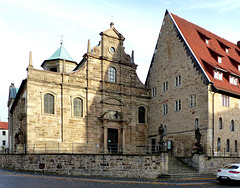
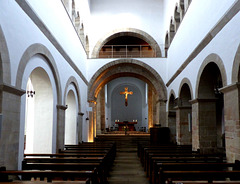
Tradition knows that Bishop Hezilo (1054-1079) turned "a house of war into a house of peace" with the Heilig-Kreuz-Kirche. The core of the building was probably a gate that protected the still unreinforced cathedral area to the east.
At the sides, wall beginnings have been excavated, which probably belonged to a fortification wall.
The side aisles themselves date from later times. The southern one, together with the side chapels, belongs to a Gothic rebuilding phase. The northern baroque nave was built after 1700, when this side of the building became dilapidated due to ground subsidence.
The west facade in the Italian style of 1712 with a front flight of steps. During the bombing of Hildesheim in March 1945, the Kreuzkirche was also severely damaged. However, the art treasures had been moved out and remained intact. Reconstruction began in 1948 and by 1958 the pre-war state had been largely restored.
Hildesheim - Heilig-Kreuz-Kirche
| |
|
|
Louis the Pious founded the bishopric of Hildesheim in 815. The settlement developed into a town and was granted market rights by King Otto III in 983. Craftsmen and merchants were attracted and the city developed into an important community. By 1167, Hildesheim was an almost completely walled market settlement.
At the beginning of the 13th century, Hildesheim had about 5,000 inhabitants, and when Hildesheim received its city charter in 1249, it was one of the largest cities in northern Germany. The clergy ruled Hildesheim for four centuries before a town hall was built and the citizens gained influence and independence. In 1367, Hildesheim became a member of the Hanseatic League. But what is now called Hildesheim was various small "suburbs". After centuries of (sometimes armed) disputes, it was not until the end of the 16th century that a union was created and subsequently at least the inner wall was taken down Old and New Town.
During the Thirty Years' War, Hildesheim was besieged and occupied several times. In 1813, after the Napoleonic Wars, the town became part of the Kingdom of Hanover, which was annexed by the Kingdom of Prussia as a province after the Austro-Prussian War in 1866.
The air raids on Hildesheim in 1944/45 destroyed large parts of the city. Of the 1500 half-timbered houses, only 200 remained. 90 percent of the historic old town was destroyed in the firestorm.
-
Tradition knows that Bishop Hezilo (1054-1079) turned "a house of war into a house of peace" with the Heilig-Kreuz-Kirche. The core of the building was probably a gate that protected the still unreinforced cathedral area to the east.
At the sides, wall beginnings have been excavated, which probably belonged to a fortification wall.
The side aisles themselves date from later times. The southern one, together with the side chapels, belongs to a Gothic rebuilding phase. The northern baroque nave was built after 1700, when this side of the building became dilapidated due to ground subsidence.
The west facade in the Italian style of 1712 with a front flight of steps. During the bombing of Hildesheim in March 1945, the Kreuzkirche was also severely damaged. However, the art treasures had been moved out and remained intact. Reconstruction began in 1948 and by 1958 the pre-war state had been largely restored.
The nave
Hildesheim - Heilig-Kreuz-Kirche
| |
|
|
Louis the Pious founded the bishopric of Hildesheim in 815. The settlement developed into a town and was granted market rights by King Otto III in 983. Craftsmen and merchants were attracted and the city developed into an important community. By 1167, Hildesheim was an almost completely walled market settlement.
At the beginning of the 13th century, Hildesheim had about 5,000 inhabitants, and when Hildesheim received its city charter in 1249, it was one of the largest cities in northern Germany. The clergy ruled Hildesheim for four centuries before a town hall was built and the citizens gained influence and independence. In 1367, Hildesheim became a member of the Hanseatic League. But what is now called Hildesheim was various small "suburbs". After centuries of (sometimes armed) disputes, it was not until the end of the 16th century that a union was created and subsequently at least the inner wall was taken down Old and New Town.
During the Thirty Years' War, Hildesheim was besieged and occupied several times. In 1813, after the Napoleonic Wars, the town became part of the Kingdom of Hanover, which was annexed by the Kingdom of Prussia as a province after the Austro-Prussian War in 1866.
The air raids on Hildesheim in 1944/45 destroyed large parts of the city. Of the 1500 half-timbered houses, only 200 remained. 90 percent of the historic old town was destroyed in the firestorm.
-
Tradition knows that Bishop Hezilo (1054-1079) turned "a house of war into a house of peace" with the Heilig-Kreuz-Kirche. The core of the building was probably a gate that protected the still unreinforced cathedral area to the east.
At the sides, wall beginnings have been excavated, which probably belonged to a fortification wall.
The side aisles themselves date from later times. The southern one, together with the side chapels, belongs to a Gothic rebuilding phase. The northern baroque nave was built after 1700, when this side of the building became dilapidated due to ground subsidence.
The west facade in the Italian style of 1712 with a front flight of steps. During the bombing of Hildesheim in March 1945, the Kreuzkirche was also severely damaged. However, the art treasures had been moved out and remained intact. Reconstruction began in 1948 and by 1958 the pre-war state had been largely restored.
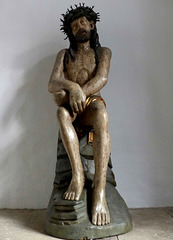
The "Pensive Christ" was created around 1520.
The "Pensive Christ" is a subject in iconography depicting a contemplating Jesus, sitting with his head supported by his hand with the Crown of Thorns and marks of his flagellation.
Most of the statues of the "Pensive Christ" were made around 1500 and in the first quarter of the 16th century.

Hildesheim - Dom
| |
|
|
Louis the Pious founded the bishopric of Hildesheim in 815. The settlement developed into a town and was granted market rights by King Otto III in 983. Craftsmen and merchants were attracted and the city developed into an important community. By 1167, Hildesheim was an almost completely walled market settlement.
At the beginning of the 13th century, Hildesheim had about 5,000 inhabitants, and when Hildesheim received its city charter in 1249, it was one of the largest cities in northern Germany. The clergy ruled Hildesheim for four centuries before a town hall was built and the citizens gained influence and independence. In 1367, Hildesheim became a member of the Hanseatic League. But what is now called Hildesheim was various small "suburbs". After centuries of (sometimes armed) disputes, it was not until the end of the 16th century that a union was created and subsequently at least the inner wall was taken down Old and New Town.
During the Thirty Years' War, Hildesheim was besieged and occupied several times. In 1813, after the Napoleonic Wars, the town became part of the Kingdom of Hanover, which was annexed by the Kingdom of Prussia as a province after the Austro-Prussian War in 1866.
The air raids on Hildesheim in 1944/45 destroyed large parts of the city. Of the 1500 half-timbered houses, only 200 remained. 90 percent of the historic old town was destroyed in the firestorm.
-
Bishop Gunthar, who was in office in Hildesheim from 815 to 834 had a small basilica built. This served as the original cathedral. The next cathedral was built by Bishop Altfried in 872 as a cruciform three-aisled basilica with a two-story westwork. The building suffered severe fire damage in 1046. Bishop Hezilo built then incorporated the surviving walls into the new building using the foundation of the former basilica. Until the 14th century, further profound changes took place, but without deviating from the ground plan of the basilica. The side chapels date from the Gothic period. From 1840 to 1850, the original west building, which had fallen into disrepair, was replaced by a neo-Romanesque double tower front, which remained in place until 1945.
During the air raids on Hildesheim in WWII, the cathedral was completely destroyed except for the west building, the southern nave arcades and the outer walls. Only the crypt and the Laurentius Chapel from the 11th century were preserved.
The cathedral was rebuilt in a simplified form between 1950 and 1960. The baroque elements were abandoned in favor of a form that took its cue from the early Romanesque style

Hildesheim - Dom
| |
|
|
Louis the Pious founded the bishopric of Hildesheim in 815. The settlement developed into a town and was granted market rights by King Otto III in 983. Craftsmen and merchants were attracted and the city developed into an important community. By 1167, Hildesheim was an almost completely walled market settlement.
At the beginning of the 13th century, Hildesheim had about 5,000 inhabitants, and when Hildesheim received its city charter in 1249, it was one of the largest cities in northern Germany. The clergy ruled Hildesheim for four centuries before a town hall was built and the citizens gained influence and independence. In 1367, Hildesheim became a member of the Hanseatic League. But what is now called Hildesheim was various small "suburbs". After centuries of (sometimes armed) disputes, it was not until the end of the 16th century that a union was created and subsequently at least the inner wall was taken down Old and New Town.
During the Thirty Years' War, Hildesheim was besieged and occupied several times. In 1813, after the Napoleonic Wars, the town became part of the Kingdom of Hanover, which was annexed by the Kingdom of Prussia as a province after the Austro-Prussian War in 1866.
The air raids on Hildesheim in 1944/45 destroyed large parts of the city. Of the 1500 half-timbered houses, only 200 remained. 90 percent of the historic old town was destroyed in the firestorm.
-
Bishop Gunthar, who was in office in Hildesheim from 815 to 834 had a small basilica built. This served as the original cathedral. The next cathedral was built by Bishop Altfried in 872 as a cruciform three-aisled basilica with a two-story westwork. The building suffered severe fire damage in 1046. Bishop Hezilo built then incorporated the surviving walls into the new building using the foundation of the former basilica. Until the 14th century, further profound changes took place, but without deviating from the ground plan of the basilica. The side chapels date from the Gothic period. From 1840 to 1850, the original west building, which had fallen into disrepair, was replaced by a neo-Romanesque double tower front, which remained in place until 1945.
During the air raids on Hildesheim in WWII, the cathedral was completely destroyed except for the west building, the southern nave arcades and the outer walls. Only the crypt and the Laurentius Chapel from the 11th century were preserved.
The cathedral was rebuilt in a simplified form between 1950 and 1960. The baroque elements were abandoned in favor of a form that took its cue from the early Romanesque style
Hildesheim - Dom
| |
|
Louis the Pious founded the bishopric of Hildesheim in 815. The settlement developed into a town and was granted market rights by King Otto III in 983. Craftsmen and merchants were attracted and the city developed into an important community. By 1167, Hildesheim was an almost completely walled market settlement.
At the beginning of the 13th century, Hildesheim had about 5,000 inhabitants, and when Hildesheim received its city charter in 1249, it was one of the largest cities in northern Germany. The clergy ruled Hildesheim for four centuries before a town hall was built and the citizens gained influence and independence. In 1367, Hildesheim became a member of the Hanseatic League. But what is now called Hildesheim was various small "suburbs". After centuries of (sometimes armed) disputes, it was not until the end of the 16th century that a union was created and subsequently at least the inner wall was taken down Old and New Town.
During the Thirty Years' War, Hildesheim was besieged and occupied several times. In 1813, after the Napoleonic Wars, the town became part of the Kingdom of Hanover, which was annexed by the Kingdom of Prussia as a province after the Austro-Prussian War in 1866.
The air raids on Hildesheim in 1944/45 destroyed large parts of the city. Of the 1500 half-timbered houses, only 200 remained. 90 percent of the historic old town was destroyed in the firestorm.
-
Bishop Gunthar, who was in office in Hildesheim from 815 to 834 had a small basilica built. This served as the original cathedral. The next cathedral was built by Bishop Altfried in 872 as a cruciform three-aisled basilica with a two-story westwork. The building suffered severe fire damage in 1046. Bishop Hezilo built then incorporated the surviving walls into the new building using the foundation of the former basilica. Until the 14th century, further profound changes took place, but without deviating from the ground plan of the basilica. The side chapels date from the Gothic period. From 1840 to 1850, the original west building, which had fallen into disrepair, was replaced by a neo-Romanesque double tower front, which remained in place until 1945.
During the air raids on Hildesheim in WWII, the cathedral was completely destroyed except for the west building, the southern nave arcades, and the outer walls. Only the crypt and the Laurentius Chapel from the 11th century were preserved.
The cathedral was rebuilt in a simplified form between 1950 and 1960. The baroque elements were abandoned in favor of a form that took its cue from the early Romanesque style.
-
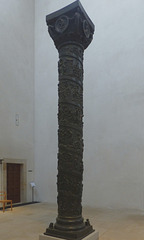
In 1001, Bishop Bernward traveled to Rome accompanying Otto III, where he became acquainted with Trajan's Column and the Column of Marcus Aurelius. Especially the relief bands of Trajan's column served him as a model and later appeared on this column as well.
The bronze column was cast around 1020. It is 379 cm high and has a diameter of 58 cm. Originally, the column was crowned by a crucifixion group on a capital and thus had a total height of more than 6 m. The column was made using the technique of lost wax casting, an extremely demanding technique at the time. it was placed in St. Michaeliskirche. The appearance of the original capital and decorative cross is not known to this day.
The cross was destroyed in 1544 during riots, which were due to the introduction of the Reformation. In 1723 the column was dismantled because it threatened to fall over. The council of the city decided to have it melted down, but this failed due to the commitment of the monks. In 1760, plans were made to sell the column to Hanover to have it melted down there. The column was sold but this time the column was saved by the objection of the abbot and the archbishop. The purchase was reversed and the column was again stored in St. Michaelis.
After several attempts to sell and melt down the column, it was to be destroyed again in 1810. But it was saved again. The episcopal official Anton Blum bought the column and now had it taken out of St. Michaelis and staged in the cathedral courtyard. This was motivated by the newfound enthusiasm of the population for the art of the Middle Ages.
In 1942 the column was stored in a safe place to save it from imminent destruction in the bombing war.

Hildesheim - Dom
| |
|
|
Louis the Pious founded the bishopric of Hildesheim in 815. The settlement developed into a town and was granted market rights by King Otto III in 983. Craftsmen and merchants were attracted and the city developed into an important community. By 1167, Hildesheim was an almost completely walled market settlement.
At the beginning of the 13th century, Hildesheim had about 5,000 inhabitants, and when Hildesheim received its city charter in 1249, it was one of the largest cities in northern Germany. The clergy ruled Hildesheim for four centuries before a town hall was built and the citizens gained influence and independence. In 1367, Hildesheim became a member of the Hanseatic League. But what is now called Hildesheim was various small "suburbs". After centuries of (sometimes armed) disputes, it was not until the end of the 16th century that a union was created and subsequently at least the inner wall was taken down Old and New Town.
During the Thirty Years' War, Hildesheim was besieged and occupied several times. In 1813, after the Napoleonic Wars, the town became part of the Kingdom of Hanover, which was annexed by the Kingdom of Prussia as a province after the Austro-Prussian War in 1866.
The air raids on Hildesheim in 1944/45 destroyed large parts of the city. Of the 1500 half-timbered houses, only 200 remained. 90 percent of the historic old town was destroyed in the firestorm.
-
Bishop Gunthar, who was in office in Hildesheim from 815 to 834 had a small basilica built. This served as the original cathedral. The next cathedral was built by Bishop Altfried in 872 as a cruciform three-aisled basilica with a two-story westwork. The building suffered severe fire damage in 1046. Bishop Hezilo built then incorporated the surviving walls into the new building using the foundation of the former basilica. Until the 14th century, further profound changes took place, but without deviating from the ground plan of the basilica. The side chapels date from the Gothic period. From 1840 to 1850, the original west building, which had fallen into disrepair, was replaced by a neo-Romanesque double tower front, which remained in place until 1945.
During the air raids on Hildesheim in WWII, the cathedral was completely destroyed except for the west building, the southern nave arcades, and the outer walls. Only the crypt and the Laurentius Chapel from the 11th century were preserved.
The cathedral was rebuilt in a simplified form between 1950 and 1960. The baroque elements were abandoned in favor of a form that took its cue from the early Romanesque style.
-
The cloister was completed around the middle of the 12th century.
Jump to top
RSS feed- Latest items - Subscribe to the latest items added to this album
- ipernity © 2007-2026
- Help & Contact
|
Club news
|
About ipernity
|
History |
ipernity Club & Prices |
Guide of good conduct
Donate | Group guidelines | Privacy policy | Terms of use | Statutes | In memoria -
Facebook
X
