


Lower Saxony, Niedersachsen, Basse-Saxe

A collection of photos - taken in Lower Saxony.
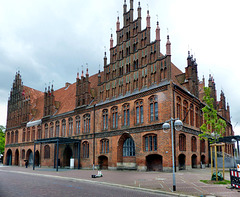
Hannover - Altes Rathaus
| |
|
|
With more than 500.000 inhabitants Hannover is the capital and largest city of the German state of Lower Saxony.
Hannover was founded in medieval times on the east bank of the River Leine. It was a small village of ferrymen and fishermen. It became a comparatively large town in the 13th century, receiving town privileges in 1241, owing to its position at a natural crossroads. It was connected to the Hanseatic League city of Bremen by the Leine and was situated north-west of the Harz mountains so that east-west traffic passed through it.
In the 14th century the main churches of Hanover were built, as well as a city wall with three city gates.
Between 1714 and 1837 three kings of Great Britain were concurrently also Electoral Princes of Hanover.
As an important railway and road junction and production centre, Hannover was a major target for strategic bombing during World War II. More than 90% of the city centre was destroyed in a total of 88 bombing raids. So today Hannover lacks it´s medieval heart. Only a few buildings got rebuilt and restored.
-
The Old Town Hall (Altes Rathaus) was the first town hall of the city of Hannover. It is Hannover´s oldest secular building, erected in the Brick Gothic style.
The erection of the building started in 1410. But it underwent several reconstructions and extensions. The original first floor became today's basement due to late medieval fills. In 1844, a renovation of the wings took place and one half-timbered wing of the 16th century was demolished and replaced by what is now nicknamed the "Doge's Palace", which houses the registry office.
When the old town hall was to be demolished at the end of the 19th century, a citizens' initiative was formed. The building was ultimately spared. It was renovated from 1877 to 1891, restoring it to the assumed condition from the time it was built, as this was considered a "pure" architectural style.
The air raids on Hanover in 1943 led to the partial destruction of the building complex. Restorations took place in 1953 and in 1964 the show gable on the west side was reconstructed.
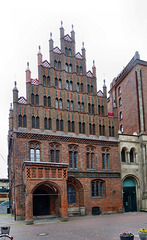
Hannover - Altes Rathaus
| |
|
|
With more than 500.000 inhabitants Hannover is the capital and largest city of the German state of Lower Saxony.
Hannover was founded in medieval times on the east bank of the River Leine. It was a small village of ferrymen and fishermen. It became a comparatively large town in the 13th century, receiving town privileges in 1241, owing to its position at a natural crossroads. It was connected to the Hanseatic League city of Bremen by the Leine and was situated north-west of the Harz mountains so that east-west traffic passed through it.
In the 14th century the main churches of Hanover were built, as well as a city wall with three city gates.
Between 1714 and 1837 three kings of Great Britain were concurrently also Electoral Princes of Hanover.
As an important railway and road junction and production centre, Hannover was a major target for strategic bombing during World War II. More than 90% of the city centre was destroyed in a total of 88 bombing raids. So today Hannover lacks it´s medieval heart. Only a few buildings got rebuilt and restored.
-
The Old Town Hall (Altes Rathaus) was the first town hall of the city of Hannover. It is Hannover´s oldest secular building, erected in the Brick Gothic style.
The erection of the building started in 1410. But it underwent several reconstructions and extensions. The original first floor became today's basement due to late medieval fills. In 1844, a renovation of the wings took place and one half-timbered wing of the 16th century was demolished and replaced by what is now nicknamed the "Doge's Palace", which houses the registry office.
When the old town hall was to be demolished at the end of the 19th century, a citizens' initiative was formed. The building was ultimately spared. It was renovated from 1877 to 1891, restoring it to the assumed condition from the time it was built, as this was considered a "pure" architectural style.
The air raids on Hanover in 1943 led to the partial destruction of the building complex. Restorations took place in 1953 and in 1964 the show gable on the west side was reconstructed.
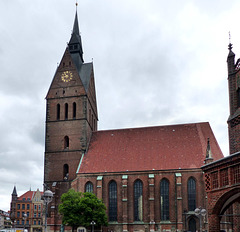
Hannover - Marktkirche
| |
|
|
|
With more than 500.000 inhabitants Hannover is the capital and largest city of the German state of Lower Saxony.
Hannover was founded in medieval times on the east bank of the River Leine. It was a small village of ferrymen and fishermen. It became a comparatively large town in the 13th century, receiving town privileges in 1241, owing to its position at a natural crossroads. It was connected to the Hanseatic League city of Bremen by the Leine and was situated north-west of the Harz mountains so that east-west traffic passed through it.
In the 14th century the main churches of Hanover were built, as well as a city wall with three city gates.
Between 1714 and 1837 three kings of Great Britain were concurrently also Electoral Princes of Hanover.
As an important railway and road junction and production centre, Hannover was a major target for strategic bombing during World War II. More than 90% of the city centre was destroyed in a total of 88 bombing raids. So today Hannover lacks it´s medieval heart. Only a few buildings got rebuilt and restored.
-
The Gothic Marktkirche ( Marktkirche St. Georgii et Jacobi) replaced an older Romanesque church, which foundations were found during an excavation in 1952.
An appeal to the citizens for donations to build the church dates back to 1344, and work began on the foundations of the tower in 1347. Around 1360 the church was consecrated. In 1368, the construction of the church tower was interrupted due to times of emergency and plague and the resulting lack of money. Today it is about 97m high!
From 1852 to 1855, the interior of the church was restored. During the air raids on Hannover during WWII, the church was destroyed except for the outer walls and the columns. Reconstruction took place in 1946-1952.
Inside the church is a baptismal font and a well-known winged altar, but as a film or video was being produced in the church that day, I couldn't see anything of the interior. I slipped inside but was immediately spotted and escorted out.
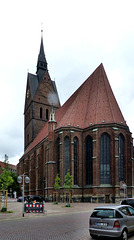
Hannover - Marktkirche
| |
|
|
With more than 500.000 inhabitants Hannover is the capital and largest city of the German state of Lower Saxony.
Hannover was founded in medieval times on the east bank of the River Leine. It was a small village of ferrymen and fishermen. It became a comparatively large town in the 13th century, receiving town privileges in 1241, owing to its position at a natural crossroads. It was connected to the Hanseatic League city of Bremen by the Leine and was situated north-west of the Harz mountains so that east-west traffic passed through it.
In the 14th century the main churches of Hanover were built, as well as a city wall with three city gates. Between 1714 and 1837 three kings of Great Britain were concurrently also Electoral Princes of Hanover.
As an important railway and road junction and production centre, Hannover was a major target for strategic bombing during World War II. More than 90% of the city centre was destroyed in a total of 88 bombing raids. So today Hannover lacks it´s medieval heart. Only a few buildings got rebuilt and restored.
-
The Gothic Marktkirche ( Marktkirche St. Georgii et Jacobi) replaced an older Romanesque church, which foundations were found during an excavation in 1952.
An appeal to the citizens for donations to build the church dates back to 1344, and work began on the foundations of the tower in 1347. Around 1360 the church was consecrated. In 1368, the construction of the church tower was interrupted due to times of emergency and plague and the resulting lack of money. Today it is about 97m high!
From 1852 to 1855, the interior of the church was restored. During the air raids on Hannover during WWII, the church was destroyed except for the outer walls and the columns. Reconstruction took place in 1946-1952.
Inside the church is a baptismal font and a well-known winged altar, but as a film or video was being produced in the church that day, I couldn't see anything of the interior. I slipped inside but was immediately spotted and escorted out.
Hannover - Kreuzkirche
| |
|
|
With more than 500.000 inhabitants Hannover is the capital and largest city of the German state of Lower Saxony.
Hannover was founded in medieval times on the east bank of the River Leine. It was a small village of ferrymen and fishermen. It became a comparatively large town in the 13th century, receiving town privileges in 1241, owing to its position at a natural crossroads. It was connected to the Hanseatic League city of Bremen by the Leine and was situated north-west of the Harz mountains so that east-west traffic passed through it.
In the 14th century the main churches of Hanover were built, as well as a city wall with three city gates. Between 1714 and 1837 three kings of Great Britain were concurrently also Electoral Princes of Hanover.
As an important railway and road junction and production centre, Hannover was a major target for strategic bombing during World War II. More than 90% of the city centre was destroyed in a total of 88 bombing raids. So today Hannover lacks it´s medieval heart. Only a few buildings got rebuilt and restored.
-
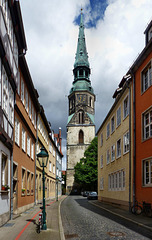
The parish of the Kreuzkirche was in 1284 separated from the Marktkirche parish. The church, dedicated to St. Spiritus et Crucis, was consecrated in 1333
After the Reformation in 1533, the church became Lutheran and got largely altered to adjust to the different needs of a Protestant congregation.
The spire of the steeple was damaged by a storm in 1630, and was replaced in Baroque style in 1652.
In WWII, air raids in 1943 destroyed the town centre, including the Kreuzkirche. It was rebuilt from 1959 to 1961 in a simplified form.
The neighbourhood "Kreuzkirchenviertel" was also bombed down, but got rebuilt as well.
Hannover - Burgstrasse
| |
|
|
|
With more than 500.000 inhabitants Hannover is the capital and largest city of the German state of Lower Saxony.
Hannover was founded in medieval times on the east bank of the River Leine. It was a small village of ferrymen and fishermen. It became a comparatively large town in the 13th century, receiving town privileges in 1241, owing to its position at a natural crossroads. It was connected to the Hanseatic League city of Bremen by the Leine and was situated north-west of the Harz mountains so that east-west traffic passed through it.
In the 14th century the main churches of Hanover were built, as well as a city wall with three city gates. Between 1714 and 1837 three kings of Great Britain were concurrently also Electoral Princes of Hanover.
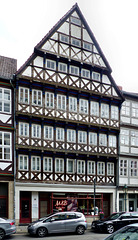
As an important railway and road junction and production centre, Hannover was a major target for strategic bombing during World War II. More than 90% of the city centre was destroyed in a total of 88 bombing raids. So today Hannover lacks it´s medieval heart. Only a few buildings - like this one- got rebuilt and restored.
Hannover
| |
|
|
|
With more than 500.000 inhabitants Hannover is the capital and largest city of the German state of Lower Saxony.
Hannover was founded in medieval times on the east bank of the River Leine. It was a small village of ferrymen and fishermen. It became a comparatively large town in the 13th century, receiving town privileges in 1241, owing to its position at a natural crossroads. It was connected to the Hanseatic League city of Bremen by the Leine and was situated north-west of the Harz mountains so that east-west traffic passed through it.
In the 14th century the main churches of Hanover were built, as well as a city wall with three city gates. Between 1714 and 1837 three kings of Great Britain were concurrently also Electoral Princes of Hanover.
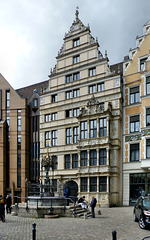
As an important railway and road junction and production centre, Hannover was a major target for strategic bombing during World War II. More than 90% of the city centre was destroyed in a total of 88 bombing raids. So today Hannover lacks it´s medieval heart. Only a few buildings or gables - like this one- got rebuilt and restored.
Hannover - Neues Rathaus
| |
|
|
|
With more than 500.000 inhabitants Hannover is the capital and largest city of the German state of Lower Saxony.
Hannover was founded in medieval times on the east bank of the River Leine. It was a small village of ferrymen and fishermen. It became a comparatively large town in the 13th century, receiving town privileges in 1241, owing to its position at a natural crossroads. It was connected to the Hanseatic League city of Bremen by the Leine and was situated north-west of the Harz mountains so that east-west traffic passed through it.
In the 14th century the main churches of Hanover were built, as well as a city wall with three city gates. Between 1714 and 1837 three kings of Great Britain were concurrently also Electoral Princes of Hanover.
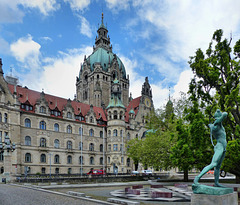
As an important railway and road junction and production centre, Hannover was a major target for strategic bombing during World War II. More than 90% of the city centre was destroyed in a total of 88 bombing raids. So today Hannover lacks it´s medieval heart. Only a few buildings - like this one- got rebuilt and restored.
-
One of them is the "Neues Rathaus" ("New Town Hall"). It was originally opened in 1913, after having been under construction for 12 years. It is a castle-like building at the southern edge of the inner city.
The town hall, with a height of 97.73 metres, a length of about 129 metres and a width of around 67 metres, was built on 6026 beech piles.
Hannover - Duve-Brunnen
| |
|
With more than 500.000 inhabitants Hannover is the capital and largest city of the German state of Lower Saxony.
Hannover was founded in medieval times on the east bank of the River Leine. It was a small village of ferrymen and fishermen. It became a comparatively large town in the 13th century, receiving town privileges in 1241, owing to its position at a natural crossroads. It was connected to the Hanseatic League city of Bremen by the Leine and was situated north-west of the Harz mountains so that east-west traffic passed through it.
In the 14th century the main churches of Hanover were built, as well as a city wall with three city gates. Between 1714 and 1837 three kings of Great Britain were concurrently also Electoral Princes of Hanover.
As an important railway and road junction and production centre, Hannover was a major target for strategic bombing during World War II. More than 90% of the city centre was destroyed in a total of 88 bombing raids. So today Hannover lacks it´s medieval heart. Only a few buildings - like this one- got rebuilt and restored.
-
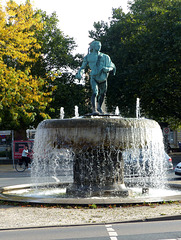
The fountain was erected at the beginning of the 20th century in honour of the entrepreneur and benefactor Johann Duve (1611-1679).
During WWII, the sower figure was taken to Hamburg to be melted down as part of the material collections, but it "survived" there. In a slightly altered form, the fountain was put back into use in 1953.
Hannover - Marktkirche
| |
|
|
|
With more than 500.000 inhabitants Hannover is the capital and largest city of the German state of Lower Saxony.
Hannover was founded in medieval times on the east bank of the River Leine. It was a small village of ferrymen and fishermen. It became a comparatively large town in the 13th century, receiving town privileges in 1241, owing to its position at a natural crossroads. It was connected to the Hanseatic League city of Bremen by the Leine and was situated north-west of the Harz mountains so that east-west traffic passed through it.
In the 14th century the main churches of Hanover were built, as well as a city wall with three city gates. Between 1714 and 1837 three kings of Great Britain were concurrently also Electoral Princes of Hanover.
As an important railway and road junction and production centre, Hannover was a major target for strategic bombing during World War II. More than 90% of the city centre was destroyed in a total of 88 bombing raids. So today Hannover lacks it´s medieval heart. Only a few buildings - like this one- got rebuilt and restored.
-
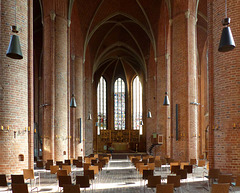
The Gothic Marktkirche ( Marktkirche St. Georgii et Jacobi) replaced an older Romanesque church, which foundations were found during an excavation in 1952.
An appeal to the citizens for donations to build the church dates back to 1344, and work began on the foundations of the tower in 1347. Around 1360 the church was consecrated. In 1368, the construction of the church tower was interrupted due to times of emergency and plague and the resulting lack of money.
From 1852 to 1855, the interior of the church was restored. During the air raids on Hannover during WWII, the church was destroyed except for the outer walls and the columns. Reconstruction took place in 1946-1952.
Hannover - Marktkirche
| |
|
|
With more than 500.000 inhabitants Hannover is the capital and largest city of the German state of Lower Saxony.
Hannover was founded in medieval times on the east bank of the River Leine. It was a small village of ferrymen and fishermen. It became a comparatively large town in the 13th century, receiving town privileges in 1241, owing to its position at a natural crossroads. It was connected to the Hanseatic League city of Bremen by the Leine and was situated north-west of the Harz mountains so that east-west traffic passed through it.
In the 14th century the main churches of Hanover were built, as well as a city wall with three city gates. Between 1714 and 1837 three kings of Great Britain were concurrently also Electoral Princes of Hanover.
As an important railway and road junction and production centre, Hannover was a major target for strategic bombing during World War II. More than 90% of the city centre was destroyed in a total of 88 bombing raids. So today Hannover lacks it´s medieval heart. Only a few buildings - like this one- got rebuilt and restored.
-
The Gothic Marktkirche ( Marktkirche St. Georgii et Jacobi) replaced an older Romanesque church, which foundations were found during an excavation in 1952.
An appeal to the citizens for donations to build the church dates back to 1344, and work began on the foundations of the tower in 1347. Around 1360 the church was consecrated. In 1368, the construction of the church tower was interrupted due to times of emergency and plague and the resulting lack of money.
From 1852 to 1855, the interior of the church was restored. During the air raids on Hannover during WWII, the church was destroyed except for the outer walls and the columns. Reconstruction took place in 1946-1952.
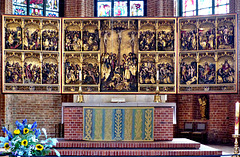
The altar was originally a double-wing altar. It was created around 1480, but was moved to another church in 1663 when the Baroque altar (donated by Johann Duve)(see the fountain) was installed. From there it was transferred to the Guelph Museum in 1856 and therefore it remained undestroyed during the war (except for the outer wings) and has been back in the Marktkirche since 1952.
When the wings are open, the Passion of Jesus can be seen in 21 scenes carved from limewood, based on graphic models by Martin Schongauer
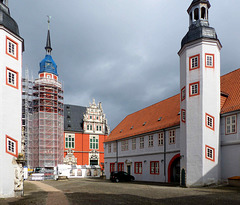
Helmstedt - Academia Julia
| |
|
|
Helmstedt developed near the monastery of St. Ludgeri, which was probably founded around 800 by St. Liudger. For centuries there was a connection to the Werden Abbey, also founded by St. Luidger.
Helmstedt was first mentioned as Helmonstede in 952. Until 1490, the abbots of the Werden-monastery were still the lords of Helmstedt, who then ceded their rights to the dukes of Brunswick-Lüneburg.
In the course of the throne dispute between the Guelphs and the Staufers, the city was almost completely destroyed at the turn of the year 1199/1200 by troops of the Magdeburg Archbishop and Philip of Swabia. After reconstruction, the city's fortifications were strengthened to withstand a siege in 1279. After years of war, the abbot of Werden, who acted as a mediator between the warring parties, was killed by enraged citizens in 1288. As a result, the city and its citizens were subjected to imperial ban, which was not lifted until 1290 by King Rudolf I.
Helmstedt developed into a trading town at an early stage. Between 1426 and 1518, it was a member of the Hanseatic League.
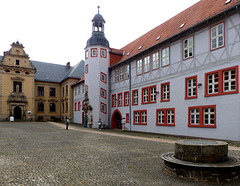
The university "Academia Julia" was founded by Duke Julius in 1576. The university significantly shaped life from 1576 to 1810 in the city. The dukes brought famous scholars to Helmstedt such as Georg Calixt, and polymath Hermann Conring and even Giordano Bruno, who advocated the teachings of Copernicus and therefore ended up at the stake in Rome years later. All these scholars published their notable works on the university printing press set up by the duke and owned by the master Jacob Lucius.
Fundamental changes occurred during the "French period" from 1806 to 1813. Jérôme Bonaparte, Napoleon's brother, ruled the Kingdom of Westphalia, to which Helmstedt belonged. By his order, university operations were finally suspended.
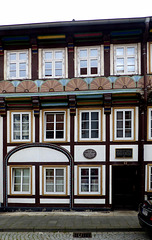
Helmstedt - Academia Julia
| |
|
|
Helmstedt developed near the monastery of St. Ludgeri, which was probably founded around 800 by St. Liudger. For centuries there was a connection to the Werden Abbey, also founded by St. Luidger.
Helmstedt was first mentioned as Helmonstede in 952. Until 1490, the abbots of the Werden-monastery were still the lords of Helmstedt, who then ceded their rights to the dukes of Brunswick-Lüneburg.
In the course of the throne dispute between the Guelphs and the Staufers, the city was almost completely destroyed at the turn of the year 1199/1200 by troops of the Magdeburg Archbishop and Philip of Swabia. After reconstruction, the city's fortifications were strengthened to withstand a siege in 1279. After years of war, the abbot of Werden, who acted as a mediator between the warring parties, was killed by enraged citizens in 1288. As a result, the city and its citizens were subjected to imperial ban, which was not lifted until 1290 by King Rudolf I.
Helmstedt developed into a trading town at an early stage. Between 1426 and 1518, it was a member of the Hanseatic League.
The university "Academia Julia" was founded by Duke Julius in 1576. The university significantly shaped life from 1576 to 1810 in the city. The dukes brought famous scholars to Helmstedt such as Georg Calixt, and polymath Hermann Conring and even Giordano Bruno, who advocated the teachings of Copernicus and therefore ended up at the stake in Rome years later. All these scholars published their notable works on the university printing press set up by the duke and owned by the master Jacob Lucius.
Fundamental changes occurred during the "French period" from 1806 to 1813. Jérôme Bonaparte, Napoleon's brother, ruled the Kingdom of Westphalia, to which Helmstedt belonged. By his order, university operations were finally suspended.
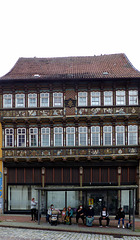
Helmstedt - Academia Julia
| |
|
|
Helmstedt developed near the monastery of St. Ludgeri, which was probably founded around 800 by St. Liudger. For centuries there was a connection to the Werden Abbey, also founded by St. Luidger.
Helmstedt was first mentioned as Helmonstede in 952. Until 1490, the abbots of the Werden-monastery were still the lords of Helmstedt, who then ceded their rights to the dukes of Brunswick-Lüneburg.
In the course of the throne dispute between the Guelphs and the Staufers, the city was almost completely destroyed at the turn of the year 1199/1200 by troops of the Magdeburg Archbishop and Philip of Swabia. After reconstruction, the city's fortifications were strengthened to withstand a siege in 1279. After years of war, the abbot of Werden, who acted as a mediator between the warring parties, was killed by enraged citizens in 1288. As a result, the city and its citizens were subjected to an imperial ban, which was not lifted until 1290 by King Rudolf I.
Helmstedt developed into a trading town at an early stage. Between 1426 and 1518, it was a member of the Hanseatic League.
The university "Academia Julia" was founded by Duke Julius in 1576. The university significantly shaped life from 1576 to 1810 in the city. The dukes brought famous scholars to Helmstedt such as Georg Calixt, and polymath Hermann Conring and even Giordano Bruno, who advocated the teachings of Copernicus and therefore ended up at the stake in Rome years later. All these scholars published their notable works on the university printing press set up by the duke and owned by the master Jacob Lucius.
Fundamental changes occurred during the "French period" from 1806 to 1813. Jérôme Bonaparte, Napoleon's brother, ruled the Kingdom of Westphalia, to which Helmstedt belonged. By his order, university operations were finally suspended.
Giordano Bruno lived in this house during his stay in Helmstedt.
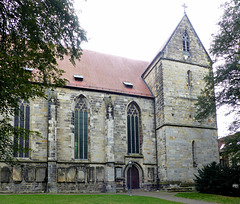
Helmstedt - Bus stop
| |
|
|
Helmstedt developed near the monastery of St. Ludgeri, which was probably founded around 800 by St. Liudger. For centuries there was a connection to the Werden Abbey, also founded by St. Luidger.
Helmstedt was first mentioned as Helmonstede in 952. Until 1490, the abbots of the Werden-monastery were still the lords of Helmstedt, who then ceded their rights to the dukes of Brunswick-Lüneburg.
In the course of the throne dispute between the Guelphs and the Staufers, the city was almost completely destroyed at the turn of the year 1199/1200 by troops of the Magdeburg Archbishop and Philip of Swabia. After reconstruction, the city's fortifications were strengthened to withstand a siege in 1279. After years of war, the abbot of Werden, who acted as a mediator between the warring parties, was killed by enraged citizens in 1288. As a result, the city and its citizens were subjected to imperial ban, which was not lifted until 1290 by King Rudolf I.
Helmstedt developed into a trading town at an early stage. Between 1426 and 1518, it was a member of the Hanseatic League.
Helmstedt - St.-Stephani
| |
|
|
Helmstedt developed near the monastery of St. Ludgeri, which was probably founded around 800 by St. Liudger. For centuries there was a connection to the Werden Abbey, also founded by St. Luidger.
Helmstedt was first mentioned as Helmonstede in 952. Until 1490, the abbots of the Werden-monastery were still the lords of Helmstedt, who then ceded their rights to the dukes of Brunswick-Lüneburg.
In the course of the throne dispute between the Guelphs and the Staufers, the city was almost completely destroyed at the turn of the year 1199/1200 by troops of the Magdeburg Archbishop and Philip of Swabia. After reconstruction, the city's fortifications were strengthened to withstand a siege in 1279. After years of war, the abbot of Werden, who acted as a mediator between the warring parties, was killed by enraged citizens in 1288. As a result, the city and its citizens were subjected to imperial ban, which was not lifted until 1290 by King Rudolf I.
Helmstedt developed into a trading town at an early stage. Between 1426 and 1518, it was a member of the Hanseatic League.
The Romanesque predecessor building was burned down by troops of the Magdeburg Archbishop and King Philip of Swabia. Around 1230, the construction of today's St. Stephen's Church in Gothic style began, but the construction work dragged on for several decades. Through structural changes in the following years, the building received not only Gothic and Romanesque sections but also Renaissance and Baroque interior elements.
The first Protestant preaching took place here in 1530 by the pastor Heinrich Wende, who was expelled from the city a short time later by the ducal sovereign.
Helmstedt
| |
|
|
Helmstedt developed near the monastery of St. Ludgeri, which was probably founded around 800 by St. Liudger. For centuries there was a connection to the Werden Abbey, also founded by St. Luidger.
Helmstedt was first mentioned as Helmonstede in 952. Until 1490, the abbots of the Werden-monastery were still the lords of Helmstedt, who then ceded their rights to the dukes of Brunswick-Lüneburg.
In the course of the throne dispute between the Guelphs and the Staufers, the city was almost completely destroyed at the turn of the year 1199/1200 by troops of the Magdeburg Archbishop and Philip of Swabia. After reconstruction, the city's fortifications were strengthened to withstand a siege in 1279. After years of war, the abbot of Werden, who acted as a mediator between the warring parties, was killed by enraged citizens in 1288. As a result, the city and its citizens were subjected to imperial ban, which was not lifted until 1290 by King Rudolf I.
Helmstedt developed into a trading town at an early stage. Between 1426 and 1518, it was a member of the Hanseatic League.
-
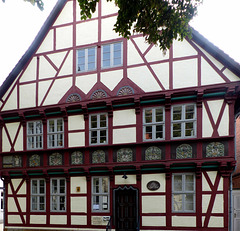
In the Middle Ages the Beguines lived here. Now it belongs to the parish.
Hildesheim - Knochenhaueramtshaus
| |
|
|
|
Louis the Pious founded the bishopric of Hildesheim in 815. The settlement developed into a town and was granted market rights by King Otto III in 983. Craftsmen and merchants were attracted and the city developed into an important community. By 1167, Hildesheim was an almost completely walled market settlement.
At the beginning of the 13th century, Hildesheim had about 5,000 inhabitants, and when Hildesheim received its city charter in 1249, it was one of the largest cities in northern Germany. The clergy ruled Hildesheim for four centuries before a town hall was built and the citizens gained influence and independence. In 1367, Hildesheim became a member of the Hanseatic League. But what is now called Hildesheim was various small "suburbs". After centuries of (sometimes armed) disputes, it was not until the end of the 16th century that a union was created and subsequently at least the inner wall was taken down Old and New Town.
During the Thirty Years' War, Hildesheim was besieged and occupied several times. In 1813, after the Napoleonic Wars, the town became part of the Kingdom of Hanover, which was annexed by the Kingdom of Prussia as a province after the Austro-Prussian War in 1866.
The air raids on Hildesheim in 1944/45 destroyed large parts of the city. Of the 1500 half-timbered houses, only 200 remained. 90 percent of the historic old town was destroyed in the firestorm.
-
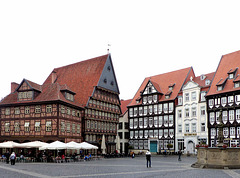
The Knochenhaueramtshaus (Butcher's Guild Hall) is one of the largest structures in the Historic Market of Hildesheim. With its 7 floors and a height of 26 meters, it is considered to be one of the tallest half-timbered houses in Germany.
It was originally built in 1529 in a Gothic style, and was used as a meeting place of the butchers' guild, which was a very wealthy and influential guild in Hildesheim in the Middle Ages. In 1884, the 4th, 5th, 6th, and 7th floors were destroyed by a fire, but rebuilt. immediately.
During WWII the City Council contemplated the dismantlement of the house, but this proved to be impossible.
On 22 March 1945, the half-timbered houses of the market place including the Knochenhaueramtshaus were destroyed by incendiary bombs. In the 1950s the houses were replaced by concrete buildings with flat roofs.
At the beginning of the 1980s, the City Council decided to tear down the buildings and reconstruct the historic Market Place. Many inhabitants donated money to the project. The foundation stone was laid on 27 October 1987and the reconstruction was completed in December 1989.
Jump to top
RSS feed- Latest items - Subscribe to the latest items added to this album
- ipernity © 2007-2026
- Help & Contact
|
Club news
|
About ipernity
|
History |
ipernity Club & Prices |
Guide of good conduct
Donate | Group guidelines | Privacy policy | Terms of use | Statutes | In memoria -
Facebook
X
