


Lower Saxony, Niedersachsen, Basse-Saxe

A collection of photos - taken in Lower Saxony.
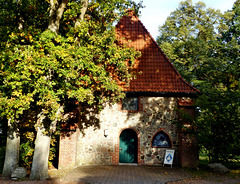
Bispingen - Ole Kerk
| |
|
|
Bispingen is a small town with (including the small hamlets around) has a population of about 6500. Bispingen is located in the center of the "Lüneburger Heide" (Lüneburg Heath), a large nature reserve of heath, geest and woodland. Over centuries this was a poor area, where "Heidschnucken" a local breed of sheep were held, a kind of forgotten hinterland between Hannover and Hamburg. Meanwhile due to the unique landscape this is a popular tourist destination.
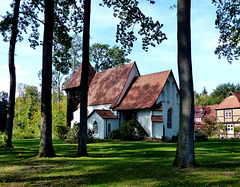
The "Ole Kerk" (old church) was the first church erected here from boulders in 1353. Ole Kerk [de] ("Old Church") dating to 1353, made from boulders. The church was commissioned by the Bishop of Verden. The name "Bispingen" derives fom "Biscopingen", what translates to "belonging to the Bishop". The "Ole Kerk", was the center of the "Kirchspiel" (parish), where all people from the surrounding hamlets met to pray on a sunday.
It grew too small end of the 19th century , so St. Antonius was built in 1908 just about 200 metres apart. The "Ole Kerk" was the place where once all people from the surounding hamlets met to pray on a sunday. It got renovated in the 1970s and is now used for weddings and concerts. It is a very quiet, magic spot.
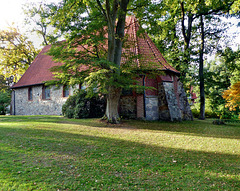
Bispingen - Ole Kerk
| |
|
|
Bispingen is a small town with (including the small hamlets around) has a population of about 6500. Bispingen is located in the center of the "Lüneburger Heide" (Lüneburg Heath), a large nature reserve of heath, geest and woodland. Over centuries this was a poor area, where "Heidschnucken" a local breed of sheep were held, a kind of forgotten hinterland between Hannover and Hamburg. Meanwhile due to the unique landscape this is a popular tourist destination.
The "Ole Kerk" (old church) was the first church erected here from boulders in 1353. Ole Kerk [de] ("Old Church") dating to 1353, made from boulders. The church was commissioned by the Bishop of Verden. The name "Bispingen" derives fom "Biscopingen", what translates to "belonging to the Bishop". The "Ole Kerk", was the center of the "Kirchspiel" (parish), where all people from the surrounding hamlets met to pray on a sunday.
It grew too small end of the 19th century , so St. Antonius was built in 1908 just about 200 metres apart. The "Ole Kerk" was the place where once all people from the surounding hamlets met to pray on a sunday. It got renovated in the 1970s and is now used for weddings and concerts. It is a very quiet, magic spot.
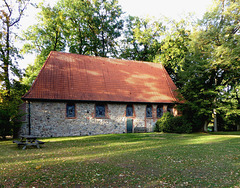
Bispingen - Ole Kerk
| |
|
Bispingen is a small town with (including the small hamlets around) has a population of about 6500. Bispingen is located in the center of the "Lüneburger Heide" (Lüneburg Heath), a large nature reserve of heath, geest and woodland. Over centuries this was a poor area, where "Heidschnucken" a local breed of sheep were held, a kind of forgotten hinterland between Hannover and Hamburg. Meanwhile due to the unique landscape this is a popular tourist destination.
The "Ole Kerk" (old church) was the first church erected here from boulders in 1353. Ole Kerk [de] ("Old Church") dating to 1353, made from boulders. The church was commissioned by the Bishop of Verden. The name "Bispingen" derives fom "Biscopingen", what translates to "belonging to the Bishop". The "Ole Kerk", was the center of the "Kirchspiel" (parish), where all people from the surrounding hamlets met to pray on a sunday. It grew too small end of the 19th century , so St. Antonius was built in 1908 just about 200 metres apart. The "Ole Kerk" was the place where once all people from the surounding hamlets met to pray on a sunday. It got renovated in the 1970s and is now used for weddings and concerts. It is a very quiet, magic spot.
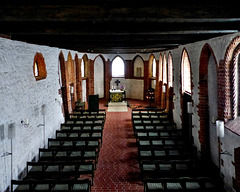
Bispingen - Ole Kerk
| |
|
|
Bispingen is a small town. Including the small hamlets around there is a population of about 6500. Bispingen is located in the center of the "Lüneburger Heide" (Lüneburg Heath), a large nature reserve of heath, geest and woodland. Over centuries this was a poor area, where "Heidschnucken" a local breed of sheep were held, a kind of forgotten hinterland between Hannover and Hamburg. Meanwhile due to the unique landscape this is a popular tourist destination.
The "Ole Kerk" (old church) was the first church erected here from boulders in 1353. Ole Kerk [de] ("Old Church") dating to 1353, made from boulders. The church was commissioned by the Bishop of Verden. The name "Bispingen" derives fom "Biscopingen", what translates to "belonging to the Bishop". The "Ole Kerk", was the center of the "Kirchspiel" (parish), where all people from the surrounding hamlets met to pray on a sunday.
It grew too small end of the 19th century , so St. Antonius was built in 1908 just about 200 metres apart. The "Ole Kerk" was the place where once all people from the surounding hamlets met to pray on a sunday. It got renovated in the 1970s and is now used for weddings and concerts. It is a very quiet, magic spot.
The nave, seen from the gallery.
Meinerdingen - St. Georg
| |
|
|
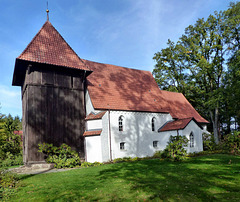
Meinerdingen, just like the nearby villages of Tieferdingen and Meinerdingen, belongs to Walsrode today, known the Walsrode Abbey founded by Count Walo within the 10th century - and the World’s largest bird park.
The Walsrode Abbey was mentioned first time in 896, St. Georg in Meinerdingen is mentioned in a document from 1269, as the former mentioned monastery was donated this area, after a nobleman´s daugther was admitted to the convent.
The erection of the church started mid 12th century in Romaneque style, but got enlarged and redesign in Gothic style about a century later. A dendrochronological investigation proved, that the tower was built around 1380.
Meinerdingen,
Honerdingen,
Walsrode,
"Abteil Walsrode",
"Stift Walsrode",
"Walsrode Abbey",
"Lüneburger Heide",
"Lüneburg Heath",
Niedersachsen,
"Lower Saxony",
Germany,
Deutschland
Meinerdingen - St. Georg
| |
|
|
|
Meinerdingen, just like the nearby villages of Tieferdingen and Meinerdingen, belongs to Walsrode today, known the Walsrode Abbey founded by Count Walo within the 10th century - and the World’s largest bird park.
The Walsrode Abbey was mentioned first time in 896, St. Georg in Meinerdingen is mentioned in a document from 1269, as the former mentioned monastery was donated this area, after a nobleman´s daugther was admitted to the convent.
The erection of the church started mid 12th century in Romaneque style, but got enlarged and redesign in Gothic style about a century later. A dendrochronological investigation proved, that the tower was built around 1380.
Rethem - Gumball Machine
| |
|
|
|
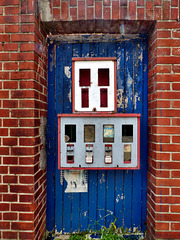
When I was a kid, I loved these machines because the bubble gum sold here was the best for making huge bubbles. But even in Rethem, a small town on the Aller River, there are now not enough young customers for these once wonderful machines.
Walsrode - Stadtkirche
| |
|
|
There is a legend around the foundation of the Walsrode Monastery by Count Wale. When the count had to leave his nearby castle he got stuck in the swamp with his wagon in the area of today's Walsrode. He saw this as a divine sign to buy the place and found a monastery there. He named the place "Walesrode"
The settlement that developed around the monastery was repeatedly caught up in the military conflicts from 1371 onwards. The village was helplessly exposed to the frequent looting and pillaging by the troops and was burned down by soldiers from Bremen in 1381. The citizens were allowed after that by the Saxon dukes to build fortifications. They laid out a large moat and erected four city gates.
The Reformation was very slow to take hold in the area. Duke Ernst sent the preacher Henning Kelp to Walsrode around 1528 so that the monastery would be reformed, but the resistance of the canonesses and the rural population continued for decades. It was not until 1574 that the Reformation was considered complete in the monastery of Walsrode.
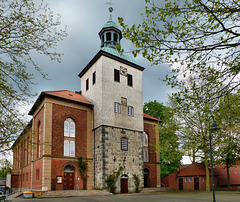
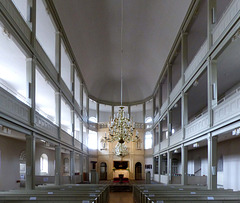
The "Stadtkirche", dedicated to "St. John the Baptist" was erected in classicist style 1848 -1850. There were at least three predecessor churches, built in the 10th, 12th and 15th centuries. The massive tower is from 1786. Wall to wall to the south stands the smaller monastery church.
Walsrode - Stadtkirche
| |
|
|
|
There is a legend around the foundation of the Walsrode Monastery by Count Wale. When the count had to leave his nearby castle he got stuck in the swamp with his wagon in the area of today's Walsrode. He saw this as a divine sign to buy the place and found a monastery there. He named the place "Walesrode"
The settlement that developed around the monastery was repeatedly caught up in the military conflicts from 1371 onwards. The village was helplessly exposed to the frequent looting and pillaging by the troops and was burned down by soldiers from Bremen in 1381. The citizens were allowed after that by the Saxon dukes to build fortifications. They laid out a large moat and erected four city gates.
The Reformation was very slow to take hold in the area. Duke Ernst sent the preacher Henning Kelp to Walsrode around 1528 so that the monastery would be reformed, but the resistance of the canonesses and the rural population continued for decades. It was not until 1574 that the Reformation was considered complete in the monastery of Walsrode.
The "Stadtkirche", dedicated to "St. John the Baptist" was erected in classicist style 1848 -1850. There were at least three predecessor churches, built in the 10th, 12th and 15th centuries.

Walsrode - Stadtkirche
| |
|
|
|
There is a legend around the foundation of the Walsrode Monastery by Count Wale. When the count had to leave his nearby castle he got stuck in the swamp with his wagon in the area of today's Walsrode. He saw this as a divine sign to buy the place and found a monastery there. He named the place "Walesrode"
The settlement that developed around the monastery was repeatedly caught up in the military conflicts from 1371 onwards. The village was helplessly exposed to the frequent looting and pillaging by the troops and was burned down by soldiers from Bremen in 1381. The citizens were allowed after that by the Saxon dukes to build fortifications. They laid out a large moat and erected four city gates.
The Reformation was very slow to take hold in the area. Duke Ernst sent the preacher Henning Kelp to Walsrode around 1528 so that the monastery would be reformed, but the resistance of the canonesses and the rural population continued for decades. It was not until 1574 that the Reformation was considered complete in the monastery of Walsrode.
The "Stadtkirche", dedicated to "St. John the Baptist" was erected in classicist style 1848 -1850. There were at least three predecessor churches, built in the 10th, 12th and 15th centuries.
Pictures of two pious men.
Epitaphs of former Lutheran pastors with nice Baroque hairdos. To the left Gabriel Meyer (1608 - 1679), to the right Meyer´s successor Superintendent Rudolphus Lodemann (1639 - 1714).
Walsrode - Stadtkirche
| |
|
|
There is a legend around the foundation of the Walsrode Monastery by Count Wale. When the count had to leave his nearby castle he got stuck in the swamp with his wagon in the area of today's Walsrode. He saw this as a divine sign to buy the place and found a monastery there. He named the place "Walesrode"
The settlement that developed around the monastery was repeatedly caught up in the military conflicts from 1371 onwards. The village was helplessly exposed to the frequent looting and pillaging by the troops and was burned down by soldiers from Bremen in 1381. The citizens were allowed after that by the Saxon dukes to build fortifications. They laid out a large moat and erected four city gates.
The Reformation was very slow to take hold in the area. Duke Ernst sent the preacher Henning Kelp to Walsrode around 1528 so that the monastery would be reformed, but the resistance of the canonesses and the rural population continued for decades. It was not until 1574 that the Reformation was considered complete in the monastery of Walsrode.
The "Stadtkirche", dedicated to "St. John the Baptist" was erected in classicist style 1848 -1850. There were at least three predecessor churches, built in the 10th, 12th and 15th centuries.
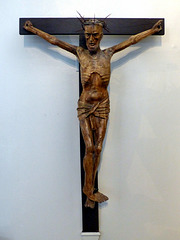
The "Walsroder Kruzifix" ("Walsrode crucifix"), carved around 1500 from the studio of the artist Hans Brüggemann, who was born around 1480 in Walsrode. It is known especially for the "Bordesholm Altar", now in the Schleswig Cathedral.
Walsrode - Kloster Walsrode
| |
|
|
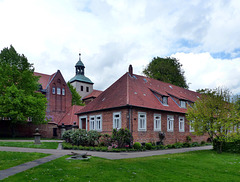
There is a legend around the foundation of the Walsrode Monastery by Count Wale. When the count had to leave his nearby castle he got stuck in the swamp with his wagon in the area of today's Walsrode. He saw this as a divine sign to buy the place and to found a canonesses monastery together with his wife Odelinth in the mid of the 10th century. The first abbess was probably their daughter Mechthildis.
The Benedictine Rule was introduced in 1255. Due to a lightning strike the monastery burnt down in 1482
In 1528 Duke Ernst "The Confessor of Brunswick" introduced the Lutheran Reformation, but the convent refused to accept the new confession for a long time. It took up to 1570, before the convent was Lutheran throughout.
In contrast to other monasteries, the monastic positions in Walsrode were reserved for the daughters of the nobility (the first "bourgeois" abbess was introduced in 1980).
In 1812 Napoleon´s soldiers occupied the convent, expelled the convent ladies and sold furniture and art objects. After a year, the ladies returned to the looted convent.
Today, women who have a professional and family life behind them live here as convent ladies. Prerequisites for admission to the convent are active membership in a Protestant church, the status "single" also in the sense of widowed or divorced, an own supply of food, the willingness to fit into a community and the interest in bringing the convent and closer to the visitors.
Walsrode - Kloster Walsrode
| |
|
|
There is a legend around the foundation of the Walsrode Monastery by Count Wale. When the count had to leave his nearby castle he got stuck in the swamp with his wagon in the area of today's Walsrode. He saw this as a divine sign to buy the place and to found a canonesses monastery together with his wife Odelinth in the mid of the 10th century. The first abbess was probably their daughter Mechthildis.
The Benedictine Rule was introduced in 1255. Due to a lightning strike the monastery burnt down in 1482
In 1528 Duke Ernst "The Confessor of Brunswick" introduced the Lutheran Reformation, but the convent refused to accept the new confession for a long time. It took up to 1570, before the convent was Lutheran throughout.
In contrast to other monasteries, the monastic positions in Walsrode were reserved for the daughters of the nobility (the first "bourgeois" abbess was introduced in 1980).
In 1812 Napoleon´s soldiers occupied the convent, expelled the convent ladies and sold furniture and art objects. After a year, the ladies returned to the looted convent.
Today, women who have a professional and family life behind them live here as convent ladies. Prerequisites for admission to the convent are active membership in a Protestant church, the status "single" also in the sense of widowed or divorced, an own supply of food, the willingness to fit into a community and the interest in bringing the convent and its art treasures closer to the visitors.
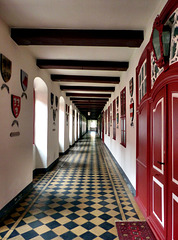
The long hallway is decorated with the coats of arms of noble ladies.
Walsrode - Kloster Walsrode
| |
|
There is a legend around the foundation of the Walsrode Monastery by Count Wale. When the count had to leave his nearby castle he got stuck in the swamp with his wagon in the area of today's Walsrode. He saw this as a divine sign to buy the place and to found a canonesses monastery together with his wife Odelinth in the mid of the 10th century. The first abbess was probably their daughter Mechthildis.
The Benedictine Rule was introduced in 1255. Due to a lightning strike the monastery burnt down in 1482
In 1528 Duke Ernst "The Confessor of Brunswick" introduced the Lutheran Reformation, but the convent refused to accept the new confession for a long time. It took up to 1570, before the convent was Lutheran throughout.
In contrast to other monasteries, the monastic positions in Walsrode were reserved for the daughters of the nobility (the first "bourgeois" abbess was introduced in 1980).
In 1812 Napoleon´s soldiers occupied the convent, expelled the convent ladies and sold furniture and art objects. After a year, the ladies returned to the looted convent.
Today, women who have a professional and family life behind them live here as convent ladies. Prerequisites for admission to the convent are active membership in a Protestant church, the status "single" also in the sense of widowed or divorced, an own supply of food, the willingness to fit into a community and the interest in bringing the convent and its art treasures closer to the visitors.
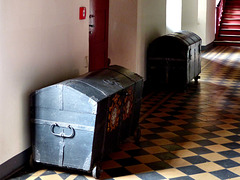
These large chests contained the possessions of the noble ladies when they moved in.
Walsrode - Kloster Walsrode
| |
|
There is a legend around the foundation of the Walsrode Monastery by Count Wale. When the count had to leave his nearby castle he got stuck in the swamp with his wagon in the area of today's Walsrode. He saw this as a divine sign to buy the place and to found a canonesses monastery together with his wife Odelinth in the mid of the 10th century. The first abbess was probably their daughter Mechthildis.
The Benedictine Rule was introduced in 1255. Due to a lightning strike the monastery burnt down in 1482
In 1528 Duke Ernst "The Confessor of Brunswick" introduced the Lutheran Reformation, but the convent refused to accept the new confession for a long time. It took up to 1570, before the convent was Lutheran throughout.
In contrast to other monasteries, the monastic positions in Walsrode were reserved for the daughters of the nobility (the first "bourgeois" abbess was introduced in 1980).
In 1812 Napoleon´s soldiers occupied the convent, expelled the convent ladies and sold furniture and art objects. After a year, the ladies returned to the looted convent.
Today, women who have a professional and family life behind them live here as convent ladies. Prerequisites for admission to the convent are active membership in a Protestant church, the status "single" also in the sense of widowed or divorced, an own supply of food, the willingness to fit into a community and the interest in bringing the convent and its art treasures closer to the visitors.
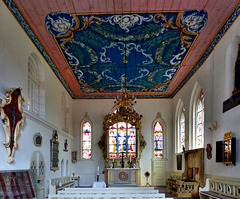
The chapel´s stained-glass windows were produced in Lueneburg in 1483.
Walsrode - Kloster Walsrode
| |
|
There is a legend around the foundation of the Walsrode Monastery by Count Wale. When the count had to leave his nearby castle he got stuck in the swamp with his wagon in the area of today's Walsrode. He saw this as a divine sign to buy the place and to found a canonesses monastery together with his wife Odelinth in the mid of the 10th century. The first abbess was probably their daughter Mechthildis.
The Benedictine Rule was introduced in 1255. Due to a lightning strike the monastery burnt down in 1482
In 1528 Duke Ernst "The Confessor of Brunswick" introduced the Lutheran Reformation, but the convent refused to accept the new confession for a long time. It took up to 1570, before the convent was Lutheran throughout.
In contrast to other monasteries, the monastic positions in Walsrode were reserved for the daughters of the nobility (the first "bourgeois" abbess was introduced in 1980).
In 1812 Napoleon´s soldiers occupied the convent, expelled the convent ladies and sold furniture and art objects. After a year, the ladies returned to the looted convent.
Today, women who have a professional and family life behind them live here as convent ladies. Prerequisites for admission to the convent are active membership in a Protestant church, the status "single" also in the sense of widowed or divorced, an own supply of food, the willingness to fit into a community and the interest in bringing the convent and its art treasures closer to the visitors.
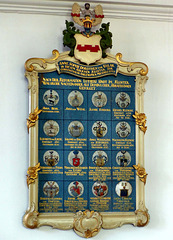
All abbesses since the Reformation can be found on this board.
Hannover - Alan Touring
| |
|
With more than 500.000 inhabitants Hannover is the capital and largest city of the German state of Lower Saxony.
Hannover was founded in medieval times on the east bank of the River Leine. It was a small village of ferrymen and fishermen. It became a comparatively large town in the 13th century, receiving town privileges in 1241, owing to its position at a natural crossroads. It was connected to the Hanseatic League city of Bremen by the Leine and was situated north-west of the Harz mountains so that east-west traffic passed through it.
In the 14th century the main churches of Hanover were built, as well as a city wall with three city gates.
Between 1714 and 1837 three kings of Great Britain were concurrently also Electoral Princes of Hanover.
As an important railway and road junction and production centre, Hannover was a major target for strategic bombing during World War II. More than 90% of the city centre was destroyed in a total of 88 bombing raids. So today Hannover lacks the medieval heart. Only a few buildings got rebuilt and restored.
-
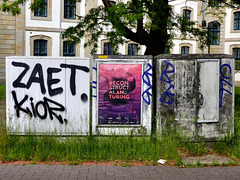
Alan Turing was an English mathematician, computer scientist, logician and cryptanalyst. Turing was highly influential in the development of theoretical computer science, providing a formalisation of the concepts of algorithm and computation with the Turing machine, which can be considered a model of a general-purpose computer. He is widely considered to be the father of theoretical computer science and artificial intelligence.
Turing was gay and during the investigation at the police in 1952, he acknowledged a sexual relationship with a man. Homosexual acts were criminal offences in the UK at that time. He was charged with "gross indecency". He was convicted and given a choice between imprisonment and probation. His probation would be conditional on his agreement to undergo hormonal physical changes. He accepted the option of injections of synthetic oestrogen. The treatment rendered Turing impotent.
Turing's conviction barred him from continuing with his cryptographic consultancy for the Government Communications Headquarters (GCHQ), though he kept his academic job. He was denied entry into the United States after his conviction in 1952.
On 8 June 1954 Turing's housekeeper found him dead. He had died the previous day at the age of 41. Cyanide poisoning was established as the cause of death. He was one of the most brilliant heads of computer science in the 20th century. I cannot imagine, where "we" would be in computer science if he would not have died at such young age.
www.buero-fuer-eskapismus.de/reconstruct-alan-turing
Hannover - Altes Rathaus
| |
|
|
With more than 500.000 inhabitants Hannover is the capital and largest city of the German state of Lower Saxony.
Hannover was founded in medieval times on the east bank of the River Leine. It was a small village of ferrymen and fishermen that became a comparatively large town in the 13th century, receiving town privileges in 1241, owing to its position at a natural crossroads. It was connected to the Hanseatic League city of Bremen by the Leine and was situated north-west of the Harz mountains, so that east-west traffic passed through it.
In the 14th century the main churches of Hanover were built, as well as a city wall with three city gates.
Between 1714 and 1837 three kings of Great Britain were concurrently also Electoral Princes of Hanover.
As an important railway and road junction and production centre, Hannover was a major target for strategic bombing during World War II. More than 90% of the city centre was destroyed in a total of 88 bombing raids. So today Hannover lacks it´s medieval heart. Only few buildings got rebuilt and restored.
-
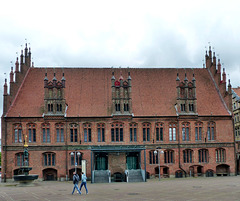
The Old Town Hall (Altes Rathhaus) was the first town hall of the city of Hannover. It is Hannover´s oldest secular building, erected in the Brick Gothic style.
The erection of the building started in 1410. But it underwent several reconstructions and extensions. The original first floor became today's basement due to late medieval fills . In 1844, a renovation of the wings took place and one half timbered wing of the 16th century, was demolished and replaced by what is now nicknamed the "Doge's Palace", which houses the registry office.
When the old town hall was to be demolished at the end of the 19th century, a citizens' initiative was formed. The building was ultimately spared. It was renovated from 1877 to 1891, restoring it to the assumed condition from the time it was built, as this was considered a "pure" architectural style.
The air raids on Hanover in 1943 led to the partial destruction of the building complex. Restorations took place in 1953 and in 1964 the show gable on the west side was reconstructed.
Jump to top
RSS feed- Latest items - Subscribe to the latest items added to this album
- ipernity © 2007-2026
- Help & Contact
|
Club news
|
About ipernity
|
History |
ipernity Club & Prices |
Guide of good conduct
Donate | Group guidelines | Privacy policy | Terms of use | Statutes | In memoria -
Facebook
X
