

tarboat's photos
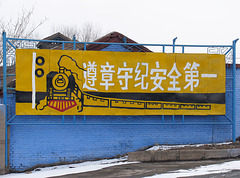
Welcome to the workshops
| |
|
Welcome sign at the depot and workshops of the Baiyin Mining Railway. As far as I know none of their locomotives had smoke deflectors as depicted here, Maybe some of the earlier JS class used there had them before they were taken out of service. By this time all they had in use was SY class 2-8-2s.
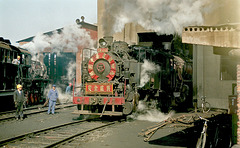
Sujiatun workshops
| |
|
Sujiatun industrial locomotive works shunter GJ 1018 is pulling a SY class from the erecting shop whilst a further SY is undergoing a steam test on the left. Even in the 1990s tank engines were scarce in China and this was the only GJ that I ever saw in steam.
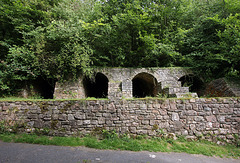
Vention limekilns
| |
|
A recent visit to the Forest of Dean allowed a chance to seek out the limekilns at Vention, Lower Lydbrook, although they are actually just outside the Forest. There are two kilns, each served by two draw tunnels. I suspect that they are of late eighteenth or early nineteenth century date.
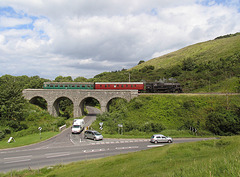
Approaching Corfe Castle
| |
|
A mixture of liveries as Standard Tank 80104 brings a short train into Corfe Castle on the Swanage Railway.

St Andrew's, Wern
| |
|
|
The Mission Church at Wern, Minera has been closed for some time. It is up for sale, but the covenants and restrictions on use are such that a buyer has proved elusive. It is listed Grade II, and it will be a pity if bumbledom by the church and planning authorities means that it is allowed to fall into ruin.
Bate Mill
| |
|
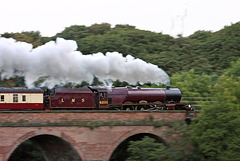
6201 " Princess Elizabeth " on Bate Mill viaduct with the Scarborough Spa Express from Crewe. One of my rare panning attempts.
Spinning
| |
|
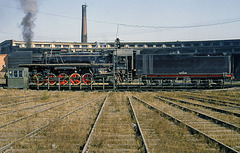
QJ 6797 takes a trip on the turntable at Suihua depot before resuming work on the line towards Nancha
Wrexham Waterworks
| |
|
|
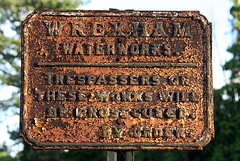
In 1863, the Wrexham Waterworks Company was established to supply the town with clean water. By 1904 demand had increased, and the company now supplied parts of Cheshire as well as Wrexham. To meet this increased demand, a new, larger reservoir was built, named Ty Mawr (Big House), which opened in 1907. The same Act of Parliament that allowed the construction also authorised the name change of Wrexham Waterworks Company to the Wrexham and East Denbighshire Water Company. A treatment works was also constructed at Legacy, where this notice protects the filter beds to this day.
Entering the loop
| |
|
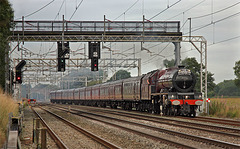
6201 enters the loop at Chelford with the Scarborough Flyer. There was plenty of steam available and the safety valves lifted before the train had stopped.
Southsea
| |
|
|
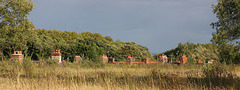
Standing below the pit bank at the former Plas Power Colliery, the village of Southsea appears to have subsided somewhat.
Penrhos engine house
| |
|
|
|
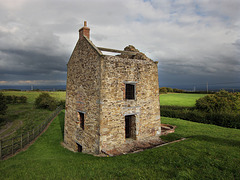
Thought to have been erected c1794 by John Wilkinson this building housed a beam pumping engine to drain the workings of his Brymbo Colliery. By mid nineteenth century it had been converted to a dwellinghouse and remained so until abandoned in the 1950s. Recently subject to considerable conservation work, it is the oldest standing full height enginehouse in Wales.
Nag's Head, Rhosllanerchrugog
| |
|
|
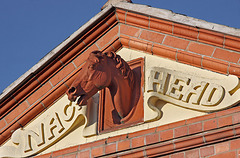
I was expecting to find one terracotta horse head at Rhos, but was pleasantly surprised to find that there are two, one on each gable of the frontage. Sadly the Nag's Head has been converted into houses and both horses have lost their ears in the past few years. This is a great shame and I wonder whether it is down to carelessness or vandalism? The terracotta is a product of Davies Brothers, Abenbury Brickworks, Wrexham.
Combined effort
| |
|
|
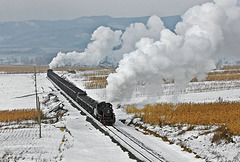
The morning empty coal wagons to Xinghua Colliery were combined with the empty spoil wagons on this particular morning on the Chengzihe system of the Jixi Coal Railway. The first attempt to surmount the fierce bank out of Zhengyang ended in failure and after rolling back down the hill a spirited effort was made by both locomotives and the train was making steady progress when it passed us stood on the Xinghua spoil banks. The strong side wind must have made the task even harder for the locomotives, it certainly froze my fingers as the temperature was around -15C before taking the wind chill into account.
Beach, ball, and beast
| |
|
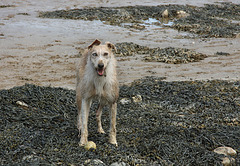
Niamh and beaches are made for each other. Add a ball and she is in heaven. Nun Mill Bay, Kirkcudbright
On the approach to Xiahua
| |
|
|
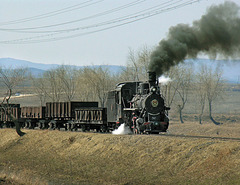
The motley varieties of coal wagon in use on the Huanan Coal Railway are obvious as a train of empties approaches the crossing point at Xiahua. Many, if not all, of the wagons were converted from timber bogies as this line was originally built as a forestry railway.
Sponds Colliery
| |
|
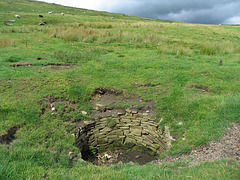
Sponds Colliery lies across a moor some 1100ft up in the parish of Lyme Handley. in the nineteenth century the land was in the ownership of the Legh's of Lyme Hall and the coal mines were let for many years to James Jackson, a farmer from Pott Shrigley. He worked the Sweet Seam via a series of pits which he sank as the workings moved from north to south across the moor. This shaft was around 300ft deep and may have been in operation in the 1870s or early 1880s. On the bank immediately behind can be seen the circle on which the whim winding gin stood and under the grass can be found the flagged path upon which the horse walked.
Kenyon & Co, Harrop, Nr Macclesfield
| |
|
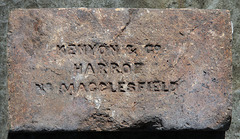
This one came as a complete surprise. I had no idea that this firm had existed and do not know where they made their firebricks. Harrop is a district at the north-west of the parish of Rainow where there were a number of small coal and fireclay mines in the nineteenth century and into the twentieth century in a couple of cases. The only kiln that I know of in that area was at Brink Brow north of Further Harrop Farm.
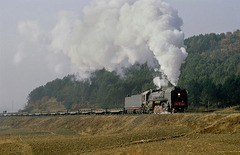
QJ 6966 Nancha Bank
| |
|
Another reminder of the joys once to be found at Nancha on the branch to Wuyiling. The sinuous climb up from the main line junction guaranteed frantic steam action every time, even with the empty log wagons as seen here. This train was banked by another QJ running tender first.
