

tarboat's photos

Wren's Nest Pit
| |
|
|
In 1826 the working of the Gees seam at Poynton Colliery was being pursued at a number of shafts to the east of where the Macclesfield Canal would be built a few years later. At that time an engine pit was being sunk immediately east of Elmbeds Farm and the Wren's Nest shaft was to become the Bye Pit to it. The depth of the shaft was about 66 yards. Both pits were connected by a tramroad which ran downhill to the Smithfield Pits on Coppice Road. They were abandoned in the 1840s and today all that remains of these pits are the slight depressions where the shafts lie, and a small scatter of spoil.

Limekilns
| |
|
18th or very early 19th century limekilns at High Edge up above Buxton and Harpur Hill. This view has the remains of two earthen kilns, right and centre, with the waste mound to the left. These intermittent kilns were operated on a commercial basis and supplied lime into Cheshire and Lancashire. The raw stone came from the hillside behind and to the right, whilst coal was supplied from mines around Axe Edge and Goyt's Moss a short distance to the west.
Sujiatun depot
| |
|
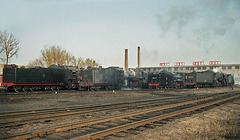
A sunday morning visit saw plenty of locomotives under light steam at Sujiatun depot. This selection includes JS class and QJ class with both eight and twelve wheel tenders.

Iron
| |
|
I found this in Higher Poynton. It may well have been produced by James Downing, Defiance Brickyard, Chesterton.
the appletree
| |
|
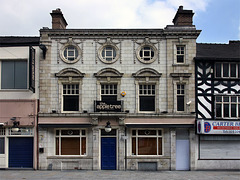
The former Prince William Hotel at 11 Bradshawgate, Bolton displays a fine frontage of cream terracotta. It appeared to be closed down.
2-6 Market Place, Atherton
| |
|
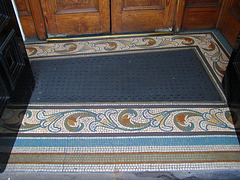
Mosaic in the entrance to the former Williams Deacon's Bank in Atherton that was built in 1889.

Boothstown Mines Rescue Station
| |
|
The gate on the side door to the training galleries at Boothstown Mines Rescue Station is very much of its tme, the building dating from 1933. Little decorative touches such as this are sadly lacking in most modern structures.
Bin day
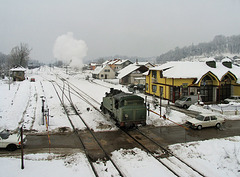
Lukavac crossing
| |
|
62-638 heads back to the Lukavac soda ash factory after delivering wagons to the exchange sidings.
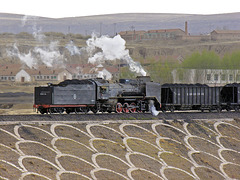
JS on the embankment
| |
|
|
JS 6246 prepares to leave the loading point at the opencast mine loading point on the Yuanbaoshan Coal Railway.
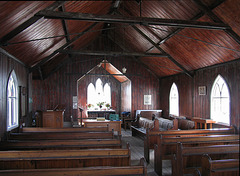
St Saviours, interior
| |
|
The tin tabernacle at the Midland Railway Centre, Butterley, was originally built as St. Saviours Church in Westhouses. This church was built in the late 1890s by the Midland railway for the workers and families at this rather remote depot. In 1995 it was moved to Butterley where it is still occasionally used for services.
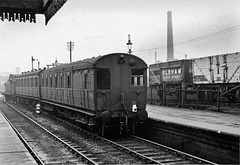
Clegg Street
| |
|
Oldham-Ashton-Guide Bridge push-pull service at Oldham Clegg Street 1957. This service is heading towards Ashton. Photo - Jack Lane collection.
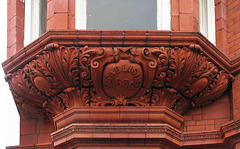
Established 1836
| |
|
Number 2-6 Market Place in Atherton was originally built to house Williams Deacon's Bank. Completed in 1889 and opened in 1901 the building was designed by Bradshaw & Gass of Bolton in the Flemish Renaissance style with plenty of terracotta decoration. The date refers to the founding of the bank.
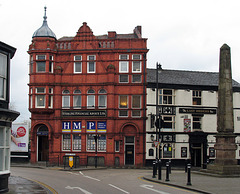
2-6 Market Place, Atherton
| |
|
2-6 Market Place in Atherton was originally built to house Williams Deacon's Bank. Completed in 1889 and opened in 1901 the building was designed by Bradshaw & Gass of Bolton in the Flemish Renaissance style with plenty of terracotta decoration. It has recently been extensively refurbished and is an important building in the town.
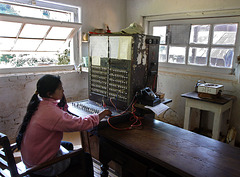
Telephone exchange
| |
|
Phone messages at Namtu are still routed via this manual exchange. No alternatives are available as there is no mobile network in Myanmar.
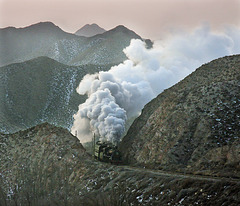
Passenger service
| |
|
|
Early morning and the passenger service to Shenbutong Mine is just ahead of the sun as it hammers up the hill on the Baiyin Mining Railway.
Colliery Baths
| |
|
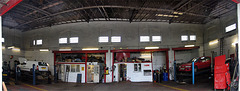
Coal owners Fletcher Burrows & Co Ltd erected the first purpose built colliery bath house in Britain at Gibfield Colliery in 1913 after a trial of an adapted building at their Howe Bridge Colliery. The colliery closed in 1963 but the building survives as a car repair and maintenance garage. The company had sent a delegation to visit pithead baths in Belgium and France, and their new facilities were based closely on continental practice. There was a large central dressing hall with showers in side aisles. Clothes could be attached to cords and hauled up to the ceiling and secured in place by padlocks. The photograph (a rather dodgy stitch) shows the interior of the building and close examination of the framework in the roof reveals that the pulleys over which the cords ran are still in situ.
Gateposts
| |
|
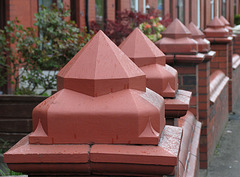
In the industrial areas of East Lancashire where brick predominates, there is a certain style to much of the terraced housing dating from the later nineteenth century. Small walled front gardens are often embellished by terracotta topped gateposts such as this fine collection on Wigan Road in Atherton. The quality of this particular group suggests products from the Rochdale area.
