

Amelia's photos with the keyword: Ruins
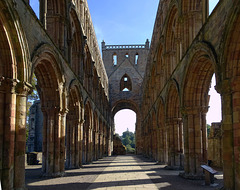
Jedburgh Abbey Ground Floor
| 07 Oct 2019 |
|
|
|
Jedburgh Abbey, a ruined Augustinian abbey which was founded in the 12th century, is situated in the town of Jedburgh, in the Scottish Borders.
The foundation appeared to have the status of 'priory' in the early years and a man by the name of Daniel was described as the Prior of Geddwrda in 1139. The church was later raised to the status of monastery before becoming, in the years prior to King David's death in 1153, a fully fledged abbey dedicated to the Virgin Mary, probably in 1147.
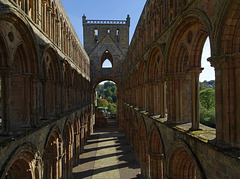
Jedburgh Abbey First Floor
| 07 Oct 2019 |
|
|
|
Jedburgh Abbey, a ruined Augustinian abbey which was founded in the 12th century, is situated in the town of Jedburgh, in the Scottish Borders.
The foundation appeared to have the status of 'priory' in the early years and a man by the name of Daniel was described as the Prior of Geddwrda in 1139. The church was later raised to the status of monastery before becoming, in the years prior to King David's death in 1153, a fully fledged abbey dedicated to the Virgin Mary, probably in 1147.
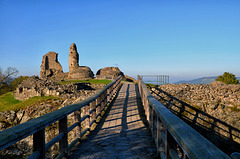
HFF everyone
| 26 Jan 2018 |
|
|
|
Montgomery Castle is a stone masonry castle looking over the town of Montgomery in Powys, mid Wales. It is one of many Norman castles on the border between Wales and England. The original motte and bailey is now known as Hen Domen and was built at the order of Roger de Montgomery, earl of Shrewsbury some time between 1071 and 1074.
The rebuilding of Montgomery Castle in stone was commenced in the late summer of 1223 on the sixteenth birthday of Henry III of England, a mile to the south-east of the original site. After 1295 and the final Welsh War of the thirteenth century the castle became more of a military backwater and prison than a front line fortress.
Peace reduced Montgomery's strategic importance, and by 1343 parts of the castle were already in disrepair. It was refurbished by Roger Mortimer, second earl of March, after 1359, and again under Henry VIII during the 1530s and 1540s. It last saw action under the Herberts during the English Civil War, when it surrendered to the Parliamentarians in 1644; and in 1649 it was demolished.
Jump to top
RSS feed- Amelia's latest photos with "Ruins" - Photos
- ipernity © 2007-2026
- Help & Contact
|
Club news
|
About ipernity
|
History |
ipernity Club & Prices |
Guide of good conduct
Donate | Group guidelines | Privacy policy | Terms of use | Statutes | In memoria -
Facebook
X
