

John Sheldon's photos

06 May 2018
1 favorite
1 comment
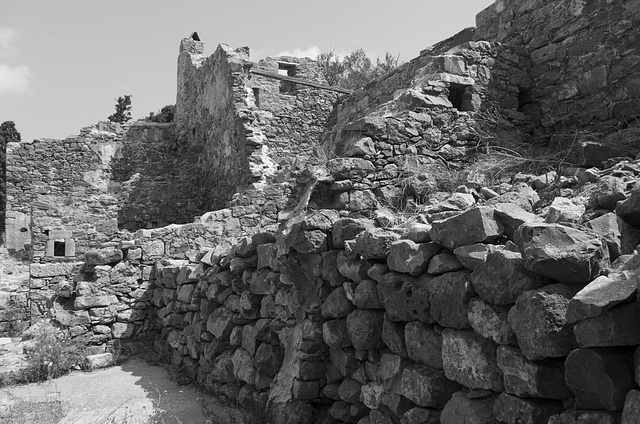
Ruined buildings at Spinalinga
Spinalonga is a small island just off the coast of northern Crete. The island was occupied by a community of leprosy sufferers from 1903 to 1957, and was one of the last active 'leper colonies' in Europe. A hospital was built, and once on the island the leprosy sufferers received food, water, medical attention and social security payments. Previously, such amenities had been unavailable to them, as they had mostly lived in the area's caves, away from the towns and villages. The community's buildings are now mostly in a state of ruin, notable exceptions being two church buildings, St George and St Pantalion, and a Venetian fortress. The fortress dates from the Venetian occupation of the island, from c1550 to 1715.
06 May 2018
1 favorite
1 comment
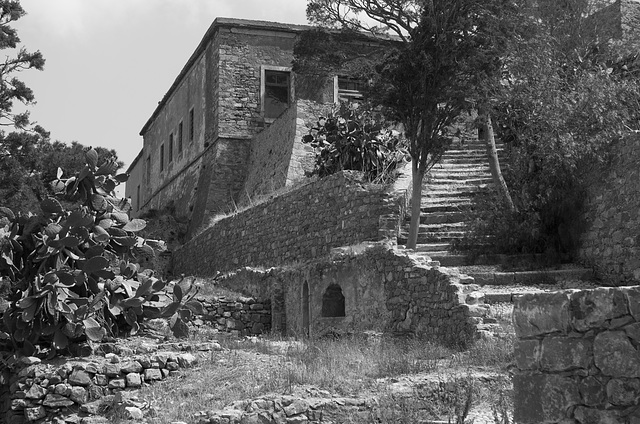
Stairs to the hospital on Spinalonga
Spinalonga is a small island just off the coast of northern Crete. The island was occupied by a community of leprosy sufferers from 1903 to 1957, and was one of the last active 'leper colonies' in Europe. A hospital was built, and once on the island the leprosy sufferers received food, water, medical attention and social security payments. Previously, such amenities had been unavailable to them, as they had mostly lived in the area's caves, away from the towns and villages. The community's buildings are now mostly in a state of ruin, notable exceptions being two church buildings, St George and St Pantalion, and a Venetian fortress. The fortress dates from the Venetian occupation of the island, from c1550 to 1715.
06 May 2018
3 favorites
4 comments
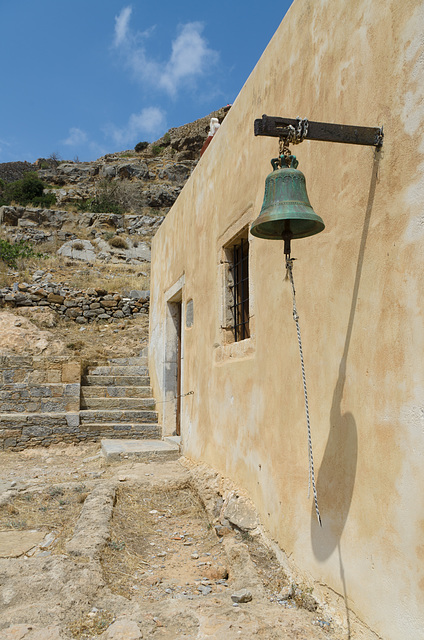
Church of Saint George, Spinalonga
The Church of St George dates back to 1661, built during the Venetian occupation of the island. It is close to the Graveyard where members of the leper community were buried between 1903 and 1957.
Spinalonga is a small island just off the coast of northern Crete. The island was occupied by a community of leprosy sufferers from 1903 to 1957, and was one of the last active 'leper colonies' in Europe. A hospital was built, and once on the island the leprosy sufferers received food, water, medical attention and social security payments. Previously, such amenities had been unavailable to them, as they had mostly lived in the area's caves, away from the towns and villages. The community's buildings are now mostly in a state of ruin, notable exceptions being two church buildings, St George and St Pantalion, and a Venetian fortress. The fortress dates from the Venetian occupation of the island, from c1550 to 1715.
06 May 2018
1 favorite
1 comment
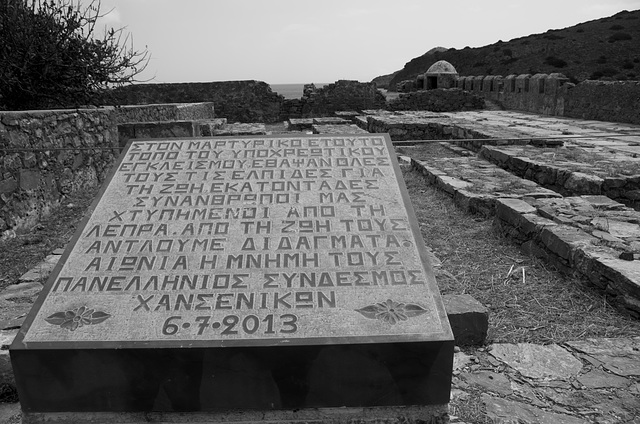
Leper community graveyard at Spinalonga
The graveyard features this large plaque in Greek, which was placed here after the last surviving members of the leper community left. The wording urges respect for those who are buried on the island.
Spinalonga is a small island just off the coast of northern Crete. The island was occupied by a community of leprosy sufferers from 1903 to 1957, and was one of the last active 'leper colonies' in Europe. A hospital was built, and once on the island the leprosy sufferers received food, water, medical attention and social security payments. Previously, such amenities had been unavailable to them, as they had mostly lived in the area's caves, away from the towns and villages. The community's buildings are now mostly in a state of ruin, notable exceptions being two church buildings, St George and St Pantalion, and a Venetian fortress. The fortress dates from the Venetian occupation of the island, from c1550 to 1715.
06 May 2018
1 comment
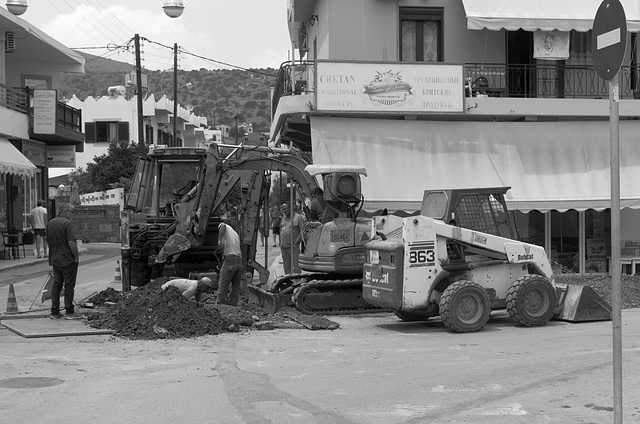
Men at work in Agios Nikolaos, Crete
I love work, I could watch it all day.
06 May 2018
2 favorites
2 comments
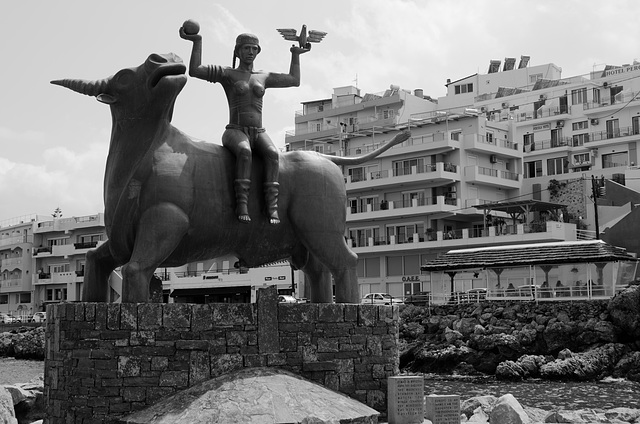
The origins of Europe at Agios Nikolaos
On the waterfront in the town of Agios Nikolaos (Saint Nicholas) on the island of Crete stands this 2012 Sculpture depicting Zeus and Europa. Zeus was the chief god in Greek mythology. His eye was caught by Europa, the daughter of the king of Phoenicia and he gained her trust on the Phoenician beaches disguised as a beautiful, friendly bull. Eventually Europa gained the confidence to ride on the animal's back. Zeus entered the Mediterranean Sea and took her to Crete (where he had spent his infancy). Their relationship lasted long enough to produce three children, one of whom was King Minos. He is credited with founding the first European civilisation which was based at Knossos on the island of Crete; his mother gave the continent of Europe its name. These stories are myths, but the Minoan civilisation of 4000 years ago was factual and magnificent.
06 May 2018
2 favorites
1 comment
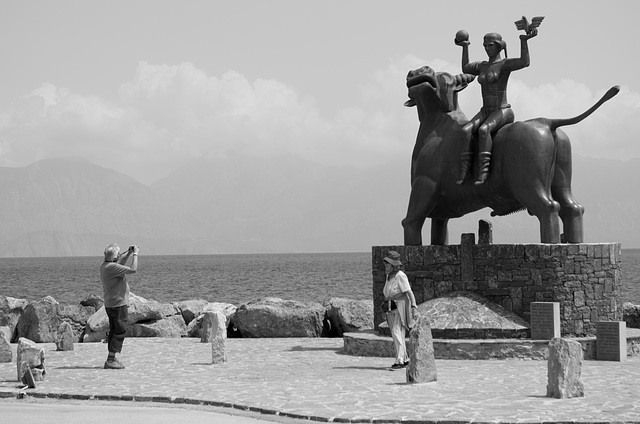
Picturing Zeus and Europa
On the waterfront in the town of Agios Nikolaos (Saint Nicholas) on the island of Crete stands this 2012 Sculpture depicting Zeus and Europa. Zeus was the chief god in Greek mythology. His eye was caught by Europa, the daughter of the king of Phoenicia and he gained her trust on the Phoenician beaches disguised as a beautiful, friendly bull. Eventually Europa gained the confidence to ride on the animal's back. Zeus entered the Mediterranean Sea and took her to Crete (where he had spent his infancy). Their relationship lasted long enough to produce three children, one of whom was King Minos. He is credited with founding the first European civilisation which was based at Knossos on the island of Crete; his mother gave the continent of Europe its name. These stories are myths, but the Minoan civilisation of 4000 years ago was factual and magnificent.
06 May 2018
1 favorite
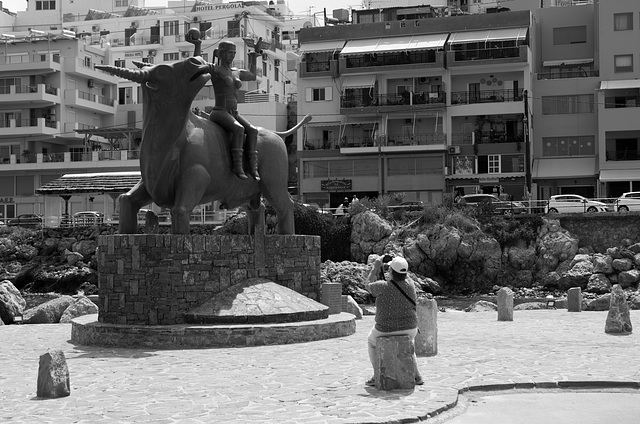
Sit down photography with Zeus and Europa
On the waterfront in the town of Agios Nikolaos (Saint Nicholas) on the island of Crete stands this 2012 Sculpture depicting Zeus and Europa. Zeus was the chief god in Greek mythology. His eye was caught by Europa, the daughter of the king of Phoenicia and he gained her trust on the Phoenician beaches disguised as a beautiful, friendly bull. Eventually Europa gained the confidence to ride on the animal's back. Zeus entered the Mediterranean Sea and took her to Crete (where he had spent his infancy). Their relationship lasted long enough to produce three children, one of whom was King Minos. He is credited with founding the first European civilisation which was based at Knossos on the island of Crete; his mother gave the continent of Europe its name. These stories are myths, but the Minoan civilisation of 4000 years ago was factual and magnificent.

06 May 2018
1 favorite
1 comment
Through the spy hole in the Horn of Plenty
The Cornucopia sculpture at Agios Nikolaos, Crete, which celebrates the creation of the Cornucopia by Zeus from one of Amalthea's horns. Amalthea was a goat who nursed Zeus in his infancy. The sculptors were Nikos and Pandelis Sotiriadi.
