

m̌ ḫ's photos


A Rook Overlooking the Ruins of Devin Castle
Perched dramatically above the Danube — like a medieval eagle that refused to come down — Devín Castle has witnessed everything from Roman legionaries to drunk poets reciting under the ruins. The site started its career respectably enough as a Roman military fort, part of the Limes Romanus, keeping watch over the empire’s northern frontier. The Romans left, but the view stayed first-class. In the 9th century, Prince Rastislav of Great Moravia fortified the rock, turning it into both a stronghold and a cradle of Slavic Christianity. Not bad for a cliff with a nice panorama.
Through the Middle Ages, the castle transformed into a Gothic residence for Hungarian nobles — think armoured banquets, not Netflix — and served as a royal border fortress for centuries. The Pálffy family turned it into a comfortable manor, but Napoleon’s troops had other aesthetic opinions and blew it to pieces in 1809. The result? The strikingly photogenic ruins admired today, which now attract photographers, hikers, and the romantically inclined who like a melancholy backdrop with their picnics.
Then there’s the Maiden Tower, or as locals call it, “that tower you definitely wouldn’t want to fall from.” Legend says a noblewoman jumped from it after losing her lover — a tragic medieval version of ghosting. Another tale insists the tower imprisoned maidens with questionable attitudes, which may explain why it clings to the cliff like a bad decision. Either way, the tower became so famous it even appeared on Slovakia’s 50-halier coin, proving heartbreak does have marketing potential.
Fast-forward to the Cold War, when Devín swapped fairy tales for wire fences. Its cliffs faced Austria, and the border below became part of the Iron Curtain. Locals could literally see freedom on the opposite bank of the Danube — close enough to imagine, far enough to die for trying. A solemn memorial now honours those who attempted the dangerous swim across. Today, exhibitions like “Attention, Border!” explore this chapter, where history took a grim turn at one of the most scenic spots in Europe.
Thankfully, modern Devín has returned to its more entertaining roots. Declared a National Historic Landmark in 1961, it now hosts open-air festivals, concerts, and wine tastings under the stars, proving that laughter (and good Riesling) can outlive empires. Curious visitors can even toss a pebble down the castle’s ancient well — wait a few seconds, and you’ll hear the splash far below. It’s a perfect metaphor for Devín itself: deep, resonant, and echoing through centuries of courage, legend, and love.

17 May 2013
Devín

Morena’s Farewell: Ending Winter the Slovak Way
The Morena celebration, literally meaning “the carrying out of the Morena effigy,” is an ancient Slovak spring ritual that symbolises the farewell to winter and the joyful arrival of spring. It remains one of the country’s oldest and most cherished folk customs, deeply rooted in pre-Christian Slavic belief, and continues to be practised in many Slovak villages today.
Morena, also known by other names such as Morana, Marmuriena, or Kyselica, represents the Slavic goddess of winter, death, and darkness. In traditional symbolism, she embodies the cold and lifeless season that must be overcome for new life to flourish. The ritual’s origins can be traced to early agrarian fertility rites, intended to ensure healthy crops, vitality, and prosperity once winter had passed.
The celebration typically takes place around the spring equinox, or about two weeks before Easter, often coinciding with Smrtná nedeľa (Dead Sunday), the fifth Sunday of Lent. In certain parts of Slovakia, it is connected with Passion Sunday, just before Palm Sunday. During this period, villagers create an effigy of Morena from straw, cloth, wood, and discarded clothing. The figure is deliberately made to look frightening or grotesque, capturing the bitterness and gloom of the departing winter.
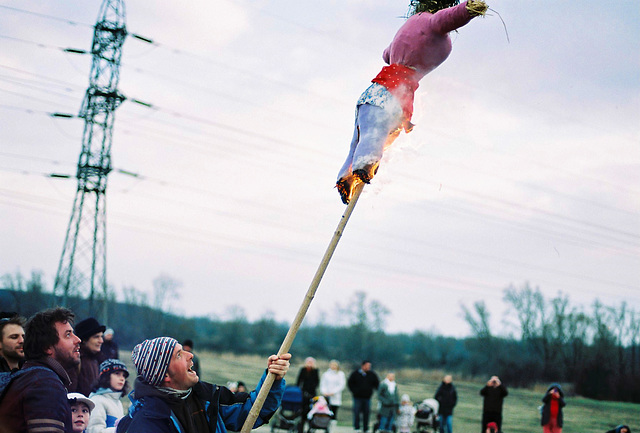
Once completed, the effigy is carried through the village in a lively procession led by children or young women dressed in traditional folk costumes. They sing songs bidding farewell to winter as they proceed towards a nearby river or stream. Upon arrival, the effigy is ceremoniously burned or drowned, representing the destruction of winter and death. In some regions, participants tear pieces of her clothing or throw stones before submerging her in the water, a way of ensuring that she cannot make her return.
After Morena’s symbolic departure, villagers bring home green branches known as letečko – meaning “little summer.” These branches, often decorated with ribbons or flowers, represent the rebirth of nature and the awakening of spring. The use of both fire and water during the ritual symbolises purity, renewal, and the eternal cycle between life and death, highlighting the transition from darkness to light.
In modern Slovakia, the tradition has been adapted into schools, community events, and folk festivals, particularly in regions such as Prešov, Kysuce, and Horehronie. Here, the custom is celebrated with local creativity and enthusiasm, often including effigy-making contests and river ceremonies. Though the Catholic Church once tried to suppress it as a pagan practice, the Morena ritual survived through folklore and rural memory. Today it stands as a cultural emblem of seasonal renewal and a vivid reminder of Slovakia’s deep connection to its ancient Slavic roots.
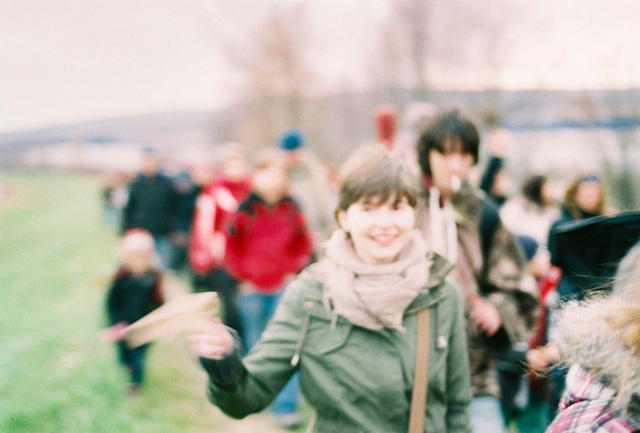
In Svätý Jur, a historic wine town near Bratislava, the ancient Morena celebration has evolved into a vibrant event embraced by young adults, who mix tradition with creative, social energy. Each March, they gather in small groups to craft the straw effigy, often adding witty or artistic details before parading it through the old streets to the stream below the vineyards. Accompanied by local drummers or musicians, the procession becomes a lively display of youthful spirit and connection to heritage. Once the effigy is set ablaze or symbolically drowned, the evening often continues around bonfires in the woods or in the wine cellars, where friends share local vintages, sing, and play acoustic music. This modern reinterpretation of the Morena ritual reflects how Svätý Jur’s younger generation keeps folklore alive while celebrating community, creativity, and the coming of spring.
Read further:
en.wikipedia.org/wiki/Morana_(goddess)
wheelandcross.substack.com/p/episode-17-spring-equinox-eastern
spectator.sme.sk/culture-and-lifestyle/c/taking-out-morena-ends-winter-welcomes-spring

17 May 2013
4 favorites
Morena celebrations in St. Jur
17 May 2013
3 favorites
Morena celebrations in St. Jur

17 May 2013
1 favorite
Morena celebrations in St. Jur

17 May 2013
3 favorites
Morena celebrations in St. Jur

17 May 2013
2 favorites
Morena celebrations in St. Jur
17 May 2013
3 favorites
