

Esther's favorite photos


By Günter Klaus
34 favorites
Die Mönchsziakade auf ihrer Runde entdeckt :)) Spotted the monk cicadas on their rounds :)) J'ai aperçu les cigales moines en pleine tournée :))
Sie gehört zur Familie der Zwergzikaden (Cicadellidae) und ist in ihrer eigenen Unterfamilie (Mönchszikaden) die einzige Art in Mitteleuropa.Die Mönchszikade wird etwa 4 bis 5,5 mm groß und hat einen sehr kompakten, fast käferartigen Körperbau. Typisch ist der breite, abgerundete Kopf und die nach hinten schräg abfallenden Flügel. Farblich ist sie sehr variabel: Sie kann komplett glänzend schwarz sein, sehr häufig eine markante, leuchtend orange-rote bis rotbraune Färbung auf dem Halsschild (Pronotum) und den Flügeln.Man findet sie von Mai bis August vor allem an Waldrändern, in Gebüschen und Hecken. Sie ernährt sich vom Saft von Laubgehölzen :))
Pip1-5: Nahaufnahmen der Zikade
It belongs to the family of leafhoppers (Cicadellidae) and is the only species in its own subfamily (monk cicadas) found in Central Europe. The monk cicada grows to about 4 to 5.5 mm in length and has a very compact, almost beetle-like body. Its broad, rounded head and wings that slope backwards are typical features. Its coloration is highly variable: it can be completely glossy black, but very often it has a striking, bright orange-red to reddish-brown coloration on its pronotum and wings. It can be found from May to August, primarily at forest edges, in bushes, and hedges. It feeds on the sap of deciduous trees.
Pip 1-5: Close-up photos of the cicada
Elle appartient à la famille des cicadelles (Cicadellidae) et est la seule espèce de sa sous-famille (cigales moines) présente en Europe centrale. La cigale moine mesure environ 4 à 5,5 mm de long et possède un corps très compact, presque semblable à celui d'un coléoptère. Sa tête large et arrondie et ses ailes inclinées vers l'arrière sont des caractéristiques typiques. Sa coloration est très variable : elle peut être entièrement noire et brillante, mais elle présente très souvent une coloration orange-rouge vif à brun rougeâtre sur son pronotum et ses ailes. On la trouve de mai à août, principalement en lisière de forêt, dans les buissons et les haies. Elle se nourrit de la sève des arbres à feuilles caduques.
Pip 1-5 : Photos rapprochées de la cigale

Nederland - Sint Maartensbrug, Stolpbrug
Making a road trip in North Holland, I came across the Stolpbrug just outside the village of Sint Maartensbrug. At first glance it didn’t look like a bridge and is located somewhere ‘in the middle of nowhere’ over the Grote Sloot . The structure is quite unique and can only be used by pedestrians and cyclists.
After some research I found that the Stolpbrug is an artwork designed by Joke Zaal. The ‘bridge’ is a monument to mark the 400 years of existence of the Zijpepolder . The skeleton of the bridge has the shape of a stolpboerderij (haubarg), which is typical for this part of the province. Former Queen Beatrix of the Netherlands opened this artwork bridge in May 1997.
The Stolpbrug is made of African azobé wood and has a height of thirteen meters. Except a bridge it is also a platform for cultural events and has a lookout with great views over the flat polders.

By Makrofan
38 favorites
U-Bahn Station Oculus
Beste Ansicht im Vollbildmodus!
Das Oculus ist eines der architektonisch beeindruckendsten Gebäude in New York City und ist auf jeden Fall einen Besuch wert, allein schon wegen der großartigen Fotokulisse!
www.ipernity.com/doc/makrofan/53109298/in/album/1382022
Innenansicht (Oculus)


69 favorites
Nature's Masterpiece
Rembrandt Tulip at the New York Botanical Garden (Bronx, New York)—May 10, 2026
A single tulip opens in a dramatic swirl of ivory-white petals, each streaked with deep crimson flames that seem painted by hand. The flower’s curling form gives it a sculptural quality, while the fine ribbing of the petals reveals delicate natural texture.
This bloom belongs to the tradition of Rembrandt-style tulips, prized for their bold feathered markings and painterly irregularity. Its red-and-white pattern recalls the historic “broken” tulips that captivated Dutch collectors centuries ago, transforming a simple flower into an object of beauty, rarity, and fascination.
By Günter Klaus
39 favorites
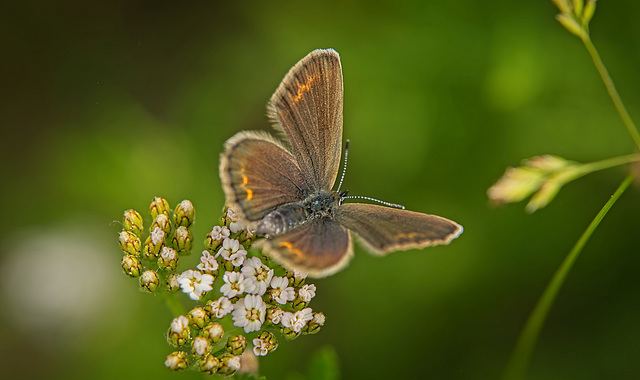
Die andere Perspektive mal auf den Bläuling im Gras :)) Another perspective on the blue butterfly in the grass :)) Une autre perspective sur le papillon bleu dans l'herbe :))
Ich mag im Frühling auch immer diese Ansichten von den Schmetterlingen,wenn sie im Gras sitzen bleiben,da hab ich von diesen Bläuling ein paar Nahaufnahmen machen können :))
Pip1-3: Nahaufnahmen des Schmetterlings
I always love these views of butterflies in spring when they stay in the grass; I was able to take a few close-up photos of this blue butterfly :))
Pip1-3: Close-ups of the butterfly
J'adore observer les papillons au printemps, lorsqu'ils se posent sur l'herbe ; j'ai pu prendre quelques photos en gros plan de ce papillon bleu :))
Pip1-3 : Gros plans du papillon

By Günter Klaus
31 favorites
Die Elster (Pica pica) an unseren Fluß :)) The magpie (Pica pica) on our river :)) La pie (Pica pica) sur notre rivière :))
Ich habe schon öfters versucht,eine Elster zu fotografieren,sie sind sehr scheu und meistens verschwunden,wenn ich mich genähert habe,diese Elster habe ich aufnehmen können,als ich aus einen kleinen Wald rauskam und sie mich nicht gleich sah,ich konnte ein paar Bilder schnell machen :))
Pip1-3: Nahaufnahmen der Elster
I've often tried to photograph a magpie, but they're very shy and usually disappear when I approach. I managed to photograph this magpie when I came out of a small wood and it didn't see me right away. I was able to quickly take a few pictures :))
Pictures 1-3: Close-ups of the magpie
J'ai souvent essayé de photographier une pie, mais elles sont très timides et disparaissent généralement à mon approche. J'ai réussi à photographier celle-ci en sortant d'un petit bois ; elle ne m'a pas vue tout de suite. J'ai pu prendre rapidement quelques photos :))
Photos 1 à 3 : Gros plans de la pie
Jump to top
RSS feed- Latest favorites - Subscribe to the favorite docs of Esther
- ipernity © 2007-2026
- Help & Contact
|
Club news
|
About ipernity
|
History |
ipernity Club & Prices |
Guide of good conduct
Donate | Group guidelines | Privacy policy | Terms of use | Statutes | In memoria -
Facebook
X
