

Esther's favorite photos


By Amelia
25 favorites
The Knife Angel in Shrewsbury
SC202 - Post 21 June - It's a crazy world. It's hard to believe that this sculpture is what the world has become.
National Youth Anti-Violence Educational Programme.
The Knife Angel was intended to educate children, young people and adults about the harmful effects that violent behaviour has on communities all across our nation. it has been made from hundreds of thousands of knives being removed off our city streets.
The journey of the Knife Angel has travelled across the country, bringing communities together to reflect, remember, and take a stand against violence.
The sculpture was created By the British Ironworks near Oswestry in Shropshire.
In December 2018, the Knife Angel began its official Anti-Violence Tour across the UK, beginning its journey outside of Liverpool’s Anglican Cathedral.
So far this year it has been to:
March 2026 Plymouth
April - May 2026 Newark, Nottinghamshire
June 2026 Ely, Cambridgeshire
June & July 2026 Shrewsbury, which is where it is at the moment, and stands proudly in the Market Square

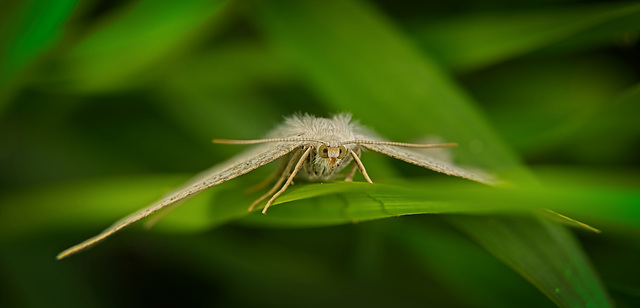
By Günter Klaus
26 favorites
Der Heidelbeer-Kleinspanners (Scopula ternata) hat sich im Gras versteckt :)) The blueberry moth (Scopula ternata) is hiding in the grass :)) La pyrale des bleuets (Scopula ternata) se cache dans l'herbe :))
Es ist etwas schwer,sie perfekt zu erreichen,weil sie sich im Gras verstecken.die Grashalme immer etwas im Weg sind und man nicht so leicht dazukommt,wegen des Fokussieren,die Nachtfalter haben eine Flügelspannweite von ca. 21 bis 29 mm (wobei die Männchen meist etwas größer und kontrastreicher gefärbt sind).Die Grundfarbe ist blassbraun, hellgelb oder weißlich-grau mit einer feinen, grauen Überstäubung. Markant sind die leicht geschwungenen, oft eher schwach ausgeprägten Querlinien auf den Flügeln.Der Falter ist hauptsächlich in der Dämmerung und nachts aktiv, fliegt aber gelegentlich auch schon am späten Nachmittag oder wird durch künstliches Licht angelockt.Er fliegt in einer einzigen Generation pro Jahr, meist von Ende Mai bis Anfang August :))
Pip1-5: verschiedene Ansichten des Nachtfalters
It's a bit difficult to get a perfect shot of them because they hide in the grass. The blades of grass are always somewhat in the way, making it hard to get close enough to focus. These moths have a wingspan of approximately 21 to 29 mm (with the males usually being slightly larger and more contrasting in color). The base color is pale brown, light yellow, or whitish-gray with a fine, gray dusting. The slightly curved, often rather faint, crosslines on the wings are a distinctive feature. The moth is mainly active at dusk and at night, but occasionally flies in the late afternoon or is attracted by artificial light. It flies in a single generation per year, usually from the end of May to the beginning of August.
Pip1-5: different views of the moth
Il est un peu difficile de les photographier parfaitement car elles se cachent dans l'herbe. Les brins d'herbe gênent toujours un peu la vue, ce qui complique la mise au point. Ces papillons ont une envergure d'environ 21 à 29 mm (les mâles étant généralement légèrement plus grands et d'une couleur plus contrastée). Leur couleur de base est brun pâle, jaune clair ou gris blanchâtre, avec un fin voile gris. Les lignes transversales légèrement incurvées, souvent assez discrètes, sur les ailes sont une caractéristique distinctive. Ce papillon est principalement actif au crépuscule et la nuit, mais vole parfois en fin d'après-midi ou est attiré par la lumière artificielle. Il n'y a qu'une seule génération par an, généralement de fin mai à début août.
Pip1-5 : différentes vues du papillon

By Günter Klaus
40 favorites
Die Wiesen-Glockenblume (Campanula patula) mal anders angeschaut :)) A different perspective on the meadow bellflower (Campanula patula) :)) Un autre point de vue sur la campanule des prés (Campanula patula) :))
Diese Glockenblumen haben wunderbar auf meinen Weg geleuchtet und ich habe sie mit verschiedenen Sichtweisen mal aufgenommen und sie hat auch einen Kurzbesuch bekommen :))
Pip1-6: Nahaufnahmen der Blume
These bluebells brightened my path beautifully, and I photographed them from different angles. I even paid them a short visit :))
Pictures 1-6: Close-ups of the flower
Ces jacinthes des bois ont magnifiquement égayé mon chemin, et je les ai photographiées sous différents angles. Je leur ai même rendu une petite visite :))
Photos 1 à 6 : Gros plans des fleurs

By Günter Klaus
35 favorites
Die Rotbraune Tanzfliege (Empis lutea) mit ihren langen Rüssel :)) The reddish-brown dance fly (Empis lutea) with its long proboscis :)) La mouche danseuse brun rougeâtre (Empis lutea) avec sa longue trompe :))
Die Fliege besitzt einen relativ kleinen Kopf mit markanten Facettenaugen und einen langen, nach unten gebogenen Rüssel,Tanzfliegen sind geschickte Jäger. Sie ernähren sich von anderen kleinen Insekten (oft Mücken oder kleinere Fliegen), die sie im Flug packen und mit ihrem kräftigen Rüssel aussaugen.Sie sind meist vom späten Frühling bis in den Sommer hinein aktiv,man findet sie besonders häufig in feuchten Lebensräumen, an Waldrändern, auf Wiesen oder in Gebüschen – genau dort, wo sie auf Blättern lauern können!!
Pip1-5: Nahaufnahmen der Fliege
The fly has a relatively small head with distinctive compound eyes and a long, downward-curving proboscis. Dance flies are skilled hunters. They feed on other small insects (often midges or smaller flies), which they catch in flight and suck dry with their powerful proboscis. They are usually active from late spring into summer and are particularly common in damp habitats, at forest edges, in meadows, or in bushes – exactly where they can lie in wait on leaves!
Pip 1-5: Close-up shots of the fly
Cette mouche possède une tête relativement petite, des yeux composés caractéristiques et une longue trompe recourbée vers le bas. Les mouches danseuses sont des chasseuses hors pair. Elles se nourrissent d'autres petits insectes (souvent des moucherons ou de petites mouches), qu'elles capturent en vol et vident de leur sang grâce à leur puissante trompe. Elles sont généralement actives de la fin du printemps à l'été et sont particulièrement fréquentes dans les milieux humides, en lisière de forêt, dans les prairies ou les buissons – là où elles peuvent se cacher sur les feuilles !
Photos 1 à 5 : Gros plans de la mouche

By Amelia
28 favorites
Just a giant bee?
SC201 - Post 14 June - Every picture tells a story.
PiP1 is the eye of the bee.
PiP 2 is more details of the body of the bee.
PiP 3 is The Knife Angel. It was completed in 2018, and stands at 27 ft (8.2 m) tall. At present I think it is in Ely Cambridgeshire.
In collaboration with the Greater Manchester Police (GMP), the British Ironworks has created an anti-violence monument to highlight the city’s stance against all forms of violence. In July 2020, a 7.5 tonne lorry arrived here at the Ironworks to deliver thousands of weapons – including knives and guns – which were all collected from the streets of Manchester.
It's a sobering thought.

By Xata
55 favorites
Tia Maria e tio Edmundo, for Sunday challenge and HBM
A BENCH FULL OF MEMORIES FOR ME, MY AUNT MARIA NOW DECEASED AND UNCLE EDMUNDO, A SHEPHERD NOW SHEPHERDING THE STARS, USED TO SIT THERE ON SUNNY WINTER DAYS...
NOW IT HAS BEEN CEMENTED AND IS ALWAYS EMPTY...EXCEPT FOR MY MEMORIES...


By Annemarie
30 favorites
Full moon night.
SC201 - Post 14 June - Every picture tells a story
View on black!
The story behind is:
I often can not sleep in full moon nights, so this is a snapshot I took the last full moon night, litterally lying in my bed.
Jump to top
RSS feed- Latest favorites - Subscribe to the favorite docs of Esther
- ipernity © 2007-2026
- Help & Contact
|
Club news
|
About ipernity
|
History |
ipernity Club & Prices |
Guide of good conduct
Donate | Group guidelines | Privacy policy | Terms of use | Statutes | In memoria -
Facebook
X
