
Esther's photos


20 Apr 2026
12 favorites
14 comments
Running on air
Boston Marathon 2026
"The Boston Marathon is an annual marathon race hosted by eight cities and towns in greater Boston in eastern Massachusetts, United States. It is traditionally held on Patriots' Day, the third Monday of April. First held in 1897, the event was inspired by the success of the first marathon competition in the 1896 Summer Olympics. The Boston Marathon is the world's oldest annual marathon and ranks as one of the world's best-known road racing events. It is one of seven World Marathon Majors."
en.wikipedia.org/wiki/Boston_Marathon
Sunday Challenge: The Need for Speed: Panning. If you would like to join this friendly Ipernity group that issues weekly photographic challenges on various topics and you have the time to comment on other members submissions, send me an ipermail and I will send you an invitation. Or join at www.ipernity.com/group/daysincolour365 . It is a great way to learn new photographic skills, practice old ones and shoot photographs on topics that you otherwise might miss.
AP1134785

20 Apr 2026
4 favorites
2 comments
Some of the 30,000 competitors
Boston Marathon 2026
"The Boston Marathon is an annual marathon race hosted by eight cities and towns in greater Boston in eastern Massachusetts, United States. It is traditionally held on Patriots' Day, the third Monday of April. First held in 1897, the event was inspired by the success of the first marathon competition in the 1896 Summer Olympics. The Boston Marathon is the world's oldest annual marathon and ranks as one of the world's best-known road racing events. It is one of seven World Marathon Majors."
en.wikipedia.org/wiki/Boston_Marathon
AP1134800

20 Apr 2026
4 favorites
2 comments
Maintain a steady speed
Boston Marathon 2026
"The Boston Marathon is an annual marathon race hosted by eight cities and towns in greater Boston in eastern Massachusetts, United States. It is traditionally held on Patriots' Day, the third Monday of April. First held in 1897, the event was inspired by the success of the first marathon competition in the 1896 Summer Olympics. The Boston Marathon is the world's oldest annual marathon and ranks as one of the world's best-known road racing events. It is one of seven World Marathon Majors."
en.wikipedia.org/wiki/Boston_Marathon
Not that long ago, the camera operators would just perch on the back of a motorcycle without any safety platform.
AP113480

20 Apr 2026
5 favorites
2 comments
The winner - John Korir of Kenya
Boston Marathon 2026
"The Boston Marathon is an annual marathon race hosted by eight cities and towns in greater Boston in eastern Massachusetts, United States. It is traditionally held on Patriots' Day, the third Monday of April. First held in 1897, the event was inspired by the success of the first marathon competition in the 1896 Summer Olympics. The Boston Marathon is the world's oldest annual marathon and ranks as one of the world's best-known road racing events. It is one of seven World Marathon Majors."
en.wikipedia.org/wiki/Boston_Marathon
AP1134768

19 Apr 2026
14 favorites
15 comments
AI Mysterious night in a city alley
Sunday Challenge: Go to ChatGPT.com, Gemini.Google.com or any AI creative site that you like and create an image that looks like a photograph but clearly is not because of a whimsical additive.
The rat in the top hat and the older vehicle in the background make it clear that this is a computer generated image. It is eerie how the computer got the lighting and shadows correct.. This image was created using ChatGPT with a prompt to create a night scene in the 1920's in film noir style with a man staring at a lit window in an alley and a rat in a top hat.

07 Apr 2026
13 favorites
14 comments
In the shower
Sunday Challenge: Take a photo of something that you have in your bathroom. It can be a fixture, a faucet, a soap bubble, an objet d'art, tile or even yourself coming out of the shower, provided that it is family friendly. You can make make it a more interesting photo by shooting it at an angle or shooting only a portion of the object to emphasize its shape. Get creative and show what you can do with a mundane topic.
Our shower surround is made out of frosted, textured glass. This provided an opportunity for an unusual portrait without the need for computer manipulation. My husband was kind enough to consent to be the model.
AP1134760
07 Dec 2025
13 favorites
10 comments
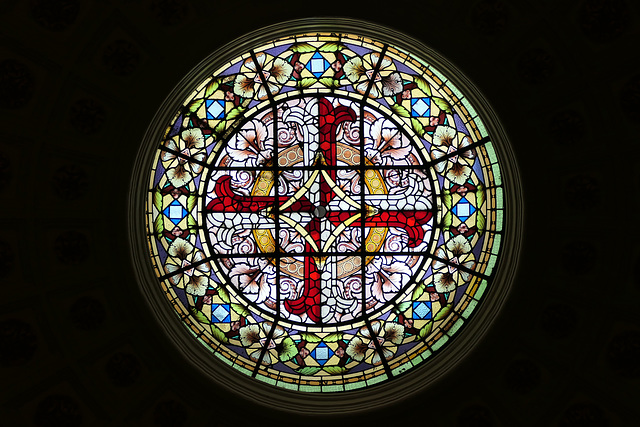
Basilica Nuestra Senora del Rosaio - 5
Basilica Nuestra Senora del Rosaio
Buenos Aires, Argentina
AP1101987

07 Dec 2025
3 favorites
3 comments
Basilica Nuestra Senora del Rosaio - 4
Basilica Nuestra Senora del Rosaio
Buenos Aires, Argentina
AP1101992

07 Dec 2025
4 favorites
3 comments
Basilica Nuestra Senora del Rosaio - 3
Basilica Nuestra Senora del Rosaio
Buenos Aires, Argentina
AP1101991
