


Deutschland

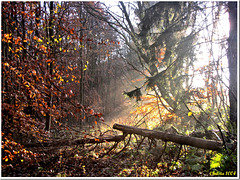
Ray of light in the late autumn forest
| |
|
|
|
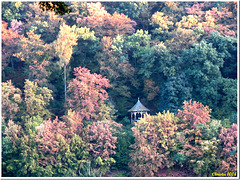
Wallpaper...
| |
|
|
|

Castle benches... HBM
| |
|
|
|
Falkenstein Castle, built in the 14th century, sits on a mountain and served to monitor the valleys below. Even then, its view extended as far as Frankfurt, which explains its strategically chosen location. After its destruction during the Thirty Years' War, it quickly lost its importance and fell into disrepair. Impressive remains of the outer fortifications, the foundations of some buildings and the keep have survived to this day.
BANCS DE CHÂTEAU... Le château de Falkenstein, datant du 14ème siècle, trône sur une montagne et servait à surveiller les vallées descendantes. Sa vue s'étendait déjà à l'époque jusqu'à Francfort, ce qui explique le choix stratégique de son emplacement. Après sa destruction pendant la guerre de Trente Ans, il perdit rapidement de son importance et tomba en ruine. Aujourd'hui encore, il reste des vestiges impressionnants du système de défense extérieur, les fondations de quelques bâtiments et le donjon.
BURGBÄNKE... Die Burg Falkenstein aus dem 14. Jh. thront auf einem Berg und diente zur Überwachung der abgehenden Täler. Ihr Blick reichte schon damals bis nach Frankfurt und erklärte den strategisch gewählten Standort. Nach der Zerstörung im 30-jährigen Krieg verlor sie schnell an Bedeutung und verfiel. Bis heute haben sich von der Anlage eindrucksvolle Reste der äusseren Wehranlage, Grundmauern einiger Gebäude und der Bergfried erhalten.

Le "Temple de l'Empereur"
| |
|
|
|
du (XIXe siècle) se trouve sur un éperon rocheux sur le versant ouest du mont Staufen dans le Taunus. Ce monument classique a la forme d'un vestibule (pronaos) de temple grec, il est censé commémorer la guerre franco-allemande de 1870 à 1871 et la fondation de l'Empire allemand qui s'en est suivie. Son nom fait référence au premier empereur allemand Guillaume Ier et à son successeur Frédéric III. Aujourd'hui, en tant que vue panoramique, il est un but d'excursions et de randonnées.
THE "EMPEROR'S TEMPLE" (19th century) stands on a rocky outcrop on the western slope of Mount Staufen in the Taunus. The neo-classical monument is in the form of a porch (pronaos) of a Greek temple, it commemorates the Franco-Prussian War from 1870 to 1871 and the subsequent foundation of the German Empire. The name refers to the first German Emperor Wilhelm I and his successor Frederick III. Today it is a vantage point and a destination for excursions and hikes.
DER KAISERTEMPEL (19. Jh.) steht auf einem Felsvorsprung am Westhang des Berges Staufen im Taunus. Das klassizistische Baudenkmal hat die Form einer Vorhalle (Pronaos) eines griechischen Tempels, es soll an den Deutsch-Französischen Krieg von 1870 bis 1871 und die anschliessende Gründung des Deutschen Kaiserreiches erinnern. Der Name bezieht sich auf den ersten deutschen Kaiser Wilhelm I. und seinen Nachfolger Friedrich III. Heute ist er als Aussichtspunkt ein Ziel für Ausflüge und Wanderungen.
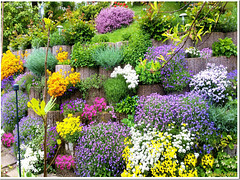
Profusion de fleurs
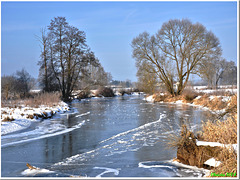
Snowscape, but the water is still flowing...
| |
|
|
|
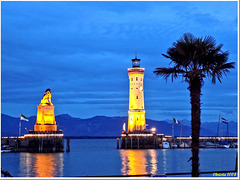
Magical moment before nightfall
| |
|
|
|
3rd PODIUM WINNER, CWP DECEMBER 2020
Lindau’s harbour entrance draws visitors from far and wide. The Bavarian Lion and the New Lighthouse stand majestically against the impressive backdrop of the Alps and Lake Constance.
Moment magique avant la tombée de la nuit. L'entrée du port de Lindau attire des visiteurs de tous horizons. Le lion bavarois et le nouveau phare se dressent majestueusement devant l'impressionnant décor des Alpes et du lac de Constance.
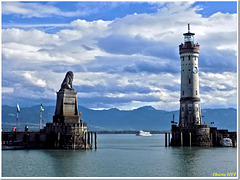
Bavarian roaring lion - on the other side is Austr…
| |
|
|
|
At right the new Lighthouse, at left the lion turns it watchful gaze over the lake. His impressive sandstone statue is standing 6 m tall and weighs 50 t. Its pedestal bears the Roman numerals MDCCCLVI, indicating the year it was erected: 1856.
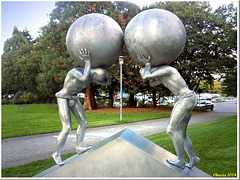
Double round
| |
|
|
|
Atlas-Skulpturen beim Puderturm. In der griechischen Mythologie war Atlas ein Titan, der nach der „Schlacht der Götter“ dazu verdammt war, den Himmel für alle Ewigkeit zu stützen.
Atlas sculptures at the Powder Tower. In Greek mythology, Atlas was a Titan condemned to hold up the sky for eternity after the "Battle of the Gods".
Sculptures d'Atlas à la Tour Poudrière. Dans la mythologie grecque, Atlas était un Titan condamné à soutenir le ciel pour l'éternité après la "Bataille des Dieux".
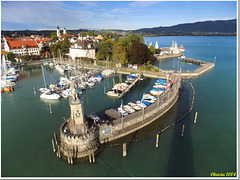
View from the top of the New Lighthouse
| |
|
|
|
The New Lighthouse is 36 m high and its base has a diameter of 24 m. When you climb the 139 steps to the viewing platform at the top you are rewarded with a breathtaking panorama (see PIP with the wide overview to Austria).
2nd PIP : Cruise to Austria
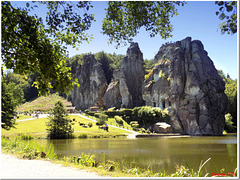
Teutoburger Wald : Blick auf die Externsteine
| |
|
|
|
The giant Externsteine sandstone pillars have been standing in the Teutoburg Forest since the Ice Age. A series of huge columns jutting out of the earth and soaring into the sky: the Externsteine rock formation is undoubtedly one of the most impressive natural monuments in the Teutoburg Forest region.
The stones appear otherworldly to some of the 500,000 or so people who visit the attraction each year, and some even say that they have magical powers...
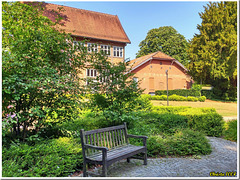
The Queen's Bench - HBM.
| |
|
|
|
The listed Queen Christine House is the oldest non-church building in Zeven (mid-17th century). Queen Christine of Sweden was the ruler of the country at the time and is said to have stopped off in Zeven on one of her journeys and stayed here. Today, changing art exhibitions, lectures, concerts and other cultural events take place here.
LE BANC DE LA REINE. La maison de la reine Christine, classée monument historique, est le plus ancien bâtiment non religieux de Zeven (milieu du 17e siècle). La reine Christine de Suède était alors la souveraine du pays et aurait fait halte à Zeven lors d'un de ses voyages et y aurait passé la nuit. Aujourd'hui, elle accueille des expositions d'art temporaires, des conférences, des concerts et d'autres manifestations culturelles.
DIE BANK DER KÖNIGIN. Das denkmalgeschützte Königin-Christinen-Haus ist das älteste nicht kirchliche Gebäude in Zeven (Mitte 17. Jh). Die schwedische Königin Christine war die damalige Landesherrin und soll auf einer ihrer Reisen in Zeven Station gemacht und hier Quartier genommen haben. Heute finden hier wechselnde Kunsstausstellungen, Vorträge, Konzerte und andere kulturelle Veranstaltungen statt.
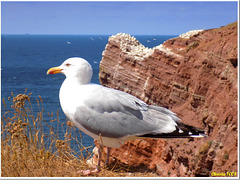
A beautiful specimen...
| |
|
|
|
The "Lummenfelsen" (Lummen cliff) is one of the attractions of Heligoland on which thousands of sea birds brood. It's also the smallest nature reserve in Germany.
UN BEAU SPECIMEN. Le "Lummenfelsen" (rocher de Lummen) est l'une des attractions de Helgoland, sur laquelle des milliers d'oiseaux de mer nichent. C'est aussi la plus petite réserve naturelle d'Allemagne.
EIN SCHÖNES EXEMPLAR. Zu Helgolands Attraktionen zählt der Lummenfelsen, auf dem tausende Seevögel brüten. Er ist zugleich das kleinste Naturschutzgebiet Deutschlands.
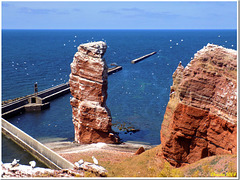
Helgoland's most famous landmark
| |
|
|
|
Helgoland, also spelled Heligoland, is situated about 70 km offshore N-W of Cuxhaven. The little island consists of a level, cliff-girded, red sandstone plateau, called the Oberland (56m at its highest point); a smaller, low sandy tract in the southeast, the Unterland, extended by reclamation; and a low sandy island (0.4 km east), called Düne.
Geological and historical evidence suggest that Helgoland and Düne are the last remnants of a single island whose periphery in AD 800 was about 190 km. Continuous wave attack on the cliffs and a rise in sea level or fall in land level had reduced the island’s periphery to about 8 miles (13 km) by 1649. Nowadays all what remains are about 1.4 square kilometers!
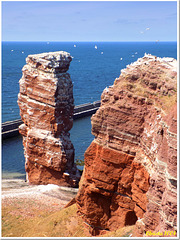
"Die Lange Anna"
| |
|
|
|
A "must seen" on the island: the "Tall Anna", the best known, single standing red sandstone cliff.
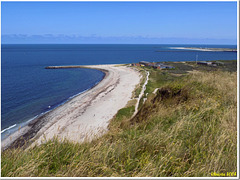
Wide white sand beach
| |
|
|
|
In the background can be seen the smaller side island "Düne".
The originally larger island of Helgoland broke in 1721; since then, there is this small sandy side island where the earless seals lounge around on sandy beaches. Populations of two seal species are found and can be observed.
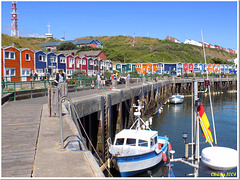
Colorful lobster huts at Heligoland harbor
| |
|
|
|
Die bunten Hummerhütten bei Ankunft Im Hafen Helgoland.
Les cabanes de homard colorées à l'arrivée dans le port d'Helgoland.

Maritimer Charme trifft auf Fachwerk-Kulisse.
| |
|
|
|
Stade hat eine ereignisreiche Vergangenheit mit malerischen Stadtkern. Der sehenswerte Hansehafen liegt im Zentrum der historischen Altstadt. Der Stader Hafen wurde um 1250 errichtet und war im Mittelalter Rivale des Hamburger Hafens! Durch die toll restaurierten Fassaden der Gebäude ergeben sich zahlreiche Fotomotive.
CHARME MARITIME RENCONTRE DECOR A COLOMBAGES. Stade a un passé riche en événements et un centre-ville pittoresque. Le port hanséatique, qui vaut le détour, se trouve au centre de la vieille ville historique. Le port de Stade a été construit vers 1250 et était le rival du port de Hambourg au Moyen-Âge ! Les façades magnifiquement restaurées des bâtiments offrent de nombreux motifs de photo.
MARITIME CHARM MEETS HALF-TIMBERED SCENERY. Stade has an eventful past with a picturesque town centre. The Hanseatic harbour, which is well worth seeing, lies in the centre of the historic old town. Stade harbour was built around 1250 and was a rival of Hamburg harbour in the Middle Ages! The beautifully restored facades of the buildings offer numerous photo opportunities.
Jump to top
RSS feed- Latest items - Subscribe to the latest items added to this album
- ipernity © 2007-2026
- Help & Contact
|
Club news
|
About ipernity
|
History |
ipernity Club & Prices |
Guide of good conduct
Donate | Group guidelines | Privacy policy | Terms of use | Statutes | In memoria -
Facebook
X
