


Ancient Heads and Faces


Paphos - Archaeological Museum
| |
|
|
The Paphos District Archaeological Museum houses a collection of artifacts from the Paphos region. The exhibits originate primarily from Kouklia and Nea Paphos.
Limestone head
of a youth
Roman period, 1st c AC

Nicosia - Cyprus Museum
| |
|
|
Nicosia (aka Lefkosia) is the capital of Cyprus. Its northern part is the de facto capital of Northern Cyprus. Nicosia has been continuously inhabited for over 5,500 years.
In 1960, Nicosia became the capital of the Republic of Cyprus, a state established by the Greek and Turkish Cypriots. In 1974, there was a coup d'état led by the Greek military junta to unite the island with Greece. The coup ousted president Makarios III and precipitated the invasion of the island by the Turkish army. The Turkish army advanced their positions, eventually capturing 37% of Cypriot territory including the northern part of Nicosia.
Today, Nicosia is divided by the Green Line into a Greek Cypriot and a Turkish Cypriot quarter, which is monitored by the United Nations Peacekeeping Force.
There are more than a dozen archeological museum ons Caprus, but the Cyprus Museum is the oldest and largest archaeological museum in Cyprus.
The museum was founded in 1882 to preserve the country’s ancient art treasures. The background to this was that Cyprus was, at that time, being systematically plundered of its archaeological treasures. The American ambassador, Luigi Palma di Cesnola, alone had acquired 35,000 artefacts for the Metropolitan Museum of Art in New York, whilst his brother, Alessandro Palma di Cesnola, stood trial for art theft. A law passed in 1905 to protect archaeological remains enabled the museum to safeguard artefacts and sites more effectively. In 1908, the museum moved to its current building and in 1961, an extension was added to the building.
Head of a female clay figurine
Chirokitia, Neolithic

Nicosia - Cyprus Museum
| |
|
|
Nicosia (aka Lefkosia) is the capital of Cyprus. Its northern part is the de facto capital of Northern Cyprus. Nicosia has been continuously inhabited for over 5,500 years.
In 1960, Nicosia became the capital of the Republic of Cyprus, a state established by the Greek and Turkish Cypriots. In 1974, there was a coup d'état led by the Greek military junta to unite the island with Greece. The coup ousted president Makarios III and precipitated the invasion of the island by the Turkish army. The Turkish army advanced their positions, eventually capturing 37% of Cypriot territory including the northern part of Nicosia.
Today, Nicosia is divided by the Green Line into a Greek Cypriot and a Turkish Cypriot quarter, which is monitored by the United Nations Peacekeeping Force.
There are more than a dozen archeological museum ons Caprus, but the Cyprus Museum is the oldest and largest archaeological museum in Cyprus.
The museum was founded in 1882 to preserve the country’s ancient art treasures. The background to this was that Cyprus was, at that time, being systematically plundered of its archaeological treasures. The American ambassador, Luigi Palma di Cesnola, alone had acquired 35,000 artefacts for the Metropolitan Museum of Art in New York, whilst his brother, Alessandro Palma di Cesnola, stood trial for art theft. A law passed in 1905 to protect archaeological remains enabled the museum to safeguard artefacts and sites more effectively. In 1908, the museum moved to its current building and in 1961, an extension was added to the building.
Votive Heads
They have "Assyrian-style" beards, what demonstrates the fusion of local Cypriot traditions with Near Eastern influences.
600 to 500 BC

Nicosia - Cyprus Museum
| |
|
|
Nicosia (aka Lefkosia) is the capital of Cyprus. Its northern part is the de facto capital of Northern Cyprus. Nicosia has been continuously inhabited for over 5,500 years.
In 1960, Nicosia became the capital of the Republic of Cyprus, a state established by the Greek and Turkish Cypriots. In 1974, there was a coup d'état led by the Greek military junta to unite the island with Greece. The coup ousted president Makarios III and precipitated the invasion of the island by the Turkish army. The Turkish army advanced their positions, eventually capturing 37% of Cypriot territory including the northern part of Nicosia.
Today, Nicosia is divided by the Green Line into a Greek Cypriot and a Turkish Cypriot quarter, which is monitored by the United Nations Peacekeeping Force.
There are more than a dozen archeological museum ons Caprus, but the Cyprus Museum is the oldest and largest archaeological museum in Cyprus.
The museum was founded in 1882 to preserve the country’s ancient art treasures. The background to this was that Cyprus was, at that time, being systematically plundered of its archaeological treasures. The American ambassador, Luigi Palma di Cesnola, alone had acquired 35,000 artefacts for the Metropolitan Museum of Art in New York, whilst his brother, Alessandro Palma di Cesnola, stood trial for art theft. A law passed in 1905 to protect archaeological remains enabled the museum to safeguard artefacts and sites more effectively. In 1908, the museum moved to its current building and in 1961, an extension was added to the building.
Limestone statue of
Zeus Keraunios (thunderer)
watched in the backdrop by a bearded greek god (?) with an "archaic smile".
Archaic period 5th - 6th c BC

Nicosia - Cyprus Museum
| |
|
|
|
Nicosia (aka Lefkosia) is the capital of Cyprus. Its northern part is the de facto capital of Northern Cyprus. Nicosia has been continuously inhabited for over 5,500 years.
In 1960, Nicosia became the capital of the Republic of Cyprus, a state established by the Greek and Turkish Cypriots. In 1974, there was a coup d'état led by the Greek military junta to unite the island with Greece. The coup ousted president Makarios III and precipitated the invasion of the island by the Turkish army. The Turkish army advanced their positions, eventually capturing 37% of Cypriot territory including the northern part of Nicosia.
Today, Nicosia is divided by the Green Line into a Greek Cypriot and a Turkish Cypriot quarter, which is monitored by the United Nations Peacekeeping Force.
There are more than a dozen archeological museum ons Caprus, but the Cyprus Museum is the oldest and largest archaeological museum in Cyprus.
The museum was founded in 1882 to preserve the country’s ancient art treasures. The background to this was that Cyprus was, at that time, being systematically plundered of its archaeological treasures. The American ambassador, Luigi Palma di Cesnola, alone had acquired 35,000 artefacts for the Metropolitan Museum of Art in New York, whilst his brother, Alessandro Palma di Cesnola, stood trial for art theft. A law passed in 1905 to protect archaeological remains enabled the museum to safeguard artefacts and sites more effectively. In 1908, the museum moved to its current building and in 1961, an extension was added to the building.
Limestone heads wearing wreaths
Archaic period 5th - 6th c BC

Nicosia - Cyprus Museum
| |
|
|
|
Nicosia (aka Lefkosia) is the capital of Cyprus. Its northern part is the de facto capital of Northern Cyprus. Nicosia has been continuously inhabited for over 5,500 years.
In 1960, Nicosia became the capital of the Republic of Cyprus, a state established by the Greek and Turkish Cypriots. In 1974, there was a coup d'état led by the Greek military junta to unite the island with Greece. The coup ousted president Makarios III and precipitated the invasion of the island by the Turkish army. The Turkish army advanced their positions, eventually capturing 37% of Cypriot territory including the northern part of Nicosia.
Today, Nicosia is divided by the Green Line into a Greek Cypriot and a Turkish Cypriot quarter, which is monitored by the United Nations Peacekeeping Force.
There are more than a dozen archeological museum ons Caprus, but the Cyprus Museum is the oldest and largest archaeological museum in Cyprus.
The museum was founded in 1882 to preserve the country’s ancient art treasures. The background to this was that Cyprus was, at that time, being systematically plundered of its archaeological treasures. The American ambassador, Luigi Palma di Cesnola, alone had acquired 35,000 artefacts for the Metropolitan Museum of Art in New York, whilst his brother, Alessandro Palma di Cesnola, stood trial for art theft. A law passed in 1905 to protect archaeological remains enabled the museum to safeguard artefacts and sites more effectively. In 1908, the museum moved to its current building and in 1961, an extension was added to the building.
Limestone statue of a
Ram bearer
Archaic period 6th c BC

Nicosia - Cyprus Museum
| |
|
|
Nicosia (aka Lefkosia) is the capital of Cyprus. Its northern part is the de facto capital of Northern Cyprus. Nicosia has been continuously inhabited for over 5,500 years.
In 1960, Nicosia became the capital of the Republic of Cyprus, a state established by the Greek and Turkish Cypriots. In 1974, there was a coup d'état led by the Greek military junta to unite the island with Greece. The coup ousted president Makarios III and precipitated the invasion of the island by the Turkish army. The Turkish army advanced their positions, eventually capturing 37% of Cypriot territory including the northern part of Nicosia.
Today, Nicosia is divided by the Green Line into a Greek Cypriot and a Turkish Cypriot quarter, which is monitored by the United Nations Peacekeeping Force.
There are more than a dozen archeological museum ons Caprus, but the Cyprus Museum is the oldest and largest archaeological museum in Cyprus.
The museum was founded in 1882 to preserve the country’s ancient art treasures. The background to this was that Cyprus was, at that time, being systematically plundered of its archaeological treasures. The American ambassador, Luigi Palma di Cesnola, alone had acquired 35,000 artefacts for the Metropolitan Museum of Art in New York, whilst his brother, Alessandro Palma di Cesnola, stood trial for art theft. A law passed in 1905 to protect archaeological remains enabled the museum to safeguard artefacts and sites more effectively. In 1908, the museum moved to its current building and in 1961, an extension was added to the building.
Limestone head of (probably)
Apollo
Potamia-Ellines (Sanctuary of Apollo), classical period, end of 5th c BC

Nicosia - Cyprus Museum
| |
|
|
Nicosia (aka Lefkosia) is the capital of Cyprus. Its northern part is the de facto capital of Northern Cyprus. Nicosia has been continuously inhabited for over 5,500 years.
In 1960, Nicosia became the capital of the Republic of Cyprus, a state established by the Greek and Turkish Cypriots. In 1974, there was a coup d'état led by the Greek military junta to unite the island with Greece. The coup ousted president Makarios III and precipitated the invasion of the island by the Turkish army. The Turkish army advanced their positions, eventually capturing 37% of Cypriot territory including the northern part of Nicosia.
Today, Nicosia is divided by the Green Line into a Greek Cypriot and a Turkish Cypriot quarter, which is monitored by the United Nations Peacekeeping Force.
There are more than a dozen archeological museum ons Caprus, but the Cyprus Museum is the oldest and largest archaeological museum in Cyprus.
The museum was founded in 1882 to preserve the country’s ancient art treasures. The background to this was that Cyprus was, at that time, being systematically plundered of its archaeological treasures. The American ambassador, Luigi Palma di Cesnola, alone had acquired 35,000 artefacts for the Metropolitan Museum of Art in New York, whilst his brother, Alessandro Palma di Cesnola, stood trial for art theft. A law passed in 1905 to protect archaeological remains enabled the museum to safeguard artefacts and sites more effectively. In 1908, the museum moved to its current building and in 1961, an extension was added to the building.
Limestone head wearing a wreath
Archaic period 6th c BC

Nicosia - Cyprus Museum
| |
|
|
Nicosia (aka Lefkosia) is the capital of Cyprus. Its northern part is the de facto capital of Northern Cyprus. Nicosia has been continuously inhabited for over 5,500 years.
In 1960, Nicosia became the capital of the Republic of Cyprus, a state established by the Greek and Turkish Cypriots. In 1974, there was a coup d'état led by the Greek military junta to unite the island with Greece. The coup ousted president Makarios III and precipitated the invasion of the island by the Turkish army. The Turkish army advanced their positions, eventually capturing 37% of Cypriot territory including the northern part of Nicosia.
Today, Nicosia is divided by the Green Line into a Greek Cypriot and a Turkish Cypriot quarter, which is monitored by the United Nations Peacekeeping Force.
There are more than a dozen archeological museum ons Caprus, but the Cyprus Museum is the oldest and largest archaeological museum in Cyprus.
The museum was founded in 1882 to preserve the country’s ancient art treasures. The background to this was that Cyprus was, at that time, being systematically plundered of its archaeological treasures. The American ambassador, Luigi Palma di Cesnola, alone had acquired 35,000 artefacts for the Metropolitan Museum of Art in New York, whilst his brother, Alessandro Palma di Cesnola, stood trial for art theft. A law passed in 1905 to protect archaeological remains enabled the museum to safeguard artefacts and sites more effectively. In 1908, the museum moved to its current building and in 1961, an extension was added to the building.
Marble Head of Ptolemaic queen
Arsinoe II
Hellenistic period, 3rd c BC
Nicosia - Cyprus Museum
| |
|
|
Nicosia (aka Lefkosia) is the capital of Cyprus. Its northern part is the de facto capital of Northern Cyprus. Nicosia has been continuously inhabited for over 5,500 years.
In 1960, Nicosia became the capital of the Republic of Cyprus, a state established by the Greek and Turkish Cypriots. In 1974, there was a coup d'état led by the Greek military junta to unite the island with Greece. The coup ousted president Makarios III and precipitated the invasion of the island by the Turkish army. The Turkish army advanced their positions, eventually capturing 37% of Cypriot territory including the northern part of Nicosia.
Today, Nicosia is divided by the Green Line into a Greek Cypriot and a Turkish Cypriot quarter, which is monitored by the United Nations Peacekeeping Force.
There are more than a dozen archeological museum ons Caprus, but the Cyprus Museum is the oldest and largest archaeological museum in Cyprus.
The museum was founded in 1882 to preserve the country’s ancient art treasures. The background to this was that Cyprus was, at that time, being systematically plundered of its archaeological treasures. The American ambassador, Luigi Palma di Cesnola, alone had acquired 35,000 artefacts for the Metropolitan Museum of Art in New York, whilst his brother, Alessandro Palma di Cesnola, stood trial for art theft. A law passed in 1905 to protect archaeological remains enabled the museum to safeguard artefacts and sites more effectively. In 1908, the museum moved to its current building and in 1961, an extension was added to the building.
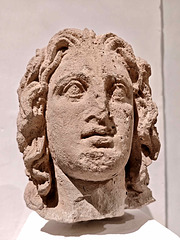
Limestone head of
Alexander the Great
Hellenistic period, 2nd c BC

Nicosia - Cyprus Museum
| |
|
Nicosia (aka Lefkosia) is the capital of Cyprus. Its northern part is the de facto capital of Northern Cyprus. Nicosia has been continuously inhabited for over 5,500 years.
In 1960, Nicosia became the capital of the Republic of Cyprus, a state established by the Greek and Turkish Cypriots. In 1974, there was a coup d'état led by the Greek military junta to unite the island with Greece. The coup ousted president Makarios III and precipitated the invasion of the island by the Turkish army. The Turkish army advanced their positions, eventually capturing 37% of Cypriot territory including the northern part of Nicosia.
Today, Nicosia is divided by the Green Line into a Greek Cypriot and a Turkish Cypriot quarter, which is monitored by the United Nations Peacekeeping Force.
There are more than a dozen archeological museum ons Caprus, but the Cyprus Museum is the oldest and largest archaeological museum in Cyprus.
The museum was founded in 1882 to preserve the country’s ancient art treasures. The background to this was that Cyprus was, at that time, being systematically plundered of its archaeological treasures. The American ambassador, Luigi Palma di Cesnola, alone had acquired 35,000 artefacts for the Metropolitan Museum of Art in New York, whilst his brother, Alessandro Palma di Cesnola, stood trial for art theft. A law passed in 1905 to protect archaeological remains enabled the museum to safeguard artefacts and sites more effectively. In 1908, the museum moved to its current building and in 1961, an extension was added to the building.
A gold mask fragment featuring half a face,

Nicosia - Cyprus Museum
| |
|
|
|
Nicosia (aka Lefkosia) is the capital of Cyprus. Its northern part is the de facto capital of Northern Cyprus. Nicosia has been continuously inhabited for over 5,500 years.
In 1960, Nicosia became the capital of the Republic of Cyprus, a state established by the Greek and Turkish Cypriots. In 1974, there was a coup d'état led by the Greek military junta to unite the island with Greece. The coup ousted president Makarios III and precipitated the invasion of the island by the Turkish army. The Turkish army advanced their positions, eventually capturing 37% of Cypriot territory including the northern part of Nicosia.
Today, Nicosia is divided by the Green Line into a Greek Cypriot and a Turkish Cypriot quarter, which is monitored by the United Nations Peacekeeping Force.
There are more than a dozen archeological museum ons Caprus, but the Cyprus Museum is the oldest and largest archaeological museum in Cyprus.
The museum was founded in 1882 to preserve the country’s ancient art treasures. The background to this was that Cyprus was, at that time, being systematically plundered of its archaeological treasures. The American ambassador, Luigi Palma di Cesnola, alone had acquired 35,000 artefacts for the Metropolitan Museum of Art in New York, whilst his brother, Alessandro Palma di Cesnola, stood trial for art theft. A law passed in 1905 to protect archaeological remains enabled the museum to safeguard artefacts and sites more effectively. In 1908, the museum moved to its current building and in 1961, an extension was added to the building.
Marble head of
Dionysos
Salamis, 2nd c AD

Ierapetra - Archaeological Collection
| |
|
|
Ierapetra is the southernmost city in Europe (excluding Cyprus) and the fourth-largest city in Crete.
In ancient times, the city was called Hierapytna. The earliest remains of the city date back to the fifth century BC. It was an important Dorian city in eastern Crete. The city of Gortyn surpassed Hierapytna's importance as an independent state when Hierapytna was conquered by the Romans in 67 BC. The city was severely damaged during the Arab conquest in 824 but was subsequently rebuilt. It experienced a new period of prosperity during the Venetian period from the 13th to the 17th centuries.
The Archaeological Collection is housed in the building of an Ottoman School that was built in 1899.
Marble head
of a larger than life statue
Sculpted in the time of Emperor Augustus (27 BC - 14 AC)

Ierapetra - Archaeological Collection
| |
|
|
Ierapetra is the southernmost city in Europe (excluding Cyprus) and the fourth-largest city in Crete.
In ancient times, the city was called Hierapytna. The earliest remains of the city date back to the fifth century BC. It was an important Dorian city in eastern Crete. The city of Gortyn surpassed Hierapytna's importance as an independent state when Hierapytna was conquered by the Romans in 67 BC. The city was severely damaged during the Arab conquest in 824 but was subsequently rebuilt. It experienced a new period of prosperity during the Venetian period from the 13th to the 17th centuries.
The Archaeological Collection is housed in the building of an Ottoman School that was built in 1899.
Marble heads
2nd c. AD

Corinth - Archaeological Museum of Ancient Corinth
| |
|
|
Corinth was founded in the Neolithic period, around 5000 BC.
It possessed a unique strategic position on the narrow Isthmus and so the city controlled trade routes between mainland Greece and Peloponnese. Powerful colonies like Syracuse and Corcyra were established across the sea. After a paved ship trackway was built, ships could cross the land, avoiding dangerous capes. In the 5th century BC, it fought against Persian invasion forces. During the Peloponnesian War Corinth joined Sparta to defeat Athens and so protect its economic dominance. Later, the city fought Sparta during the Corinthian War. In 146 BC, Roman commander Lucius Mummius attacked the defiant city. The Roman army completely destroyed Corinth and enslaved its citizens. For a century, the historic site remained a desolated ghost town. Julius Caesar refounded it as a Roman colony in 44 BC. Barbarian tribes looted Corinth later on. Under Byzantine rule, it served as a strong military center. The Ottoman Empire captured the city's fortress in 1458. A catastrophic earthquake completely ruined Old Corinth in the year 1858. Modern Corinth was successfully rebuilt six kilometers away from the ruins.
The Archaeological Museum of Ancient Corinth is located within the archaeological site of Ancient Corinth.
Terracotta votive female heads
4th c BC

Corinth - Archaeological Museum of Ancient Corinth
| |
|
|
Corinth was founded in the Neolithic period, around 5000 BC.
It possessed a unique strategic position on the narrow Isthmus and so the city controlled trade routes between mainland Greece and Peloponnese. Powerful colonies like Syracuse and Corcyra were established across the sea. After a paved ship trackway was built, ships could cross the land, avoiding dangerous capes. In the 5th century BC, it fought against Persian invasion forces. During the Peloponnesian War Corinth joined Sparta to defeat Athens and so protect its economic dominance. Later, the city fought Sparta during the Corinthian War. In 146 BC, Roman commander Lucius Mummius attacked the defiant city. The Roman army completely destroyed Corinth and enslaved its citizens. For a century, the historic site remained a desolated ghost town. Julius Caesar refounded it as a Roman colony in 44 BC. Barbarian tribes looted Corinth later on. Under Byzantine rule, it served as a strong military center. The Ottoman Empire captured the city's fortress in 1458. A catastrophic earthquake completely ruined Old Corinth in the year 1858. Modern Corinth was successfully rebuilt six kilometers away from the ruins.
The Archaeological Museum of Ancient Corinth is located within the archaeological site of Ancient Corinth.
Portrait of Emperor Nero
marble, ca 60 AD

Corinth - Archaeological Museum of Ancient Corinth
| |
|
|
Corinth was founded in the Neolithic period, around 5000 BC.
It possessed a unique strategic position on the narrow Isthmus and so the city controlled trade routes between mainland Greece and Peloponnese. Powerful colonies like Syracuse and Corcyra were established across the sea. After a paved ship trackway was built, ships could cross the land, avoiding dangerous capes. In the 5th century BC, it fought against Persian invasion forces. During the Peloponnesian War Corinth joined Sparta to defeat Athens and so protect its economic dominance. Later, the city fought Sparta during the Corinthian War. In 146 BC, Roman commander Lucius Mummius attacked the defiant city. The Roman army completely destroyed Corinth and enslaved its citizens. For a century, the historic site remained a desolated ghost town. Julius Caesar refounded it as a Roman colony in 44 BC. Barbarian tribes looted Corinth later on. Under Byzantine rule, it served as a strong military center. The Ottoman Empire captured the city's fortress in 1458. A catastrophic earthquake completely ruined Old Corinth in the year 1858. Modern Corinth was successfully rebuilt six kilometers away from the ruins.
The Archaeological Museum of Ancient Corinth is located within the archaeological site of Ancient Corinth.
Portrait of Julius Caesar
Marble, 1st c AD

Corinth - Archaeological Museum of Ancient Corinth
| |
|
|
Corinth was founded in the Neolithic period, around 5000 BC.
It possessed a unique strategic position on the narrow Isthmus and so the city controlled trade routes between mainland Greece and Peloponnese. Powerful colonies like Syracuse and Corcyra were established across the sea. After a paved ship trackway was built, ships could cross the land, avoiding dangerous capes. In the 5th century BC, it fought against Persian invasion forces. During the Peloponnesian War Corinth joined Sparta to defeat Athens and so protect its economic dominance. Later, the city fought Sparta during the Corinthian War. In 146 BC, Roman commander Lucius Mummius attacked the defiant city. The Roman army completely destroyed Corinth and enslaved its citizens. For a century, the historic site remained a desolated ghost town. Julius Caesar refounded it as a Roman colony in 44 BC. Barbarian tribes looted Corinth later on. Under Byzantine rule, it served as a strong military center. The Ottoman Empire captured the city's fortress in 1458. A catastrophic earthquake completely ruined Old Corinth in the year 1858. Modern Corinth was successfully rebuilt six kilometers away from the ruins.
The Archaeological Museum of Ancient Corinth is located within the archaeological site of Ancient Corinth.
Antique heads
perhaps from a greek ladies' hairdresser displaying his hairdos here.
Jump to top
RSS feed- Latest items - Subscribe to the latest items added to this album
- ipernity © 2007-2026
- Help & Contact
|
Club news
|
About ipernity
|
History |
ipernity Club & Prices |
Guide of good conduct
Donate | Group guidelines | Privacy policy | Terms of use | Statutes | In memoria -
Facebook
X
