

Andrew Trundlewagon's photos

sleds DSC 4088a
toronto DSC 4054

blue jay DSC 3932

CSC 0316
squirrel 2 DSC 4051
novembers rose render2
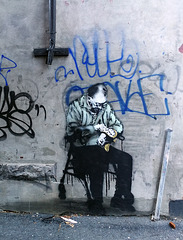
persistence of memory Time IMG 20171203 170438
| |
|
|
|
A mural in an alley Montreal. I don't know if the melting watch on the mans wrist is a comment on the nature of time or reference to some of Dali's painting like "persistence of memory" which are strewn with melting clock faces.
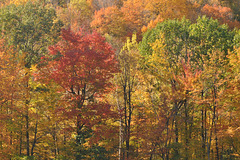
Autumn colour CSC 3815
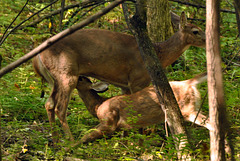
mother feeds her fawn st bruno DSC 3261
| |
|
|
|
A mother deer feeds her youngster. It is not the clearest shot as they were quite deep in the woods, and it does not show in a still image but the young fawn was so excited, waving its tail vigorously.
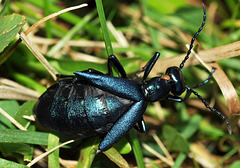
Meloe, oil beetle, St Bruno, Oct 2017
| |
|
|
|
I don’t expect too many people to care for this one. First, it’s a beetle, second, it’s a black beetle. It is an oil beetle, (Genus Meloe, there are several species and they all look the same to me). When threatened they pump out a fluid from between their leg joints that contains cantharidin, a compound that is more than a little nasty. In small doses it is reputedly an aphrodisiac, the famous Spanish fly is based on cantharidin, but consume too much, (and by all accounts, a little is too much), and a grim, writhing, agonizing, death ensues. Their reproductive habits also tend toward the macabre. The female lays eggs in burrows. The first generation of larvae hatch, crawl up plant stalks to settle in flowers. Here they are picked up by bees. In fact, some oil beetles emit pheromones that attract male wild bees. The larvae climb aboard the bee. The male bee mates with a female bee, and the larval oil beetles are transferred to the female. One web-site referred to this transfer as 'six-legged venereal disease', which is a troubling comparison but apt. The female bee lays her eggs and stuffs the nest with pollen. Meanwhile, the oil beetle larvae having dropped off the mummy bee, set about to eat the pollen. Then they eat the larval bees. Then they make themselves scarce without so much as a thank you note.
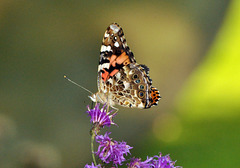
painted lady 2 sept 2017 st bruno DSC 3319
| |
|
|
|
A painted lady butterfly, St. Bruno Park, This year we have had an extraordinary number of painted lady butterflies (Vanessa cardui).
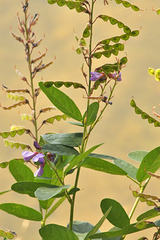
showy tick trefoil st bruno sept 2 2017 DSC 2990
| |
|
|
|
Showy tick trefoil, (Desmodium canadenses) growing beside a lake, Mont St Bruno Provincial Park, Quebec. It is in the bean family, and this one is at the end of flowering and has produced seed pods.
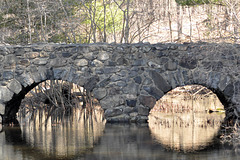
the bridge st bruno DSC 2704
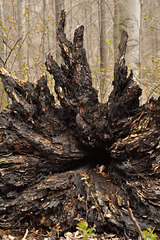
the blasted tree don valley toronto DSC 2903
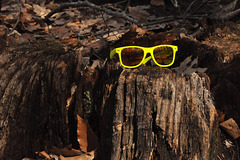
sunglasses DSC 3051

more beer DSC 0394
| |
|
|
|
The correct answer to any relevant question. (All questions to which it is not the correct answer being, by definition, irrelevant).

folkestone 2017
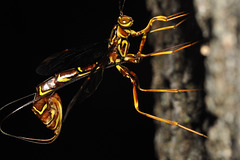
Giant ichneumon megarhyssa-Aug 2017 DSC 2219
| |
|
|
|
The female Giant Ichneumon wasp, Megarhyssa macrurus, possesses an ovipositor several times her own length with which she drills into the side of diseased trees to lay an egg on the larva of another wasp, the pigeon horntail. The horntail prey larva is killed, and after hatching the ichneumon larva feeds upon it. The ovipositor is composed of a central delivery shaft through which the egg passes, and two outer sheaths that protect and stiffen the central “hypodermic needle”. At the beginning and end of the drilling process the last segments of the tail split apart and a flexible membrane is inflated between them, (see the other photo) and in ways not clear, at least to me, this assists in the manipulation of the ovipositer as it enters and leaves the wood. Before the drilling begins the wasp walks methodically up and down the tree, “feeling” with her antenna to sense the presence of the host larva buried below the surface.
