

tarboat's photos
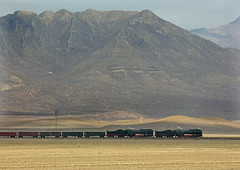
Lindong next stop
| |
|
The sunshine belies the fact that it is bitterly cold and windy as a pair of QJs hurry their load toward Gulumanhan in the last months of steam on the Jitong railway. The landscape is typical of this section of the railway between Daban and Lindong.
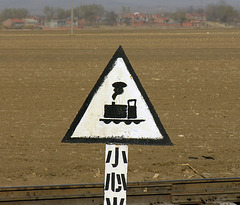
Beware
| |
|
|
Stylised depiction on the warning sign at a crossing near Xiaonan on the Tiefa Coal Railway.
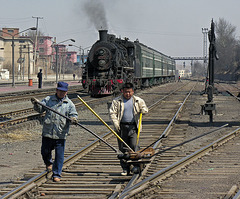
Track gang
| |
|
Track repair gang on the move at the central station of the Tiefa system at Diaobingshan
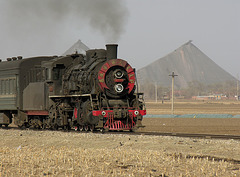
Mine railway passenger service
| |
|
One of the last batches of SY class 2-8-2 locomotives to be built in the very late 1990s is seen here leaving Qiaonan Jct for Wangqian on the Tiefa mining railway. Large spoil heaps dominate the coal mining landscape in this area.

Winnington from the river
| |
|
The river Weaver is surprisingly rural as it meets the Witton Brook close to the Winnington soda ash Works. A view from the Anderton boat lift trip boat.
Three in one
| |
|
|
|
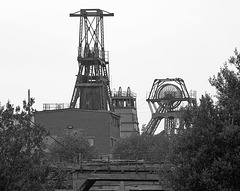
There are few places in the UK where you can see three colliery headgears at once. This is Chatterley Whitfield Colliery in North Staffordshire which closed in 1976 and was subsequently operated as a mining museum until that failed in 1993. The headgears seen are, from the left, Institute, Platt and Hesketh shafts. There is a fourth headgear on the Winstanley shaft which is to the left of the photographer.
Approaching the summit
| |
|
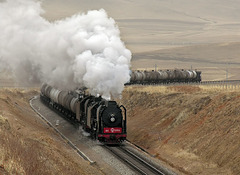
A pair of QJ class 2-10-2 locomotives working hard on the 'S' curves just before the summit west of Chaganhada. In a short distance they will be able to coast most of the way down to Daban where the locomotives will be changed. By this time the change will be to a DF4 class diesel rather than another pair of QJs for the slog over the mountainous Jinpeng section.
I found this one amongst the unprocessed images taken during my 2005 visit to the Jitong Railway to say farewell to the last place in the world with main line steam.
Wansbeck Road
| |
|
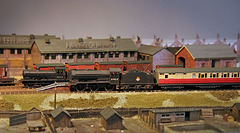
Highlight for me at the Macclesfield model railway exhibition was Mick Simpson's Wansbeck Road at 2mm scale. A beautifully detailed model of a County Durham colliery village station in the late 50s/early 60s.

Huncoat Accrington
| |
|
The Huncoat brickworks was one of two in the village, and produced high quality clay bricks.
Cobridge
| |
|
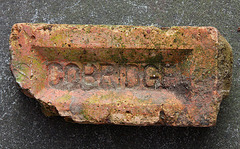
The Cobridge Brick & Sanitary Pipe Co. Ltd was one of the four major brick producers in the Stoke-on-Trent area at the beginning of the twentieth century. This brick has the appearance of having been manufactured using shale.

Vernon Poynton
| |
|
At the Park Pit site brickmaking recommenced in 1937 after the closure of the Poynton collieries. A private company, the Poynton Brick Co. used shale from the colliery tip to make bricks using an open topped kiln of the Scotch type. In a 1939 trade directory the works is described as run by the Vernon Brick Co., and soon after was taken over bv J & A Jackson. The machinery was situated in the old colliery power house and the bricks with "Vernon Poynton" on the face could still be found in the press until the works was demolished in the early 1970s. The plant was electrified in 1956 and the kiln had a top put over it, but production ceased in 1958. Maximum output was 65,000 bricks per week.
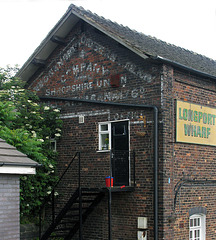
Longport Wharf
| |
|
Ghosts of the canal past on the end wall of the warehouses and stables at Longport Wharf. The Shropshire Union Railways and Canal Company was formed in 1846 and leased by the London and North Western Railway from 1847. The railway company finally bought it in 1922. The Trent and Mersey Canal was actually owned by a rival company - the North Staffordshire Railway.
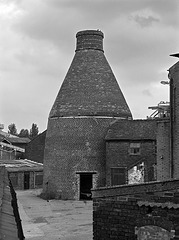
Longport
| |
|
Bottle ovens are becoming rather scarce around the Potteries although this one by the Trent and Mersey Canal at Longport does appear to have had some conservation work undertaken.
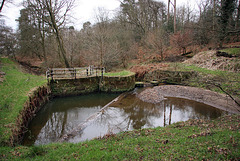
Canal Feeder
| |
|
|
A hidden part of thecanal network. This is the takeoff point for the canal feeder to the Sutton Reservoir of the Macclesfield Canal.
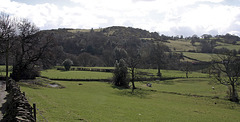
Hurdsfield Collieries
| |
|
The more I look into the subject the more I realise just how extensive the coal mining industry was in the hills around Macclesfield. I took a stroll into Higher Hurdsfield and soon found coal workings adjacent to Well Lane and Swanscoe Lane. There is one mine on the left, against the wall with lots of holly growing out of the shaft. Well Lane runs across the image and the mounds on the right in front of the wall are the remains of another shaft which I suspect was the one used to raise coal with carts loading just inside the gateway.
Just out of view to the right along Well Lane is a large old house fronting the road which used to be a public house known as the Traveller's Rest. The location suggests that Well Lane may have been the old route of the road to Rainow. Maybe Eagle1942 can help with this?
Judging by the evidence available so far, it is likely that these pits were operating in the first half of the nineteenth century. They were certainly out of use by the 1870s.
Cliff Hill in the background was part of Macclesfield Common where coal was being worked in the eighteenth and early nineteenth centuries and probably earlier. I shall have to have a look at the remains up there in the next few weeks.
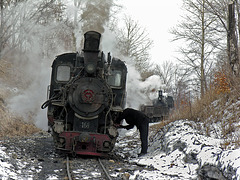
Time for a quick adjustment
| |
|
Loaded trains are banked, by the locomotive from the previous train of empties, from Lixin to the summit of the Huanan Coal Railway. At the summit the brakes are screwed down on the wagons and the train locomotive checked over before the banker drops back to Lixin to pick up its train and continue the journey to the mine.
This wonderful scene can still be observed several times a day during the periods when the line is operating.
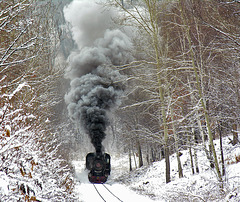
Storming uphill
| |
|
A C2 class locomotive fights uphill with a train of coal empties in wintry conditions on the Huanan Coal Railway
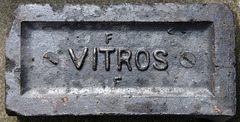
Vitros
| |
|
Staffordshire Blue brick with the trademark 'VITROS'. The manufacturer was the North Staffordshire Brick & Tile Co Ltd.
