

tarboat's photos
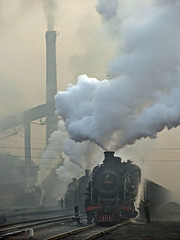
Dongchang colliery lineup
| |
|
Morning shift change on the Chenghize system at Jixi sometimes results in a perfect lineup of locomotives in the yard at Dongchang colliery.
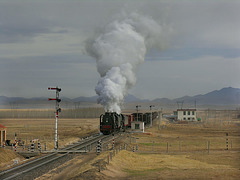
Goodbye Jitong steam
| |
|
|
A pair of QJs leave the loop at Baomutu and head for Daban. We were leaving for Chifeng and Yuanbaoshan and by the end of the year steam was gone for ever on the main line in China. This was the last steam train I ever photographed on the Jitong Railway.
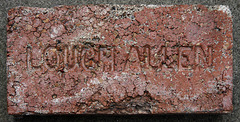
Lough Allen Brick Co
| |
|
Unusual 'frog-free' lettered brick.
On the shores of Lough Allen in the area between Tarmon and Drumkerran was a place called the “Jetty”. The jetty was a wooden harbor used by the Limerick Steamship Company for distributing goods transported by boat from Limerick. Close by, stands the chimneystack of “ Lough Allen Brick Works ” a factory set up in the early 19th century by the Limerick Steamship Company. The raw material, clay and shale which were used in the brick making were mined a short distance from the jetty, and coal used in the baking of the brick was taken from nearby coal pits. Fire bricks, pipes and tiles were manufactured here until closure in the 1920s.
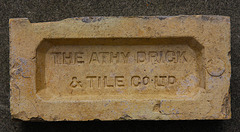
Athy Brick & Tile Co Ltd
| |
|
An article from the Leinster Leader 26 March 1898 describes the works and business of the Athy Brick & Tile Co Ltd which had started production in 1893. £120,000 was expended on machinery and buildings on a site on the Monasterevan road at the northern side of the town. About forty men were in constant employment throughout the year, and an average of £50 weekly was paid in salaries and wages. The working men earned from 10s to 20s per week at that time. Weekly output was around 80,000 bricks and the principal market was Dublin. Octagon, bull-nose, and every variety of moulded brick were made.
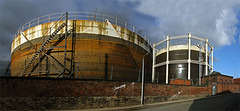
Gasholders
| |
|
Macclesfield's two gasholders, across the Bollin from Tesco, are of entirely different designs. The far one with the lattice girders is the older.

Cracken Edge
| |
|
Another peek into the Cracken Edge stone mines. Long abandoned workings where the roof has, to an extent, become the floor. :-o
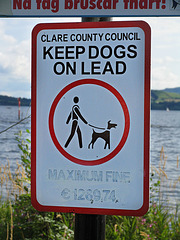
Maximum fine
| |
|
|
|
The changeover from the Punt to the Euro provided endless opportunities for the bureaucratic mind to waste public money. This fine example is at Mountshannon Harbour in County Clare.
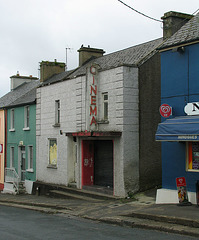
Astor cinema
| |
|
|
Another Irish cinema that has closed in the past few years is the Astor at Scariff in County Clare. Its last year of operation appears to have been 2007. It was also the venue for the Midnight Court Film Society which has had to transfer screenings to MacNamara's Bar.

Blue waters
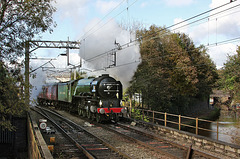
Kidsgrove junction
| |
|
Tornado leaving the Crewe line and crossing the canal at Kidsgrove on its way to Barrow Hill.
Ladmanlow
| |
|
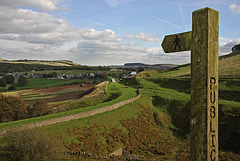
The embankment once carried the Cromford and High Peak Railway on its way over the moors to Whaley Bridge via several rope worked inclines. Abandoned in 1892 from this point to the west, the stub was retained, initially to serve the Goyt Colliery siding, the trackbed of which can be seen running behind the signpost. When the colliery closed services were cut back to Ladmanlow Yard on the other side of the main road that runs just above the siding at this point.
Passing Kidsgrove
| |
|
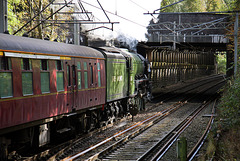
Dappled sunlight as Tornado accelerates its train away from Kidsgrove after joining the North Staffordshire main line on its way from Crewe to Barrow Hill.
View On Black
Biligou freight
| |
|
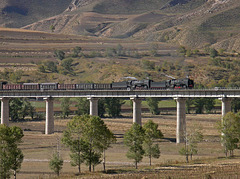
QJs 6808 and 6773 steadily slog uphill Pass across the viaduct at Biligou with an eastbound freight on the Jinpeng section of the Jitong Railway. This was the last summer that these locomotives would see regular service over Jinpeng on the last steam main line.

British and Foreign Marine Insurance Company
| |
|
The British and Foreign Marine Insurance Company Building, Castle St, Liverpool, is listed Grade II. It was designed c1889 by G.E. Grayson of Grayson and Ould at the northern end of Castle Street. The company's inscription can be seen above a colourful mosaic frieze, designed by Frank Murray and made by Salviati, showing scenes of shipping.
Plateway
| |
|
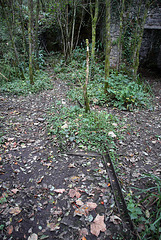
Plateway track still in place 100+ years after the closure of Fussell's Lower Ironworks at Mells.
Roof problems
Glin Pier
| |
|
|
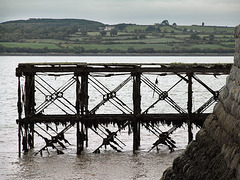
The stone built jetty at Glin on the Shannon estuary still provides a sheltered berth, but the iron pier extension has seen better days. Only the framework remains, slowly rusting away and will one day crumble into the sea.
Ironbridge Power Station
| |
|
|
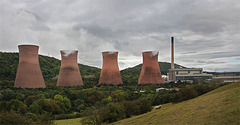
The first power station on this site was Ironbridge A, built by the West Midlands Joint Electricity Authority and commissioned in 1932 with full 200 MW output achieved in 1939. Ironbridge B was commenced in 1963 and full 1000 MW capacity reached with the commissioning of the second 500 MW unit in February 1970. The A station was closed in 1981 and demolished in 1983. Currently operated by E.ON UK it has recently been proposed that it should be closed by 2015. It is served by a rail link that brings in up to seven coal trains a day.
Great care was taken to ensure that the station was well hidden from the surrounding heritage sites around Ironbridge. In addition the cooling towers were deliberately constructed using concrete to which a red pigment had been added, to blend with the colour of the local soil. This added £11,000 to the construction costs. The station's single 205 m (670 ft) high chimney is fifth tallest chimney in the UK.
