

tarboat's photos
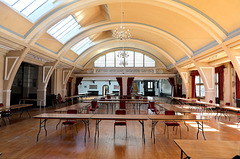
Hulme Hall
| |
|
|
|
Hulme Hall at Port Sunlight was designed by William Owen and his son, Segar. Built in 1901 as a women's dining hall, it became an art gallery from 1911, housing some of the collection of William Lever, 1st Viscount Leverhulme, prior to its removal to the Lady Lever Art Gallery around 1922. During World War I, the artworks were packed away and the building housed refugees from Belgium.
The Beatles gave four performances at Hulme Hall, the first on 7 July 1962. On 18 August 1962, Hulme Hall served as the venue for Ringo Starr's first official performance as a Beatle following the sacking of Pete Best; the band's first performance as the Fab Four.
It has been used as a community centre and now contains a cafe with the rest used as a conference, banqueting and wedding centre. The building is listed Grade II.
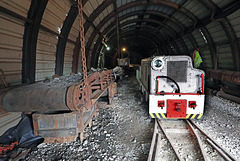
Underground loco
| |
|
|
Underground locomotive and conveyor at the Lancashire Mining Museum in Astley Green.
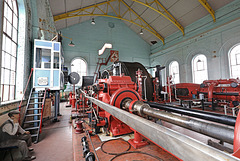
Steam winder
| |
|
|
|
An afternoon at the Lancashire Mining Museum where I was made very welcome by the volunteers.
In the engine house at Astley Green Colliery is the largest steam winding engine ever used in the Lancashire Coalfield. Built by Yates & Thom in 1912, the twin tandem compound engine delivered 3,300 hp. It was being operated with compressed air on this demonstration day.
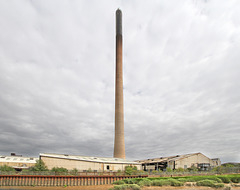
Reckitt's chimney
| |
|
This 141m/460ft tall chimney was built in the early 1970s at the works of Reckitt and Colman who made a range of products including dolly blue and zebrite grate polish. Today the business specialises in healthcare products as Reckitt Benckiser Health Care UK Ltd and has moved its Hull business to a site a short distance away.

Drypool
| |
|
|
The Drypool bridge over the River Hull is a Scherzer lifting bridge and was designed by W. Morris, the Hull City Engineer. It was fabricated in Hull, being completed in March 1961.
Lock 11
| |
|
|
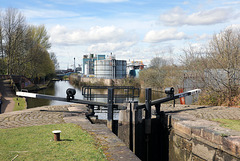
Ashton Canal lock 11 at Clayton in Manchester. Below the lock is where the Stockport branch of the canal headed off to the left. In the background is the Evonik chemical plant
Evonik is a German owned speciality chemicals manufacturer. The company says that Evonik products make tires fuel-efficient, mattresses more elastic, medications more effective, and animal feeds healthier. Its website lists a large range of products including petrochemical antifoulant, gasoline octane enhancer and corrosion inhibitors.
8F to Caldon
| |
|
|
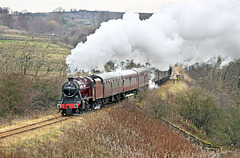
On the day of the public reopening of the Caldon Low branch of the Churnet Valley Railway, 8F 8624 climbs hard after passing the former station at Winkhill. This section no longer carries trains after the line was lifted east of the current terminus at Ipstones.
Castle or Quarry?
| |
|
|
|
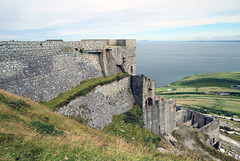
The Yr Eifl granite quarry at Trefor opened in 1850 and closed in 1963. The massive concrete stone bins and crusher block were built in 1923
Polychromatic
| |
|
|
|
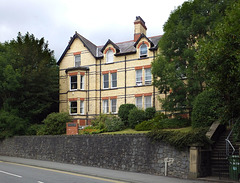
The very best in north-east Welsh brick is on show in this polychromatic housing on Ffridoed Road, Bangor.
Rhiwbach
| |
|
|
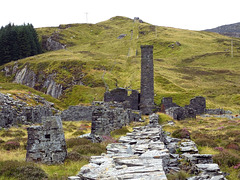
Looking along the remains of the top mill at Rhiwbach slate quarry. In the background are the boiler and enginehouse and the course of the incline that lifted the finished slates up to the Rhiwbach tramway which carried them down to the Ffestiniog railway for onward transport to Porthmadog.
Into the yard
| |
|
|
|
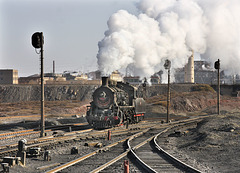
SY 0819 hurries into the Gongsi yard of the line operated by The Baiyin Non-ferrous Metal (Group) Co., Ltd. Below the smoke in the background can be seen the bottom of the shot tower at the lead smelter.
Next stop Cheddleton
| |
|
|
|
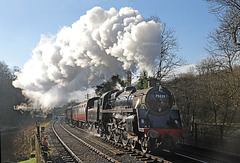
Standard class 4 No.75014, renumbered to Stoke vased 75035, gets away from Consall Station and is about to pass the black Lion pub on the Churnet Valley Railway.30742 charters event.

Close defence
| |
|
|
Spigot mortar base at Windy Knoll overlooking the roads into Castleton in the Peak National Park. Mam Tor forms the background with Mam Nick on the left side. Presumably this was part of some form of defensive line in this area between Machester and Sheffield.
Balmoral
| |
|
|
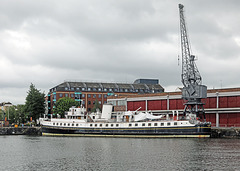
The excursion ship Balmoral was built at Southampton by John I Thornycroft & Company for the Southampton, Isle of Wight and South of England Royal Mail Steam Packet Co. Limited, more normally known as the Red Funnel line. It operated as a ferry to the Isle of Wight until dedicated car ferries were introduced and then mainly on excursion cruises work. In 1968 the vessel was purchased by P & A Campbell and moved to the Bristol Channel until the company closed its sailings in 1980.
Subsequently the ship was purchased for a failed restaurant project at Dundee and then passed to Waverley Steam Navigation Co. Ltd for operations around the Bristol Channel. In 2015, ownership of MV Balmoral was transferred to a new registered charity MV Balmoral Fund Limited, and she is now operated by their subsidiary, White Funnel Ltd. The ship has not operated since the end of 2017 and has seen major repair work and it is hoped to be back in service soon.
Here she is seen lying alongside the quay in Bristol Harbour.
Chemical wharf
| |
|
|
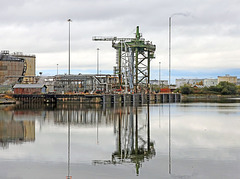
Wharf on the Manchester Ship Canal serving the Stanlow oil refinery at Ellesmere Port.
Shop tiles
| |
|
|
|
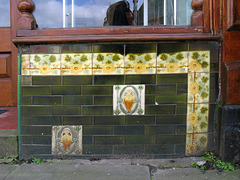
Glazed tiles on the frontage of a shop on Upper Inkerman Street in Llanelli. Sadly these have now been painted over.
Maldon flour mill
| |
|
|
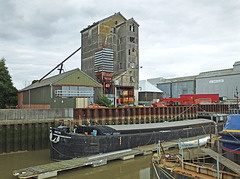
Carr's Flour Mill, Maldon. The Carr business was founded by Jonathan Dodgson Carr in the 1830s and has two other mills at Silloth and Kirkcaldy. Since 2016 it has been owned by Whitworth Holdings. This mill was built in 1896 as a roller mill for Samuel Garrett. It later belonged to William Green and Sons, then Green Bros, and subsequently Carr's.
Michell's Pass
| |
|
|
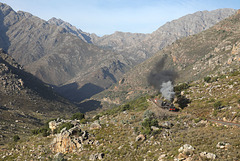
19B 1412 climbing the 190 metres rise to Michell's Pass in the gorge section between Ceres and Wolseley on the line to Prince Alfred Hamlet.
