Alan H's photos
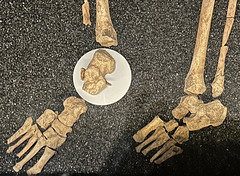
Nail through Ankle Bone
| |
|
One of the most extreme execution practices in the Roman world was crucifixion. Such a prolonged and painful death was reserved for the enslaved and free non-citizens. These remains belong to an adult male who is the only probable crucifixion victim discovered in Roman Britain. One anklebone still holds the iron nail with which he was transfixed. Citizen soldiers gave up their rights when they enlisted, making crucifixion for desertion or cowardice an ever-present threat for troops.
Fenstanton, Cambridgeshire
AD 100-200
From the 'Legion - Life in the Roman Army' exhibition.
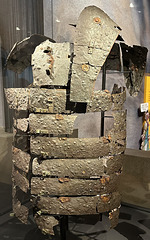
Roman Armour
| |
|
The earliest known fragments of segmental armour were found in Kalkriese, at the site of the landmark Roman defeat at the Battle of the Teutoburg Forest in AD 9. It comprises 30 plates, with brass edges and tin- and silver-foiled embellishments. Previously, no complete or nearly complete set of lorica segmentata had ever been discovered.
From the 'Legion - Life in the Roman Army' exhibition.
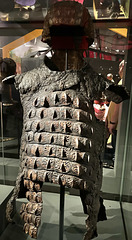
Crocodile Armour
| |
|
Crocodile-skin armour possibly dating to the 3rd century AD. Its crocodile scalp headdress may have been intended either for protective or ceremonial use, it seems wide enough to fit over a helmet, so may even be a local adaptation of the tradition of Roman standard-bearers and trumpeters wearing skins of fierce animals over their helmets.
From the 'Legion - Life in the Roman Army' exhibition.
Roman Shield Boss
| |
|
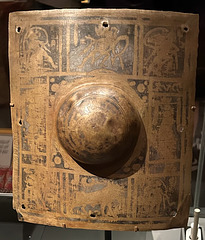
Copper alloy rectangular shield centre with circular boss, coated with tin, and decorated by incised and pounced lines. The central boss is decorated with an eagle holding an olive branch and surrounded by a wreath. The border is of 8 panels. In each corner is a figure representing one of the Four Seasons; above is Mars, below a bull, the badge of the 8th Legion. In the margins are two legionary standards, and the following words incised into the metal along the left side:
LEG VIII AVG
IVL(II) MAGNI IVNI(I) DUBITATI
The shield thus belonged to Junius Dubitatus, who served in the century of Julius Magnus in the Eighth Legion Augustus, in Britain under Hadrian. It was discovered in 1866 during dredging to widen and deepen the River Tyne. It is believed it was lost in a shipwreck.
It is believed that Junius was an ordinary soldier in the Eighth Legion, based in Germany and sent over to Britain to provide extra manpower for a war against the native Britons. It looks likely that Junius was heading into the Tyne from Germany when a storm broke and his ship sank. No trace of the vessel has ever been found and no-one knows what became of Junius although it is likely he went down with the ship.
From the 'Legion - Life in the Roman Army' exhibition.

Roman Army Shield
| |
|
Despite the countless number made, this is the only surviving Roman legionary shield (scutum). It is from Rome's Syrian frontier where the dry climate preserved the wood and its painted leather surface, but its semi-circular shape is now more curled. Found at the Roman city of Dura-Europos, in modern-day Syria, this unique survival from the 3rd century AD is painted with victorious and regimental symbols: an eagle, Victories and a lion.
From the 'Legion - Life in the Roman Army' exhibition.
Painted Wall Decoration
| |
|
|
|
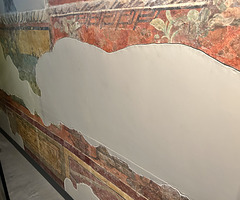
Discovered in a room of the headquarters building of the Roman fortress in York. In the undercroft of the York Minster.
Painted Wall Decoration
| |
|
|
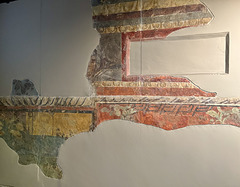
Discovered in a room of the headquarters building of the Roman fortress in York. In the undercroft of the York Minster.
Roman Baths
| |
|
|
|
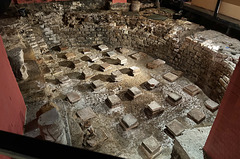
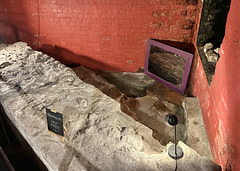
The remains of the fortress baths underneath the appropriately named Roman Bath pub. This section is the hot room or caldarium of the baths.
Roman Baths
| |
|
|
The remains of the fortress baths underneath the appropriately named Roman Bath pub. This section is the cold room or frigidarium of the baths.
Roman Baths
| |
|
|
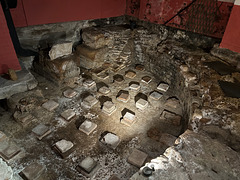
The remains of the fortress baths underneath the appropriately named Roman Bath pub. This section is the hot room or caldarium of the baths.
Clifford's Tower - View from the Top
| |
|
|
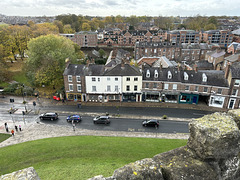
The now ruined keep of the medieval Norman castle is commonly referred to as Clifford's Tower. Henry III rebuilt the castle in stone in the middle of the 13th century, includin this keep.
Clifford's Tower
| |
|
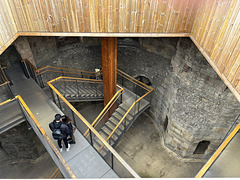
The now ruined keep of the medieval Norman castle is commonly referred to as Clifford's Tower. Henry III rebuilt the castle in stone in the middle of the 13th century, includin this keep.
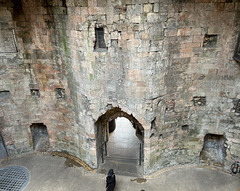
Clifford's Tower
| |
|
|
The now ruined keep of the medieval Norman castle is commonly referred to as Clifford's Tower. Henry III rebuilt the castle in stone in the middle of the 13th century, includin this keep.
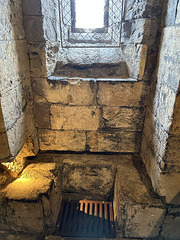
Clifford's Tower - the Latrine
| |
|
|
The now ruined keep of the medieval Norman castle is commonly referred to as Clifford's Tower. Henry III rebuilt the castle in stone in the middle of the 13th century, includin this keep.
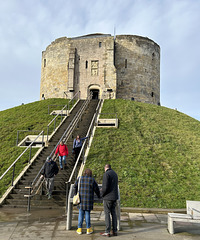
Clifford's Tower
| |
|
|
The now ruined keep of the medieval Norman castle is commonly referred to as Clifford's Tower. Henry III rebuilt the castle in stone in the middle of the 13th century, including this keep.
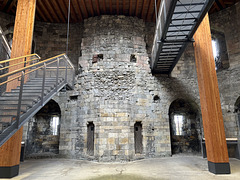
Clifford's Tower
| |
|
|
The now ruined keep of the medieval Norman castle is commonly referred to as Clifford's Tower. Henry III rebuilt the castle in stone in the middle of the 13th century, includin this keep.
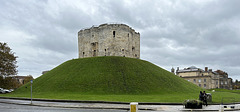
Clifford's Tower
| |
|
|
The now ruined keep of the medieval Norman castle is commonly referred to as Clifford's Tower. Henry III rebuilt the castle in stone in the middle of the 13th century, includin this keep.