Diane Putnam's photos
Kitchen lizard
| |
|
|
|
Maneki neko
| |
|
|
A found face
| |
|
|
|
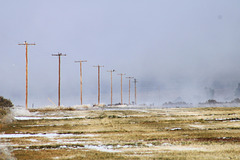
Down the line
| |
|
|
|
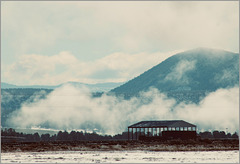
Steamy valley morning
| |
|
|
|
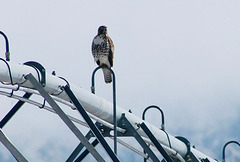
Scanning for rodents
| |
|
|
|
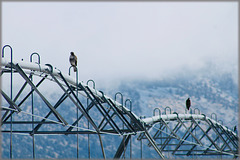
Hawks
| |
|
|
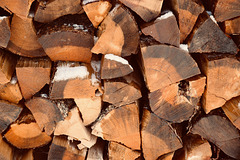
Winter fuel
| |
|
|
|
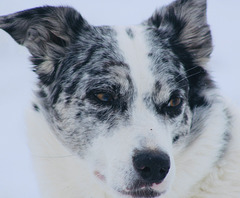
Crescent
| |
|
|
|
A fluffy, kind-hearted, three-legged Australian shepherd belonging to my granddaughter. She is an incessant hunter of rodents of all kinds, the champion of the pack.
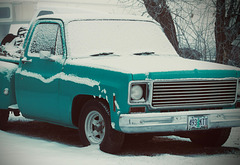
Chevy, 1974-ish
| |
|
|
|
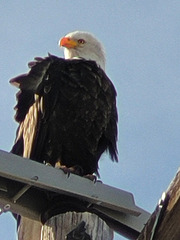
Bald eagle
| |
|
|
|
America's national bird. "Bald eagles are North American birds. Their range extends from the Mexico border through the United States and Canada. These birds are extremely populous in Alaska and can be found pillaging the commercial fishing docks for scraps.They're so numerous that they're like huge pigeons, even lurking in garbage dumps and parking lots. Very protective of their territory (and food source), they are known to give the passerby a painful talon strike on the head.
Bald eagles can be seen along the East and West coasts, the Rocky Mountains, and the Mississippi River. The rest of the United States only sees bald eagles during the winter and their migration.These birds don't just eat fish. Mice, snakes, frogs, rabbits and even cats or small dogs are also on the menu.
The eagle above has marshes, lakes and the Klamath Basin National Wildlife Refuge nearby. That's why she looks so smug.
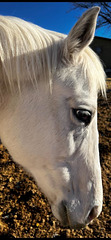
Steph's new horse
| |
|
|
|
Belongs to my daughter-in-law. I forgot her name. She's very gentle, never spooks and is a real pro at being ridden at all speeds and by all kinds of humans.
Photo sent to me by Stephanie, my daughter-in-law.
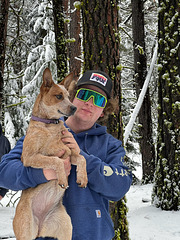
Rusty and Travis
| |
|
|
|
Yet another new dog. Rusty is a Red Heeler, sweet as pie and a real workout to train. A co-worker gave her to Travis (my grandson). Travis is mostly moved out of his parents' house, so they have "only" four dogs, not five.
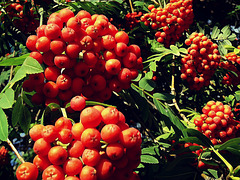
Rowan berries
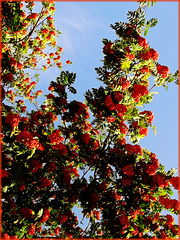
Rowan tree (Sorbus Rosaceae)
| |
|
|
|
- Pros: Pretty tree and fruits; can make jam w/berries; provides deep shade.
- Cons: Flowers smell like cat pee, odor travels; fruit tastes bitter; makes a mess.
The species and varieties of Rowan tree are so copious that I am mainly giving information about the N. American trees. Also known as the mountain ash, native to the mountain regions of the northern hemisphere. Most species are small deciduous trees 10-20ft tall. The Sorbus (Sorbus) is a North American native species, of which this one is probably an example. Rowans have a multitude of species, subspecies and hybrids, The British Isles have a multitude of their own, but the largest number of Sorbus species is in Asia.
Rowan fruit contains sorbic acid, and when raw also contains parasorbic acid (about 0.4%-0.7% in the European rowan[15]), which causes indigestion and can lead to kidney damage,* but heat treatment (cooking, heat-drying etc.) and, to a lesser extent, freezing, renders it nontoxic by changing it to the benign sorbic acid. They are also usually too astringent to be palatable when raw. Collecting them after first frost (or putting in the freezer) cuts down on the bitter taste as well. [Source of all information is Wikipedia, Eng.]
*My grandson and I tried a few berries several years and spit them out immediately. This is a good protection against kidney damage for those of us who only know they can be made into jelly (heat treated!).
Grill
Horse
| |
|
|
|