

Günter Klaus' photos with the keyword: Rostfarbiger Dickkopffalter
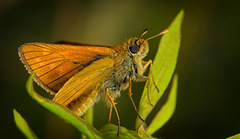
Der Rostfarbiger Dickkopffalter (Ochlodes sylvanus…
| 27 Jun 2025 |
|
|
|
Es ist immer mal schön,wenn die Schmetterlinge sich auch mal platzieren und sich schon ablichten lassen,mir ist aufgefallen,dass sich diese Dickkopffalter sehr gerne als Model fotografieren lassen :))
Pip1-2: Nahaufnahmen des Schmetterlings
It's always nice when the butterflies pose and allow themselves to be photographed. I've noticed that these skippers really enjoy being photographed as models :))
Pip1-2: Close-ups of the butterfly
C'est toujours agréable quand les papillons se positionnent et se laissent photographier. J'ai remarqué que ces skippers aiment vraiment être photographiés comme modèles :))
Pip1-2 : Gros plans du papillon
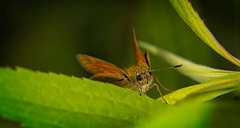
Der Rostfarbige Dickkopffalter (Ochlodes sylvanus)…
| 02 Sep 2024 |
|
|
|
Dieser Schmetterling zählt ja auch zu den kleineren ihrer Art,aber man trifft ihn immer mal an,man muss einfach die Geduld haben und dann erwischt man sie immer mal :))
Pip1-3: Nahaufnahmen des Schmetterlings
This butterfly is one of the smaller ones of its kind, but you can come across it from time to time, you just have to be patient and then you'll always catch it :))
Pip1-3: Close-ups of the butterfly
Ce papillon est l'un des plus petits de son espèce, mais vous le croisez toujours de temps en temps, il suffit d'être patient et vous l'attraperez toujours :))
Pip1-3 : Gros plans du papillon
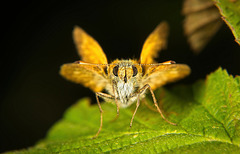
Der Rostfarbiger Dickkopffalter (Ochlodes sylvanus…
| 16 Aug 2023 |
|
|
|
Diese Schmetterlinge fliegen von Mai bis August und wie schon der Name sagt,haben diese Falter einen breiteren Kopf,das Männchen erkennt man an dem schwarzen Strich am Vorderflügel Oberseite
Pip1-3: verschiedene Ansichten des Schmetterlings
These butterflies fly from May to August and as the name suggests, these moths have a broader head, the male can be recognized by the black line on the upper side of the forewing
Pip1-3: different views of the butterfly
Ces papillons volent de mai à août et comme leur nom l'indique, ces papillons ont une tête plus large, le mâle est reconnaissable à la ligne noire sur le dessus de l'aile antérieure
Pip1-3 : différentes vues du papillon
Jump to top
RSS feed- Günter Klaus' latest photos with "Rostfarbiger Dickkopffalter" - Photos
- ipernity © 2007-2025
- Help & Contact
|
Club news
|
About ipernity
|
History |
ipernity Club & Prices |
Guide of good conduct
Donate | Group guidelines | Privacy policy | Terms of use | Statutes | In memoria -
Facebook
X
