

Esther's photos with the keyword: crocodile

What's for dinner?
| 17 Aug 2026 |
|
|
|
A Nile Crocodile swims alongside the frantic wildebeest crossing the Mara River in Kenya. Normally, one or two of the wildebeest would become his dinner. However, this day, he was content to watch his dinner pass him by. Perhaps he had recently had his fill of wildebeest. In any event, these wildebeest were extremely lucky that he allowed them to pass unscathed.
Sunday Challenge: Storytelling : The moment - “What is happening right now—and what does this moment make me anticipate?”
A3Z2A4260
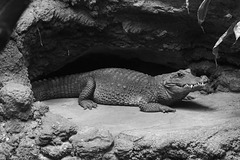
Plenty of teeth (Explored)
| 13 Jun 2021 |
|
|
|
West African Dwarf Crocodile
The Sunday Challenge: Plenty in black and white
TSCIMG 5158
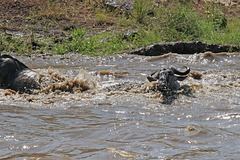
About to be eaten
| 30 Mar 2021 |
|
|
|
Huge herds of wildebeest cross the Mara River in Kenya to follow the rains and get to the grasslands in Tanzania. The crossing is extremely dangerous because Nile crocodiles lie in wait for the wildebeest and lions wait on the other side.
LIMG 1890
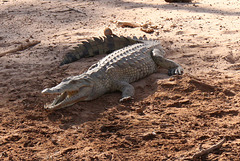
Nile Crocodile
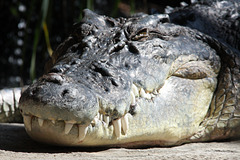
I'd hate to be his dentist
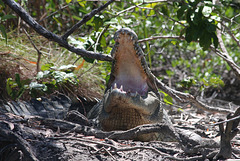
La la la
| 17 Jul 2013 |
|
|
|
Estuarine crocodile, Daintree Rainforest, Queensland, Australia.
"The saltwater crocodile (Crocodylus porosus), also known as saltie, estuarine or Indo-Pacific crocodile, is the largest of all living reptiles, as well as the largest terrestrial and riparian predator in the world. The males of this species can reach sizes of up to 7 m (23 ft) and weigh as much as 2,000 kg (4,400 lb).[2] However, an adult male saltwater crocodile is generally between 4.3 and 5.2 m (14 and 17 ft) in length and weighs 400–1,000 kg (880–2,200 lb), rarely growing larger.[3] Females are much smaller and often do not surpass 3 m (9.8 ft). As its name implies, this crocodile can live in salt water, but usually resides in mangrove swamps, estuaries, deltas, lagoons, and lower stretches of rivers. They have the broadest distribution of any modern crocodile, ranging from the eastern coast of India, throughout most of Southeast Asia, stretching south to northern Australia, and historically ranging as far west as off the eastern coast of Africa and as far east as waters off the coast of Japan."
en.wikipedia.org/wiki/Saltwater_crocodile
Sunday Challenge: open
AIMG 7491
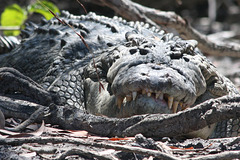
Toothy grin
| 17 Jul 2013 |
|
|
|
Estuarine crocodile, Daintree Rainforest, Queensland Australia
"The saltwater crocodile (Crocodylus porosus), also known as saltie, estuarine or Indo-Pacific crocodile, is the largest of all living reptiles, as well as the largest terrestrial and riparian predator in the world. The males of this species can reach sizes of up to 7 m (23 ft) and weigh as much as 2,000 kg (4,400 lb).[2] However, an adult male saltwater crocodile is generally between 4.3 and 5.2 m (14 and 17 ft) in length and weighs 400–1,000 kg (880–2,200 lb), rarely growing larger.[3] Females are much smaller and often do not surpass 3 m (9.8 ft). As its name implies, this crocodile can live in salt water, but usually resides in mangrove swamps, estuaries, deltas, lagoons, and lower stretches of rivers. They have the broadest distribution of any modern crocodile, ranging from the eastern coast of India, throughout most of Southeast Asia, stretching south to northern Australia, and historically ranging as far west as off the eastern coast of Africa and as far east as waters off the coast of Japan."
en.wikipedia.org/wiki/Saltwater_crocodile
AIMG 7487A
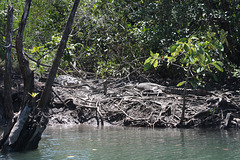
Lying in wait
| 17 Jul 2013 |
|
|
|
Estuarine crocodile, Daintree Rainforest, Queensland, Australia
"The saltwater crocodile (Crocodylus porosus), also known as saltie, estuarine or Indo-Pacific crocodile, is the largest of all living reptiles, as well as the largest terrestrial and riparian predator in the world. The males of this species can reach sizes of up to 7 m (23 ft) and weigh as much as 2,000 kg (4,400 lb).[2] However, an adult male saltwater crocodile is generally between 4.3 and 5.2 m (14 and 17 ft) in length and weighs 400–1,000 kg (880–2,200 lb), rarely growing larger.[3] Females are much smaller and often do not surpass 3 m (9.8 ft). As its name implies, this crocodile can live in salt water, but usually resides in mangrove swamps, estuaries, deltas, lagoons, and lower stretches of rivers. They have the broadest distribution of any modern crocodile, ranging from the eastern coast of India, throughout most of Southeast Asia, stretching south to northern Australia, and historically ranging as far west as off the eastern coast of Africa and as far east as waters off the coast of Japan."
en.wikipedia.org/wiki/Saltwater_crocodile
AIMG 7485
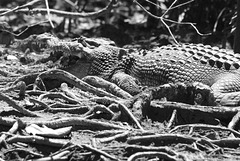
Rough skin
| 17 Jul 2013 |
|
|
|
Estuarine crocodile, Daintree Rainforest, Queensland, Australia
"The saltwater crocodile (Crocodylus porosus), also known as saltie, estuarine or Indo-Pacific crocodile, is the largest of all living reptiles, as well as the largest terrestrial and riparian predator in the world. The males of this species can reach sizes of up to 7 m (23 ft) and weigh as much as 2,000 kg (4,400 lb).[2] However, an adult male saltwater crocodile is generally between 4.3 and 5.2 m (14 and 17 ft) in length and weighs 400–1,000 kg (880–2,200 lb), rarely growing larger.[3] Females are much smaller and often do not surpass 3 m (9.8 ft). As its name implies, this crocodile can live in salt water, but usually resides in mangrove swamps, estuaries, deltas, lagoons, and lower stretches of rivers. They have the broadest distribution of any modern crocodile, ranging from the eastern coast of India, throughout most of Southeast Asia, stretching south to northern Australia, and historically ranging as far west as off the eastern coast of Africa and as far east as waters off the coast of Japan."
en.wikipedia.org/wiki/Saltwater_crocodile
AIMG 7500B
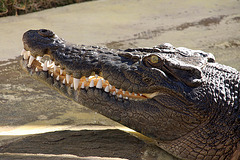
Pearly Whites
| 26 Jan 2013 |
|
|
Nile Crocodile - Alice Springs Reptile Centre, Australia
How doth the little crocodile
Improve his shining tail,
And pour the waters of the Nile
On every golden scale!
How cheerfully he seems to grin,
How neatly spreads his claws,
And welcomes little fishes in
With gently smiling jaws!
A poem by Lewis Carroll that appears in Alice's Adventures in Wonderland.
AIMG_6576
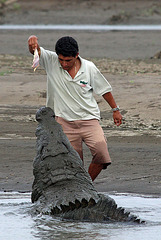
Too Dangerous
| 04 Aug 2011 |
|
|
|
On the Rio Tarcoles in Carara National Park in Costa Rica, some boat operators tempt fate and try to increase their tips by coaxing wild American crocodiles to come out of the water to be hand fed chicken. This was taken from afar of a tour boat driver risking his health to do so. Our boat driver did not not do this and we tipped him well in appreciation of his sanity.
A picture is worth a thousand words.
AIMG_0501
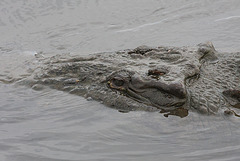
Too close for comfort
| 05 Aug 2011 |
|
|
American crocodile - Rio Tarcoles in Carara National Park, Costa Rica
ODT: Liquid
AIMG_0518
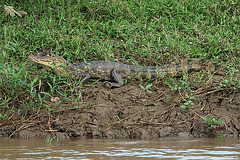
Spectacled caiman
| 23 Apr 2011 |
|
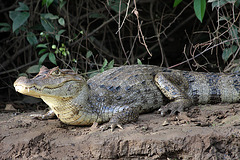
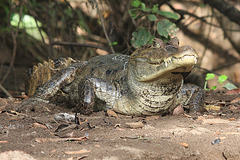
Spectacled caiman at Cano Negro, Costa Rica. The Spectacled caiman lives in lowland wetland and riverine habitats in fresh and salt water. Males tend to be 6 - 8 feet long while females grow to almost 5 feet. They can be identified by the bony ridge between the eyes, which looks like they are wearing spectacles.
AxMG_2331
Now that's an overbite
| 27 Apr 2011 |
|
This is not quite as sharp as I would have liked, but it was shot from a boat in marginal light. Spectacled caiman at Cano Negro, Costa Rica. The Spectacled caiman lives in lowland wetland and riverine habitats in fresh and salt water. Males tend to be 6 - 8 feet long while females grow to almost 5 feet. They can be identified by the bony ridge between the eyes, which looks like they are wearing spectacles.
AxMG_2367
Approaching menance
Jump to top
RSS feed- Esther's latest photos with "crocodile" - Photos
- ipernity © 2007-2026
- Help & Contact
|
Club news
|
About ipernity
|
History |
ipernity Club & Prices |
Guide of good conduct
Donate | Group guidelines | Privacy policy | Terms of use | Statutes | In memoria -
Facebook
X
