

Martin M. Miles' photos with the keyword: Notker of Liège

Liège - Palais des Princes-Evêques
| 29 Aug 2025 |
|
|
Liège is the center of the largest Walloon agglomeration, and the cultural center of the Walloon region of Belgium. The city, with a population of about 200.000, is located at the confluence of the Ourthe and Meuse rivers.
Around 705, Saint Lambert of Maastricht is credited with completing the Christianization of the region, but conversion may still not have been quite universal, since Lambert was murdered in Liège. To enshrine his relics, the successor, Hubertus (later St. Hubert), built a basilica which became the nucleus of the city.
In 1468, following an uprising of the inhabitants against Burgundian rule, xof Burgundy had the city plundered and systematically destroyed. The few survivors who had fled into the forests—Charles the Bold allegedly had more than 5,000 inhabitants murdered—were only able to return to the city for reconstruction after seven years.
In 1789, partly in connection with the French Revolution, the Liège Revolution occurred. It was directed against the absolutist rule of the Prince-Bishop and was crushed in early 1791 by troops commissioned by the Holy Roman Empire. In 1795, Liège was occupied by French troops and became part of the First French Republic. The Congress of Vienna annexed it to the Kingdom of the Netherlands, which in 1830 became the Kingdom of Belgium, to which Liège has belonged ever since.
The Palace was the residence of former Prince-Bishops of Liège and once faced the monumental Cathedral of St. Lambert. Two buildings preceded the present palace, a first palace integrated with the fortifications was built about 1000 by Bishop Notger, but it was destroyed by fire in 1185. The palace was reconstructed under Rudolf of Zähringen. This building was heavily damaged in the sack of the city by the Burgundians and was also burnt in 1505.
On mounting the episcopal throne in 1505, Bishop Érard de La Marck found the palace in ruins and entrusted the construction of a new one to the master builder Arnold van Mulken in 1526. It was finished at the end of the 16th century.
The principal facade on the south was completely rebuilt after the fire of 1734. In 1849, a new west wing was built to accommodate the provincial government.
It now houses the Palace of Justice of Liège and the Provincial Palace, i.e. the government building of Liège Province.
The great courtyard is surrounded by galleries of arcades

Liège - Palais des Princes-Evêques
| 29 Aug 2025 |
|
Liège is the center of the largest Walloon agglomeration, and the cultural center of the Walloon region of Belgium. The city, with a population of about 200.000, is located at the confluence of the Ourthe and Meuse rivers.
Around 705, Saint Lambert of Maastricht is credited with completing the Christianization of the region, but conversion may still not have been quite universal, since Lambert was murdered in Liège. To enshrine his relics, the successor, Hubertus (later St. Hubert), built a basilica which became the nucleus of the city.
In 1468, following an uprising of the inhabitants against Burgundian rule, xof Burgundy had the city plundered and systematically destroyed. The few survivors who had fled into the forests—Charles the Bold allegedly had more than 5,000 inhabitants murdered—were only able to return to the city for reconstruction after seven years.
In 1789, partly in connection with the French Revolution, the Liège Revolution occurred. It was directed against the absolutist rule of the Prince-Bishop and was crushed in early 1791 by troops commissioned by the Holy Roman Empire. In 1795, Liège was occupied by French troops and became part of the First French Republic. The Congress of Vienna annexed it to the Kingdom of the Netherlands, which in 1830 became the Kingdom of Belgium, to which Liège has belonged ever since.
The Palace was the residence of former Prince-Bishops of Liège and once faced the monumental Cathedral of St. Lambert. Two buildings preceded the present palace, a first palace integrated with the fortifications was built about 1000 by Bishop Notger, but it was destroyed by fire in 1185. The palace was reconstructed under Rudolf of Zähringen. This building was heavily damaged in the sack of the city by the Burgundians and was also burnt in 1505.
On mounting the episcopal throne in 1505, Bishop Érard de La Marck found the palace in ruins and entrusted the construction of a new one to the master builder Arnold van Mulken in 1526. It was finished at the end of the 16th century.
The principal facade on the south was completely rebuilt after the fire of 1734. In 1849, a new west wing was built to accommodate the provincial government.
It now houses the Palace of Justice of Liège and the Provincial Palace, i.e. the government building of Liège Province.
The great courtyard is surrounded by galleries of arcades

Liège - Palais des Princes-Evêques
| 29 Aug 2025 |
|
|
Liège is the center of the largest Walloon agglomeration, and the cultural center of the Walloon region of Belgium. The city, with a population of about 200.000, is located at the confluence of the Ourthe and Meuse rivers.
Around 705, Saint Lambert of Maastricht is credited with completing the Christianization of the region, but conversion may still not have been quite universal, since Lambert was murdered in Liège. To enshrine his relics, the successor, Hubertus (later St. Hubert), built a basilica which became the nucleus of the city.
In 1468, following an uprising of the inhabitants against Burgundian rule, xof Burgundy had the city plundered and systematically destroyed. The few survivors who had fled into the forests—Charles the Bold allegedly had more than 5,000 inhabitants murdered—were only able to return to the city for reconstruction after seven years.
In 1789, partly in connection with the French Revolution, the Liège Revolution occurred. It was directed against the absolutist rule of the Prince-Bishop and was crushed in early 1791 by troops commissioned by the Holy Roman Empire. In 1795, Liège was occupied by French troops and became part of the First French Republic. The Congress of Vienna annexed it to the Kingdom of the Netherlands, which in 1830 became the Kingdom of Belgium, to which Liège has belonged ever since.
The Palace was the residence of former Prince-Bishops of Liège and once faced the monumental Cathedral of St. Lambert. Two buildings preceded the present palace, a first palace integrated with the fortifications was built about 1000 by Bishop Notger, but it was destroyed by fire in 1185. The palace was reconstructed under Rudolf of Zähringen. This building was heavily damaged in the sack of the city by the Burgundians and was also burnt in 1505.
On mounting the episcopal throne in 1505, Bishop Érard de La Marck found the palace in ruins and entrusted the construction of a new one to the master builder Arnold van Mulken in 1526. It was finished at the end of the 16th century.
The principal facade on the south was completely rebuilt after the fire of 1734. In 1849, a new west wing was built to accommodate the provincial government.
It now houses the Palace of Justice of Liège and the Provincial Palace, i.e. the government building of Liège Province.

Liège - Couvent des Mineurs
| 29 Aug 2025 |
|
Liège is the center of the largest Walloon agglomeration, and the cultural center of the Walloon region of Belgium. The city, with a population of about 200.000, is located at the confluence of the Ourthe and Meuse rivers.
Around 705, Saint Lambert of Maastricht is credited with completing the Christianization of the region, but conversion may still not have been quite universal, since Lambert was murdered in Liège. To enshrine his relics, the successor, Hubertus (later St. Hubert), built a basilica which became the nucleus of the city.
In 1468, following an uprising of the inhabitants against Burgundian rule, xof Burgundy had the city plundered and systematically destroyed. The few survivors who had fled into the forests—Charles the Bold allegedly had more than 5,000 inhabitants murdered—were only able to return to the city for reconstruction after seven years.
In 1789, partly in connection with the French Revolution, the Liège Revolution occurred. It was directed against the absolutist rule of the Prince-Bishop and was crushed in early 1791 by troops commissioned by the Holy Roman Empire. In 1795, Liège was occupied by French troops and became part of the First French Republic. The Congress of Vienna annexed it to the Kingdom of the Netherlands, which in 1830 became the Kingdom of Belgium, to which Liège has belonged ever since.
From the 13th century until the end of the Ancien Régime , the Franciscan community, called Cordeliers, was closely linked to the communal and social life.
Over the centuries, the monastery became a public place: a refuge for the poor, for convicts seeking refuge to escape the justice, a place that welcomed many of the city's good trades: tailors, weavers, furriers etc. Other trades, such as barbers, surgeons, and doctors, celebrated their patron saint's festivals here.
From 1577, the monastery served as the city of Liège's arsenal . The monastery walls housed the cannons of the Liège militia and firefighting equipment, which the Franciscans themselves took over.
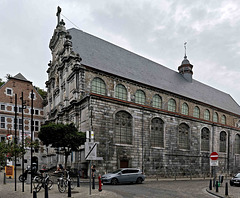
Liège - Saint-Antoine
| 29 Aug 2025 |
|
|
Liège is the center of the largest Walloon agglomeration, and the cultural center of the Walloon region of Belgium. The city, with a population of about 200.000, is located at the confluence of the Ourthe and Meuse rivers.
Around 705, Saint Lambert of Maastricht is credited with completing the Christianization of the region, but conversion may still not have been quite universal, since Lambert was murdered in Liège. To enshrine his relics, the successor, Hubertus (later St. Hubert), built a basilica which became the nucleus of the city.
In 1468, following an uprising of the inhabitants against Burgundian rule, xof Burgundy had the city plundered and systematically destroyed. The few survivors who had fled into the forests—Charles the Bold allegedly had more than 5,000 inhabitants murdered—were only able to return to the city for reconstruction after seven years.
In 1789, partly in connection with the French Revolution, the Liège Revolution occurred. It was directed against the absolutist rule of the Prince-Bishop and was crushed in early 1791 by troops commissioned by the Holy Roman Empire. In 1795, Liège was occupied by French troops and became part of the First French Republic. The Congress of Vienna annexed it to the Kingdom of the Netherlands, which in 1830 became the Kingdom of Belgium, to which Liège has belonged ever since.
Saint-Antoine's Church belonged to the former monastery of the Miners of Liège. It was completed in 1244 and is now deconsecrated. The main building was enhanced with a Baroque façade in the 18th century.
The church was damaged by an aerial bomb explosion in December 1944. The choir was restored in a simple style.

Liège -Temple protestant
| 28 Aug 2025 |
|
|
|
Liège is the center of the largest Walloon agglomeration, and the cultural center of the Walloon region of Belgium. The city, with a population of about 200.000, is located at the confluence of the Ourthe and Meuse rivers.
Around 705, Saint Lambert of Maastricht is credited with completing the Christianization of the region, but conversion may still not have been quite universal, since Lambert was murdered in Liège. To enshrine his relics, the successor, Hubertus (later St. Hubert), built a basilica which became the nucleus of the city.
In 1468, following an uprising of the inhabitants against Burgundian rule, xof Burgundy had the city plundered and systematically destroyed. The few survivors who had fled into the forests—Charles the Bold allegedly had more than 5,000 inhabitants murdered—were only able to return to the city for reconstruction after seven years.
In 1789, partly in connection with the French Revolution, the Liège Revolution occurred. It was directed against the absolutist rule of the Prince-Bishop and was crushed in early 1791 by troops commissioned by the Holy Roman Empire. In 1795, Liège was occupied by French troops and became part of the First French Republic. The Congress of Vienna annexed it to the Kingdom of the Netherlands, which in 1830 became the Kingdom of Belgium, to which Liège has belonged ever since.
The Protestant Reformation here was strongly influenced here by Idelette de Bure, a native of Liège who married Jean Calvin in 1530.
As late as the early 19th century, Protestant services were held in several halls throughout the city. Services were conducted alternately in French and Dutch. After the Belgian Revolution, which led to the secession of the southern provinces from the Netherlands in 1830 and the founding of the independent Kingdom of Belgium, the Protestant congregations were protected by the Belgian King Leopold I.
The church, built according to designs by architect Georges Appia, is made of red brick and concrete. A three-bay, semicircularly vaulted porch forms an inner courtyard. The floor plan follows the traditional form of a Latin basilica with three naves.
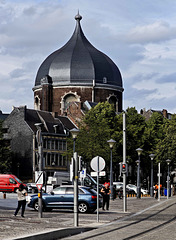
Liège - Saint-André
| 28 Aug 2025 |
|
Liège is the center of the largest Walloon agglomeration, and the cultural center of the Walloon region of Belgium. The city, with a population of about 200.000, is located at the confluence of the Ourthe and Meuse rivers.
Around 705, Saint Lambert of Maastricht is credited with completing the Christianization of the region, but conversion may still not have been quite universal, since Lambert was murdered in Liège. To enshrine his relics, the successor, Hubertus (later St. Hubert), built a basilica which became the nucleus of the city.
In 1468, following an uprising of the inhabitants against Burgundian rule, xof Burgundy had the city plundered and systematically destroyed. The few survivors who had fled into the forests—Charles the Bold allegedly had more than 5,000 inhabitants murdered—were only able to return to the city for reconstruction after seven years.
In 1789, partly in connection with the French Revolution, the Liège Revolution occurred. It was directed against the absolutist rule of the Prince-Bishop and was crushed in early 1791 by troops commissioned by the Holy Roman Empire. In 1795, Liège was occupied by French troops and became part of the First French Republic. The Congress of Vienna annexed it to the Kingdom of the Netherlands, which in 1830 became the Kingdom of Belgium, to which Liège has belonged ever since.
The oldest mention of Saint-André dates back to 1250. From 1261, the church was owned by the Teutonic Order, which held the building until the Revolution.
Construction of the current church, which replaced the medieval one, began in 1765 and was consecrated in 1772. After the Liège Revolution, it served as a grain exchange. Until 2011, the old Saint-André Church served as a venue for temporary exhibitions.

Liège - Le chapeau d'or
| 28 Aug 2025 |
|
Liège is the center of the largest Walloon agglomeration, and the cultural center of the Walloon region of Belgium. The city, with a population of about 200.000, is located at the confluence of the Ourthe and Meuse rivers.
Around 705, Saint Lambert of Maastricht is credited with completing the Christianization of the region, but conversion may still not have been quite universal, since Lambert was murdered in Liège. To enshrine his relics, the successor, Hubertus (later St. Hubert), built a basilica which became the nucleus of the city.
In 1468, following an uprising of the inhabitants against Burgundian rule, xof Burgundy had the city plundered and systematically destroyed. The few survivors who had fled into the forests—Charles the Bold allegedly had more than 5,000 inhabitants murdered—were only able to return to the city for reconstruction after seven years.
In 1789, partly in connection with the French Revolution, the Liège Revolution occurred. It was directed against the absolutist rule of the Prince-Bishop and was crushed in early 1791 by troops commissioned by the Holy Roman Empire. In 1795, Liège was occupied by French troops and became part of the First French Republic. The Congress of Vienna annexed it to the Kingdom of the Netherlands, which in 1830 became the Kingdom of Belgium, to which Liège has belonged ever since.
Le chapeau d'or
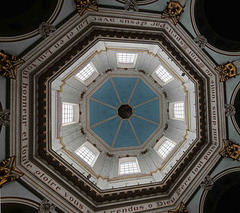
Liège - Collégiale Saint-Jean l'Évangéliste
| 28 Aug 2025 |
|
|
Liège is the center of the largest Walloon agglomeration, and the cultural center of the Walloon region of Belgium. The city, with a population of about 200.000, is located at the confluence of the Ourthe and Meuse rivers.
Around 705, Saint Lambert of Maastricht is credited with completing the Christianization of the region, but conversion may still not have been quite universal, since Lambert was murdered in Liège. To enshrine his relics, the successor, Hubertus (later St. Hubert), built a basilica which became the nucleus of the city.
In 1468, following an uprising of the inhabitants against Burgundian rule, xof Burgundy had the city plundered and systematically destroyed. The few survivors who had fled into the forests—Charles the Bold allegedly had more than 5,000 inhabitants murdered—were only able to return to the city for reconstruction after seven years.
In 1789, partly in connection with the French Revolution, the Liège Revolution occurred. It was directed against the absolutist rule of the Prince-Bishop and was crushed in early 1791 by troops commissioned by the Holy Roman Empire. In 1795, Liège was occupied by French troops and became part of the First French Republic. The Congress of Vienna annexed it to the Kingdom of the Netherlands, which in 1830 became the Kingdom of Belgium, to which Liège has belonged ever since.
The Collegiate Church of St. John the Evangelist was founded as a collegiate church by Notker of Liège around 980, and consecrated in 987. The church was a kind of replica of Charlemagne's Aachen Cathedral. It was suppressed in 1797 during the French Revolution, the building being confiscated and sold in 1798.
The center, originally an octagonal building in Mosan Romanesque style, incorporating elements of the Church of the Holy Sepulchre in Jerusalem, the church was completely rebuilt in a late Baroque style in 1754–1784. It has been in use as a parish church since 1809.
The church is currently being restored.
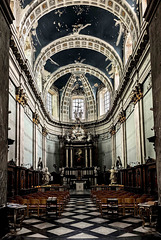
Liège - Collégiale Saint-Jean l'Évangéliste
| 28 Aug 2025 |
|
Liège is the center of the largest Walloon agglomeration, and the cultural center of the Walloon region of Belgium. The city, with a population of about 200.000, is located at the confluence of the Ourthe and Meuse rivers.
Around 705, Saint Lambert of Maastricht is credited with completing the Christianization of the region, but conversion may still not have been quite universal, since Lambert was murdered in Liège. To enshrine his relics, the successor, Hubertus (later St. Hubert), built a basilica which became the nucleus of the city.
In 1468, following an uprising of the inhabitants against Burgundian rule, xof Burgundy had the city plundered and systematically destroyed. The few survivors who had fled into the forests—Charles the Bold allegedly had more than 5,000 inhabitants murdered—were only able to return to the city for reconstruction after seven years.
In 1789, partly in connection with the French Revolution, the Liège Revolution occurred. It was directed against the absolutist rule of the Prince-Bishop and was crushed in early 1791 by troops commissioned by the Holy Roman Empire. In 1795, Liège was occupied by French troops and became part of the First French Republic. The Congress of Vienna annexed it to the Kingdom of the Netherlands, which in 1830 became the Kingdom of Belgium, to which Liège has belonged ever since.
The Collegiate Church of St. John the Evangelist was founded as a collegiate church by Notker of Liège around 980, and consecrated in 987. The church was a kind of replica of Charlemagne's Aachen Cathedral. It was suppressed in 1797 during the French Revolution, the building being confiscated and sold in 1798.
The center, originally an octagonal building in Mosan Romanesque style, incorporating elements of the Church of the Holy Sepulchre in Jerusalem, the church was completely rebuilt in a late Baroque style in 1754–1784. It has been in use as a parish church since 1809.
The church is currently being restored.
Liège - Collégiale Saint-Jean l'Évangéliste
| 28 Aug 2025 |
|
Liège is the center of the largest Walloon agglomeration, and the cultural center of the Walloon region of Belgium. The city, with a population of about 200.000, is located at the confluence of the Ourthe and Meuse rivers.
Around 705, Saint Lambert of Maastricht is credited with completing the Christianization of the region, but conversion may still not have been quite universal, since Lambert was murdered in Liège. To enshrine his relics, the successor, Hubertus (later St. Hubert), built a basilica which became the nucleus of the city.
In 1468, following an uprising of the inhabitants against Burgundian rule, xof Burgundy had the city plundered and systematically destroyed. The few survivors who had fled into the forests—Charles the Bold allegedly had more than 5,000 inhabitants murdered—were only able to return to the city for reconstruction after seven years.
In 1789, partly in connection with the French Revolution, the Liège Revolution occurred. It was directed against the absolutist rule of the Prince-Bishop and was crushed in early 1791 by troops commissioned by the Holy Roman Empire. In 1795, Liège was occupied by French troops and became part of the First French Republic. The Congress of Vienna annexed it to the Kingdom of the Netherlands, which in 1830 became the Kingdom of Belgium, to which Liège has belonged ever since.
The Collegiate Church of St. John the Evangelist was founded as a collegiate church by Notker of Liège around 980, and consecrated in 987. The church was a kind of replica of Charlemagne's Aachen Cathedral. It was suppressed in 1797 during the French Revolution, the building being confiscated and sold in 1798.
The center, originally an octagonal building in Mosan Romanesque style, incorporating elements of the Church of the Holy Sepulchre in Jerusalem, the church was completely rebuilt in a late Baroque style in 1754–1784. It has been in use as a parish church since 1809.
The church is currently being restored.
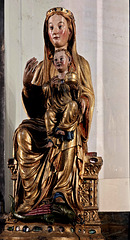
Virgin and Child
Sedes Sapientia
Mosan School / ca 1230
Liège - Collégiale Saint-Jean l'Évangéliste
| 27 Aug 2025 |
|
|
Liège is the center of the largest Walloon agglomeration, and the cultural center of the Walloon region of Belgium. The city, with a population of about 200.000, is located at the confluence of the Ourthe and Meuse rivers.
Around 705, Saint Lambert of Maastricht is credited with completing the Christianization of the region, but conversion may still not have been quite universal, since Lambert was murdered in Liège. To enshrine his relics, the successor, Hubertus (later St. Hubert), built a basilica which became the nucleus of the city.
In 1468, following an uprising of the inhabitants against Burgundian rule, xof Burgundy had the city plundered and systematically destroyed. The few survivors who had fled into the forests—Charles the Bold allegedly had more than 5,000 inhabitants murdered—were only able to return to the city for reconstruction after seven years.
In 1789, partly in connection with the French Revolution, the Liège Revolution occurred. It was directed against the absolutist rule of the Prince-Bishop and was crushed in early 1791 by troops commissioned by the Holy Roman Empire. In 1795, Liège was occupied by French troops and became part of the First French Republic. The Congress of Vienna annexed it to the Kingdom of the Netherlands, which in 1830 became the Kingdom of Belgium, to which Liège has belonged ever since.
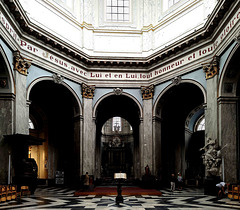
The Collegiate Church of St. John the Evangelist was founded as a collegiate church by Notker of Liège around 980, and consecrated in 987. The church was a kind of replica of Charlemagne's Aachen Cathedral. It was suppressed in 1797 during the French Revolution, the building being confiscated and sold in 1798.
The center, originally an octagonal building in Mosan Romanesque style, incorporating elements of the Church of the Holy Sepulchre in Jerusalem, the church was completely rebuilt in a late Baroque style in 1754–1784. It has been in use as a parish church since 1809.
The church is currently being restored.
Liège - Collégiale Saint-Jean l'Évangéliste
| 27 Aug 2025 |
|
Liège is the center of the largest Walloon agglomeration, and the cultural center of the Walloon region of Belgium. The city, with a population of about 200.000, is located at the confluence of the Ourthe and Meuse rivers.
Around 705, Saint Lambert of Maastricht is credited with completing the Christianization of the region, but conversion may still not have been quite universal, since Lambert was murdered in Liège. To enshrine his relics, the successor, Hubertus (later St. Hubert), built a basilica which became the nucleus of the city.
In 1468, following an uprising of the inhabitants against Burgundian rule, xof Burgundy had the city plundered and systematically destroyed. The few survivors who had fled into the forests—Charles the Bold allegedly had more than 5,000 inhabitants murdered—were only able to return to the city for reconstruction after seven years.
In 1789, partly in connection with the French Revolution, the Liège Revolution occurred. It was directed against the absolutist rule of the Prince-Bishop and was crushed in early 1791 by troops commissioned by the Holy Roman Empire. In 1795, Liège was occupied by French troops and became part of the First French Republic. The Congress of Vienna annexed it to the Kingdom of the Netherlands, which in 1830 became the Kingdom of Belgium, to which Liège has belonged ever since.
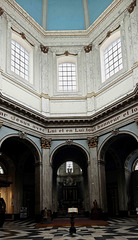
The Collegiate Church of St. John the Evangelist was founded as a collegiate church by Notker of Liège around 980, and consecrated in 987. The church was a kind of replica of Charlemagne's Aachen Cathedral. It was suppressed in 1797 during the French Revolution, the building being confiscated and sold in 1798.
The center, originally an octagonal building in Mosan Romanesque style, incorporating elements of the Church of the Holy Sepulchre in Jerusalem, the church was completely rebuilt in a late Baroque style in 1754–1784. It has been in use as a parish church since 1809.
The church is currently being restored.
Liège - Collégiale Saint-Jean l'Évangéliste
| 27 Aug 2025 |
|
|
|
Liège is the center of the largest Walloon agglomeration, and the cultural center of the Walloon region of Belgium. The city, with a population of about 200.000, is located at the confluence of the Ourthe and Meuse rivers.
Around 705, Saint Lambert of Maastricht is credited with completing the Christianization of the region, but conversion may still not have been quite universal, since Lambert was murdered in Liège. To enshrine his relics, the successor, Hubertus (later St. Hubert), built a basilica which became the nucleus of the city.
In 1468, following an uprising of the inhabitants against Burgundian rule, xof Burgundy had the city plundered and systematically destroyed. The few survivors who had fled into the forests—Charles the Bold allegedly had more than 5,000 inhabitants murdered—were only able to return to the city for reconstruction after seven years.
In 1789, partly in connection with the French Revolution, the Liège Revolution occurred. It was directed against the absolutist rule of the Prince-Bishop and was crushed in early 1791 by troops commissioned by the Holy Roman Empire. In 1795, Liège was occupied by French troops and became part of the First French Republic. The Congress of Vienna annexed it to the Kingdom of the Netherlands, which in 1830 became the Kingdom of Belgium, to which Liège has belonged ever since.
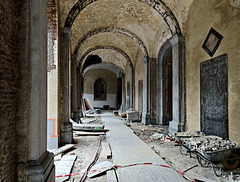
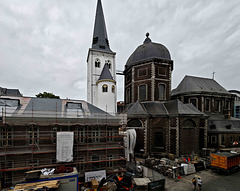
The Collegiate Church of St. John the Evangelist was founded as a collegiate church by Notker of Liège around 980, and consecrated in 987. The church was a kind of replica of Charlemagne's Aachen Cathedral. It was suppressed in 1797 during the French Revolution, the building being confiscated and sold in 1798.
The center, originally an octagonal building in Mosan Romanesque style, incorporating elements of the Church of the Holy Sepulchre in Jerusalem, the church was completely rebuilt in a late Baroque style in 1754–1784. It has been in use as a parish church since 1809.
The church is currently being restored.
Liège - Collégiale Saint-Jean l'Évangéliste
| 27 Aug 2025 |
|
Liège is the center of the largest Walloon agglomeration, and the cultural center of the Walloon region of Belgium. The city, with a population of about 200.000, is located at the confluence of the Ourthe and Meuse rivers.
Around 705, Saint Lambert of Maastricht is credited with completing the Christianization of the region, but conversion may still not have been quite universal, since Lambert was murdered in Liège. To enshrine his relics, the successor, Hubertus (later St. Hubert), built a basilica which became the nucleus of the city.
In 1468, following an uprising of the inhabitants against Burgundian rule, xof Burgundy had the city plundered and systematically destroyed. The few survivors who had fled into the forests—Charles the Bold allegedly had more than 5,000 inhabitants murdered—were only able to return to the city for reconstruction after seven years.
In 1789, partly in connection with the French Revolution, the Liège Revolution occurred. It was directed against the absolutist rule of the Prince-Bishop and was crushed in early 1791 by troops commissioned by the Holy Roman Empire. In 1795, Liège was occupied by French troops and became part of the First French Republic. The Congress of Vienna annexed it to the Kingdom of the Netherlands, which in 1830 became the Kingdom of Belgium, to which Liège has belonged ever since.
The Collegiate Church of St. John the Evangelist was founded as a collegiate church by Notker of Liège around 980, and consecrated in 987. The church was a kind of replica of Charlemagne's Aachen Cathedral. It was suppressed in 1797 during the French Revolution, the building being confiscated and sold in 1798.
The center, originally an octagonal building in Mosan Romanesque style, incorporating elements of the Church of the Holy Sepulchre in Jerusalem, the church was completely rebuilt in a late Baroque style in 1754–1784. It has been in use as a parish church since 1809.
The church is currently being restored.

Liège - Collégiale Saint-Denis
| 17 Aug 2025 |
|
Liège is the center of the largest Walloon agglomeration, and the cultural center of the Walloon region of Belgium. The city, with a population of about 200.000, is located at the confluence of the Ourthe and Meuse rivers.
Around 705, Saint Lambert of Maastricht is credited with completing the Christianization of the region, but conversion may still not have been quite universal, since Lambert was murdered in Liège. To enshrine his relics, the successor, Hubertus (later St. Hubert), built a basilica which became the nucleus of the city.
In 1468, following an uprising of the inhabitants against Burgundian rule, xof Burgundy had the city plundered and systematically destroyed. The few survivors who had fled into the forests—Charles the Bold allegedly had more than 5,000 inhabitants murdered—were only able to return to the city for reconstruction after seven years.
In 1789, partly in connection with the French Revolution, the Liège Revolution occurred. It was directed against the absolutist rule of the Prince-Bishop and was crushed in early 1791 by troops commissioned by the Holy Roman Empire. In 1795, Liège was occupied by French troops and became part of the First French Republic. The Congress of Vienna annexed it to the Kingdom of the Netherlands, which in 1830 became the Kingdom of Belgium, to which Liège has belonged ever since.
The church was founded in 987 by Prince-Bishop Notker of Liège. It was part of the first city wall, and the tower was part of the city fortifications. Dendrological examinations of the wood of the nave's roof beams revealed that they date from 1012 to 1015. The Romanesque choir was replaced by the present Gothic choir at the beginning of the 15th century. At the end of the 17th century, the interior of the church was rebuilt in the then-prevalent Baroque style. It was one of the seven collegiate churches of Liège.
After the French Revolution and the dissolution of the chapter in 1797, Saint-Denis lost part of its church treasure.. In 1803, the church was reopened as a parish church.
The altarpiece of the Passion of Christ and the Life of Saint Dionysius was commissioned by the canons in 1522. It originally consisted of a carved central section and movable painted panels. The upper section was probably made in the workshop of Jan Borman (the Younger) in Brussels. In total, over 150 people are depicted here.

Liège - Collégiale Saint-Denis
| 16 Aug 2025 |
|
|
|
Liège is the center of the largest Walloon agglomeration, and the cultural center of the Walloon region of Belgium. The city, with a population of about 200.000, is located at the confluence of the Ourthe and Meuse rivers.
Around 705, Saint Lambert of Maastricht is credited with completing the Christianization of the region, but conversion may still not have been quite universal, since Lambert was murdered in Liège. To enshrine his relics, the successor, Hubertus (later St. Hubert), built a basilica which became the nucleus of the city.
In 1468, following an uprising of the inhabitants against Burgundian rule, xof Burgundy had the city plundered and systematically destroyed. The few survivors who had fled into the forests—Charles the Bold allegedly had more than 5,000 inhabitants murdered—were only able to return to the city for reconstruction after seven years.
In 1789, partly in connection with the French Revolution, the Liège Revolution occurred. It was directed against the absolutist rule of the Prince-Bishop and was crushed in early 1791 by troops commissioned by the Holy Roman Empire. In 1795, Liège was occupied by French troops and became part of the First French Republic. The Congress of Vienna annexed it to the Kingdom of the Netherlands, which in 1830 became the Kingdom of Belgium, to which Liège has belonged ever since.
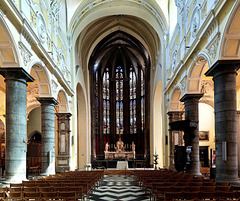
The church was founded in 987 by Prince-Bishop Notker of Liège. It was part of the first city wall, and the tower was part of the city fortifications. Dendrological examinations of the wood of the nave's roof beams revealed that they date from 1012 to 1015. The Romanesque choir was replaced by the present Gothic choir at the beginning of the 15th century. At the end of the 17th century, the interior of the church was rebuilt in the then-prevalent Baroque style. It was one of the seven collegiate churches of Liège.
After the French Revolution and the dissolution of the chapter in 1797, Saint-Denis lost part of its church treasure.. In 1803, the church was reopened as a parish church.
The Gothic choir
Liège - Collégiale Saint-Denis
| 16 Aug 2025 |
|
Liège is the center of the largest Walloon agglomeration, and the cultural center of the Walloon region of Belgium. The city, with a population of about 200.000, is located at the confluence of the Ourthe and Meuse rivers.
Around 705, Saint Lambert of Maastricht is credited with completing the Christianization of the region, but conversion may still not have been quite universal, since Lambert was murdered in Liège. To enshrine his relics, the successor, Hubertus (later St. Hubert), built a basilica which became the nucleus of the city.
In 1468, following an uprising of the inhabitants against Burgundian rule, xof Burgundy had the city plundered and systematically destroyed. The few survivors who had fled into the forests—Charles the Bold allegedly had more than 5,000 inhabitants murdered—were only able to return to the city for reconstruction after seven years.
In 1789, partly in connection with the French Revolution, the Liège Revolution occurred. It was directed against the absolutist rule of the Prince-Bishop and was crushed in early 1791 by troops commissioned by the Holy Roman Empire. In 1795, Liège was occupied by French troops and became part of the First French Republic. The Congress of Vienna annexed it to the Kingdom of the Netherlands, which in 1830 became the Kingdom of Belgium, to which Liège has belonged ever since.
The church was founded in 987 by Prince-Bishop Notker of Liège. It was part of the first city wall, and the tower was part of the city fortifications. Dendrological examinations of the wood of the nave's roof beams revealed that they date from 1012 to 1015. The Romanesque choir was replaced by the present Gothic choir at the beginning of the 15th century. At the end of the 17th century, the interior of the church was rebuilt in the then-prevalent Baroque style. It was one of the seven collegiate churches of Liège.
After the French Revolution and the dissolution of the chapter in 1797, Saint-Denis lost part of its church treasure.. In 1803, the church was reopened as a parish church.
Jump to top
RSS feed- Martin M. Miles' latest photos with "Notker of Liège" - Photos
- ipernity © 2007-2026
- Help & Contact
|
Club news
|
About ipernity
|
History |
ipernity Club & Prices |
Guide of good conduct
Donate | Group guidelines | Privacy policy | Terms of use | Statutes | In memoria -
Facebook
X
